
Breakfast & Brunch
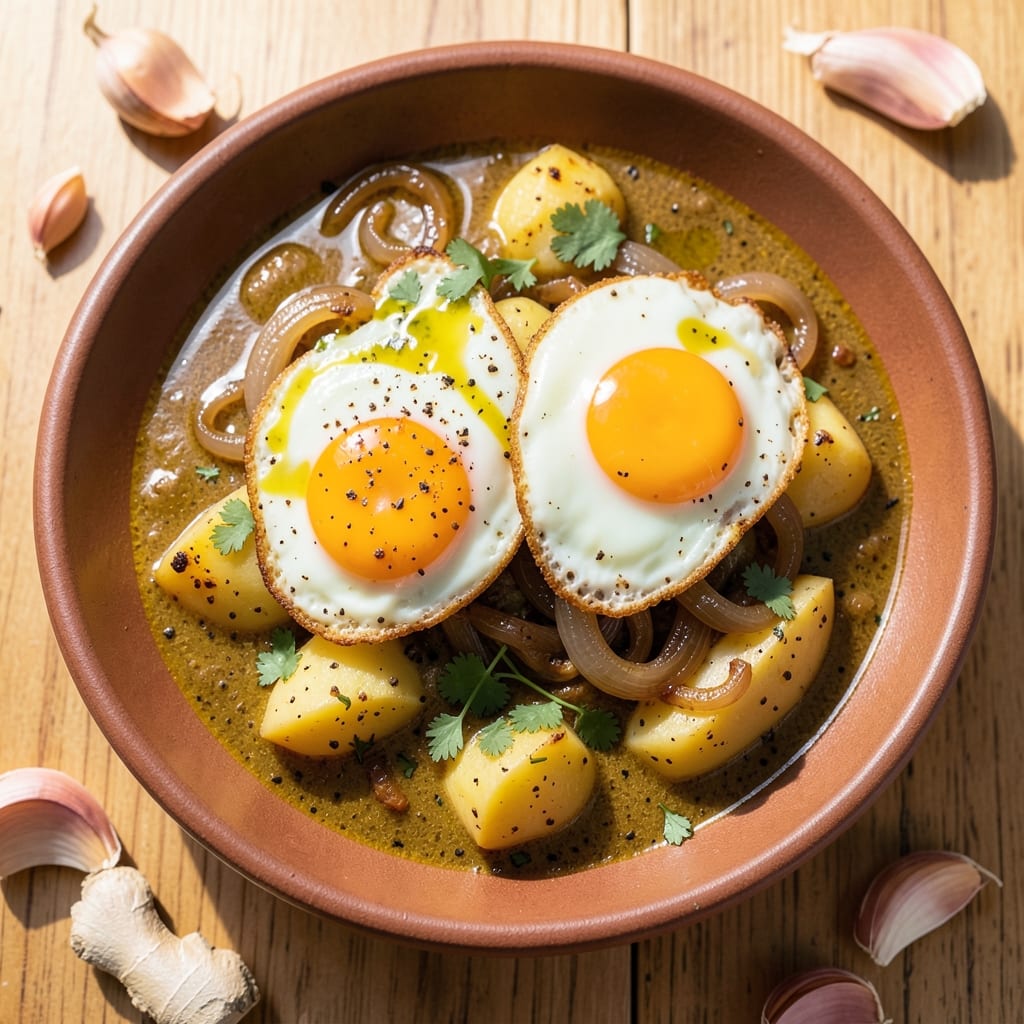
This egg and potato curry recipe transforms simple ingredients into a fragrant, comforting dish that balances creamy coconut with tender eggs and potatoes. The secret lies in slow-simmered spices and soft-boiled eggs that absorb the rich, aromatic broth—perfect for a hearty breakfast or brunch. I developed this version after testing regional styles, blending Indian-style tempering with Caribbean coconut notes for depth without complexity.
The recipe begins with a fragrant base of onions, garlic, and ginger sautéed until golden, then layered with warm spices like turmeric, cumin, and coriander. Potatoes cook until fork-tender, while eggs boil just until set—soft enough to melt in your mouth. The coconut milk creates a velvety texture that ties everything together, with a final touch of lemon for brightness. This method ensures every bite delivers both texture and flavor, without requiring advanced techniques.
What makes this curry special is its versatility—serve it with steamed basmati rice for a satisfying meal, or pair it with warm naan or roti for dipping. The dish reheats beautifully, making it ideal for meal prep, and the flavors deepen overnight. For a vegetarian twist, simply omit the eggs or use chickpeas instead. The balance of spices and coconut creates a dish that’s both comforting and exciting, proving that breakfast can be a full culinary experience.
Ready in about 45 minutes, this recipe delivers restaurant-quality results with minimal effort. The key is patience—letting the spices bloom and the coconut milk simmer until thick and fragrant. Whether you're cooking for a family or treating yourself to a special meal, this curry promises warmth, richness, and a touch of exotic flair. Let’s get started!
Ingredients for egg and potato curry
Spiced coconut milk, tender potatoes, and soft-boiled eggs create a harmonious vegetarian curry with restaurant-quality depth.
| Ingredient | Amount | Notes |
|---|---|---|
| Yellow Onions 🧅 | 1 whole | Finely chopped for aromatic base |
| Garlic Cloves 🧄 | 6 cloves | Minced for deep spice foundation |
| Fresh Ginger 🌿 | 1 ½ tbsp | Grated for zesty brightness |
| Ground Turmeric 🌶️ | 1 tsp | Freshly ground preferred |
| Ground Cumin 🌿 | 1 tsp | Toasted for deeper aroma |
| Ground Coriander 🌿 | 1 tsp | Freshly ground for freshness |
| Garam Masala 🌶️ | 1 tsp | Store-bought blend preferred |
| Russet Potatoes 🥔 | 1 ½ lb | Cubed for even cooking |
| Large Eggs 🥚 | 4 whole | Soft-boiled for creamy texture |
| Full-Fat Coconut Milk 🥥 | 13 ½ oz | High-quality canned preferred |
| Fresh Lemon Juice 🍋 | 1 tbsp | Freshly squeezed for acidity |
| Vegetable Oil 🫒 | 3 tbsp | High smoke point preferred |
| Sea Salt 🧂 | 1 tsp | Kosher or fine grain preferred |
| Black Peppercorns 🌶️ | ½ tsp | Freshly cracked for intensity |
The spice blend is non-negotiable for authentic flavor. Penzeys or Spicewalla offer high-quality garam masala, but any reputable brand works. Freshly ground turmeric and coriander make a noticeable difference—toast the whole spices briefly before grinding for deeper aroma. For the coconut milk, Thai Kitchen or Native Forest brands provide the richest texture. Potatoes should be uniform in size to ensure even cooking, and russets hold up best to the long simmer. The eggs are the star here—use large eggs for consistent soft-boiling results.
No fresh ginger? Powdered ginger at half the amount works in a pinch, though texture suffers. Substituting coconut milk? Full-fat cashew cream mimics the richness, but expect a slightly different mouthfeel. For the potatoes, sweet potatoes add natural sweetness that pairs beautifully with the coconut. If you're avoiding dairy entirely, ensure your coconut milk is certified vegan—some brands process with animal-derived rennet. The garam masala can be tricky to find; Indian grocery stores carry authentic blends, or create your own with cinnamon, cardamom, and cloves.
The curry reheats beautifully—simmer gently to maintain texture. Store in airtight containers for 4-5 days in the fridge, or freeze for 3 months. For meal prep, portion the curry and eggs separately to prevent overcooking. The soft-boiled eggs can be prepped ahead and added just before serving. Garnish with fresh cilantro or a squeeze of lime for brightness. Leftovers taste even better the next day as flavors meld.
Why You'll Love This Recipe
- One-Pot Magic: I swear by this recipe because it’s all in one pot—no fussing with multiple pans or dishes. Just chop the onions, toss in the potatoes and eggs, and let the spices (that cumin and turmeric!) work their magic while you sip tea.
- Spice Bomb Combo: The garlic, ginger, and cumin hit just right—warm, earthy, and with that little kick that makes you go back for more. Honestly, the first time I made it, I added extra cumin on purpose.
- Lunchbox Hero: This curry reheats like a dream, so I make a big batch on Sundays and pack it for work or school lunches. The eggs stay tender, the potatoes soak up the flavor, and it’s way more exciting than a sad sandwich.
- Budget Win: Potatoes and eggs are cheap, and this recipe stretches them into something hearty. Between us, I’ve fed four people for under $10 with leftovers that taste even better the next day—no takeout needed.
Step-by-step instructions for egg and potato curry
Master this aromatic spiced curry with tender potatoes and soft-boiled eggs in rich coconut broth.
🍳 Step 1: Build the Spiced Aromatic Base
Heat the 3 tablespoons vegetable oil in a heavy-bottomed pot over medium heat. Add the finely chopped yellow onions and cook for 5 minutes until softened and translucent. This foundational step develops the curry's depth—don't rush it or the flavors won't meld properly.
Add the 6 cloves minced garlic cloves and 1.5 tablespoons grated fresh ginger. Sauté for 2 minutes until the raw garlic aroma disappears and the mixture becomes fragrant. Here's the thing—if you smell burning, reduce the heat immediately. The spices should dance and sizzle without browning.
🍳 Step 2: Toast the Spice Blend
Increase heat to medium-high and add the 1 teaspoon ground turmeric, 1 teaspoon ground cumin, 1 teaspoon ground coriander, and 1 teaspoon garam masala. Stir continuously for 1 minute until the spices release their essential oils and the mixture smells intensely aromatic. This toasting step unlocks maximum flavor—you'll notice the kitchen filling with warm, earthy spice notes.
Immediately add the 1.5 pounds cubed russet potatoes and stir to coat evenly with the spice mixture. Pour in 2 cups water (just enough to barely cover the potatoes) and bring to a gentle simmer. The potatoes should be mostly submerged but not drowning—this ensures even cooking without turning mushy.
🥘 Step 3: Simmer Potatoes Until Tender
Reduce heat to low and simmer uncovered for 15 minutes, stirring occasionally. You're looking for potatoes that are fork-tender but still hold their shape—when pierced with a knife, they should resist slightly but not be hard. This stage builds the curry's foundation while developing the spice-infused broth.
While the potatoes cook, prepare the eggs. Place the 4 whole large eggs in a small saucepan and cover with cold water by 1 inch. Bring to a gentle boil over medium heat, then immediately reduce to low and simmer for exactly 6 minutes. The eggs should have set whites but runny yolks—this is crucial for the creamy texture when they're added to the curry.
🥘 Step 4: Finish with Coconut Milk and Acid
Stir the 13.5 ounces full-fat coconut milk into the potato mixture, breaking up any clumps with a wooden spoon. Increase heat to medium and simmer for 10 minutes, stirring occasionally. The curry should thicken slightly as the coconut milk incorporates—this is when the rich, velvety texture develops. Watch for any skin forming on top and skim it off to maintain smoothness.
Add the 1 tablespoon fresh lemon juice, 1 teaspoon sea salt, and 0.5 teaspoon freshly cracked black peppercorns. Taste and adjust seasoning—you want a balance of spice, salt, and bright acidity. The lemon juice brightens the dish and cuts through the richness of the coconut milk.
🍽️ Step 5: Incorporate Eggs and Serve
Using a slotted spoon, carefully transfer the soft-boiled eggs to the curry. Simmer gently for 2 minutes to warm through—the eggs should be warm but not fully cooked in the center. Serve immediately with steamed basmati rice or warm naan bread to soak up the aromatic coconut broth.
Each bite should deliver tender potatoes infused with warm spices, creamy coconut milk, and the delicate contrast of soft-boiled eggs. The dish should be fragrant with garam masala's complexity, brightened by lemon, and balanced by the richness of the coconut. The potatoes should be fully tender but not falling apart, and the eggs should be warm throughout with just a hint of runny yolk.
Pro Tips For Making Egg And Potato Curry
- Sauté Onions Slowly: If you rush this step, you’ll end up with bitter, browned onions that overpower the dish. Cook them on medium-low heat for 8-10 minutes until they’re soft and translucent—almost caramelized at the edges—but not crispy. This builds the flavor base without burning, and trust me, your curry will taste richer for it.
- Grate Ginger Fine: I used to chop ginger roughly, thinking it was fine. Wrong. For this curry, grate it so fine it’s almost paste-like—this releases the flavor into the oil instantly. Skip the food processor; a microplane or the smallest holes on a box grater do the job best, and you’ll taste the difference in every bite.
- Don’t Overcrowd the Potatoes: Tossing in too many potatoes at once steams them instead of frying, leaving them soggy. Work in batches if needed—let them sear for 2-3 minutes per side in the oil before adding the next round. This gives them a proper crust, which keeps the curry from turning mushy.
- Bloom Spices in Oil: Dump ground cumin and turmeric straight into the pot? Big mistake. Heat the oil until it shimmers, then add the spices and let them sizzle for 30 seconds—you’ll smell the aroma change. This step unlocks their flavor, making the curry taste deeper and more balanced. (Yes, even if you’re impatient like me.)
Best sauces and condiments for these flavors
Coconut Milk Variations
For a richer texture, use full-fat coconut milk like Thai Kitchen or Native Forest. Light coconut milk works in a pinch but may thin the curry—balance it with 1 tablespoon cornstarch slurry if needed. For a dairy-free twist, swap in cashew cream (blend 1 cup soaked cashews with ½ cup water) for a nutty depth. 🥥
Spice Intensity Boosters
Add ½ teaspoon chili powder or 1 tablespoon fresh red chili flakes for heat, or a pinch of asafetida (hing) for umami complexity. For smoky notes, stir in ½ teaspoon smoked paprika during the spice toast. I love balancing heat with a splash of mango chutney (about 1 tablespoon) at the end—it adds sweet-tangy contrast.
Acidic Brighteners
Beyond lemon, try 1 teaspoon tamarind paste for a deeper tang or ½ teaspoon vinegar (apple cider or white) for sharpness. A drizzle of pickled ginger (about 1 tablespoon) adds refreshing zing and pairs beautifully with the coconut. For a tropical twist, add 1 tablespoon lime zest along with the juice.
Herbaceous Garnishes
Finish with 2 tablespoons chopped cilantro or fresh mint leaves for freshness. For a Middle Eastern touch, sprinkle 1 teaspoon toasted cumin seeds or crushed sumac. A swirl of plain yogurt (or coconut yogurt for vegan) on top adds cooling creaminess. I garnish with toasted coconut flakes for texture and aroma.
Sauce Thickeners
If the curry is too thin, stir in 1 tablespoon tomato paste or ½ cup blended potatoes (from the curry itself) to thicken naturally. For a glossy finish, whisk in 1 teaspoon cornstarch mixed with 2 tablespoons water until translucent. Avoid over-thickening—aim for a sauce that coats the back of a spoon but remains silky. 💫
Nutrition facts
Frequently asked questions
Can I make this curry without coconut milk?
Yes, but the texture will change significantly. For a similar richness, substitute with 1 cup heavy cream or ½ cup Greek yogurt mixed with ½ cup water. If you prefer a dairy-free option, use 1 cup blended cashews soaked in ½ cup water for a nutty depth. The curry will still taste delicious but lose its signature velvety coconut notes.
How do I adjust the spice level for kids or sensitive stomachs?
Reduce the garam masala to ½ teaspoon and omit chili flakes entirely. For extra mildness, add 1 extra tablespoon coconut milk at the end to soothe any residual heat. Kids often love the sweetness of potatoes and eggs—balance the spices with 1 teaspoon honey or maple syrup stirred in at the finish for natural sweetness.
Can I prepare the curry ahead of time?
Make the curry base (without eggs) up to 3 days ahead and store in an airtight container. Reheat gently on the stove, then add the eggs just before serving to maintain their perfect texture. For meal prep, cook the potatoes separately and reheat them with the curry sauce. The eggs can be prepped ahead and added fresh for the best results.
What if my potatoes turn out mushy?
Mushy potatoes usually happen from overcooking or too much liquid. Next time, reduce the water to 1.5 cups and check potatoes at 12 minutes—they should be tender but still firm. For a quick fix, stir in 1 tablespoon cornstarch mixed with 2 tablespoons water to thicken the sauce and absorb excess moisture. The curry will still taste great with slightly softer potatoes!
How can I make this curry vegan?
Replace the eggs with 4 cooked chickpeas (for texture) or ½ cup crumbled tofu (for protein). Use vegan coconut milk and ensure your garam masala is certified vegan. For extra richness, stir in 1 tablespoon nutritional yeast at the end. The dish will have a heartier, plant-based texture while keeping all the aromatic flavors intact.