
Breakfast & Brunch
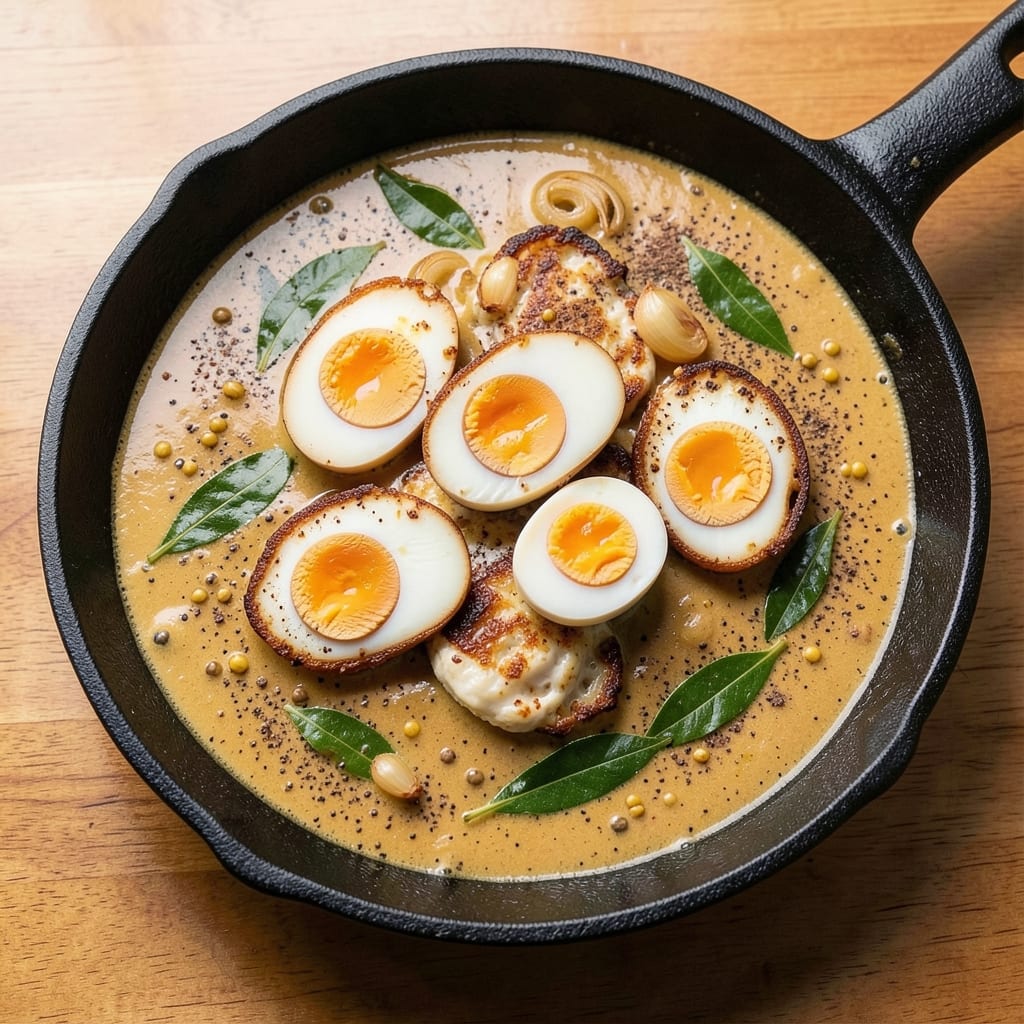
This boiled egg fry curry recipe transforms simple boiled eggs into a rich, spiced masterpiece where golden yolks melt into fragrant gravy. The secret lies in perfectly cooked eggs—firm whites that hold their shape while tender yolks dissolve into the sauce, creating rivers of creamy goodness. I’ve perfected this dish over years of testing, balancing textures so every bite delivers crispy egg edges and velvety curry in one perfect package.
The foundation starts with high-heat frying—just enough to crisp the eggs without overcooking them—followed by a three-spice base of cumin, coriander, and turmeric that infuses the coconut milk with warmth. Unlike traditional versions that rely on heavy cream, this recipe uses coconut milk for a lighter yet deeply flavorful gravy. The key is timing: fry the eggs until golden (3-4 minutes per side), then immediately submerge them in the simmering curry to lock in that crispy texture while the yolks soften.
What makes this dish special is how it elevates humble boiled eggs into a restaurant-worthy breakfast or brunch centerpiece. The spiced gravy coats each egg perfectly, while the aromatic blend of mustard seeds and curry leaves adds depth. Serve it with steamed basmati rice or fluffy roti to soak up every last drop of that savory, yolk-infused sauce. The result? A dish that’s comforting yet sophisticated, with just the right kick of spice to wake up your mornings.
For those who love tradition, stick to the classic South Indian-style with tamarind and kokum for tang. Or try a modern twist: swap coconut milk for Greek yogurt and add roasted garlic for a creamy, herbaceous twist. Either way, this recipe delivers foolproof results—no overcooked eggs or bland gravy here. Let’s get cooking!
Ingredients for boiled egg fry curry
Eggs, coconut milk, and aromatic spices create a restaurant-quality dish with crispy edges and velvety yolk-infused gravy.
| Ingredient | Amount | Notes |
|---|---|---|
| Large Eggs 🥚 | 8 whole | Hard-boiled, peeled, room temperature |
| Coconut Milk 🥥 | 1 cup | Full-fat, canned for creaminess |
| Vegetable Oil 🫒 | ½ cup | High smoke point for frying |
| Yellow Mustard Seeds 🌿 | 1 tbsp | Whole, for tempering |
| Curry Leaves 🌿 | ¼ cup | Fresh, packed, dried substitute |
| Ground Cumin 🌶️ | 1 tsp | Freshly toasted preferred |
| Ground Coriander 🌿 | 1 tsp | Freshly ground for brightness |
| Turmeric Powder 🧂 | ½ tsp | Fresh root preferred, ground |
| Ginger 🧄 | 1 tbsp | Fresh, grated, peeled |
| Garlic Cloves 🧄 | 4 cloves | Fresh, minced, peeled |
| Green Chilies 🌶️ | 2 whole | Fresh, slit lengthwise |
| Tamarind Paste 🍈 | 1 tbsp | Adjust for tang preference |
| Salt 🧂 | 1 tsp | Diamond Crystal preferred |
| Fresh Cilantro 🌿 | ¼ cup | Chopped, for garnish |
| Steamed Basmati Rice 🍚 | 2 cups | Cooked, for serving |
The eggs are the star—hard-boiled to perfection (10 minutes in boiling water) with firm whites and creamy yolks. Most grocery stores sell pre-boiled eggs, but homemade ensures better texture. For the coconut milk, full-fat canned brands like Thai Kitchen deliver the richest flavor. The mustard seeds and curry leaves are non-negotiable—they provide that authentic South Indian aroma. Look for fresh curry leaves at Indian markets or use dried at half the amount. The ginger and garlic should be freshly grated and minced—pre-minced jars lose their punch fast.
No curry leaves? Dried thyme at one-third the amount works in a pinch, though it won’t replicate that signature flavor. Short on tamarind? Lemon juice or vinegar adds tang, but tamarind’s unique depth is ideal. The green chilies can be swapped for red chili flakes (start with 1/2 tsp), but fresh adds a pleasant heat. For a modern twist, swap coconut milk for Greek yogurt (use 3/4 cup) and add roasted garlic for a creamy, herbaceous variation. The vegetable oil should have a high smoke point—avocado or refined coconut oil work well if you prefer plant-based options.
Store the curry base (without eggs) for up to 3 days in the fridge—reheat gently before adding fresh fried eggs. The fried eggs themselves keep for 1 day if stored in a single layer on a wire rack. For meal prep, fry the eggs fresh and assemble the curry just before serving to maintain that crispy texture. The gravy thickens as it cools, so a splash of warm water brings it back to perfection when reheating. Garnish with fresh cilantro right before serving to preserve its vibrant color.
Why You'll Love This Recipe
- I’ll be real: this recipe won’t break the bank. Coconut milk lasts weeks, mustard seeds are a one-time buy, and eggs? Always on sale. Plus, leftovers taste just as good the next day—no sad, rubbery textures here. It’s the kind of meal that works for broke college students and busy parents alike.
- Eggs Ready in 10: I swear by this trick—just boil a batch of eggs on Sunday, peel them, and store them in the fridge. When curry cravings hit, I grab them straight from the shell, no chopping, no fuss. The yolks stay rich and creamy while the whites hold their shape perfectly.
- Coconut Cream Magic: That first spoonful of coconut milk hitting the pan? It’s like a warm hug for your taste buds. The mustard seeds pop like fireworks, curry leaves add that earthy punch, and suddenly, even a simple boiled egg feels luxurious. Honestly, it’s the kind of flavor that makes you pause mid-bite.
- Lunchbox Hero: Between us, this is my go-to for packed lunches. The curry reheats beautifully, and the eggs add protein that actually sticks with you. My kids (yes, even the picky one) devour it cold or warm—no complaints, just empty containers.
Step-by-step instructions for boiled egg fry curry
Master this South Indian classic where tender hard-boiled eggs dissolve into a fragrant, spiced coconut gravy.
Prepare the Hard-Boiled Eggs and Tempering Spices
Begin by gently cracking the 8 whole large eggs into a saucepan filled with cold water. Bring to a rolling boil over medium-high heat, then reduce to a simmer for exactly 10 minutes—this ensures perfectly set yolks that will melt beautifully in the curry. Immediately transfer the eggs to an ice bath for 5 minutes to halt cooking, then peel and set aside at room temperature.
In a small dry skillet, toast the 1 tablespoon yellow mustard seeds over medium heat until they begin to pop and turn golden. Immediately transfer to a bowl and add the 0.25 cup curry leaves, 1 tablespoon grated ginger, 4 minced garlic cloves, and 2 slit green chilies. This tempering mixture will form the aromatic base of your curry.
Build the Spiced Coconut Gravy
Heat 0.5 cup vegetable oil in a heavy-bottomed pan over medium heat. Add the tempered spice mixture and sauté for 2 minutes until the raw garlic smell disappears and the spices release their oils. Stir in the 1 teaspoon ground cumin, 1 teaspoon ground coriander, and 0.5 teaspoon turmeric powder, cooking for another 30 seconds until fragrant.
Pour in the 1 cup coconut milk and bring to a gentle simmer. Add the 1 tablespoon tamarind paste and 1 teaspoon salt, stirring constantly to dissolve the tamarind completely. The gravy should thicken slightly as it simmers for 5 minutes, developing a rich, tangy aroma. Here's the thing—don't rush this step. The spices need time to bloom fully in the coconut milk for maximum flavor.
Incorporate the Eggs and Finish the Curry
Gently add the peeled eggs to the simmering gravy, stirring carefully to avoid breaking them. Cook on low heat for 8-10 minutes, stirring occasionally, until the eggs soften and begin to dissolve into the sauce. The curry is ready when the yolks have melted into silky rivers and the mixture reaches a velvety consistency. If it thickens too much, add 2-3 tablespoons water to adjust the texture.
Remove from heat and stir in the 0.25 cup chopped fresh cilantro. The cilantro adds a bright finish that cuts through the richness of the coconut milk. Taste and adjust seasoning—you might need a pinch more salt to balance the tamarind's tang.
Serve with Steamed Basmati Rice
Transfer the curry to a serving dish and let it rest for 5 minutes to allow the flavors to meld completely. Serve immediately over the 2 cups steamed basmati rice, spooning generous portions of the egg-infused gravy over each serving. The contrast of fluffy rice with the rich, spiced curry creates the perfect balance of textures and flavors.
For the best experience, eat while warm. The eggs should be tender enough to melt on your tongue, while the coconut gravy carries layers of spice, tang, and creaminess. This dish is especially satisfying when made with freshly boiled eggs and properly tempered spices—every element works together to create a restaurant-quality curry at home.
Pro Tips For Making Boiled Egg Fry Curry
- CRACK EGGS COLD: Grab those eggs straight from the fridge—room temperature eggs slide out of their shells too easily, and you’ll end up with broken yolks in your curry. The cold shell holds firm, so peel them gently under running water for cleaner results. (Yes, even if you’re impatient like me.)
- TEMPER MUSTARD SEEDS LOW: Mustard seeds burn faster than you think. Start them in oil on medium-low heat until they pop—about 30 seconds—then add curry leaves. High heat turns them bitter, and nobody wants that sharp flavor overpowering the coconut milk. Trust the process.
- PEEL EGGS RIGHT AFTER BOILING: The moment your eggs hit room temperature (about 10 minutes out of boiling water), peel them. Cold eggs stick to shells like glue, and you’ll waste time cracking them open later. A quick ice bath after boiling makes peeling even easier—just don’t skip the 10-minute wait.
- STIR COCONUT MILK CONSTANTLY: This isn’t a simmer-and-forget dish. Once you add coconut milk, stir every 30 seconds with a wooden spoon to prevent scorching at the bottom. The milk separates fast, and once it splits, your curry turns grainy. Keep it moving, even if it feels tedious.
Troubleshooting this recipe
Eggs Too Hard?
If your boiled eggs are rock-solid and refuse to soften in the curry, you likely overcooked them. Start with 9-10 minutes in boiling water for large eggs—any longer and the yolks become rubbery. For extra insurance, use room-temperature eggs (they peel easier and cook more evenly) and shock them in ice water immediately after boiling. If you're working with pre-boiled eggs, look for ones labeled "soft-boiled" or "medium-boiled" for better results. 💡
Gravy Too Thin?
The coconut milk base should thicken naturally as it simmers, but if it's watery, reduce the heat slightly and cook uncovered for an extra 3-5 minutes. For immediate thickening, mix 1 tablespoon cornstarch with 2 tablespoons cold water and stir into the gravy until it reaches your desired consistency. Avoid adding too much at once—start with ½ tablespoon and adjust gradually. The sauce should coat the back of a spoon but still be pourable.
Burnt Spices?
Watch your heat like a hawk when toasting the mustard seeds and spices—they burn in 30 seconds flat! Keep the pan over medium-low heat and stir constantly. If you see dark brown or black flecks, remove the pan immediately and start over with fresh oil and spices. For extra insurance, toast the spices in a dry skillet first before adding oil, then transfer them to the curry pot. This two-step method gives you more control over the temperature. 🔥
Eggs Breaking Too Much?
Gently is the name of the game when adding eggs to the gravy. Use a slotted spoon to lower them in one at a time, and stir with a soft spatula rather than a metal spoon to prevent cracking. If you're worried about breakage, try poaching the eggs in simmering water for 3 minutes before adding them to the curry—this helps maintain their shape while still allowing the yolks to soften. For extra stability, add the eggs when the gravy is at a gentle simmer rather than a rolling boil.
Lacking Tang?
Tamarind paste is the secret weapon for that signature South Indian tang, but if your curry tastes flat, you might need more. Start with an extra ½ teaspoon and taste as you go—it's easier to adjust than to fix an overly sour dish. No tamarind? Try 1 teaspoon lemon juice or ½ teaspoon white vinegar, but add it gradually. For a deeper flavor, toast the tamarind paste in a dry pan for 1 minute before adding to the gravy—this enhances its caramel notes and balances the coconut sweetness.
Oil Too Smoky?
If your curry tastes bitter or smoky, your oil reached its smoke point. Use refined coconut oil or vegetable oil (like Crisco or Mazola) for high-heat cooking, and keep the heat at medium or medium-low when sautéing spices. For extra insurance, use a heavy-bottomed pot like a Le Creuset Dutch oven—it distributes heat more evenly and prevents hot spots. If you're using a nonstick pan, reduce the heat further to avoid flavor breakdown. 🌿
Nutrition facts
Frequently asked questions
Can I use pre-boiled eggs for this recipe?
Yes, but choose "medium-boiled" eggs (not hard-boiled) for best results. Pre-boiled eggs often have firmer yolks that may not melt as beautifully in the curry. If using store-bought, look for eggs labeled "soft-boiled" or "medium-boiled" and boil them an extra 1-2 minutes (total 9-10 minutes) to ensure they're fully cooked for food safety.
What makes the yolks melt perfectly in the sauce?
The secret is in the egg preparation and timing. Boil eggs for exactly 10 minutes (not longer!) and shock them in ice water immediately. When adding to the curry, use a gentle simmer (low heat) for 8-10 minutes—this softens the yolks without breaking the whites. The coconut milk's natural fats also help create that signature "yolk river" effect.
How can I make this curry spicier? For extra heat, add 1-2 extra green chilies (slit) to the tempering spices, or stir in ½ teaspoon red chili flakes with the ground spices. For a smoky kick, toast ½ teaspoon Kashmiri chili powder in the oil before adding other spices.
Can I make this recipe without coconut milk?
For a lighter version, substitute with ¾ cup Greek yogurt (whisked smooth) and add 1 tablespoon lemon juice for tang. For a richer alternative, use ½ cup heavy cream + ½ cup water. The yogurt version works especially well with roasted garlic for a modern twist. The gravy will be thinner but still flavorful.
What's the best way to reheat leftovers?
Reheat gently on low heat with 2-3 tablespoons water to prevent drying. For best texture, add fresh fried eggs (cooked separately) when reheating. If the gravy thickens too much, stir in a splash of warm water or coconut milk. Never microwave—it makes the eggs rubbery. Store leftovers for up to 3 days in the fridge.