
Desserts
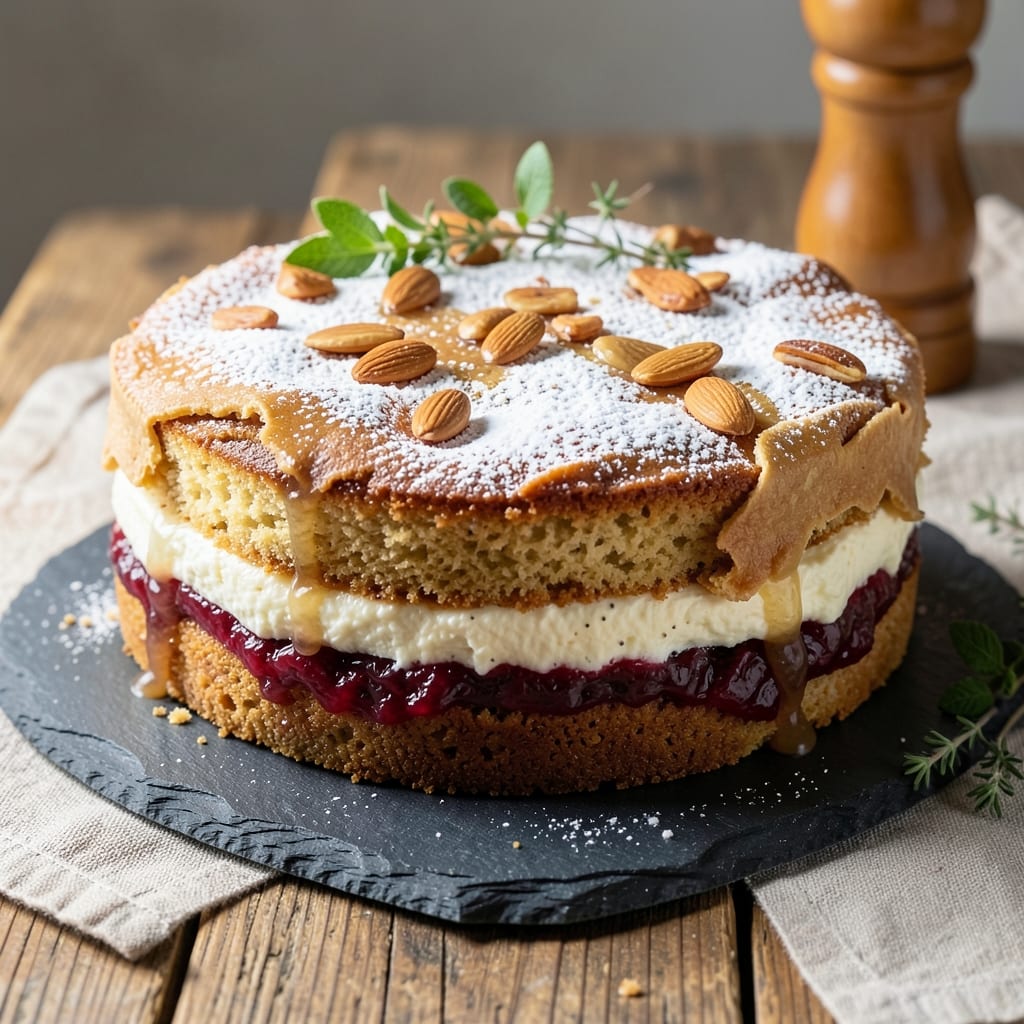
This egg and milk free cake recipe proves you don’t need traditional ingredients to create a light, fluffy vanilla cake that melts in your mouth. ✨ The secret lies in clever egg substitutes (like flaxseed or aquafaba) and dairy-free milk alternatives that still deliver that signature tender crumb. I’ve baked countless versions to perfect this foolproof method—no one will guess it’s vegan.
What makes this recipe work is the combination of a simple batter technique and the right substitutions. Instead of eggs, we use a flaxseed "egg" (1 tablespoon ground flaxseed + 3 tablespoons water per egg), which binds the cake beautifully. For milk, I recommend unsweetened almond or coconut milk, both of which add moisture without altering the flavor. The result? A cake that’s moist, airy, and perfectly sweet—ideal for birthdays, celebrations, or just treating yourself.
Baking time is straightforward: about 30-35 minutes at 350°F, yielding a golden dome with a crackly top that hides a soft, velvety interior. The vanilla extract infuses every bite with warmth, while a light dusting of powdered sugar (optional) adds that final touch of elegance. This cake keeps well for up to 3 days, making it perfect for meal prep or gifting.
Whether you’re baking for dietary restrictions or simply curious about plant-based desserts, this recipe delivers restaurant-quality results without compromise. Let’s get started—your taste buds will thank you.
Ingredients for egg and milk free cake
Eight simple ingredients transform into a fluffy, moist cake without eggs or milk.
| Ingredient | Amount | Notes |
|---|---|---|
| All-Purpose Flour 🌾 | 2 ½ cups | Sifted for light texture |
| Granulated Sugar 🍚 | 1 ½ cups | White or organic preferred |
| Unsweetened Almond Milk 🥛 | 1 ¼ cups | Room temperature for best blend |
| Ground Flaxseed 🌱 | 3 tbsp | Freshly ground for binding |
| Pure Vanilla Extract 🍯 | 1 tbsp | High-quality, no alcohol needed |
| Baking Powder 🧂 | 2 tsp | Aluminum-free for best rise |
| Salt 🧂 | ½ tsp | Fine sea salt preferred |
| Vegetable Oil 🫒 | ½ cup | Light or canola works best |
| Apple Cider Vinegar 🍎 | 1 tsp | For flaxseed activation |
| Powdered Sugar 🍚 | ¼ cup | Optional for dusting |
| Turbinado Sugar 🍬 | 2 tbsp | For sprinkling on top |
The flour is your foundation—King Arthur or Bob's Red Mill brands yield the best results. For the flaxseed, grind it fresh just before mixing to maximize binding power. Unsweetened almond milk works best, but oat or coconut milk are solid backups. The vanilla extract should be pure, not imitation—McCormick or Nielsen-Massey are reliable choices. If you're using a store-bought vanilla, make sure it says 'pure vanilla extract' on the bottle. The baking powder must be fresh; if it's older than six months, test it by mixing with water—it should bubble vigorously.
No flaxseed? Chia seeds work at double the amount (6 tbsp chia + 1.5 cups water). Out of almond milk? Soy milk or water can substitute, but texture may vary slightly. The apple cider vinegar activates the baking powder for a better rise—white vinegar works too. For extra richness, add 1 tbsp melted coconut oil to the batter. The turbinado sugar on top adds a delightful crunch—brown sugar works too if you prefer a deeper flavor. Prefer a denser cake? Reduce the almond milk by 0.25 cup and add 0.25 cup applesauce.
This cake stays moist for 3 days when wrapped tightly in plastic. For longer storage, freeze portions for up to 3 months. The flaxseed mixture can be prepped ahead and stored in the fridge for 5 days. To reheat, microwave for 20 seconds or warm in a 300°F oven for 10 minutes. For extra fluffiness, let the batter rest for 10 minutes before baking. The cake's crackly top hides a tender interior—don't skip the baking time, even if it looks underdone.
Why You'll Love This Recipe
- No-Fuss Mixing: I swear by the flaxseed trick—just stir it into the almond milk, let it sit for 5 minutes, and boom, you’ve got a binding agent that works better than eggs ever did. No whisking, no waiting for eggs to come to room temperature, just straightforward measuring and combining.
- Vanilla Sugar Crunch: That vanilla extract isn’t just for flavor—it’s the secret to a cake that tastes like it was baked with love (and maybe a little extra sugar). The almond milk keeps it tender without being gummy, while the flaxseed adds a subtle nuttiness that pairs perfectly with the sweetness.
- Weeknight Workhorse: Between us, this is my go-to for when I need a cake fast—birthday, potluck, or just because. It bakes in one bowl, no fancy layers, and the crumb stays moist for days. Honestly, I’ve even used it for dessert at 7 p.m. on a Tuesday and no one batted an eye.
- Budget-Friendly Stash: The ingredients are all pantry staples, and the flaxseed hack means I’m not buying specialty binders. A box of flour and a can of almond milk last me ages, and the cake freezes like a dream—so I make a batch, slice it up, and keep it on hand for whenever cravings hit. No waste, just pure convenience.
Step-by-step instructions for fluffy dairy-free vanilla cake
Here's how to create a light, airy cake without eggs or milk—every layer will surprise you.
👨🍳 Step 1: Activate the Flaxseed Egg Substitute
In a small bowl, whisk together the 3 tablespoons ground flaxseed and 1 teaspoon apple cider vinegar. Let this mixture sit for 5 minutes—you'll see it thicken into a gel-like consistency, mimicking the binding properties of eggs. This is your secret to that perfect rise and tender crumb.
I like to use freshly ground flaxseed because it activates more effectively than pre-ground. If you're in a hurry, you can microwave the dry flaxseeds for 30 seconds first to speed up the process, but don't skip the vinegar—it's what creates that egg-like binding.
👨🍳 Step 2: Combine Wet Ingredients for Maximum Moisture
In a large mixing bowl, combine the 1.25 cups unsweetened almond milk (room temperature), 0.5 cup vegetable oil, 1.5 cups granulated sugar, and the flaxseed mixture. Whisk vigorously for 2-3 minutes until the sugar dissolves completely and the mixture becomes smooth and pale.
Here's the thing—room temperature almond milk blends better and creates a lighter batter. If yours is cold, just let it sit for 10 minutes at room temperature first. The oil and sugar should create tiny air bubbles as you whisk, which will translate to that signature cake lightness.
👨🍳 Step 3: Sift and Fold Dry Ingredients Gently
In a separate bowl, sift together the 2.5 cups all-purpose flour, 2 teaspoons baking powder, 0.5 teaspoon salt, and 1 tablespoon pure vanilla extract. This sifting step prevents dense pockets in your cake and ensures even distribution of leavening agents.
With the mixer on low speed, gradually add the dry ingredients to the wet mixture. Mix just until combined—no more than 30 seconds—to avoid developing gluten that would make your cake tough. You should still see small flour streaks in the batter. This is where patience pays off for that perfect tender crumb.
🔥 Step 4: Bake in Preheated Pans for Even Rise
Preheat your oven to 350°F and grease two 9-inch round cake pans with vegetable oil or line them with parchment paper. Divide the batter evenly between the pans and smooth the tops. Sprinkle 2 tablespoons turbinado sugar evenly over each cake—this creates that beautiful caramelized crust while adding just a touch of crunch.
Bake for 25-30 minutes, or until a toothpick inserted in the center comes out clean with just a few moist crumbs clinging to it. I know it's tempting to open the oven door early, but resist! The cakes will rise dramatically in the first 10 minutes, so don't peek until at least then.
⏰ Step 5: Cool and Dust for Perfect Presentation
Remove the cakes from the oven and let them cool in the pans for 10 minutes. Then transfer them to a wire rack to cool completely. Here's where the magic happens—once fully cooled, dust the tops generously with 0.25 cup powdered sugar for that professional bakery finish.
This cooling step is crucial for preventing soggy layers. If you're impatient like me, you might want to slice into one cake to check the texture—it should be moist but not wet, with a fine crumb that melts in your mouth. The sugar dusting isn't just for looks; it adds a delicate sweetness that balances the vanilla flavor perfectly.
Pro Tips For Making Egg And Milk Free Cake
- Mix Flaxseed First: Combine ground flaxseed with almond milk right away—let it sit for 5 minutes before adding to the batter. I learned this the hard way when my cake turned out gummy; the flax "egg" needs time to thicken properly. Stir it well so no lumps sneak in later.
- Measure Flour Right: Spoon flour into the measuring cup, then level it with a knife—don’t scoop directly from the bag. Packed flour makes dense cake; I used to overfill cups and wondered why my texture was off. A kitchen scale? Even better.
- Bake at 350°F: Preheat the oven to 350°F and don’t open it for 20 minutes—resist the urge to peek. My first few cakes dried out because I cracked the door early. A toothpick test (clean after 1 minute) tells you when it’s done.
- Chill Before Slicing: Let the cake cool in the pan for 10 minutes, then transfer to a wire rack. Slice it after it’s fully cooled—otherwise, it’ll crumble like a sad sandwich. (Yes, I’ve seen it happen.)
Troubleshooting perfect results
Dry or Crumbly Cake
If your cake turns out dry or crumbly, it’s likely due to overmixing or insufficient moisture. First, ensure you’re mixing the batter just until combined—overmixing develops gluten, which makes cakes tough. For extra moisture, try adding 2-3 tablespoons of unsweetened applesauce or 1-2 tablespoons of coconut milk to the batter. Also, check that your almond milk is fresh and hasn’t separated—old milk can lead to dry results. 💧
Cake Didn’t Rise
A flat cake usually means the baking powder wasn’t activated properly. Double-check that your baking powder is fresh (test it by mixing with water—it should bubble). Also, ensure your flaxseed mixture was rested for 5 minutes before adding it to the batter. If you’re using store-bought vanilla extract, make sure it’s pure; imitation extracts can sometimes interfere with leavening. For extra lift, whisk the batter vigorously for 2-3 minutes to incorporate air.
Soggy Texture
A soggy cake often happens when the cake is removed from the oven too soon or cooled improperly. Always let the cake cool in the pan for 10 minutes before transferring it to a wire rack. If the cake feels too moist, it might be due to overbaking—pull it out when a toothpick comes out with just a few moist crumbs. For a firmer texture, try reducing the almond milk by 0.25 cup and replacing it with 0.25 cup applesauce.
Uneven Baking
Uneven baking can occur if your oven isn’t preheated properly or if the cakes aren’t placed on the middle rack. Always preheat your oven for 15 minutes before baking and use an oven thermometer to confirm it’s at 350°F. Rotate the pans halfway through baking if your oven has hot spots. For even browning, consider placing a baking sheet on the lower rack to reflect heat upward. 🔥
Bitter Taste
A bitter taste can come from old ingredients, particularly the vanilla extract or baking powder. Always use fresh, high-quality vanilla extract—McCormick or Nielsen-Massey are reliable choices. If your almond milk tastes bitter, try switching to oat milk or coconut milk instead. Avoid using expired baking powder, as it can leave a metallic aftertaste. For a sweeter flavor, add 1-2 tablespoons of maple syrup to the batter.
Sticky or Gummy Top
A sticky or gummy top usually means the cake wasn’t baked long enough or the sugar on top didn’t caramelize properly.
Nutrition facts
Frequently asked questions
Can I substitute flaxseed with another egg replacement?
Yes! For this recipe, you can use chia seeds (double the amount: 6 tbsp chia + 1.5 cups water) or aquafaba (3 tbsp for 1 egg). Chia works well for binding, while aquafaba adds airiness. Just note that chia may slightly alter the texture to be denser, while aquafaba keeps it lighter.
What's the best dairy-free milk alternative if I don't have almond milk?
Unsweetened oat milk, soy milk, or coconut milk all work well. For the lightest texture, oat milk is my top pick—it blends smoothly and adds moisture without overpowering the vanilla flavor. Avoid sweetened versions, as they may make the cake overly sweet.
How do I make this cake gluten-free?
Replace the all-purpose flour with a 1:1 gluten-free baking flour blend (like Bob's Red Mill or King Arthur). For best results, add 0.5 teaspoon xanthan gum to help bind the cake. You may also need to reduce the almond milk by 2 tablespoons since gluten-free flours absorb more liquid.
Can I bake this cake in a single 9-inch pan instead of two?
Yes, but it will be thicker and denser. Reduce baking time to 25-30 minutes and check for doneness with a toothpick. For a single-layer cake, consider using a 9x13-inch pan instead—it bakes more evenly and yields a larger portion. The texture will still be moist, but the rise will be less dramatic.
Why does my cake taste slightly bitter?
Bitterness usually comes from old ingredients like vanilla extract or baking powder. Always use fresh baking powder (test it by mixing with water—it should bubble). For vanilla, choose pure extract (no alcohol needed). If your almond milk tastes bitter, switch to oat or coconut milk instead. For extra sweetness, add 1-2 tablespoons of maple syrup to the batter.