
Breakfast & Brunch
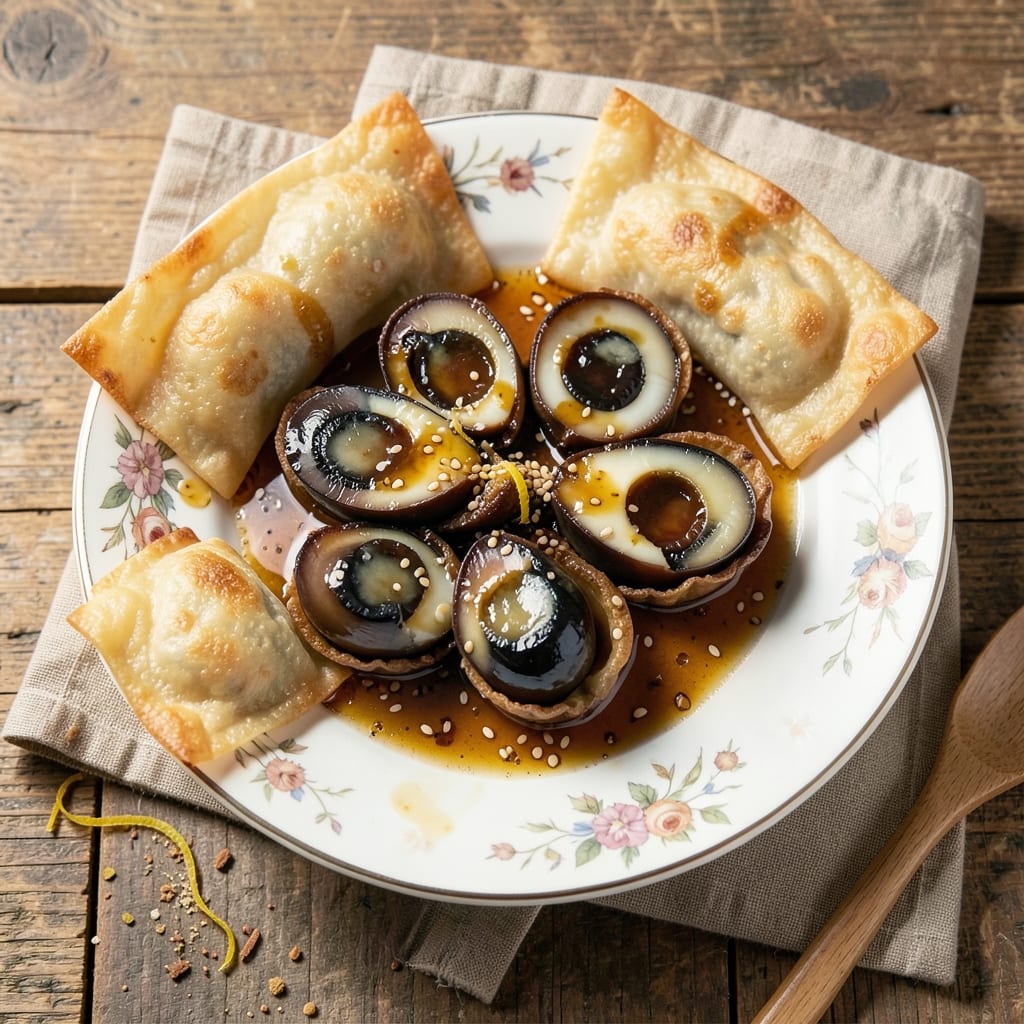
This Chung Ling Egg recipe delivers a perfect balance of textures—crispy wonton shells encasing silky yolk centers, a dish steeped in Cantonese tradition. The process begins with carefully selecting century eggs, known for their distinctive dark, wrinkled exterior and creamy, jelly-like yolk. For those new to this delicacy, the recipe includes a simplified preparation method that preserves authenticity while making it accessible.
The key to success lies in the crispy wonton wrappers, which require precise folding and frying to achieve that satisfying crunch. Traditional Chung Ling Eggs are often served during celebrations, symbolizing prosperity and good fortune. This version maintains that cultural significance while offering a modern twist that appeals to home cooks. The dish pairs beautifully with a light dipping sauce, balancing the rich, earthy flavors of the century egg.
What sets this recipe apart is the attention to detail in both the preparation and plating. The crispy wonton shells not only enhance the visual appeal but also provide a delightful contrast to the smooth, custard-like yolk. Whether you're serving this as a centerpiece for a special occasion or as an intriguing appetizer, the result is a dish that feels both elegant and approachable. The process is straightforward once you understand the core techniques.
Ready to elevate your brunch or dinner table with this iconic dish? The recipe walks you through every step, from selecting the right century eggs to mastering the crispy wonton shells. With a little practice, you'll achieve restaurant-quality results that honor the tradition while making it your own. Let’s get started on creating this unforgettable culinary experience.
Ingredients for chung ling egg
Four preserved eggs and sixteen wonton wrappers transform into a Cantonese masterpiece—crispy, silky, and steeped in tradition.
| Ingredient | Amount | Notes |
|---|---|---|
| Century Eggs (Preserved Eggs) 🥚 | 4 whole | High-quality, dark-skinned, jelly-like yolk |
| Wonton Wrappers 🍜 | 16 pieces | Square, thin, store-bought or homemade |
| Vegetable Oil 🫒 | 2 cups | High smoke point for frying |
| All-Purpose Flour 🌾 | ½ cup | For dusting wonton wrappers |
| Sesame Oil 🫒 | 1 tbsp | Toasted, for aroma enhancement |
| Soy Sauce 🥢 | 2 tbsp | Light or dark, for dipping sauce |
| Rice Vinegar 🍶 | 1 tbsp | White or seasoned, for tang |
| Sesame Seeds 🌾 | 1 tsp | Toasted, for garnish |
| Green Onions 🧅 | 3 whole | Thinly sliced, for garnish |
| Salt 🧂 | ½ tsp | Fine sea salt, for seasoning |
| Black Pepper 🌶️ | ¼ tsp | Freshly ground, for subtle heat |
| Cornstarch 🌾 | 1 tbsp | For crispier wonton shells |
| Water 💧 | ¼ cup | For cornstarch slurry |
Century eggs are the heart of this dish—look for deep black, wrinkled skins and a creamy yolk that jiggles like jelly. Asian grocery stores like H Mart or 99 Ranch Market carry them fresh, often in brine. If unavailable, substitute with hard-boiled eggs (though texture will differ). The wonton wrappers should be thin and pliable—avoid pre-cooked or thick varieties. For extra crispiness, dust them with a mix of all-purpose flour and cornstarch before folding. Sesame oil is non-negotiable here—its nutty aroma elevates the dish beyond standard frying oil.
No sesame oil? Toasted peanut oil works in a pinch, though flavor will shift slightly. Substitute soy sauce with tamari for gluten-free or light coconut aminos for a milder taste. The dipping sauce can be simplified to just soy sauce and rice vinegar, but adding a touch of honey or sugar balances the saltiness. For garnish, toasted sesame seeds are ideal, but crushed peanuts add crunch if unavailable. Prefer a sweeter profile? Swap rice vinegar for mirin—it’s sweeter and adds depth. Always toast your sesame seeds in a dry pan until fragrant to avoid bitterness.
Century eggs keep for weeks in their brine—transfer to the fridge once opened. Wonton wrappers freeze beautifully for up to 3 months between parchment paper. For best results, fry the wonton shells just until golden—overcooking turns them rubbery. Store assembled Chung Ling Eggs in an airtight container for 2 days (if they last that long!). The dipping sauce can be prepped a day ahead—flavors meld beautifully in the fridge. For a restaurant-worthy presentation, arrange the crispy wontons in a circular pattern with the eggs nestled in the center, garnished with green onions and sesame seeds.
Why You'll Love This Recipe
- Two-Ingredient Filling: I swear by the simplicity of this recipe—just century eggs and wonton wrappers. No chopping, no blending, no stress. You’ll be rolling those crispy pockets in minutes, and honestly? That’s half the battle won.
- Umami Bomb: That first bite of century egg—salty, creamy, with a hint of funk—is next-level. When you fry them golden in sesame oil, the flavor explodes in the best way. My husband still asks, "What’s in these?" every time.
- Party in a Pouch: These are my go-to for game day, potlucks, or when friends drop by unannounced. They’re handheld, shareable, and disappear faster than you can say "second round." (Yes, even on a Tuesday night.)
- Budget-Friendly Crunch: Century eggs keep forever, and wonton wrappers are a steal. I make a double batch, freeze half, and boom—easy weeknight dinner or late-night snack. Minimal cost, maximum satisfaction. My wallet thanks me.
Step-by-step instructions for crispy wonton-encrusted century eggs
Master the delicate balance of crispy wonton shells and silky preserved egg centers with this precise technique.
Prepare the Century Eggs for Frying
Peel the 4 whole Century Eggs (Preserved Eggs) carefully, reserving the jelly-like yolks. Crack each egg in half lengthwise and gently separate the yolks from the whites. Place the yolks in a small bowl and set aside—these delicate centers must remain intact during frying.
For the whites, use a spoon to scoop out the firm white portion and chop it into small, even pieces. Set these aside as well. The yolks' silky texture comes from their long preservation, so handle them with minimal pressure to avoid breaking the delicate membranes.
Create the Cornstarch Slurry for Crispy Wonton Shells
In a small bowl, whisk together the 1 tablespoon Cornstarch and 0.25 cup Water until completely dissolved. The mixture should be smooth with no lumps—strain it through a fine-mesh sieve if necessary. This slurry will create a light, crispy coating on the wonton wrappers.
Dip each of the 16 pieces Wonton Wrappers into the slurry, allowing excess to drip off. Then lightly dust both sides with the 0.5 cup All-Purpose Flour, shaking off any excess. The flour helps create a golden crust while the cornstarch ensures that signature crunch. Work quickly to prevent the wrappers from drying out.
Fry the Wonton Shells to Perfect Crispness
Heat 1 cup Vegetable Oil in a deep skillet over medium-high heat until it reaches 350°F. Test the oil by dropping in a small piece of wonton wrapper—it should sizzle immediately and float. Fry the wonton wrappers in batches of 4-5 pieces for 30-45 seconds per side until they turn a golden brown color.
Remove the fried wrappers with a slotted spoon and drain on paper towels. The shells should be crisp but not brittle. If they brown too quickly, reduce the heat slightly. These will be your edible cradles for the preserved egg yolks—their texture is everything.
Assemble and Garnish the Chung Ling Eggs
Place one fried wonton shell on each of 4 serving plates. Gently nestle a preserved egg yolk into the center of each shell. Arrange the chopped egg whites around the yolk in an artistic pattern. Drizzle with 1 tablespoon Sesame Oil and sprinkle with 1 teaspoon Sesame Seeds for aroma and texture contrast.
For the dipping sauce, whisk together the 2 tablespoons Soy Sauce, 1 tablespoon Rice Vinegar, 0.5 teaspoon Salt, and 0.25 teaspoon Black Pepper. Thinly slice the 3 whole Green Onions and sprinkle over the assembled eggs. The vinegar in the sauce cuts through the richness of the preserved eggs, while the green onions add freshness.
Serve Immediately for Optimal Texture
Serve the Chung Ling Eggs immediately while the wonton shells remain crisp. The contrast between the crispy wonton shells, silky preserved egg yolks, and creamy chopped egg whites creates a textural symphony in every bite. Pair with additional dipping sauce for those who prefer extra tang.
The key to success lies in the crispness of the wonton shells and the careful handling of the preserved egg yolks. Serve with steamed jasmine rice or a simple cucumber salad to complement the rich flavors. Each component should be at its peak when brought together—hot, crisp, and perfectly balanced.
Pro Tips For Making Chung Ling Egg
- Peel Eggs First: Century eggs are messy—peel them before wrapping. The slippery black membrane clings to wrappers like glue, and you’ll waste time scrubbing later. Use a spoon to gently scoop out the yolk and white separately if you’re fussy, but even just peeling them clean saves headaches.
- Keep Oil Medium: High heat burns wonton wrappers fast. Medium heat (around 325°F/160°C) lets them puff golden without turning into crispy blackened edges. I learned this the hard way—my first batch looked like charred origami.
- Skip the Overmixing: Once you add flour to the egg mixture, stir just until combined—no need to make a smooth batter. Overmixing develops gluten, and your dumplings turn chewy instead of tender. A few lumps? Doesn’t matter.
- Toast the Wrappers: Warm wonton wrappers in a dry pan for 10 seconds per side before filling. They’ll hold shape better and won’t stick to your fingers when shaping. Sounds weird, but it works—your future self will thank you.
Dietary considerations for this dish
Gluten-Free Adaptations
Skip the traditional wonton wrappers and use gluten-free rice paper wrappers instead—they crisp beautifully when fried. Brands like Rice Paper Wrappers from Vietnamese markets work perfectly. For the cornstarch slurry, ensure it’s 100% cornstarch (no wheat additives) to maintain crispiness. 🌾
Low-Sodium Options
Century eggs are naturally salty, so reduce the soy sauce to 1 tablespoon and replace with 1 tablespoon coconut aminos for a milder flavor. Boost umami with 1 teaspoon white miso paste in the dipping sauce instead of salt. The rice vinegar and sesame oil will still add depth without overpowering the dish.
Vegetarian Substitutes
Preserved eggs are vegetarian-friendly, but if you want a fully plant-based version, replace the yolks with marinated tofu cubes (soaked in 1 tbsp soy sauce + 1 tbsp rice vinegar + 1 tsp sesame oil for 30 minutes). Keep the crispy wonton shells and chopped egg whites (or sub with chopped mushrooms for texture). The dipping sauce remains the same.
Allergen-Friendly Swaps
For sesame allergies, omit the sesame oil and seeds, and use toasted pumpkin seed oil for frying instead. Double-check wonton wrappers for wheat or egg (some brands contain both). If avoiding eggs entirely, use chickpea flour wrappers (like Banza Wraps) for a neutral base. Always verify labels—cross-contamination is a risk with shared processing facilities.
Nut-Free Considerations
Sesame seeds are the only nut-related ingredient here, so simply skip them for nut-free versions. Garnish with crushed potato chips (for crunch) or extra green onions instead. The dish remains rich and flavorful without nuts—just lose the visual pop from toasted seeds. Store-bought wonton wrappers are typically nut-free, but check packaging if severe allergies are a concern.
Protein-Packed Boost
Add 1 cup cooked shrimp or chopped chicken to the chopped egg whites for extra protein. Toss the meat with 1 tsp soy sauce and ½ tsp ginger before arranging it around the yolks. This keeps the dish vegetarian-friendly while adding heartiness. For a vegan option, use crumbled tofu or tempeh instead.
Nutrition facts
Frequently asked questions
What makes Chung Ling Eggs different from regular preserved eggs?
Chung Ling Eggs feature crispy wonton shells encasing the preserved egg yolks, creating a textural contrast that traditional preserved eggs lack. The wonton wrappers add a delicate crunch, while the century egg's jelly-like yolk remains silky. This presentation is what sets it apart from simple preserved egg dishes.
Can I use regular hard-boiled eggs instead of century eggs?
While you can substitute hard-boiled eggs, the texture and flavor won't be the same. Century eggs have a distinctive jelly-like yolk that's impossible to replicate. For authenticity, seek out preserved eggs at Asian markets—they're the secret to this dish's signature taste. The dark skin and creamy interior are key!
How do I store leftover Chung Ling Eggs?
Store any leftovers in an airtight container at room temperature for up to 2 days—the crispy wonton shells lose their crunch when refrigerated. For longer storage, keep the fried wonton shells and preserved egg components separately. Reheat the shells in a dry skillet for 30 seconds before reassembling with the yolks.
What's the best way to handle century egg yolks?
Century egg yolks are delicate—handle them with a spoon rather than your fingers to avoid breaking the jelly-like texture. When separating the yolks from whites, work gently and place them in a bowl of cool water to stabilize them. This helps maintain their unique consistency during assembly.
Can I make Chung Ling Eggs ahead of time?
Prepare the components separately and store them in the fridge: fry the wonton shells ahead and keep them in an airtight container (they'll stay crisp for 1 day). Store the preserved egg yolks in their brine until ready to assemble. The dipping sauce can be made 2 days in advance. Reheat the shells just before serving for best results!