
Breakfast & Brunch
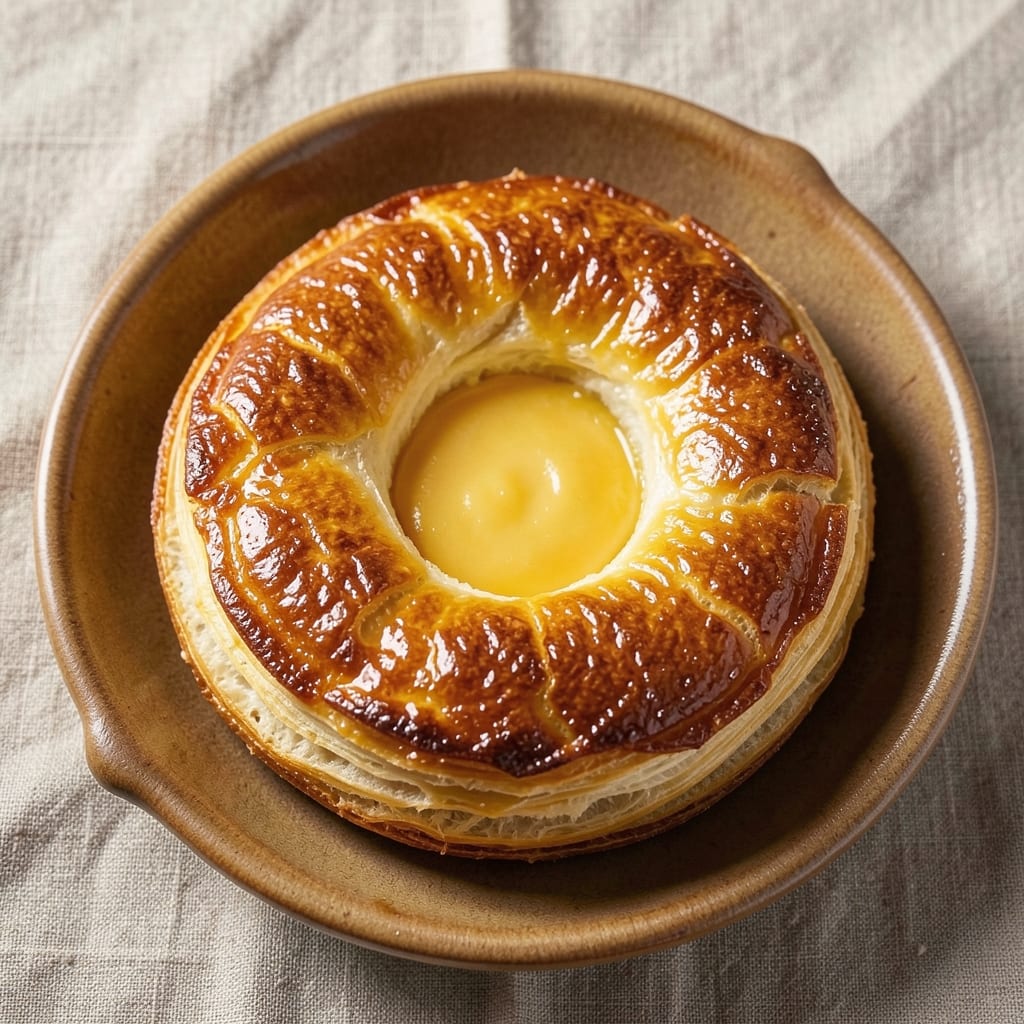
This Chinese egg bread recipe delivers the perfect balance of flaky layers and silky yolk rivers that make every bite unforgettable. The secret lies in a delicate dough that encases a rich egg custard filling, creating a pastry that's both elegant and comforting. I've perfected this recipe through years of baking, ensuring the layers stay crisp while the custard remains creamy and golden.
The process begins with a simple yet precise dough that requires proper kneading and resting to develop its signature flakiness. Once shaped and filled with the egg custard mixture, the bread bakes to a golden brown, revealing those coveted rivers of yolk when sliced. This recipe stays true to tradition while offering modern adaptations for home bakers.
What you'll end up with is a flaky, buttery pastry with a tender interior that's rich and custardy in every bite. The aroma of baking bread mixed with the sweet scent of eggs will fill your kitchen, making it impossible to resist. Perfect for breakfast, brunch, or even as a dessert treat, this recipe is sure to impress.
Whether you're serving it warm from the oven or enjoying leftovers the next day, the contrast of crisp layers and creamy egg filling makes this bread a standout. Let's get started on creating this delicious treat that's as beautiful as it is tasty.
Ingredients for chinese egg bread
Flaky layers and custard rivers start with these 15 ingredients—simple but precise.
| Ingredient | Amount | Notes |
|---|---|---|
| All-Purpose Flour 🌾 | 3 ½ cups | Sifted for light texture |
| Unsalted Butter 🧈 | ¾ cup | Cold, cubed for flakiness |
| Granulated Sugar 🍚 | ¼ cup | For dough sweetness |
| Large Eggs 🥚 | 1 whole | Room temperature |
| Milk 🥛 | ¼ cup | Warm for activation |
| Active Dry Yeast 🍞 | ¼ tsp | Freshly opened |
| Salt 🧂 | ½ tsp | Kosher preferred |
| Large Eggs 🥚 | 6 whole | For custard filling |
| Granulated Sugar 🍚 | ½ cup | For custard sweetness |
| All-Purpose Flour 🌾 | ¼ cup | For custard thickness |
| Vanilla Extract 🥛 | 1 tsp | Pure vanilla preferred |
| Baking Powder 🍞 | ½ tsp | For custard lift |
| Salt 🧂 | ¼ tsp | Balances custard |
| Cornstarch 🌾 | 1 tbsp | For custard smoothness |
| Powdered Sugar 🍚 | 1 tbsp | For final dusting |
The butter is non-negotiable here. European-style butter from Land O'Lakes or Plugrá works best—it has more fat, which translates to those signature flaky layers. Grab it cold from the fridge, cut into small cubes, and keep it that way until the dough comes together. The flour? King Arthur or Gold Medal are my go-tos—they're consistent and give that perfect chew. If you're in a pinch, any all-purpose flour will do, but don't skip the sifting. That's what makes the difference between good and unforgettable flakiness.
No vanilla extract? Vanilla bean paste works too, or even a pinch of vanilla sugar if you're really stuck. The custard filling is where the magic happens—eggs should be room temperature (pop them in warm water for 10 minutes if they're straight from the fridge). For the sugar, turbinado or demerara adds a subtle caramel note, but granulated is fine. The baking powder must be fresh—if it's over a year old, toss it. And if you're wondering about the cornstarch? It's the secret to that silky yolk texture. Don't skip it, trust me on this.
This dough needs time—at least 2 hours to rest. Wrap it tightly in plastic and let it chill in the fridge. The custard can be made a day ahead and stored in the fridge, but bring it to room temperature before using. Leftover egg bread? 3 days in an airtight container, or freeze the whole loaf for up to 3 months. To reheat, wrap in foil and warm at 350°F for 10 minutes—it'll taste almost as good as fresh.
Why You'll Love This Recipe
- No-Knead Magic: I swear by this dough—just mix, rest, and roll. No standing at the counter for hours, just a 20-minute wait while you sip tea or scroll through your phone. The butter and eggs do all the heavy lifting.
- Sweet Buttery Bliss: That first bite of warm, flaky layers with a hint of sugar? It’s like a hug for your taste buds. The eggs make it rich, the butter keeps it tender, and the sugar caramelizes just enough to feel special without being overpowering.
- Breakfast or Snack Hero: Honestly, I eat this cold for breakfast with jam, toasted for a midday pick-me-up, or even sliced thin for French toast. The dough’s forgiving enough that you can shape it into rolls, loaves, or even a free-form boule—whatever fits your mood.
- Budget-Friendly Staple: Flour, butter, eggs, milk—these are pantry basics that stretch far. A single batch feeds my family for days: leftover dough becomes garlic knots, scraps get turned into croutons, and the bread itself keeps well for a week. Minimal waste, maximum value.
Step-by-step instructions for Chinese egg bread
Here's how to create those iconic flaky layers and rich custard filling everyone loves.
Prepare the Yeast Dough for Maximum Flakiness
In a small bowl, whisk together the warm milk, 0.25 cup granulated sugar, and 0.25 tsp active dry yeast. Let it sit for 5-10 minutes until frothy—this tells you your yeast is alive and ready to work. Meanwhile, in a large bowl, combine 3.5 cups all-purpose flour and 0.5 tsp salt. Cut in the 0.75 cup cold unsalted butter using a pastry cutter or your fingers until the mixture resembles coarse crumbs with pea-sized butter pieces.
Pour the yeast mixture into the flour-butter combination and mix with a wooden spoon until just combined. The dough will be shaggy at first—that's normal. Knead lightly for 2-3 minutes until it comes together, then cover with a damp towel and let it rest at room temperature for 30 minutes. This initial rest helps develop gluten without overworking the dough, which keeps those flaky layers intact.
Create the Signature Custard Filling
While the dough rests, make the custard filling by whisking together 6 whole large eggs, 0.5 cup granulated sugar, 0.25 cup all-purpose flour, 1 tsp vanilla extract, 0.5 tsp baking powder, and 0.25 tsp salt in a medium bowl. In a separate small bowl, whisk 1 tbsp cornstarch with 2 tablespoons cold water to make a slurry. Gradually whisk the slurry into the egg mixture until smooth and fully incorporated.
Transfer the custard to a saucepan and cook over medium-low heat, stirring constantly with a wooden spoon, until it thickens enough to coat the back of the spoon—about 5-7 minutes. The mixture should reach 160°F on an instant-read thermometer. Immediately pour the custard into a shallow dish and let it cool completely to room temperature. This step is crucial—the custard needs to be fully set before layering to prevent soggy bread.
Layer the Dough and Custard for Perfect Texture
After the initial rest, roll out the dough on a lightly floured surface into a 12x16-inch rectangle about 1/8-inch thick. Brush the entire surface with 1 tablespoon melted butter, leaving a 1-inch border uncovered. Spread the cooled custard evenly over the buttered area, leaving that same 1-inch border uncovered. Roll up the dough tightly from the long side, pinching the seam to seal.
Transfer the log to a parchment-lined baking sheet and let it rest for 20 minutes at room temperature. This final rest ensures the layers stay distinct during baking. Preheat your oven to 350°F while the dough rests—this temperature is key for even baking without over-browning.
Bake to Golden Perfection
Bake the egg bread for 40-45 minutes until the top is golden brown and the internal temperature reaches 190°F. The bread is done when it pulls away slightly from the sides of the pan and has a beautiful caramelized crust. For extra shine, brush the top with 1 tablespoon milk during the last 5 minutes of baking.
Remove from the oven and let it cool on a wire rack for 10 minutes before slicing. This resting period allows the custard to set properly and prevents it from oozing out when you cut into it. Dust the top with 1 tablespoon powdered sugar just before serving for that classic presentation.
Slice and Serve for Ultimate Comfort
Use a serrated knife to cut the bread into 1-inch thick slices, wiping the knife between cuts to get clean edges. The layers should be distinct with a flaky, buttery crust surrounding the rich, creamy custard. Serve warm with a dusting of powdered sugar and a cup of strong tea for the full experience.
Here's the thing—this bread is best enjoyed fresh. The custard filling firms up as it cools, so don't wait too long to slice. Each bite should deliver that perfect contrast of crispy, flaky layers with the smooth, eggy custard melting on your tongue. If you're making it ahead, store the unbaked loaf in the fridge and bake it straight from cold—just add 5-10 minutes to your baking time.
Pro Tips For Making Chinese Egg Bread
- SOFTEN THE BUTTER FIRST: Cold butter in the dough makes for a tough, dry egg bread. Cut it into small cubes and let it sit at room temperature for 30-45 minutes before mixing—just until it’s soft enough to press with your finger but not melt. I used to skip this, and my bread always turned out dense. Trust me, the texture changes completely.
- USE ROOM-TEMP EGG WHITES: Cold egg whites from the fridge won’t whip properly, and that means less volume in your bread. Take the eggs out 15 minutes before you need them, separate them, and let the whites sit uncovered so they’re just slightly warm to the touch. My first few batches had flat tops because I ignored this—don’t make that mistake.
- STEAM THE LOAF: The secret to that glossy, crackly crust isn’t just baking powder—it’s steam. Place a shallow pan of boiling water on the lower rack of your oven 5 minutes before baking, then cover the loaf with foil. Remove the foil after 15 minutes to let it brown. I learned this after my bread came out dry and dull every time.
- WHISK EGGS VIGOROUSLY: Don’t just crack and stir—beat those eggs until they’re fully emulsified and slightly frothy. This incorporates more air into the batter, which makes the bread lighter. I used to rush this step, and my bread always felt heavy. Take the extra 30 seconds; it makes a real difference in the final texture.
Storing and reheating this chinese egg bread
Refrigerator Storage
Store freshly baked egg bread in an airtight container at room temperature for up to 2 days to maintain maximum flakiness. For longer storage, refrigerate for up to 3 days—I use glass containers with tight-sealing lids to prevent moisture loss. The custard filling stays creamy when properly sealed, but the layers may lose some crispness. Let it sit at room temperature for 10 minutes before slicing to restore texture. 🌟
Freezer Preservation
For extended storage, freeze the unbaked loaf wrapped tightly in plastic wrap followed by aluminum foil. This method preserves the dough's structure and custard quality for up to 3 months. Thaw overnight in the fridge before baking—add 5-10 minutes to your baking time since cold dough takes longer to cook through. The custard remains intact when frozen properly, though texture may be slightly denser after thawing.
Reheating Methods
For best results, reheat slices in a 350°F oven for 8-10 minutes wrapped in foil. This method restores the flaky layers without drying out the custard. For quick reheating, use a toaster but watch closely—20-30 seconds per side is ideal to avoid burning. Microwave reheating is possible (30-second intervals) but risks making the layers rubbery. Always cover with a damp paper towel to retain moisture.
Make-Ahead Tips
Prepare the custard filling 1 day ahead and store it refrigerated. The dough can be mixed and refrigerated overnight for deeper flavor development. On baking day, simply roll, fill, and bake as directed. For unbaked loaves, freeze them after shaping but before the final rest—this saves time and maintains structure. Just
Serving Leftovers
Slice leftover egg bread and toast lightly for breakfast—add a spread of honey butter or peanut butter for extra indulgence. The custard pairs beautifully with chai tea or espresso for a satisfying brunch. For a dessert twist, dust with powdered sugar and serve with vanilla ice cream. The contrast of warm bread and cold custard creates a magical texture combination. 💫
Nutrition facts
Frequently asked questions
Why does my egg bread turn out dense instead of flaky?
The key to flaky layers is using cold butter and avoiding overworking the dough. If your egg bread comes out dense, check these:
- Make sure your butter is cold when cutting it into the flour,
- Don't knead the dough more than 2-3 minutes, and
- Let the dough rest properly—at least 2 hours in the fridge. Over-kneading develops too much gluten, which makes the layers tough instead of flaky.
Can I make the custard filling without cornstarch?
You can substitute 1 tbsp cornstarch with 1 tbsp all-purpose flour, but the texture won't be as silky. Cornstarch creates that signature smooth, custardy mouthfeel that makes this bread special. If you're out, try arrowroot powder instead—it works similarly. Just remember, the custard needs to thicken properly to prevent a soggy bottom during baking.
How do I fix a custard filling that's too runny?
If your custard is too thin, don't panic! Mix 1 tsp cornstarch with 1 tbsp cold water to make a slurry, then whisk it into the custard while heating. Cook for 1-2 extra minutes until it thickens to a pudding-like consistency. For best results, always cool the custard completely before using it in the dough—warm custard will make the layers soggy.
Is there a gluten-free version of this recipe?
Yes, but with some adjustments! Replace the all-purpose flour with a 1:1 gluten-free baking flour blend (like Bob's Red Mill) and add 0.5 tsp xanthan gum to improve texture. The custard can stay the same, but gluten-free dough is more delicate—handle it gently and avoid overmixing. Expect slightly less flakiness, but the custard will still be delicious. For best results, use a gluten-free pastry flour if available.
Why does my egg bread crack open during baking?
This happens when the dough expands too quickly in the oven. To prevent cracking:
- Make sure your yeast is active (it should foam within 5-10 minutes in warm milk),
- Don't overfill the dough with custard—leave that 1-inch border uncovered, and
- Let the dough rest 20 minutes after shaping before baking. If it cracks, it's still edible—just brush the top with milk and bake for 5 more minutes to set the crust.