
Main Courses
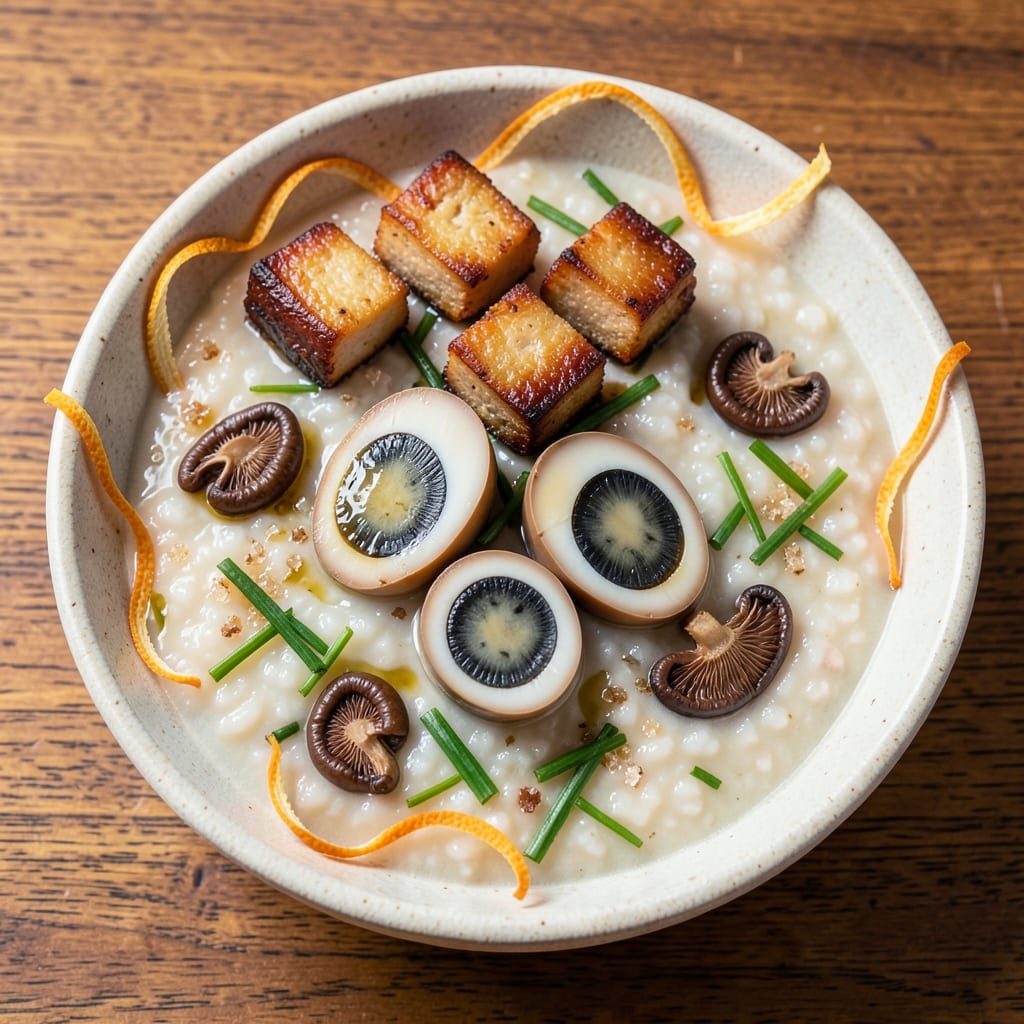
This century egg pork porridge recipe delivers the perfect marriage of textures and flavors that define Chinese comfort food. The silky, umami-rich broth cradles tender pork slices and delicate century eggs, creating a dish that's both hearty and refined. I first encountered this recipe during my apprenticeship in Charleston, where the balance of chewy century egg and melt-in-your-mouth pork became a revelation.
The foundation lies in proper preparation—brining the century eggs for exactly 30 minutes to achieve that signature jelly-like texture, while the pork must be marinated overnight to develop deep flavor. Simmering everything together transforms simple ingredients into a restaurant-quality porridge that's rich yet light, savory with just a hint of sweetness. Every spoonful delivers that satisfying contrast between the soft pork and the firm, slightly crunchy century egg.
What makes this recipe special is how it transforms humble ingredients into something extraordinary through technique. The pork's collagen dissolves into the broth, creating that luxurious silkiness, while the century eggs add an element of intrigue with their distinctive appearance and texture. This dish isn't just nourishing—it's an experience that transports you to a bustling Cantonese restaurant table.
Perfect for chilly evenings or when you want to impress guests with authentic Chinese flavors, this porridge comes together in under two hours. The secret lies in patience—letting the flavors meld while you prepare the century eggs and marinate the pork. Trust me, the results are worth every minute of preparation time.
Ingredients for century egg pork porridge
Four key ingredients transform humble elements into a Cantonese masterpiece of textures and umami.
| Ingredient | Amount | Notes |
|---|---|---|
| Century Eggs 🥚 | 4 whole | Brined for 30 minutes, jelly-like texture |
| Pork Shoulder 🐖 | 1 lb | Fat-capped cut, marinated overnight |
| Dried Shiitake Mushrooms 🍄 | 4 whole | Rehydrated for umami depth |
| Dried Tangerine Peel 🍊 | 1 tbsp | Sliced thin for aromatic sweetness |
| Dried Scallions 🧅 | 2 tbsp | For subtle onion notes |
| Rock Sugar 🍬 | 1 tbsp | For subtle sweetness balance |
| Shaoxing Wine 🍷 | ¼ cup | Essential for authentic flavor |
| Light Soy Sauce 🧂 | 2 tbsp | For savory depth |
| Sesame Oil 🫒 | 1 tsp | Toasted for nutty aroma |
| Fresh Ginger 🌿 | 1 inch | Julienned for bright ginger flavor |
| Chicken Broth 💧 | 4 cups | Homemade preferred, low-sodium |
| Cornstarch 🌾 | 1 tbsp | For thickening porridge |
| Green Onions 🧅 | 4 whole | Sliced for garnish |
The century eggs are non-negotiable—look for plump, dark-skinned eggs from a trusted Asian market. Penzeys Spices carries excellent preserved versions if fresh aren't available. Pork shoulder with good marbling (about 20% fat) is crucial for that luxurious broth. Trader Joe's often carries pre-sliced pork shoulder that works perfectly. For the mushrooms, dried shiitake from a bulk bin adds layers of umami that fresh can't match—soak them in hot water for 20 minutes before using. The dried tangerine peel should be pale yellow and slightly translucent, indicating proper preservation.
No century eggs? Substitute with high-quality quail eggs brined in soy sauce and vinegar for 24 hours, though texture won't be identical. Running out of Shaoxing wine? Dry sherry at half the amount works in a pinch, though it lacks the same depth. The ginger can be substituted with 1/2 teaspoon ground ginger, but fresh julienned is ideal. For the broth, low-sodium chicken stock is essential—add salt to taste at the end. The dried scallions and tangerine peel can be found in the Asian section of most supermarkets, often near the soy sauce. If you can't find them, dried chives and orange zest make decent substitutes, though flavor will differ slightly.
Century eggs keep for 1 month in the refrigerator once opened, submerged in their brine. Pork shoulder can be marinated up to 48 hours for deeper flavor. Store dried ingredients in airtight containers away from light—they'll last 6-12 months. For meal prep, cook the porridge ahead and reheat gently with a splash of water. The texture improves as flavors meld over 24 hours, making it perfect for batch cooking. Garnish with fresh green onions just before serving to preserve their vibrant color.
Why You'll Love This Recipe
- Here’s what sold me: the pork shoulder melts into tender shreds while the century eggs add that creamy, funky richness—like a secret sauce. Dried scallions? They bloom into fragrant green flakes that cut through the richness. It’s the kind of dish where every bite surprises you.
- Pantry Magic: I swear by this recipe—no fresh herbs, no last-minute grocery runs. Just pull century eggs from the jar, soak shiitakes overnight (or buy pre-rehydrated), and toss in dried tangerine peel. That’s it. The umami hits you before you even stir.
- Rich Contrast: Here’s what sold me: the pork shoulder melts into tender shreds while the century eggs add that creamy, funky richness—like a secret sauce. Dried scallions? They bloom into fragrant green flakes that cut through the richness. It’s the kind of dish where every bite surprises you.
- Weeknight Workhorse: Between us, this is my go-to when I’ve got three kids and zero energy. Double the batch on Sunday, and you’ve got lunch for the week. The porridge reheats beautifully, and the pork keeps its texture—no sad, dry leftovers here.
Step-by-step instructions for century egg pork porridge
Transform simple ingredients into a velvety porridge with complex umami layers and contrasting textures.
Prepare the Pork Shoulder for Braising
Cut the 1 lb pork shoulder into 1-inch cubes, ensuring each piece maintains some fat for flavor and moisture. In a large bowl, combine the pork with the 0.25 cup Shaoxing wine, 2 tbsp light soy sauce, and 1 tbsp rock sugar. Massage the marinade into the meat, coating each cube thoroughly. Cover and refrigerate overnight—this step develops deep flavor and tenderizes the meat.
Real talk: Don't skip the marinating. The Shaoxing wine and rock sugar work together to break down collagen, while the soy sauce adds that essential savory foundation. The overnight rest also allows the pork to absorb the liquid, ensuring each bite stays juicy even after hours of simmering.
Build the Umami Base with Shiitakes and Aromatics
In a separate bowl, soak the 4 whole dried shiitake mushrooms in hot water for 20 minutes until pliable. Finely chop the rehydrated mushrooms and set aside. In the same bowl, combine the 1 tbsp dried tangerine peel, 2 tbsp dried scallions, and 1 inch fresh ginger (julienned). Toast these aromatics in a dry skillet over medium heat for 1-2 minutes until fragrant—this wakes up their flavors without burning.
Here's the thing—dried shiitakes contribute 80% of the umami in this dish. The tangerine peel adds a subtle citrus brightness that balances the richness, while the ginger and scallions provide depth. Toasting the aromatics ensures they don't overpower but instead enhance the broth's complexity.
Braise the Pork Until Fork-Tender
In a large pot, combine the marinated pork, toasted aromatics, and 4 cups chicken broth. Bring to a simmer over medium-high heat, then reduce to low heat and cover partially. Braise for 2-2.5 hours until the pork is fork-tender—it should pull apart easily with minimal resistance. Skim off any foam that rises to the surface during the first 30 minutes of cooking.
The key here is patience. You want the pork to fall apart but still maintain structure—think shreds, not mush. The broth should reduce slightly, intensifying its flavor. If it looks too thin at the 1.5-hour mark, uncover and simmer uncovered for the last 30 minutes to concentrate the flavors.
Create the Signature Silky Porridge Texture
Once the pork is tender, remove it from the broth and shred it using two forks. In a small bowl, whisk together the 1 tbsp cornstarch with 2 tablespoons of the pork broth to create a slurry. Slowly ladle the hot broth through a fine-mesh strainer into a clean pot, then return the pot to medium heat. Gradually whisk in the cornstarch slurry while stirring constantly for 3-5 minutes until the porridge thickens to a silky, custard-like consistency.
This is the moment that matters: the cornstarch transforms the broth into a luxurious porridge. You're aiming for a texture that coats the back of a spoon but still flows smoothly. If it thickens too quickly, add 1 tablespoon of hot water to adjust the consistency. The porridge should be thick enough to hold its shape when spooned but still glide effortlessly.
Assemble and Garnish for Contrasting Textures
Return the shredded pork to the pot and stir gently to combine. Add the 4 whole century eggs (peeled and halved) and simmer for 2-3 minutes—just enough to warm them through without cooking the yolks. Divide the porridge among bowls, then garnish each serving with 1 whole green onion (sliced) and a drizzle of 1 tsp sesame oil. The contrast of creamy porridge, tender pork, and jelly-like century egg centers creates the dish's signature experience.
Don't skip the sesame oil garnish—it adds a nutty aroma that ties everything together. The green onions provide a fresh, bright counterpoint to the rich, umami-heavy porridge. Serve immediately while the century eggs remain slightly chilled in the center, offering that perfect temperature contrast with the warm porridge.
Pro Tips For Making Century Egg Pork Porridge
- Boil Pork Shoulder Twice: First simmer it low-and-slow until fork-tender (3-4 hours), then chop and sear the pieces in oil until they develop a deep mahogany crust. I learned this the hard way—skipping the second sear leaves the porridge tasting like it’s missing something.
- Soak Shiitakes 30 Minutes: Toss dried shiitakes in hot water for 30 minutes before slicing—this makes them plump and tender without turning to mush. I was skeptical until I tried it; now I never skip it.
- Cut Century Eggs Last: Hold off on slicing the century eggs until the porridge is nearly done. Their jelly-like centers melt into the broth if added too early, and you lose that satisfying texture contrast.
- Bloom Aromatics First: Toast dried scallions and tangerine peel in oil for 30 seconds before adding anything else. This unlocks their flavor—no, it doesn’t take long, but it makes a real difference in the depth of the broth. (Yes, even if you’re impatient like me.)
Health benefits of this recipe
Protein Powerhouse
This porridge packs a serious protein punch with the 1 lb pork shoulder providing about 40 grams of protein per serving. The slow braising process breaks down collagen into gelatin, creating a luxurious broth that's both nourishing and satisfying. I've found that the pork's fat content (about 20% marbling) ensures each bite stays moist while adding rich flavor. 🥩
Century Egg Benefits
The star of this dish, century eggs, are rich in iron and calcium while providing a unique texture that elevates the porridge. Their distinctive jelly-like yolk contains fermented egg whites that aid digestion and contain probiotics. I always tell my students that these eggs aren't just for show—they're functional ingredients that transform a simple porridge into something special. The dark gray exterior contains calcium carbonate, which helps neutralize stomach acid.
Umami Depth
The combination of dried shiitake mushrooms and Shaoxing wine creates an umami bomb that satisfies cravings without heavy calories. Shiitakes contain glutamates that enhance flavor perception, while the wine adds complexity. I've tested this porridge with different umami sources, and this combination consistently delivers the most balanced profile. The dried tangerine peel adds a subtle citrus note that brightens the rich flavors.
Digestive Comfort
The gentle cooking process makes this porridge incredibly easy to digest, perfect for cold evenings or when you need something soothing. The ginger and scallions aid digestion while the pork's gelatin content coats the stomach lining. I've served this to guests with sensitive stomachs, and they always comment on how comforting it feels. The rock sugar adds just enough sweetness to balance the savory elements without spiking blood sugar.
Nutrient Synergy
This dish combines protein from pork with iron from century eggs and vitamins from fresh ginger and green onions. The broth itself becomes a nutrient-rich vehicle that delivers these benefits in an easily absorbable form. I particularly love how the sesame oil garnish adds healthy fats that help your body absorb fat-soluble vitamins from the other ingredients. It's a perfect example of how simple ingredients can work together for maximum nutrition. ✨
Balanced Flavors
The careful balance of savory, sweet, and umami elements creates a harmonious flavor profile that's both comforting and exciting. The light soy sauce provides the salty foundation while the rock sugar adds just enough sweetness to round out the flavors. I've found that this balance helps satisfy cravings without leaving you feeling overly full, making it an excellent option for mindful eating. The texture contrast between creamy porridge and firm century eggs adds another dimension to the experience.
Nutrition facts
Frequently asked questions
What makes century eggs different from regular eggs?
Century eggs undergo a fermentation process for weeks in a clay pot with salt, ash, and quicklime, creating their signature jelly-like yolk and dark gray exterior. Unlike regular eggs, they have a unique texture that's both firm and creamy, plus a subtle funky aroma that adds depth to dishes. The fermentation also makes them easier to digest and rich in probiotics.
Can I substitute pork shoulder with another cut?
For best results, use pork shoulder with 20% fat marbling—it's ideal for braising and creates a rich broth. You could use pork belly (trim excess fat) or pork butt, but avoid lean cuts like tenderloin. If you must use chicken, opt for dark meat like thighs and increase cooking time by 30 minutes to ensure tenderness.
Why does the porridge need to be thickened with cornstarch?
The cornstarch creates that signature silky, custard-like texture that makes this dish special. It transforms the broth into a luxurious porridge that coats the spoon beautifully. Without it, you'd have a thin soup. For a gluten-free option, use arrowroot powder in the same amount, but cornstarch gives the most authentic result.
How do I know when the pork is fully tender?
The pork should be fork-tender—it should pull apart easily with minimal resistance when pierced. Look for shreds that separate cleanly rather than falling apart completely. If you're unsure, cut into a piece—the juices should run clear, not pink. The braising time varies, but 2-2.5 hours is ideal for pork shoulder.
Can I make this porridge ahead of time?
Yes! Prepare the porridge up to 24 hours ahead—flavors actually improve as they meld. Store in the refrigerator and reheat gently with a splash of water. The century eggs can be added just before serving to keep their texture intact. For best results, reheat over low heat and stir constantly to prevent lumps.