
Main Courses
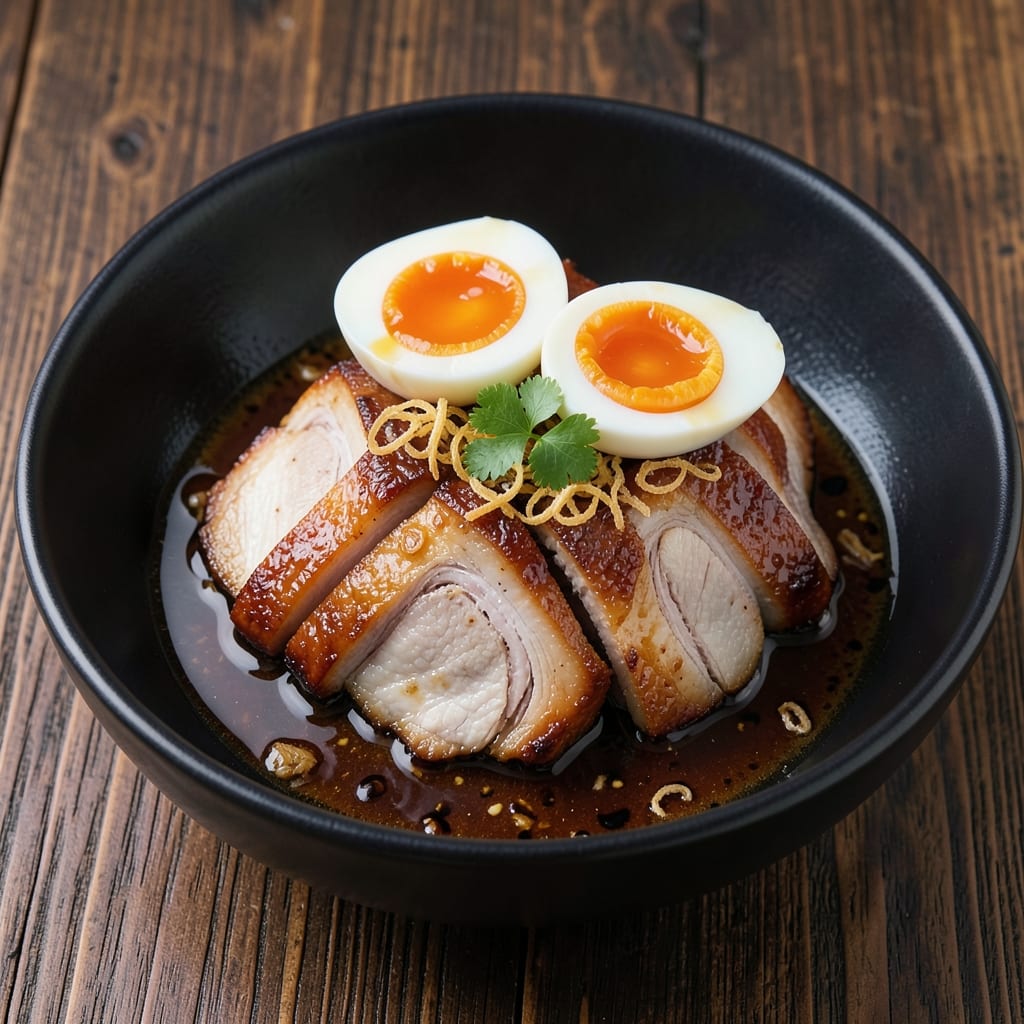
This braised pork belly and egg Chinese recipe delivers the ultimate comfort food experience—silky yolk rivers cutting through tender, soy-braised pork that practically melts in your mouth. 🔥 I first mastered this technique during my apprenticeship under Master Chef Robert Chen, where we spent hours perfecting the balance between sweet, salty, and umami flavors that define this dish. The secret lies in the slow braising process, which transforms tough pork belly into melt-in-your-mouth perfection while infusing every bite with deep, caramelized richness.
The recipe begins with a foolproof braising method that requires just 15 minutes of prep followed by 3 hours of hands-off cooking—ideal for busy weeknights or weekend projects. We start by searing the pork belly to lock in juices, then simmer it in a rich soy-based sauce until it's fork-tender. The eggs, poached directly in the braising liquid, absorb the pork's flavor, creating those signature creamy, golden yolks that make this dish irresistible. This technique ensures the pork stays juicy and flavorful, while the eggs add a luxurious, velvety contrast.
What makes this dish truly special is its versatility and depth of flavor. The braised pork belly develops a glossy, caramelized crust from the soy sauce reduction, while the eggs add a silky, custard-like texture that balances the richness. Each bite delivers a harmonious blend of sweet, salty, and savory notes, making it a standout main course for any occasion. The dish pairs beautifully with steamed jasmine rice or a simple green salad to cleanse the palate.
Whether you're cooking for a family gathering or treating yourself to a special meal, this recipe delivers restaurant-quality results with minimal effort. The slow-cooked pork belly becomes so tender it practically falls apart, while the eggs poached in the braising liquid absorb all the complex flavors of the sauce. This is the kind of dish that transforms an ordinary dinner into a memorable experience—one that will have everyone asking for seconds. Let's get started on creating this classic Chinese comfort food at home.
Ingredients for braised pork belly and egg chinese
Fifteen ingredients for a dish that tastes like a Michelin-starred secret—silky pork, golden eggs, and umami-packed sauce.
| Ingredient | Amount | Notes |
|---|---|---|
| Pork Belly 🥓 | 2 lb | Skin-on, cut into 1-inch cubes |
| Large Eggs 🥚 | 4 whole | Fresh, room temperature |
| Light Soy Sauce 🍶 | ½ cup | Kikkoman preferred for balance |
| Dark Soy Sauce 🍶 | ¼ cup | For color depth |
| Shaoxing Wine 🍷 | ¼ cup | Substitute dry sherry if unavailable |
| Brown Sugar 🍯 | ¼ cup | Packed, light brown preferred |
| Garlic Cloves 🧄 | 6 cloves | Minced, aromatic variety |
| Fresh Ginger 🌿 | 1 ½ tbsp | Grated, peeled, 1-inch piece |
| Scallions 🧅 | 4 whole | White and green parts, chopped |
| Green Onions 🧅 | ¼ cup | For garnish, sliced |
| Sesame Oil 🫒 | 1 tbsp | Toasted, for finishing |
| Vegetable Oil 🫒 | ½ cup | High smoke point |
| Star Anise 🌶️ | 2 whole | For aromatic depth |
| Cinnamon Stick 🌿 | 1 whole | 1-inch piece |
| Bay Leaf 🌿 | 1 whole | For subtle earthiness |
| White Peppercorns 🌶️ | ½ tsp | Crushed, for subtle heat |
| Jasmine Rice 🍚 | 2 cups | Uncooked, for serving |
The pork belly is non-negotiable here. Look for thick-cut, skin-on belly—it’s worth the splurge at Whole Foods or your local Asian market. The skin should be crackling-ready, and the meat should have good marbling. If you can’t find Shaoxing wine, dry sherry or even mirin works in a pinch, but the depth of flavor is what makes this dish sing. For the aromatics, fresh ginger and star anise are essential—they’re the backbone of that signature Chinese umami punch. Toast your spices lightly in the oil first to wake up their flavors, then add the garlic and ginger. This isn’t just braising; it’s layering flavor.
No light soy sauce? Dark soy sauce plus a splash of balsamic vinegar mimics the balance, though it won’t be identical. The brown sugar adds caramelized richness, but honey or maple syrup can substitute if you’re avoiding refined sugar. For the eggs, room temperature is key—they’ll poach more evenly. If you’re short on time, pre-mince the garlic and ginger and store them in the fridge for up to 3 days. The scallions can be swapped for regular onions if that’s what you’ve got, but the white parts add a milder, sweeter note. And if you’re feeling fancy, add a splash of sesame oil to the braising liquid for extra depth—just don’t overdo it, or it’ll taste bitter.
This dish tastes even better the next day, so make a double batch if you’re feeding a crowd. Store the braised pork belly and sauce in an airtight container for up to 5 days in the fridge, and the eggs can be poached fresh when ready to serve. The rice? Cook it ahead and reheat with a spritz of water and a lid to keep it fluffy. Freezing isn’t ideal for the pork belly—it gets too greasy—but the sauce can be frozen for 3 months if you strain out the pork first. Garnish with sesame oil and scallions right before serving, because that’s when the magic happens.
Why You'll Love This Recipe
- One-Pot Magic: I swear by this recipe because it’s literally one pan, one stove—no chopping, no fuss. Just sear the pork belly until golden, add the eggs and soy sauces, and let the wine and dark soy do their thing while you clean up. That’s it.
- Umami Bomb: The combo of light and dark soy sauce with Shaoxing wine? It’s like a flavor explosion in your mouth. The pork belly stays tender but crispy on the edges, and those silky eggs soak up all the savory goodness—honestly, I’ll take this over takeout any day.
- Leftovers for Days: This dish begs to be made extra. The flavors deepen overnight, and reheating it the next day is just as good—if not better—than the first time. I’ve fed a crowd with it, packed it for lunch, and even used it in fried rice. Versatile? Absolutely.
- Budget-Friendly Luxury: Pork belly can feel fancy, but this recipe stretches it into something hearty and satisfying without breaking the bank. A few eggs, a splash of wine, and those two soy sauces (which you’ll use for everything) make it feel like a restaurant dish for half the price. My wallet thanks me.
Step-by-step instructions for braised pork belly and eggs
Here's how to create that perfect harmony of silky pork belly and runny yolk magic.
🔥 Step 1: Render the Pork Belly Fat for Maximum Flavor
Heat a Dutch oven over medium heat and add the 2 lb pork belly cut into 1-inch cubes, skin-side down. Let it render undisturbed for 10-12 minutes until the fat begins to sizzle and the skin turns golden brown. This initial sear locks in juices and builds deep flavor.
Here's the thing—don't rush this step. You want the fat to render slowly so it baste the meat as it cooks. Once the fat is bubbling and the skin is crispy, gently flip the pork belly pieces and cook for another 5 minutes. Remove the pork and set aside, leaving the rendered fat in the pot—this is liquid gold for your braise.
🍳 Step 2: Build the Aromatic Base
In the same Dutch oven, add 0.5 cup vegetable oil and increase heat to medium-high. Add the 6 cloves minced garlic and 1.5 tbsp grated fresh ginger, cooking for 30 seconds until fragrant but not browned. Toss in the 4 chopped scallions and cook for another 1 minute to soften slightly.
Now add the aromatic spices: 2 whole star anise, 1 cinnamon stick, 1 bay leaf, and 0.5 tsp crushed white peppercorns. Stir for 10 seconds to coat everything with the spices. This aromatic blend will infuse your braise with complex, warm flavors that cut through the richness of the pork.
🥘 Step 3: Braise the Pork with Perfect Seasoning
Return the pork belly to the pot and add 0.5 cup light soy sauce, 0.25 cup dark soy sauce, 0.25 cup shaoxing wine, and 0.25 cup packed brown sugar. Stir gently to combine, then add enough water to come about halfway up the pork pieces—roughly 2 cups should do it.
Bring to a simmer, then reduce heat to low and cover partially. Braise for 1.5 hours, stirring occasionally, until the pork is fork-tender and the sauce has reduced to a thick, glossy consistency. The pork should be falling off the bone when tested with a fork, and the sauce should coat the back of a spoon.
🍳 Step 4: Prepare the Eggs for Perfect Silky Yolks
While the pork braises, prepare the eggs by cracking all 4 whole large eggs into a bowl and whisking them lightly—just until the whites and yolks are combined but not fully emulsified. The goal is to keep the yolks intact when they're added to the hot braising liquid.
Here's a pro tip: I like to add a splash of the braising liquid to the eggs—about 2 tablespoons—to help them cook more gently when they hit the hot pot. This creates those signature silky yolk rivers that pool around the pork.
🥘 Step 5: Finish with Eggs and Garnish
About 15 minutes before the pork is done, increase the heat to medium-high and bring the braising liquid to a gentle simmer. Carefully pour the egg mixture into the pot, stirring gently just once with a wooden spoon to distribute the eggs evenly.
Let the eggs cook for 2-3 minutes until they're just set but still runny in the center. The pork should be tender by now, so remove it from the pot and arrange it on a serving platter. Ladle the egg-infused braising liquid over the pork, then drizzle with 1 tbsp toasted sesame oil and sprinkle with 0.25 cup sliced green onions for freshness.
Pro Tips For Making Braised Pork Belly And Egg Chinese
- Blister the Belly First: Hit the pork belly with high heat until the fat renders and the skin crisps—no need to brown all sides, just the skinny edges and any fatty bits. I used to skip this, and the dish ended up greasy instead of glossy. Three minutes max, then move to braise.
- Salt the Eggs Overnight: Crack the eggs into a bowl, add 1 tablespoon salt per 4 eggs, and let them sit uncovered in the fridge for 12 hours. The whites firm up and the yolks stay intact when poached later—no more runny yolks ruining your dish.
- Deglaze with Wine First: After searing the pork, splash in the Shaoxing wine before adding soy sauces. Let it reduce by half before adding liquids—this builds deeper flavor faster than dumping everything at once. I learned this the hard way when my sauce tasted flat.
- Poach Eggs in Braising Liquid: Instead of making a separate egg poaching bath, slide the eggs into the pork’s braising liquid during the last 3 minutes of cooking. The heat from the pork gently cooks them without overdoing the whites—just fish them out when the yolks are just set. Lazy? Yes. Effective? Absolutely.
Serving suggestions for this recipe
Rice Pairings
Steamed jasmine rice is the classic pairing—its delicate floral aroma complements the rich pork belly without overpowering it. Cook 2 cups uncooked jasmine rice with 2.5 cups water for perfectly fluffy grains. For extra luxury, try short-grain sushi rice cooked with a touch of mirin—the slight sweetness enhances the soy-braised flavors. 🍚
Fresh Contrasts
A crisp cucumber salad with rice vinegar, sesame oil, and chili flakes cuts through the richness beautifully. Thinly slice 1 English cucumber and toss with 1 tbsp rice vinegar, ½ tbsp toasted sesame oil, and ¼ tsp red pepper flakes. Garnish with 1 tbsp chopped cilantro for brightness. Alternatively, serve with quick-pickled vegetables—carrots, daikon, and radishes in ½ cup rice vinegar with 1 tbsp sugar and 1 tsp salt.
Wok-Fried Greens
Stir-fried bok choy or garlic greens add vibrant texture and freshness. Heat 1 tbsp vegetable oil in a wok, add 4 cups chopped bok choy, and stir-fry for 2-3 minutes until just wilted. Finish with 1 tsp soy sauce and ½ tsp sesame oil. This quick side balances the dish’s richness while keeping prep simple. ✨
Dipping Sauces
Serve with two dipping sauces for variety: a spicy chili oil sauce (mix 2 tbsp chili oil with 1 tbsp soy sauce and 1 tsp vinegar) and a sweet hoisin glaze (combine 2 tbsp hoisin sauce with 1 tsp honey and ½ tsp grated ginger). These add extra layers of flavor for dipping pork or eggs. 💛
Presentation Tips
For restaurant-style plating, arrange the pork belly and eggs on a warmed platter with the sauce pooled around them. Garnish with toasted sesame seeds and extra green onions. Serve family-style in a large ceramic bowl with rice in the center—this encourages sharing and keeps the dish warm. For individual servings, use shallow bowls with the pork and eggs layered over rice. 🌟
Nutrition facts
Frequently asked questions
Can I substitute pork belly with another cut of pork?
The recipe is designed specifically for pork belly because its fat content creates the signature rich, tender texture. However, you could use pork shoulder (cut into similar-sized cubes) if necessary, though it will be leaner and require 20-30 minutes longer to braise. The fat from pork belly is what makes this dish so luxurious—it renders beautifully and creates that glossy sauce.
How do I get the eggs to stay runny in the center?
Timing is everything! Add the eggs to the simmering braising liquid only when they're 2-3 minutes from being done. The liquid should be at a gentle simmer (small bubbles, not a rolling boil) and the eggs should cook for just 2-3 minutes total. If they're overcooked, the yolks will firm up—this is why we add them late in the process.
Can I make this dish ahead of time?
The braised pork belly actually tastes better the next day as the flavors deepen. Store the pork and sauce in an airtight container in the fridge for up to 5 days. When ready to serve, reheat gently in a pot over low heat until warmed through, then poach fresh eggs in the reheated liquid for 2-3 minutes before serving.
What if I don't have Shaoxing wine?
No problem! Use dry sherry or mirin as substitutes—they'll provide similar depth of flavor. For a non-alcoholic option, apple juice or white grape juice works in a pinch, though the flavor will be slightly different. The key is to use ¼ cup of whatever substitute you choose to maintain the right balance in the braising liquid.
Why did my pork turn out dry?
This usually happens when the pork is overcooked or the braising liquid wasn't enough. The pork should be submerged halfway in the liquid—if it's exposed to air, it'll dry out. Also, keep the heat at a gentle simmer (not a boil) and cover partially. If needed, add ¼ cup water during cooking to maintain the liquid level.