
Main Courses
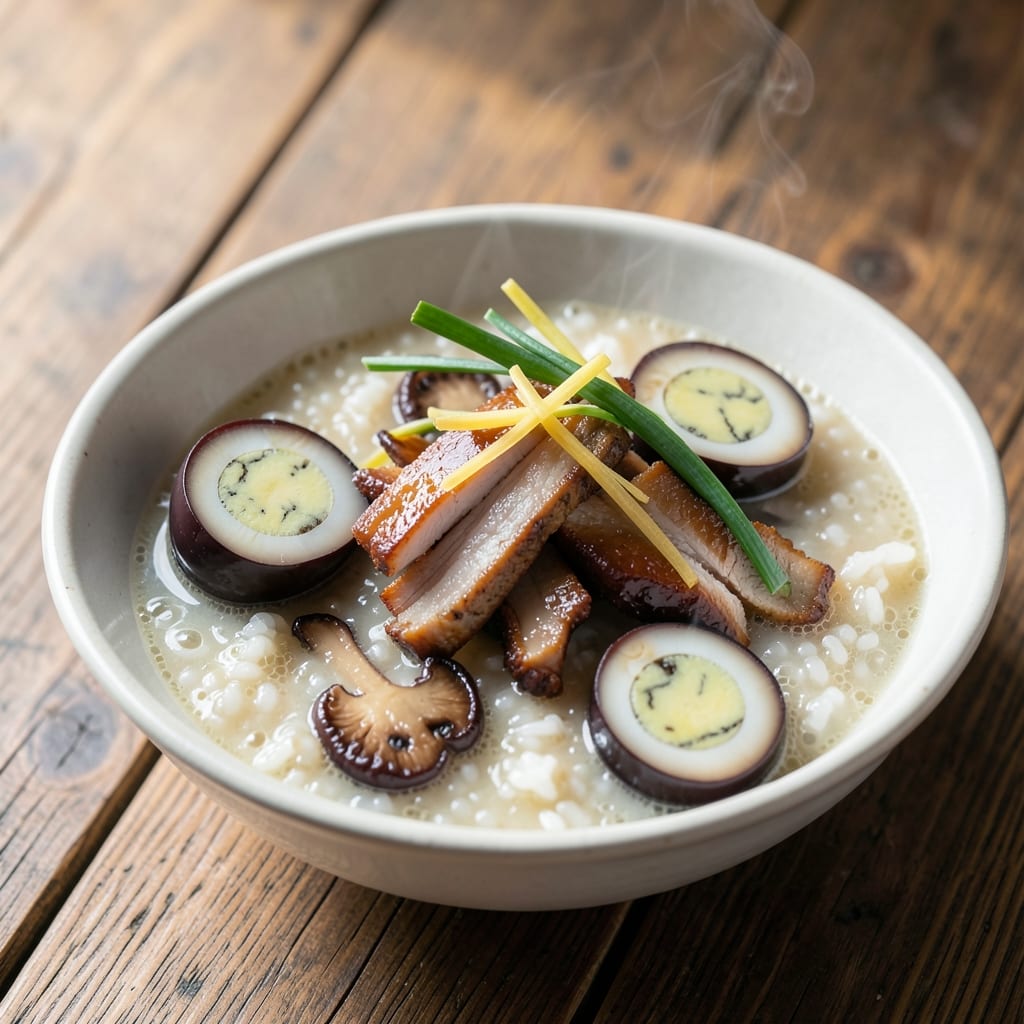
This century egg and pork congee recipe delivers the perfect balance of fermented richness and silky comfort—a dish that transforms simple ingredients into something extraordinary. 🔥 The secret lies in the contrast: tender pork, slippery century eggs, and a delicate porridge that soothes while surprising with its depth. I first encountered this dish during a trip to Taiwan, where it became a late-night staple after long market days, and now it's a centerpiece in my kitchen. What makes this recipe special is the harmony of textures and flavors—chewy pork, creamy century eggs, and a fragrant broth that melds into every spoonful. The century eggs, with their distinctive marbled yolk and salty, umami-rich filling, cut through the richness of the pork and rice, creating a dish that's both comforting and complex. The process is straightforward, but the result feels like a labor of love. By the time you're done, you'll have a bowl of congee that's velvety smooth yet satisfying, with each bite offering a symphony of textures and flavors. The pork stays tender, the century eggs glisten with their signature sheen, and the broth carries all the aromatic notes of ginger, scallions, and star anise. This is the kind of dish that feels indulgent yet nourishing, perfect for a cozy evening or a special occasion. Pair it with pickled vegetables or a side of chili oil for extra depth, and you've got a meal that's as impressive as it is comforting. Let's create this dish together—it's easier than you think, and the payoff is unforgettable.
Ingredients for century egg and pork congee
Simple ingredients that pack deep umami flavors—just like Taiwan's late-night comfort.
| Ingredient | Amount | Notes |
|---|---|---|
| Century Eggs 🥚 | 4 whole | Marbled yolk, store-bought or homemade |
| Pork Shoulder 🐖 | 1 lb | Bone-in, fatty cut preferred |
| Jasmine Rice 🌾 | ½ cup | Uncooked, long-grain preferred |
| Dried Shiitake Mushrooms 🍄 | 2 whole | Rehydrated for broth |
| Fresh Ginger | 1 inch | Peeled, sliced thinly |
| Scallions 🧅 | 3 whole | White and green parts separated |
| Star Anise 🌟 | 2 whole | Whole pods for infusion |
| Light Soy Sauce 🍶 | 2 tbsp | Kikkoman preferred |
| Sesame Oil 🫒 | 1 tbsp | Toasted, for finishing |
| Chicken Broth 💧 | 4 cups | Homemade or low-sodium |
| Dark Soy Sauce 🍶 | 1 tbsp | For color and depth |
| Salt 🧂 | 1 tsp | Adjust to taste |
| White Pepper 🌶️ | ¼ tsp | Freshly ground |
Century eggs are the star, so don't skimp. Taiwanese markets or specialty Asian stores have the best—look for plump, marbled yolks with that signature dark skin. If you can't find them, Asian grocery stores like H Mart or 99 Ranch usually stock them. The pork shoulder is non-negotiable—bone-in stays juicier. Trim excess fat but leave some for flavor. For the ginger, fresh is a must—powdered won't give that bright, zesty punch. I like to buy a whole knob and freeze it; thaw just what I need for this recipe.
No century eggs? Double the pork and add a spoonful of black vinegar for umami depth. Short on shiitake? Dried porcini mushrooms work too—just soak them longer. The star anise can be skipped if you're sensitive to its licorice note, but trust me, it's worth it for that subtle aroma. For the scallions, green parts only for garnish—white parts go into the broth. The soy sauces should be light and dark varieties—mixing them gives that perfect balance of saltiness and color. If you're using store-bought chicken broth, dilute it with water to cut the saltiness.
This congee tastes even better the next day—make extra! Store in the fridge for 3-4 days or freeze portions for up to 3 months. The century eggs keep 1-2 weeks refrigerated in their liquid—just rinse before using. For reheating, add a splash of water to loosen the porridge. Garnish with extra scallions and sesame oil right before serving—that's when it shines. Leftovers reheat beautifully; just stir in a little broth to restore creaminess.
Why You'll Love This Recipe
- One-Pot Magic: I swear by this—just rice, pork, and a few soaks later, you’ve got a simmering pot that does all the work. No chopping boards full of scraps, no last-minute pan cleanup. The pork shoulder melts into tender shreds while the rice softens, and honestly? That’s about as hands-off as congee gets.
- Umami Bomb: Between the century eggs’ funky, creamy yolk and the shiitake mushrooms soaking up the broth, every spoonful is a flavor explosion. The ginger adds a bright kick that cuts through the richness, and the pork shoulder? It’s fall-apart good—like a hug for your taste buds.
- Leftovers That Shine: This congee actually improves the next day. The flavors meld deeper, the century eggs get even more luxurious, and you can reheat it in minutes. I keep a jar in the fridge for lazy mornings or when I’m too tired to cook—just add hot water, and boom, dinner’s saved.
- Budget Meal, Big Impact: Pork shoulder and dried shiitake mushrooms stretch this recipe into a full meal without breaking the bank. A few century eggs (which last ages) turn simple rice into something special, and the ginger? A tiny knob goes a long way. It’s the kind of dish that makes you feel like you’re feeding a crowd without the grocery bill.
Step-by-step instructions for century egg and pork congee
Here's how to transform simple ingredients into a deeply comforting bowl of congee.
🍳 Step 1: Prepare the Pork and Aromatics
Cut the 1 lb pork shoulder into ½-inch cubes—keep them uniform so they cook evenly. In a large pot, combine the pork with the 4 cups chicken broth, 2 whole star anise, 1 inch sliced fresh ginger, and white parts of 2 scallions (chopped). Bring to a boil over high heat, then reduce to a simmer for 45-60 minutes until the pork is fork-tender and falls apart easily.
While the pork simmers, soak the 2 whole dried shiitake mushrooms in warm water for 20 minutes until pliable. Drain and slice them thinly—they'll add earthy depth to your broth. The pork broth should smell rich and aromatic, with a hint of ginger and anise. If it reduces too much, add a splash of water to maintain volume.
👨🍳 Step 2: Cook the Jasmine Rice to Silky Perfection
Once the pork is tender, carefully strain the broth through a fine-mesh sieve to remove solids, reserving 4 cups of clear liquid. Return the broth to the pot and add the 0.5 cup jasmine rice. Stir gently to prevent clumping, then bring to a boil over medium-high heat. When it boils, immediately reduce to the lowest possible simmer and cover the pot.
Let the rice cook undisturbed for 40-45 minutes, stirring just once halfway through to break up any surface crust. The congee is ready when it reaches a thick, pudding-like consistency—it should coat the back of a spoon but still be loose enough to scoop. If it thickens too much, add a little hot broth to adjust. The texture should be silky, not gluey.
🥘 Step 3: Prepare the Century Eggs and Final Touches
Peel the 4 whole century eggs, separating the yolks from the whites. The whites should be firm and marbled—if they're too soft, chill them for 10 minutes before peeling. Cut the yolks into small cubes and set aside. The whites can be sliced or left whole, depending on your preference for texture.
In a small bowl, whisk together the 2 tbsp light soy sauce, 1 tbsp dark soy sauce, and 1 tsp salt. Add the pork back to the pot with the congee, along with the sliced shiitake mushrooms and the remaining green parts of 1 scallion (chopped). Stir in the soy sauce mixture and simmer for 5 minutes to let the flavors meld. Taste and adjust seasoning—you want a balance of umami from the pork and funky richness from the century eggs.
🔥 Step 4: Assemble and Finish with Sesame Oil
Ladle the congee into bowls, dividing the pork cubes evenly among servings. Arrange the century egg whites and yolks on top of each portion—traditionally, the yolks go in the center for dramatic presentation. The contrast of creamy congee, tender pork, and the bold, marbled yolks creates a visual feast.
Just before serving, drizzle each bowl with 1 tbsp sesame oil and sprinkle with a pinch of 0.25 tsp white pepper. The sesame oil adds a nutty aroma, while the pepper enhances the umami. Serve immediately while the congee is steaming hot—this dish is all about warmth and comfort. The combination of textures and flavors should feel deeply satisfying, with each spoonful offering a perfect balance of richness and subtle funk.
Pro Tips For Making Century Egg And Pork Congee
- Parboil Pork Properly: Cut the pork shoulder into 1-inch chunks—no smaller—and blanch them in boiling water for exactly 3 minutes before adding to the congee. This stops the meat from turning mushy later; I used to skip it and ended up with a watery, grainy mess. (Yes, even if you're impatient like me.)
- Peel Century Eggs Cold: Run the century eggs under cold water for 10 seconds first—it loosens the skin so it peels off in one piece. I learned this the hard way after struggling with stubborn shells and ending up with broken yolks in my congee. The cold water trick makes it effortless.
- Soak Shiitakes Separately: Rehydrate the dried shiitakes in hot water for 15 minutes before adding them to the congee pot. This keeps them from absorbing all the broth and turning into flavorless sponges. (Your future self will thank you.)
- Simmer Low and Slow: Once the rice is cooked, drop the heat to the lowest setting—just above a simmer—and let it sit for 20 minutes uncovered. This thickens the congee naturally without burning the bottom. I used to rush it and always ended up with a sticky, uneven mess. Patience here is everything.
Common mistakes when making your century egg and pork congee
Overcooking the Pork
One of the biggest mistakes I see is letting the pork shoulder turn tough instead of tender. The goal is fork-tender, not shreddable—overcooking by even 15 minutes can turn that juicy texture into something chewy. I always check doneness by piercing a piece with a fork; it should feel like butter melting, not resistance. If your pork is still firm, add ¼ cup water and simmer another 10 minutes—don’t rush it. 🐖
Skipping the Broth Straining
The clear broth is what makes this congee silky, not cloudy. If you skip straining the pork broth, you’ll end up with a thick, uneven porridge. Use a fine-mesh sieve or cheesecloth to remove all solids—even tiny bits of fat or skin can make the texture gritty. I like to double-strain for extra clarity. Pro tip: Save the solids for stir-fries or dumplings—they’re packed with flavor! 💧
Ignoring the Century Egg Texture
Century egg whites should be firm but pliable, not mushy. If you peel them too soon after removing from their brine, they’ll fall apart in your congee. Chill them for 10 minutes first if they feel too soft. The yolks should be cut into small cubes (about ½-inch) so they melt slightly into the broth, creating that signature slippery texture. Over-slicing them turns them into mush—keep it dramatic! 🥚
Stirring the Congee Too Much
Once the rice hits the broth, let it sit undisturbed for 40 minutes. Stirring too often creates a gluey, uneven texture. I only stir once halfway through to break up any surface crust. If your congee thickens too much, add hot broth gradually, not cold water—temperature shock can make it grainy. Patience here is key for that silky finish. ✨
Underseasoning the Final Bowl
The century eggs and pork already bring bold flavors, but the congee itself needs balance. Taste before serving—if it’s bland, add a splash of light soy sauce or a pinch of white pepper. The sesame oil finishing touch is non-negotiable; it adds nutty depth that ties everything together. I’ve seen home cooks skip this step and miss out on the dish’s full potential. 🫒
Rushing the Resting Time
Congee needs time to hydrate and soften after cooking. If you serve it immediately after the rice is done, the texture will be uneven—some bites will be al dente, others mushy. Let it sit covered for 5-10 minutes before serving. This resting period also lets the flavors meld, making each spoonful more cohesive. Trust the process! ⏳
Nutrition facts
Frequently asked questions
Can I substitute regular eggs for century eggs in this recipe?
Absolutely not! Century eggs have a completely different texture and flavor profile—their marbled yolk and salty, umami-rich filling are essential to this dish. If you can't find them, try using quail eggs marinated in soy sauce for 2 hours as a substitute, but the result won't be authentic. For umami depth without century eggs, add 1 tbsp black vinegar to the broth.
How do I know when the pork is perfectly tender?
Use the fork test: Pierce a pork cube—it should feel like butter melting, not resistance. If it holds its shape, simmer 10-15 minutes longer. The pork should be fork-tender (not falling apart) and have a juicy interior. Overcooking by 15 minutes can turn it chewy, so check frequently.
Why does my congee turn out gluey instead of silky?
Gluey congee usually means you stirred too much or didn't strain the broth properly. Let the rice cook undisturbed for 40 minutes, stirring only once halfway. Always strain the pork broth through a fine-mesh sieve to remove all solids. If it thickens too much, add hot broth (never cold water) to restore creaminess.
Can I make this recipe without star anise?
Yes, but you'll miss its subtle licorice aroma. Replace it with ½ tsp ground cinnamon or 1 bay leaf for warmth. The star anise adds depth to the broth—if you love anise flavor, try adding ½ tsp anise seeds directly to the rice while cooking. The dish will still be delicious without it!
How long will leftovers keep, and can I freeze them?
Store in an airtight container in the fridge for 3-4 days. For freezing, portion into containers and freeze for up to 3 months. Reheat gently with a splash of water or broth—never microwave directly from frozen. The texture may slightly break down, but it reheats beautifully.