
Breakfast & Brunch
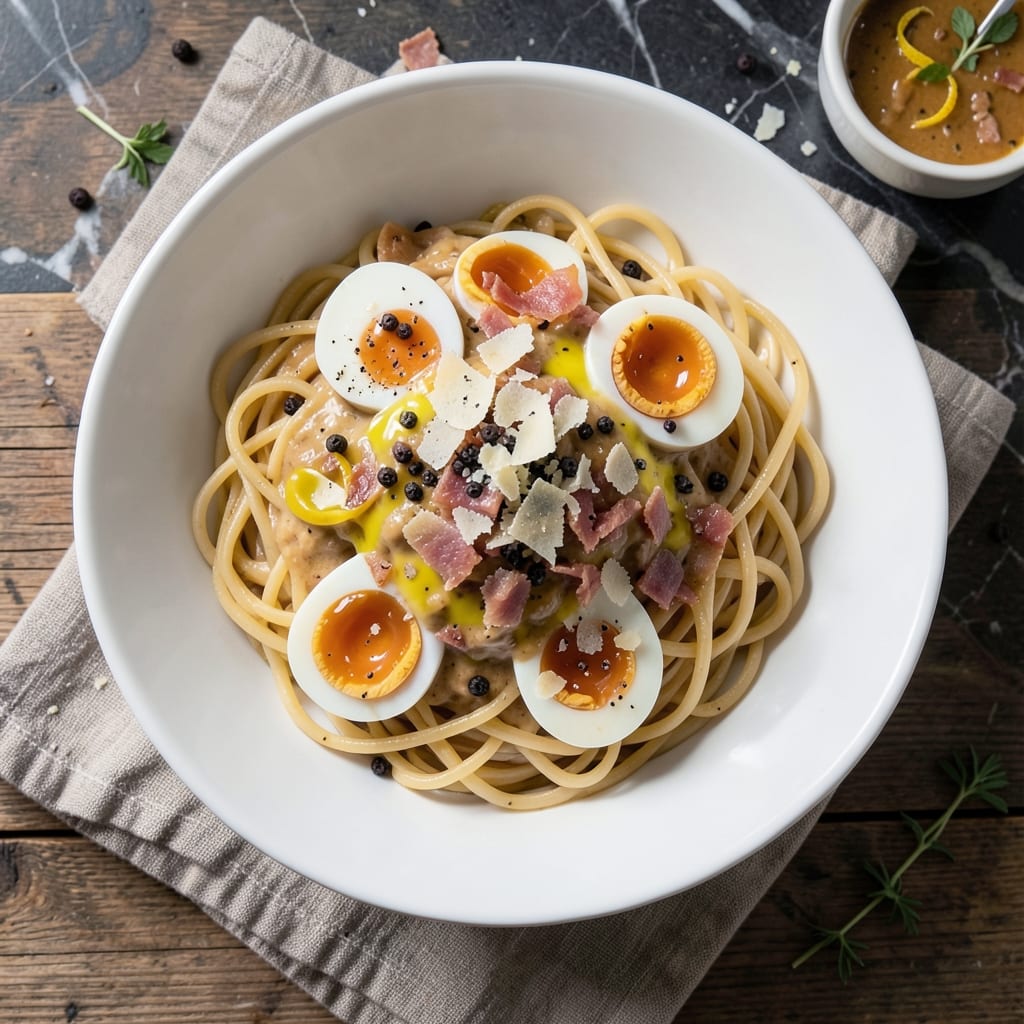
This century egg carbonara recipe blends Chinese and Italian traditions into a single, unforgettable dish that delivers bold umami and creamy richness in every bite. The marriage of century eggs—with their distinctive jelly-like texture and briny depth—and classic carbonara creates a flavor profile unlike any traditional pasta. I first tasted this fusion at a small Italian-Chinese bistro in Rome, where the chef insisted it was "the future of comfort food." The secret lies in balancing the century egg's intense flavor with the silky egg-cheese sauce, ensuring the pasta remains al dente while absorbing every layer of taste.
What sets this recipe apart is the two-stage preparation: first, the century eggs (if not pre-made) require careful handling to achieve their signature texture, while the pasta cooks in reserved starchy water—a carbonara essential. The sauce, emulsified with century egg yolks and aged Parmigiano-Reggiano, creates a velvety coating that clings to each strand of pasta. This isn’t just another pasta dish; it’s a culinary bridge between cultures, where the century egg’s preserved richness meets the Italian tradition of simplicity and indulgence. The result? A dish that’s as visually striking as it is delicious, with dark, glossy century egg pieces contrasting against the golden pasta.
By the time you twirl that first forkful, you’ll experience a symphony of textures—crispy pasta edges, creamy sauce, and the century egg’s jelly-like center bursting with umami. The dish pairs beautifully with a crisp white wine or even a light lager, cutting through the richness while complementing the century egg’s salty depth. Whether you’re serving this as a weekend brunch centerpiece or a dinner conversation starter, it’s a recipe that promises to impress even the most discerning palates. Ready to transform your pasta nights forever?
The beauty of this fusion lies in its versatility: swap in vegan cheese for a plant-based version, or adjust the century egg quantity to suit your adventurousness. The technique is straightforward once you master the sauce emulsification, and the cultural storytelling makes it as rewarding to prepare as it is to eat. Let’s dive into the steps that will bring this umami bomb to your table.
Ingredients for century egg carbonara
Four preserved eggs and a handful of Italian staples transform into an umami-rich fusion masterpiece.
| Ingredient | Amount | Notes |
|---|---|---|
| Century Eggs 🥚 | 4 whole | High-quality, preserved with jelly texture |
| Spaghetti 🍝 | ½ lb | Spaghetti or linguine, al dente preferred |
| Large Egg Yolks 🥚 | 4 whole | Separated from century eggs plus 2 fresh |
| Parmigiano-Reggiano Cheese 🧀 | 1 ½ cups | Freshly grated, aged 24+ months |
| Guanciale or Pancetta 🥓 | 4 oz | Diced, cured pork for authentic flavor |
| Fresh Black Peppercorns 🌶️ | ½ tsp | Freshly cracked, coarse grind |
| Extra-Virgin Olive Oil 🫒 | ¼ cup | High-quality, fruity aroma |
| Salt 🧂 | 1 tsp | Diamond Crystal preferred |
| Garlic Cloves 🧄 | 2 cloves | Minced, fresh preferred |
| White Wine 🍷 | ½ cup | Dry, crisp, like Pinot Grigio |
| Pasta Water 💧 | 1 cup | Reserved starchy cooking water |
Century eggs are the heart of this dish, so quality matters. Look for eggs with intact, glossy jelly centers—Asian grocery stores or specialty markets carry the best. If you can't find them, duck eggs preserved for 100 days work as a substitute, though texture won't be identical. The guanciale (or pancetta) should have visible fat marbling—Whole Foods or Italian delis are your best bets. Freshly grated Parmigiano-Reggiano is non-negotiable; pre-grated clumps ruin the sauce. For the wine, Pinot Grigio or Vermentino cuts through the richness without overpowering the century egg's depth.
No guanciale? Pancetta or thick-cut bacon works in a pinch, but render the fat first. Century eggs too intense? Use half the quantity and add 2 extra egg yolks to balance. Running out of pasta water? Add 2 tbsp reserved olive oil to the sauce to help emulsify. The garlic can be roasted for a sweeter note—toss minced cloves with olive oil and roast at 400°F for 5 minutes. For a vegan twist, swap Parmigiano for nutritional yeast plus vegan butter>—the umami stays, the richness adapts.
Century eggs keep 2-3 weeks in the fridge once opened, submerged in their brine. Pasta water should be starchy but not boiling—cool slightly before adding to the sauce. The sauce emulsifies best when warm, so assemble everything just before tossing with pasta. Leftovers? Store sauce separately from pasta—reheat sauce gently, then toss with fresh pasta and a splash of water. This dish reheats beautifully, though the century egg texture softens slightly—best enjoyed fresh
Why You'll Love This Recipe
- Two-Ingredient Magic: The century eggs do all the work—salty, creamy, and packed with umami in just one spoonful. No fancy prep, no balancing flavors; you’re basically cheating with that rich, jelly-like center melting into the sauce.
- Creamy Without Heavy Cream: That velvety sauce comes from yolks and cheese alone, no need for butter or milk. The guanciale (or pancetta) adds depth, but honestly? The century egg’s funky-sweet flavor steals the show every time.
- Weeknight to Dinner Party: Make it for yourself on a Tuesday with store-bought spaghetti, or impress guests by slicing the century eggs thin for a restaurant-worthy plate. Same recipe, two totally different vibes—no extra effort.
- Budget Luxury: Century eggs last weeks in the fridge, and a little goes a long way. Pancetta’s cheaper than you’d think, and Parmigiano-Reggiano stretches further than you’d expect. Fancy flavors for everyday meals? Yes, please.
Step-by-step instructions for century egg carbonara
Here's how to transform century eggs into a decadent, umami-rich carbonara that redefines the classic.
Prepare the Century Eggs and Pasta
Start by separating the century egg yolks from the whites. Crack open all 4 whole century eggs and carefully scoop out the yolks—those creamy, jelly-like centers are where the magic happens. Set aside 4 whole large egg yolks (2 from the century eggs plus 2 fresh) in a bowl and reserve the whites for another use if desired.
Bring a large pot of water to a rolling boil and add 1 teaspoon salt. Add the 0.5 lb spaghetti and cook until 1 minute shy of al dente—you want it to finish cooking in the sauce. Reserve 1 cup pasta water before draining, as this starchy liquid is essential for emulsifying the sauce later. Drain the pasta and set aside, keeping it warm.
Render the Guanciale and Build the Sauce Base
Heat 0.25 cup extra-virgin olive oil in a large skillet over medium heat. Add the 4 oz diced guanciale or pancetta and cook, stirring occasionally, until the fat renders out and the meat becomes golden and crispy—about 8-10 minutes. Remove the guanciale with a slotted spoon and set aside, leaving the rendered fat in the pan.
Add the 2 cloves minced garlic to the skillet and cook for 30 seconds until fragrant—don’t let it brown. Pour in the 0.5 cup white wine and scrape up any browned bits from the bottom of the pan. Simmer for 2-3 minutes until the wine reduces by half, intensifying its flavor. This deglazing step captures all the umami from the guanciale.
Emulsify the Egg and Cheese Mixture
In a separate bowl, whisk together the 4 whole large egg yolks, 1.5 cups freshly grated Parmigiano-Reggiano cheese, and 0.5 teaspoon freshly cracked black peppercorns until smooth and pale. The mixture should be thick but still pourable—this is your sauce foundation.
Remove the skillet from heat and immediately add the warm pasta and reserved 1 cup pasta water. Toss everything together for 30 seconds to coat the strands. Then, slowly pour in the egg-cheese mixture while stirring vigorously. The residual heat from the pasta will gently cook the eggs into a silky sauce without scrambling them. If the sauce thickens too much, add more pasta water 1 tablespoon at a time until it reaches a creamy, clingy consistency.
Finish with Guanciale and Serve Immediately
Return the crispy guanciale to the skillet and toss everything together for 1-2 minutes until the sauce fully coats the pasta and the guanciale reabsorbs some of its rendered fat. The sauce should be glossy, creamy, and cling to the pasta like a second skin.
Taste and adjust seasoning with more salt or black peppercorns if needed. Serve immediately in warm bowls, garnished with extra Parmigiano-Reggiano cheese and a sprinkle of freshly cracked black pepper. The contrast of the century egg’s deep umami with the rich, creamy sauce and crispy guanciale makes this carbonara unforgettable.
Pro Tips For Making Century Egg Carbonara
- Peel Century Eggs First: The jelly-like insides of century eggs are delicate—peel them before cooking and store them in a bowl of cold water. This keeps them from turning to mush when they hit the hot pan later. (Yes, even if you’re eager to start.)
- Render Guanciale Low: Cook the guanciale or pancetta slow over medium-low heat—it’s easy to burn, and charred fat ruins the dish. Once the fat pools (about 5-7 minutes), crank the heat to render it faster, but keep an eye on it. (I learned this after one batch tasted like smoke.)
- Reserve That Water: Save a cup of pasta water before draining—century egg carbonara needs it to emulsify the sauce. The alkaline water from century eggs can make the sauce break, so a splash of starchy pasta water keeps everything smooth. (Trust me, your sauce will thank you.)
- Whisk Yolks Cold: Mix the egg yolks with cheese after removing the pasta from heat—heat turns them scrambled. Keep the bowl in an ice bath while whisking for a silky, creamy finish. (No one wants rubbery eggs in their carbonara.)
Wine and beer pairings for century egg carbonara
Italian Whites
A crisp Pinot Grigio from the Alto Adige region is my go-to pairing—its bright acidity and citrus notes cut through the century egg’s briny depth while complementing the creamy carbonara sauce. Look for a bottle with 12-13% ABV and minimal oak influence, like Castro's or Santa Margherita. The wine’s minerality enhances the umami without overpowering it. 🍷
Light Lager Balance
For beer lovers, a German-style Helles or Italian lager like Peroni or Birra del Borgo provides a refreshing contrast. The subtle malt sweetness and light carbonation cleanse your palate between each rich forkful of century egg pasta. Avoid heavy IPAs—they’ll clash with the delicate sauce.
Sparkling Wine Twist
A chilled Prosecco or Cava adds effervescence that mirrors the century egg’s jelly-like texture. The bubbles enhance the dish’s umami richness while keeping the meal light. I recommend La Marca Prosecco or Freixenet Cordon Negro Cava for their crisp, citrus-forward profiles.
Red Wine Caution
While some might reach for Chianti, its tannins can overpower the century egg’s delicate texture. If you prefer red, opt for a light-bodied Pinot Noir with 12% ABV or less, like Meiomi. The fruit-forward notes will harmonize better with the dish’s umami complexity.
Non-Alcoholic Options
For a mocktail, mix sparkling water, ½ cup fresh grapefruit juice, and a splash of agave syrup. The citrus acidity mirrors the wine pairings while keeping the meal refreshing. Garnish with a grapefruit wedge for visual appeal and extra zing.
Nutrition facts
Frequently asked questions
Can I use regular eggs instead of century eggs in this recipe?
The century egg’s jelly-like texture and briny depth are what make this dish special! While you can substitute with 4 extra egg yolks (plus 2 whole eggs for the sauce), you’ll miss the unique umami flavor. For a closer match, try duck eggs preserved for 100 days—they’ll have a similar intensity.
What’s the best way to store leftover century egg carbonara?
Store the sauce and pasta separately in airtight containers—the sauce will keep for 2 days in the fridge. Reheat gently, then toss with fresh pasta and a splash of water to restore creaminess. Leftovers won’t be as glossy, but the flavor stays rich!
Why did my carbonara sauce turn grainy?
This usually happens when the egg mixture cooks too fast or the heat isn’t low enough. Always remove the skillet from heat before adding the egg-cheese mix, and stir constantly. If it happens, whisk in 1 tablespoon cold water to help re-emulsify—just like a classic carbonara fix!
Can I make this recipe vegan?
Swap the eggs for silken tofu blended with nutritional yeast, use vegan Parmigiano, and render vegan bacon (like coconut bacon) instead of guanciale. The century egg’s umami will still shine through!
How do I know when century eggs are fresh?
Fresh century eggs have intact, glossy jelly centers with no graying. The brine should smell slightly salty but not fishy. If the jelly is dark or crumbly, it’s past its prime—opt for fresher ones for the best texture in your carbonara.