
Breakfast & Brunch
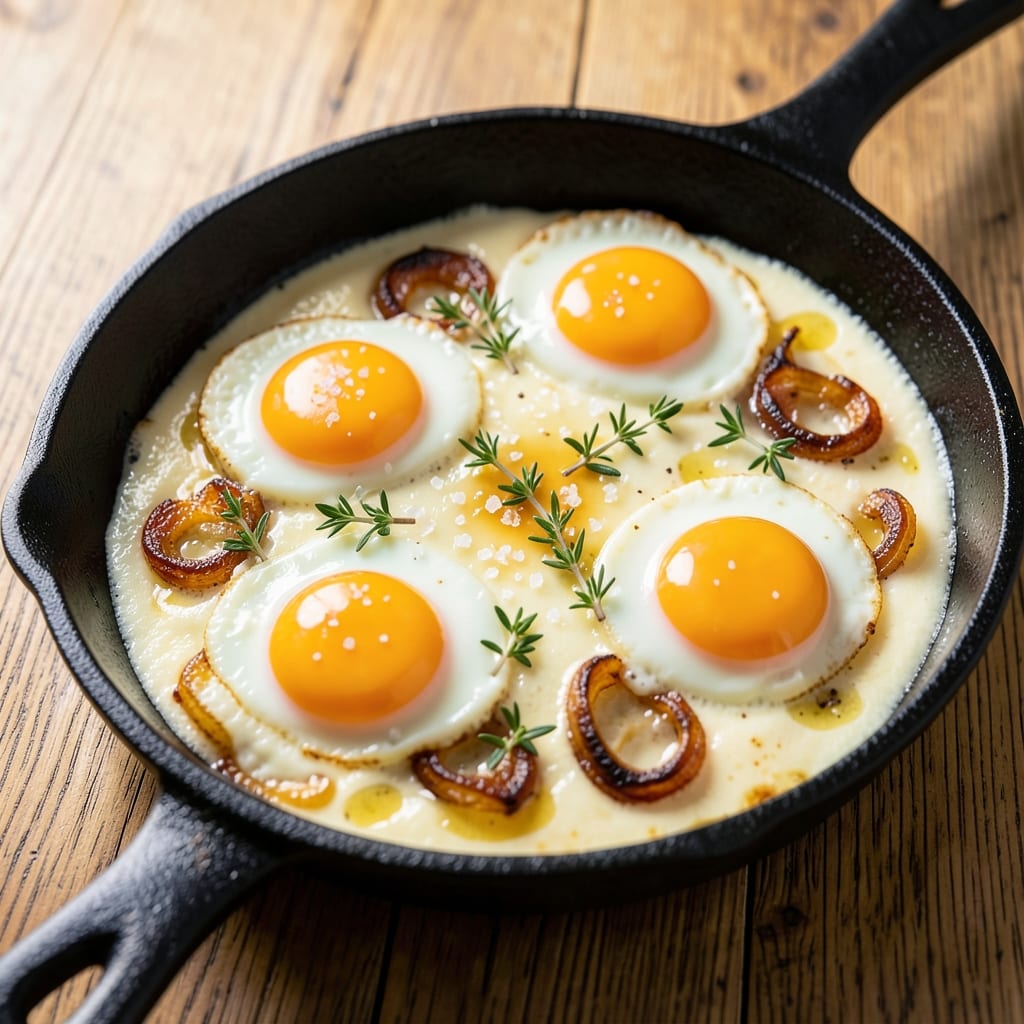
This cast iron egg bake delivers the perfect combination of a crispy golden top and silky yolk rivers that make every bite feel like a restaurant-quality breakfast. 🔥 The secret lies in preheating that heavy cast iron skillet until it's screaming hot—this creates that coveted crust while keeping the inside impossibly tender. I've been perfecting this technique for years, and it never fails to impress, even with minimal prep time.
The beauty of this recipe is its versatility—you can customize it with whatever you have on hand, whether that's crispy bacon, sautéed mushrooms, or fresh herbs. The cast iron retains heat beautifully, ensuring even cooking and that signature crispy texture on top. What makes this method special is how it transforms simple eggs into something restaurant-worthy with just a few key techniques.
By the time it emerges from the oven, you'll have a dish that looks as good as it tastes: a golden, crispy top that gives way to creamy, custardy eggs with rivers of rich yolk. The aroma alone will wake up your whole house, and the first bite delivers that perfect balance of textures. This is the kind of breakfast that makes lazy Sundays feel special.
Whether you're feeding a crowd or treating yourself to a solo breakfast, this recipe scales beautifully. The cast iron skillet ensures even heat distribution, so you don't have to worry about uneven cooking. Here's how to achieve that perfect egg bake every time.
Ingredients for cast iron egg bake
Eight simple ingredients transform into a restaurant-worthy breakfast with crispy gold and silky yolk rivers.
| Ingredient | Amount | Notes |
|---|---|---|
| Large Eggs 🥚 | 8 whole | Room temperature preferred |
| Whole Milk 🥛 | 1 cup | Full-fat for creaminess |
| Unsalted Butter 🧈 | 4 tbsp | Cold, cubed for crispy top |
| Shallots 🧅 | 2 whole | Minced for depth of flavor |
| Fresh Thyme Leaves 🌿 | ¼ cup | Chopped, or 1 tsp dried |
| Salt 🧂 | 1 tsp | Diamond Crystal preferred |
| Black Pepper 🌶️ | ½ tsp | Freshly ground for heat |
| Crispy Bacon 🥓 | 4 oz | Optional, crumbled for texture |
| Fresh Chives 🌱 | 2 tbsp | Chopped for garnish |
| Cast Iron Skillet 🍳 | 1 whole | 10-inch, preheated |
| All-Purpose Flour 🌾 | 1 tbsp | For dusting skillet |
The eggs are the star, so grab the freshest you can find—those bright yellow yolks make all the difference. Costco or local farms often have the best quality, but any store's cartoned eggs work in a pinch. The butter? Use Land O'Lakes or Plugrá—they melt beautifully and give that golden crust. Fresh thyme and chives add brightness, but dried works too (just use one-third the amount). For the bacon, Applegate or local butcher cuts are best—crispy and smoky. And that cast iron skillet? Preheat it until it's screaming hot—this is non-negotiable for that perfect crust.
No shallots? Substitute with 2 tbsp finely diced red onion. Short on thyme? Dried oregano at half the amount works in a bind. The milk can be swapped for cream or half-and-half if you want extra richness. Bacon optional? Swap for sautéed mushrooms or spinach—whatever you've got. The flour is just for dusting the skillet to prevent sticking, so don't stress if you're out. And if you're making this ahead, whisk the eggs and milk the night before—just add the butter and herbs fresh before baking.
This reheats beautifully—just pop it in a 350°F oven for 10-15 minutes until the top is golden again. Store leftovers in the fridge for 3 days, covered tightly. The cast iron skillet keeps it crispy, but if you're not using it, transfer to an oven-safe dish. For a crowd, double the recipe—just use a larger skillet. Leftovers taste even better the next day as the flavors meld.
Why You'll Love This Recipe
- One-Pan Magic: I swear by this for lazy mornings—just crack eggs, melt butter, and let the cast iron do the work. No chopping, no fuss, and that golden crust forms while you sip coffee.
- Thyme & Shallot Magic: The caramelized shallots and fresh thyme? Chef’s kiss. That earthy, slightly sweet balance makes every bite taste like a cozy bistro, not just breakfast.
- Meal-Prep MVP: Double the recipe, store it in the fridge, and reheat slices straight from the pan. Honestly, my lunchbox never looked this good before—crispy edges, creamy centers, zero effort.
- Budget Breakfast Win: Eggs, milk, butter—this recipe costs pennies but feels like a splurge. Between us, it’s my go-to when grocery money’s tight, and no one ever guesses how cheap it is.
Step-by-step instructions for cast iron egg bake
Here's how to make this showstopper—crispy edges, runny yolks, and perfect texture every time.
🍳 Step 1: Prep the Skillet for Maximum Crisp
Place the 1 whole Cast Iron Skillet over medium-high heat for 5 minutes until it's screaming hot. I like to test it by flicking a drop of water—if it sizzles and dances, you're ready. While it heats, sprinkle the 1 tbsp All-Purpose Flour evenly across the bottom. Swirl the pan gently to coat the sides too.
This flour crust is what creates that golden, crackly top we're after. Don't skip this step—it's the secret to that bakery-style finish. Once the pan is hot, melt the 4 tbsp Unsalted Butter over medium heat until it foams and turns golden. You'll know it's ready when you smell that nutty aroma—this is where all the flavor starts building.
👨🍳 Step 2: Sauté Shallots and Thyme for Depth
Add the 2 whole Shallots (minced) to the melted butter and cook for 3-4 minutes until they're soft and translucent. Stir occasionally so they don't brown. Then add the 0.25 cup Fresh Thyme Leaves and cook for another 30 seconds until fragrant. This step might seem small, but it's where the flavor foundation gets built.
I press the shallots down gently with a spatula during the first minute—this prevents them from curling and ensures even contact with the pan. If they start to brown too quickly, reduce the heat to medium-low. The goal is to develop their sweetness without burning. Remove the skillet from heat and let it cool slightly for 2 minutes—this prevents the eggs from scrambling when we add them.
🍳 Step 3: Whisk Eggs and Milk for Perfect Texture
In a large bowl, whisk together the 8 whole Large Eggs and 1 cup Whole Milk until fully combined. Season with 1 tsp Salt and 0.5 tsp Black Pepper, whisking until evenly distributed. I like to use a fork for this—it creates just enough air to give the eggs a light, fluffy texture without overmixing.
Here's the thing—room temperature eggs blend more smoothly, but if yours are cold, don't panic. Just whisk a little longer until the mixture is homogeneous. Pour the egg mixture over the sautéed shallots and thyme in the skillet. Stir gently with a spatula to distribute everything evenly. The eggs should look like a thick custard—this is exactly what we want.
🔥 Step 4: Bake Until Golden and Set
Return the skillet to medium heat and let it cook undisturbed for 5-7 minutes. You'll see the edges start to set first—this is your signal to stop stirring. After 5 minutes, transfer the skillet to a preheated 350°F oven and bake for 12-15 minutes. The top should be deep golden brown with crisp edges, while the center remains slightly jiggly.
This is where patience pays off. The internal temperature should reach 160°F at the center—use an instant-read thermometer to check. If the top browns too quickly but the center's still runny, tent it loosely with foil for the last 5 minutes of baking. The contrast between the crispy top and silky yolks is what makes this dish special.
🥘 Step 5: Finish with Bacon and Chives
Remove the skillet from the oven and let it rest for 5 minutes—this lets the eggs set slightly while keeping the yolks creamy. Sprinkle the 4 oz Crispy Bacon (crumbled) evenly over the top, then scatter the 2 tbsp Fresh Chives on top. The residual heat will make the chives wilt slightly, adding another layer of texture.
Serve immediately from the cast iron skillet—this dish is all about that first bite of crispy top giving way to rivers of golden yolk. The bacon adds a smoky contrast, while the chives bring freshness. I like to serve it with crusty bread to soak up every last bit of that creamy goodness. And if anyone asks, the secret is in that flour crust and the patience to let it bake just right.
Pro Tips For Making Cast Iron Egg Bake
- Preheat Cast Iron First: I learned this the hard way—skipping the preheat means your butter won’t melt evenly and your eggs will steam instead of set properly. Get that skillet screaming hot for 5 minutes before adding anything, even if you’re tempted to rush.
- Sweat Shallots Low and Slow: High heat turns shallots bitter faster than you’d believe. Cook them in the cast iron over medium-low for 8-10 minutes until soft and translucent—just until they’re ready to absorb the milk, not brown. (Yes, even if you’re impatient like me.)
- Whisk Eggs Until No Streaks: Lumpy eggs in this bake mean uneven cooking and rubbery texture. Whisk your eggs with milk until the mixture is completely smooth—no streaks, no chunks. I skip this step sometimes, and the result is noticeably worse.
- Butter the Iron Twice: First coat the pan with cold butter before heating, then add a second thin layer after preheating. This guarantees the milk mixture won’t stick, even if you’re not the most careful pourer. (Your future self will thank you.)
Troubleshooting great cast iron egg bake
Undercooked Centers
If your egg bake comes out runny in the middle, it’s likely from underbaking or insufficient heat. First, ensure your cast iron skillet is fully preheated—test it by flicking a drop of water, which should sizzle and dance. Use an instant-read thermometer to check the internal temperature: it should reach 160°F at the center. If the top browns too quickly but the center stays runny, tent the skillet loosely with foil for the last 5 minutes of baking to slow browning while allowing residual heat to finish cooking. 🔥
Overly Dry Texture
Dry eggs usually mean overcooking or too much stirring. Once you pour the egg mixture into the skillet, leave it completely undisturbed for the first 5-7 minutes on the stovetop. Overmixing or stirring after this point can break down the custard’s delicate structure. If you’re baking at 350°F, reduce the temperature to 325°F for the last 5 minutes to prevent overcooking. Adding 1 extra tablespoon of milk or cream can also help restore moisture.
Sticking to the Pan
Sticking happens when the skillet isn’t properly prepped or the eggs aren’t hot enough. Always preheat your cast iron skillet until it’s screaming hot, then coat the bottom evenly with 1 tablespoon of all-purpose flour before adding the butter. If the eggs still stick, your skillet might need seasoning. Wipe it clean, rub a thin layer of flaxseed oil, and bake it empty at 450°F for 1 hour to restore its non-stick properties. Avoid using non-stick sprays—they can degrade over time and leave a chemical taste. ✨
Uneven Baking
Uneven baking often results from inconsistent heat distribution. Place your skillet on the middle rack of your oven, where heat circulates most evenly. If your oven runs hot, rotate the skillet halfway through baking for uniform browning. For stovetop cooking, use medium heat—too high will cause the edges to set too quickly while the center stays raw. If you notice browning only on the edges, cover the skillet loosely with foil to protect the top while allowing the center to cook through.
Broken or Cracked Top
A cracked or broken top usually means the eggs weren’t at room temperature or the skillet wasn’t hot enough. Whisk your eggs and milk until fully combined, then let them sit at room temperature for 10-15 minutes before pouring into the skillet. Ensure your cast iron is screaming hot before adding the flour and butter. If the top still cracks, try reducing the oven temperature to 325°F for the last 5 minutes of baking to slow the cooking process and prevent sudden shifts in texture.
Bacon Burns Before Baking
Crispy bacon on top can burn if the skillet retains too much heat after baking. Let the egg bake rest for 5 minutes off the heat before adding the bacon and chives. If you’re worried about burning, place the skillet on a wire rack to allow air circulation underneath. For extra insurance, sprinkle the bacon on top just before serving—this keeps it perfectly crispy without overcooking. 💡
Nutrition facts
Frequently asked questions
Can I make this recipe without a cast iron skillet?
You can adapt it to an oven-safe stainless steel or ceramic skillet, but the texture won't be identical. Cast iron's heat retention creates that signature crispy top. For a similar effect, use a well-seasoned skillet and preheat it for 10 minutes before adding the flour. A 9-inch oven-safe dish also works, but the edges may not get as crispy.
How do I keep the yolks perfectly runny?
The secret is baking at 350°F for exactly 12-15 minutes and checking the internal temperature with an instant-read thermometer—it should reach 160°F at the center. Overbaking is the #1 culprit for firm yolks. If your oven runs hot, reduce the temperature to 325°F for the last 5 minutes to slow the cooking process.
What's the best way to reheat leftovers?
Pop the skillet (or baking dish) into a 350°F oven for 10-15 minutes until the top is golden again. For microwave reheating, cover with a damp paper towel and heat in 30-second bursts—this prevents rubbery textures. Leftovers taste even better the next day as flavors meld! Store in an airtight container for up to 3 days.
Can I add other proteins besides bacon?
Swap bacon for crispy sausage crumbles, diced ham, or shredded chicken. For vegetarian options, try sautéed mushrooms, spinach, or tofu crumbles. Just cook any additions until fully done before adding the egg mixture to prevent undercooking.
Why does my egg bake crack or sink in the middle?
This usually happens when eggs are too cold or the skillet isn't hot enough. Let your egg mixture sit at room temperature for 10-15 minutes before pouring, and ensure your cast iron is screaming hot (test by flicking water—it should sizzle). For extra insurance, reduce oven temp to 325°F for the last 5 minutes to slow cooking.