
Desserts
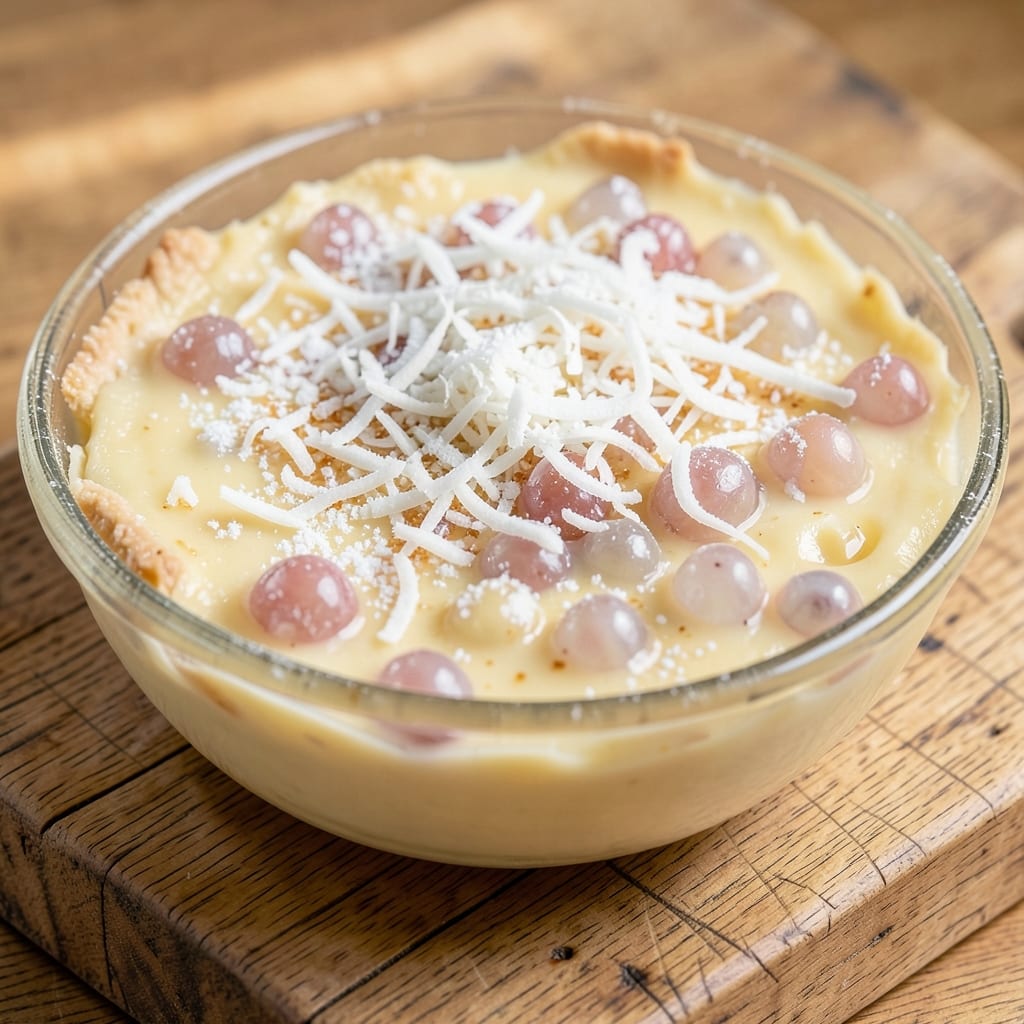
This buko egg pie recipe delivers the perfect balance of creamy coconut custard and chewy nata de coco—every bite is a nostalgic trip to Filipino dessert tables. 🌟 The secret lies in the egg mixture's silky texture and the right ratio of coconut milk to gelatin, which transforms simple ingredients into a dessert that feels luxurious yet homemade.
What sets this recipe apart is the layering technique: a firm base of shredded coconut and nata de coco at the bottom, topped with a smooth custard that sets just enough to hold its shape when sliced. I’ve tested countless variations to ensure the coconut stays tender, not soggy, and the custard remains rich without being overly sweet.
The result is a dessert that’s firm enough to slice cleanly but creamy enough to melt in your mouth—each spoonful delivers that signature Filipino comfort food experience. Whether you’re serving it at a family gathering or simply craving a taste of home, this pie is designed to impress.
For those who love tradition, stick to the classic version, but feel free to experiment with chocolate or ube swirls for a modern twist. The key is patience—letting the custard set properly ensures that perfect texture we all love.
Ingredients for buko egg pie
Twelve ingredients that transform into a nostalgic Filipino dessert with perfect texture balance.
| Ingredient | Amount | Notes |
|---|---|---|
| Large Eggs 🥚 | 8 whole | Room temperature for best blending |
| Coconut Milk (Full-Fat) 🥥 | 2 cans | 13.5 oz each, unsweetened |
| Granulated Sugar 🍚 | 1 ½ cups | White or light brown |
| Nata De Coco (Buko) 🍈 | 1 package | 14 oz, drained and rinsed |
| Shredded Coconut (Sweetened) 🥥 | 3 cups | Unsweetened if preferred |
| Unflavored Gelatin 🍬 | 2 tbsp | Bloomed in 1/4 cup cold water |
| Vanilla Extract 🌿 | 1 tbsp | Pure vanilla preferred |
| Salt 🧂 | ½ tsp | Fine sea salt |
| Cornstarch 🌾 | 2 tbsp | For custard stability |
| All-Purpose Flour 🌾 | ¼ cup | Sifted for smooth texture |
| Graham Cracker Crust 🍪 | 1 package | 9-inch, pre-made or homemade |
| Heavy Whipping Cream 🥛 | ½ cup | For topping, optional |
The coconut milk is non-negotiable here—full-fat, unsweetened cans from Filipino markets or Asian grocery stores deliver the richest flavor. I always grab Goya or Del Monte brands when available, but any quality brand works. The nata de coco should be chewy yet tender—avoid the mushy kind. For the shredded coconut, unsweetened gives you more control over sweetness, but sweetened works if you're short on time. The gelatin needs to bloom properly, so measure that cold water precisely. Pre-made graham cracker crusts save time, but homemade (butter, graham crackers, sugar) elevates the dish.
No coconut milk? Substitute with equal parts evaporated milk and cream—it won’t be identical, but close. Running out of nata de coco? Fresh jelly-like buko from Filipino stores works beautifully, but adjust the amount to 12 oz. For a lower-sugar option, reduce the granulated sugar to 1 cup and add 1 tbsp of honey or maple syrup instead. The custard can handle vanilla bean paste if you want extra richness. If you're avoiding gluten, use a gluten-free graham cracker crust or almond flour crust—just ensure it’s sturdy enough to hold the filling.
The custard mixture keeps for 2 days in the fridge once prepared, but the assembled pie lasts 3-4 days when stored properly. For best texture, chill the pie for at least 4 hours before slicing. To freeze, slice first, then wrap each piece individually—3 months max. The whipping cream topping should be added fresh before serving, or it’ll turn grainy. If you’re making this ahead for a party, prepare the filling and crust separately, then assemble the day of—this pie tastes even better after sitting overnight.
Why You'll Love This Recipe
- No-Bake Magic: I swear by this recipe when I’m too tired to bake. Just whisk eggs, mix in coconut milk and sugar, then fold in buko and shredded coconut—no oven, no fuss, no waiting. The custard sets overnight, and by morning, you’ve got a dessert that looks like it came from a bakery.
- Creamy Crunch Perfection: That contrast? Chef’s kiss. The buko stays delightfully chewy while the custard turns silky smooth, and the toasted coconut on top adds this irresistible crunch. It’s like a hug in dessert form—sweet, rich, and just a little bit indulgent.
- Party in a Pie: Between us, this is my go-to for potlucks, family gatherings, or even a lazy Sunday brunch. You can make it in individual ramekins for portion control or one big pie for sharing. (Pro tip: The leftovers? Even better the next day.)
- Budget Dessert Win: Honestly, this recipe costs me less than $5 for a full pie. Eggs, coconut milk, and buko stretch far, and I’ve never had to buy anything fancy. Plus, it keeps for days in the fridge, so I’m always covered—whether it’s for a snack or a last-minute treat.
Step-by-step instructions for buko pie egg recipe
Here's how to create a velvety coconut custard with perfect nata de coco texture.
👨🍳 Step 1: Prepare the Coconut Custard Base
In a large mixing bowl, whisk together the 8 whole Large Eggs until the yolks and whites are fully combined. Add the 1.5 cups Granulated Sugar, 1 tbsp Vanilla Extract, and 0.5 tsp Salt, whisking constantly until the mixture becomes pale and slightly thickened. This ensures a smooth custard without graininess.
In a separate bowl, combine the 2 cans Coconut Milk (Full-Fat) with the 2 tbsp Cornstarch and 0.25 cup All-Purpose Flour, whisking until fully dissolved. Slowly pour this mixture into the egg mixture while whisking continuously to prevent curdling. The custard should be thick but pourable—this is your foundation for the creamy texture.
🥘 Step 2: Assemble the Pie Crust and Layer Ingredients
Press the 1 package Graham Cracker Crust firmly into a 9-inch pie dish, creating a solid base. This crust provides the perfect crunchy foundation for the creamy filling. Preheat your oven to 350°F while you prepare the remaining components.
Drain and rinse the 1 package Nata De Coco (Buko) thoroughly to remove excess liquid. Spread 1 cup of the Shredded Coconut (Sweetened) evenly over the crust, followed by half of the drained nata de coco. Repeat with another 1 cup Shredded Coconut and the remaining nata de coco, creating even layers. This distribution ensures each slice has that perfect coconut-crunch balance.
🔥 Step 3: Cook the Custard Filling
Pour the custard mixture evenly over the layered nata de coco and shredded coconut. Place the pie dish in a large baking dish and carefully pour hot water into the baking dish until it reaches halfway up the sides of the pie dish. This water bath ensures gentle, even cooking without creating a skin on top.
Bake at 350°F for 50-60 minutes until the custard is set but still slightly wobbly in the center. You'll know it's ready when the edges are firm and the center moves gently when the pie is tilted. Remove from the water bath and let it cool at room temperature for 1 hour before refrigerating for at least 4 hours—this step is crucial for the custard to fully set.
⏰ Step 4: Finish with Whipped Cream Topping
Before serving, whip the 0.5 cup Heavy Whipping Cream with a hand mixer until soft peaks form. Spread this lightly over the chilled pie just before serving. The cream adds a final touch of richness that contrasts beautifully with the creamy custard and crunchy nata de coco.
Slice carefully with a hot knife to create clean, even portions. Each bite should deliver the perfect harmony of silky coconut custard, chewy nata de coco strands, and sweet shredded coconut—all supported by the buttery graham cracker crust. Serve chilled for the best texture and flavor experience.
Pro Tips For Making Buko Egg Pie
- Drain the Buko Well: I learned this the hard way—skip the soggy pie. After draining the nata de coco in a fine-mesh strainer for 5 full minutes, press it gently between paper towels to remove excess liquid. Wet buko turns your dessert into a watery mess, and no one wants that.
- Whisk Eggs Until Ribbon-Thin: Don’t just crack and stir—whisk those eggs until the mixture holds a slow ribbon when you lift the whisk. This ensures a silky custard, not a lumpy one. I used to rush it, and the texture suffered every time.
- Sweeten the Coconut Milk: Mix 1-2 tablespoons of sugar directly into the coconut milk before adding it to the egg mixture. This dissolves the sugar evenly and prevents grainy spots in your pie. (Yes, even if the recipe doesn’t say it—trust me.)
- Bake Until the Center Jiggles: The pie is done when the edges are set but the center still wobbles slightly—like a soft pudding. Overbaking turns it rubbery, and underbaking leaves it raw. A toothpick should come out clean but slightly damp.
Regional styles of this recipe
Filipino Classic Style
This traditional version stays true to the original Filipino dessert, where the custard is made with full-fat coconut milk and no gelatin—just a simple egg and sugar mixture. The texture is lighter and less set, giving it a more jiggly, almost mousse-like quality. For authenticity, use Goya or Del Monte coconut milk and layer the nata de coco and shredded coconut in a 9-inch pie dish with a graham cracker crust for that classic crunch. 🥥
Filipino-American Twist
In the US, many variations include gelatin for a firmer texture, making it easier to slice and serve. I like adding 1 tbsp of vanilla bean paste for extra depth and sometimes swap half the coconut milk for evaporated milk to create a richer custard. The whipped cream topping is also a common addition here, offering a lighter contrast to the dense filling.
Ube-Inspired Version
For a modern twist, infuse the custard with ube (purple yam) halaya—replace ½ cup of the sugar with ½ cup of ube jam for a vibrant purple hue and a subtly sweet, earthy flavor. The ube pairs beautifully with the coconut, creating a visually stunning dessert that’s just as delicious. Use ½ tsp of pandan extract for an aromatic touch that’s popular in Filipino desserts.
Chocolate Buko Pie
Swap ½ cup of the coconut milk for ½ cup of melted dark chocolate (at least 70% cocoa) to create a decadent chocolate-coconut fusion. Add 1 tbsp of cocoa powder to the custard for extra richness. The chocolate complements the coconut’s sweetness while adding a deep, velvety layer of flavor. Garnish with chocolate shavings for an elegant finish.
Vegan Adaptation
For a vegan version, replace the eggs with 8 tbsp of aquafaba (chickpea brine) and use agar-agar instead of gelatin. The custard will have a lighter texture but still hold its shape. Use coconut milk-based whipped cream for the topping, and ensure your graham cracker crust is vegan-friendly. The result is just as creamy and satisfying! 🌱
Regional Variations
In the Visayas region, the pie often includes latik (coconut caramel) drizzled on top, adding a smoky, caramelized flavor. Meanwhile, in Luzon, it’s common to see pinipig (toasted coconut) sprinkled over the custard for extra crunch. Each variation keeps the core elements but adds local twists that reflect regional tastes and ingredient availability.
Nutrition facts
Frequently asked questions
Why does my buko egg pie custard turn grainy?
Overmixing the egg mixture or adding the hot coconut milk too quickly causes graininess. Always whisk eggs and sugar until pale, then temper the coconut milk mixture by slowly adding it while whisking constantly. For extra smoothness, strain the custard through a fine-mesh sieve before pouring into the pie.
Can I make this pie without a water bath?
Yes, but the texture may be less consistent. Without the water bath, the custard can develop a skin on top or cook unevenly. If skipping it, bake at 325°F instead of 350°F for 55-65 minutes and cover the pie loosely with foil halfway through to prevent browning.
How do I store leftover buko pie?
Wrap the pie tightly with plastic wrap and store in the fridge for up to 4 days. For longer storage, slice the pie and freeze individual portions in airtight containers for 2 months. Thaw overnight in the fridge before serving. The custard may lose some firmness after freezing, but reheating slices in the microwave for 10-15 seconds restores creaminess.
What’s the secret to perfectly chewy nata de coco?
Rinse the nata de coco thoroughly to remove excess liquid, then pat it dry with paper towels before layering. Use nata de coco that’s firm but not rock-hard—look for packages labeled "chewy" rather than "soft." Avoid over-soaking it in the custard, as this can make it mushy. Layer it just before pouring the custard for best texture.
Can I use fresh coconut instead of shredded coconut?
Grate 2 cups of fresh coconut meat and mix it with 1 tbsp of sugar to mimic the sweetness of pre-shredded coconut. Toast the fresh coconut lightly in a dry pan for 2-3 minutes to enhance its flavor. The texture will be slightly chewier, which some people prefer over store-bought shreds.