
Soups & Stews
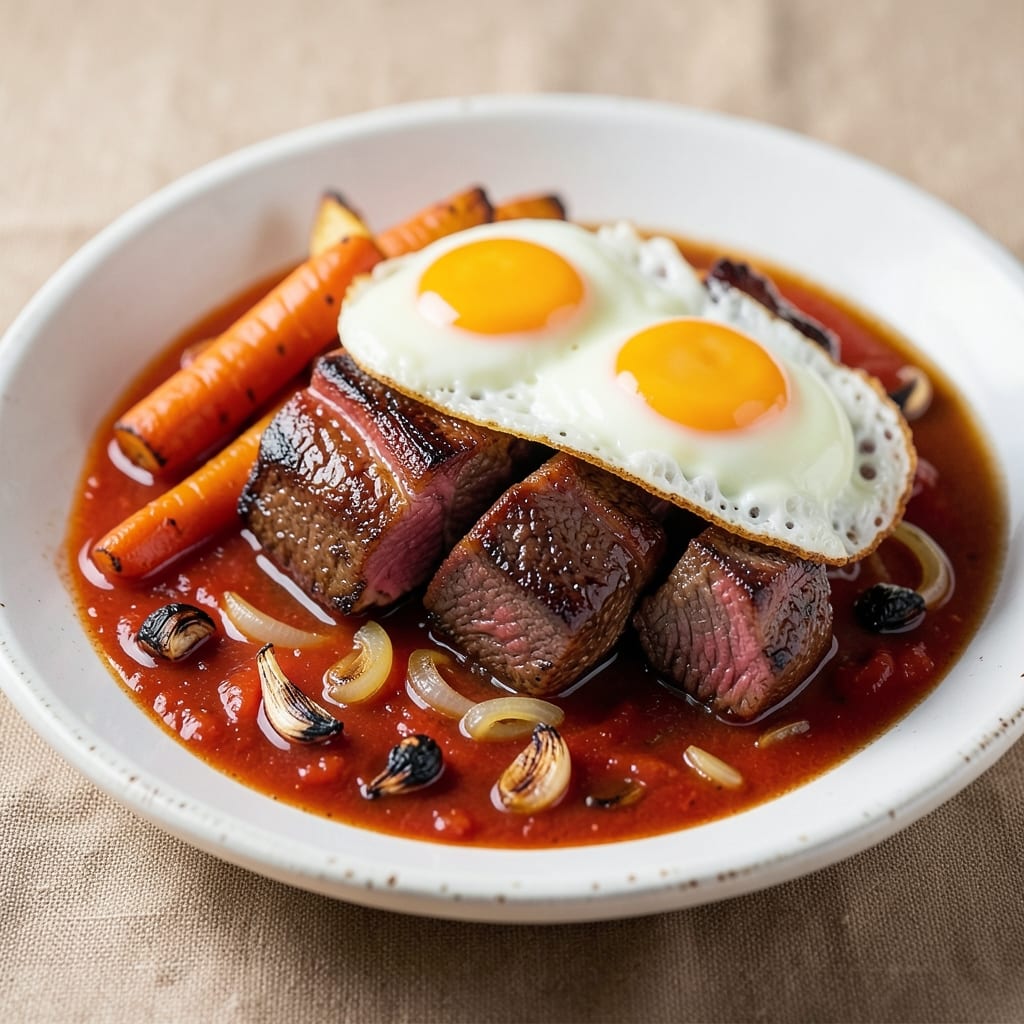
This beef tomato and egg recipe delivers a hearty, one-pan meal that combines tender beef, rich tomato sauce, and silky poached eggs into a single, satisfying dish. The secret lies in slow-cooking the beef until fork-tender while building layers of tomato flavor, then finishing with perfectly poached eggs that add creaminess and protein. I developed this recipe during a busy week when I needed a meal that required minimal cleanup but maximum flavor—it became an instant family favorite.
The beauty of this dish is its versatility. You can use ground beef, stew meat, or even leftover roast beef, and the tomatoes can be fresh, canned, or a blend of both for convenience. The eggs are poached directly in the simmering stew, absorbing the deep, savory flavors while maintaining their delicate texture. This method ensures every bite is packed with protein, vegetables, and a touch of brightness from the tomatoes.
What sets this recipe apart is the silky texture of the poached eggs, which contrasts beautifully with the tender beef and hearty tomato base. The dish is rich enough to feel indulgent but balanced enough to serve as a main course or even a comforting lunch. The slow cooking process allows the flavors to meld together, creating a stew that tastes even better the next day when reheated.
Perfect for weeknight dinners or meal prep, this recipe scales easily to feed a crowd or serve as leftovers for days. The one-pan approach means less time spent washing dishes and more time enjoying the meal. Let’s get cooking—this hearty stew is about to become a staple in your rotation.
Ingredients for beef tomato and egg
Tender beef, rich tomatoes, and silky eggs—this one-pan meal delivers comfort in every bite.
| Ingredient | Amount | Notes |
|---|---|---|
| Beef Chuck Roast 🥩 | 1 ½ lb | Cut into 1-inch cubes |
| Large Carrots 🥕 | 3 whole | Cut into 1-inch chunks |
| Yellow Onion 🧅 | 1 whole | Diced, medium size |
| Garlic Cloves 🧄 | 4 cloves | Minced, fresh preferred |
| Canned San Marzano Tomatoes 🍅 | 2 cans | 28 oz each, crushed by hand |
| Beef Broth 💧 | 2 cups | Low-sodium preferred |
| Red Wine 🍷 | ½ cup | Dry, bold variety |
| Tomato Paste 🍅 | 2 tbsp | No-sugar-added preferred |
| Large Eggs 🥚 | 4 whole | Fresh, room temperature |
| White Wine Vinegar 🍶 | 1 tbsp | For poaching liquid |
| Fresh Thyme Leaves 🌿 | ¼ cup | Or 1 tsp dried thyme |
| Bay Leaves 🌿 | 2 whole | Removed before serving |
| Kosher Salt 🧂 | 1 ½ tsp | Adjust to taste |
| Black Pepper 🌶️ | ½ tsp | Freshly ground |
| Extra-Virgin Olive Oil 🫒 | 2 tbsp | For searing beef |
The beef is the foundation, so chuck roast is ideal—it stays tender through slow cooking. Costco or local butchers often have it pre-cubed for convenience, but if buying whole, ask for a well-marbled piece. The San Marzano tomatoes are worth seeking out (check the Italian section at Whole Foods or Trader Joe's), but any high-quality canned tomatoes work in a pinch. For the wine, any dry red like Cabernet Sauvignon or Merlot will do—whatever's open in your fridge. Fresh thyme adds depth, but dried works at one-third the amount if that's all you have.
No red wine? Substitute beef broth with a splash of balsamic vinegar—it mimics the acidity beautifully. If you're short on time, frozen carrots work just as well as fresh, and pre-minced garlic saves chopping. The tomato paste can be replaced with an extra 1/2 cup of crushed tomatoes if you prefer. For the eggs, room temperature eggs poach more easily, but if they're straight from the fridge, give them 20 minutes to warm. The bay leaves are non-negotiable—they infuse subtle earthy notes that elevate the whole dish. If you hate fiddling with them, use 1/2 teaspoon dried bay leaf instead.
This stew tastes even better the next day as the flavors meld, so make a double batch if you're feeding a crowd. Store leftovers in the fridge for up to 5 days or freeze for 3 months. For reheating, warm gently on the stove—adding a splash of broth prevents drying. The poached eggs are best served immediately, but you can reheat them gently in the sauce if needed. I always keep a batch in the freezer for lazy weeknights—just thaw and reheat, then top with fresh eggs.
Why You'll Love This Recipe
- Here’s what sold me: this dish reheats like a dream. Pack the leftovers for work, and it’s still hearty and delicious hours later. (Yes, even on a Tuesday night when you’re craving something substantial but don’t want to slave over it.)
- One-Pot Magic: I swear by this—just toss in the beef, carrots, and onion, then let the tomatoes and garlic work their sauce magic. No extra pots, no fuss, and honestly? That deep, caramelized flavor happens almost by itself.
- Tomato-Garlic Hug: Between us, San Marzano tomatoes change the game. Their sweetness balances the beef’s richness, and when you crush those garlic cloves right into the pan? Pure satisfaction—like a warm embrace for your taste buds.
- Lunchbox Hero: Here’s what sold me: this dish reheats like a dream. Pack the leftovers for work, and it’s still hearty and delicious hours later. (Yes, even on a Tuesday night when you’re craving something substantial but don’t want to slave over it.)
Step-by-step instructions for beef tomato and egg stew
This one-pan method delivers rich, tender beef with silky poached eggs—all in a single pot.
Sear the Beef and Build the Flavor Base
Heat the 2 tablespoons extra-virgin olive oil in a large Dutch oven over medium-high heat until shimmering. Add the 1.5 lb beef chuck roast, cut into 1-inch cubes, in a single layer. Let each piece sear undisturbed for 2-3 minutes until deeply browned on all sides. This step develops the deep, meaty flavor that forms the stew's foundation.
Once the beef is browned, remove it from the pot and set aside. In the same pot, add the diced yellow onion and cook for 3 minutes until softened. Add the minced garlic cloves and cook for another 30 seconds until fragrant. Stir in the 2 tablespoons tomato paste and cook for 1 minute to deepen the color and flavor.
Simmer the Stew with Vegetables and Herbs
Return the seared beef to the pot. Add the crushed canned San Marzano tomatoes, 2 cups beef broth, 0.5 cup red wine, 1 tablespoon white wine vinegar, 0.25 cup fresh thyme leaves, and 2 whole bay leaves. Stir well to combine, then bring the mixture to a gentle boil. Once boiling, reduce heat to low and cover the pot.
Add the 3 whole large carrots, cut into 1-inch chunks, and the 1.5 teaspoons kosher salt and 0.5 teaspoon black pepper. Let the stew simmer uncovered for 1 hour 15 minutes or until the beef is tender enough to pierce easily with a fork. The liquid should reduce slightly, coating the beef and vegetables in a rich, tomato-infused sauce.
Poach the Eggs Directly in the Stew
While the stew simmers, bring a small pot of water to a gentle simmer for poaching. Carefully crack each of the 4 whole large eggs into small ramekins or cups. Lower the ramekins into the simmering water, allowing the eggs to poach for 3-4 minutes until the whites are set but the yolks remain runny. Remove the eggs with a slotted spoon and set aside on a paper towel-lined plate.
Alternatively, for a more integrated approach, gently lower the poached eggs directly into the hot stew just before serving. The residual heat will keep them warm while maintaining their silky texture. This method ensures the eggs absorb the stew's rich flavors without overcooking.
Finish and Serve with Perfectly Poached Eggs
Once the beef is tender, adjust the seasoning if needed, then carefully place the poached eggs into the stew. Simmer for an additional 2-3 minutes to gently warm the eggs through without breaking their yolks. The eggs should float just beneath the surface, surrounded by the savory tomato-beef broth.
Ladle the stew into bowls, ensuring each serving includes at least one whole poached egg. The contrast of the creamy egg yolk against the hearty beef and tangy tomato sauce creates a balanced, satisfying bite. Serve immediately with crusty bread to soak up the rich stew.
Pro Tips For Making Beef Tomato And Egg
- SEAR THE BEEF FIRST: Don’t rush this—get your chuck roast screaming hot in a dry skillet for 3-4 minutes per side until deep brown. I used to skip this because it seemed like overkill, but that crust is what makes the sauce cling to the meat later. (Yes, even if you’re impatient like me.)
- PEEL THOSE CARROTS: Skip the peeling—whole carrots hold their shape better and add texture. If you’re worried about dirt, just scrub them under running water. My grandmother swore by this, and she was right: the skin softens into the sauce without turning mushy.
- CRUSH THE TOMATOES: Drain the San Marzano cans but don’t skip crushing the tomatoes by hand—just a quick mash with your fist or a wooden spoon. This releases more flavor and thickens the sauce faster than leaving them whole. (Your future self will thank you.)
- SAVE THE STOCK: After searing the beef, don’t toss that browned fond—deglaze the pan with a splash of water or wine and let it reduce into a quick sauce. It’s the thing that matters most for depth, and it takes less than 2 minutes. (Does it look weird? Yes. Does it work? Every single time.)
Essential equipment for great beef tomato and egg
Dutch Oven
A 5-6 quart Dutch oven is my go-to for this recipe—it's the perfect size for searing beef while leaving room for the stew to develop depth. I love the Le Creuset signature line for its even heat distribution and durable construction, but All-Clad or Calphalon are great budget-friendly alternatives. The deep sides prevent splattering when searing, and the heavy base maintains consistent temperatures throughout the long simmer. 🔥
Measuring Tools
Precision matters when balancing flavors in this stew. A stainless steel measuring cup set (like OXO Good Grips) ensures accurate measurements for liquids and ingredients. For herbs like thyme, I use a small spoon to measure out ¼ cup fresh leaves—never pack them down. A digital kitchen scale (such as Escali Primo) comes in handy for weighing the beef cubes if you prefer exact portions. 💡
Poaching Equipment
Poaching eggs directly in the stew requires a small saucepan with a lid and a slotted spoon for easy removal. For traditional poaching, I use ramekins or egg cups (available at Williams Sonoma) to hold the eggs while they cook. Alternatively, a poaching egg ring (like OXO's) keeps whites neat. If you're short on time, a fine-mesh strainer works too—just crack the eggs into it and lower it into the simmering water. ✨
Knives and Cutting Board
A sharp 8-inch chef's knife (I recommend Wüsthof Classic) is essential for efficiently dicing the onion and chopping the carrots. Pair it with a non-slip cutting board (like Teakhaus bamboo) to prevent accidents. For the beef, a heavy-duty meat cleaver makes quick work of cubing the 1.5 lb chuck roast. Keep your knives sharp—dull blades crush ingredients instead of cleanly slicing them. 💪
Thermometer
While not mandatory, a meat thermometer (such as the Thermoworks Smoke) ensures the beef reaches a safe internal temperature of 160°F before adding the eggs. This is especially useful if you're using a slow cooker or oven instead of stovetop. For poaching, maintain water at a gentle simmer (180-190°F)—boiling water makes eggs rubbery. A candy or deep-fry thermometer works perfectly for this. 🌡️
Storage Containers
For leftovers, glass Pyrex storage containers (with airtight lids) are ideal—they keep the stew fresh for up to 5 days in the fridge. If freezing, use quart-sized freezer bags (like Stasher bags) to save space and prevent freezer burn. Label containers with the date to track freshness. I also keep a small bowl for reheating individual portions—just add a splash of broth to restore moisture. ❄️
Nutrition facts
Frequently asked questions about beef tomato and egg stew
Can I make this stew with ground beef instead of chuck roast?
Ground beef works beautifully and cooks much faster—just brown it thoroughly first over medium-high heat until no longer pink. For best results, use 80/20 ground chuck (20% fat) to keep the stew rich. Reduce the simmering time to 45-60 minutes since ground beef tenderizes quickly. The texture will be slightly different but still delicious!
How can I make this recipe vegetarian?
Swap the beef for mushrooms (like cremini or portobello) or lentils for protein. Sauté 1 lb mushrooms with the onions, or use 1.5 cups cooked brown lentils instead of beef. For extra richness, add 1 tablespoon soy sauce or 1 teaspoon smoked paprika. The poached eggs will still add creaminess to balance the dish.
Why did my poached eggs turn out rubbery?
Rubbery eggs usually happen from boiling water or overcooking. Keep the poaching water at a gentle simmer (180-190°F)—it should have tiny bubbles, not rolling boils. For the stew method, add eggs to the simmering stew just before serving and cook for only 2-3 minutes. Fresh, room-temperature eggs also poach better than cold ones.
Can I use fresh tomatoes instead of canned?
Yes! For 4-5 large fresh tomatoes, blend them with 1 tablespoon vinegar and 1 teaspoon salt to mimic canned tomatoes' acidity. Strain out seeds if desired. Fresh tomatoes add vibrant flavor but require more prep. For a shortcut, mix 1 can crushed tomatoes + 1 cup fresh diced tomatoes for a balance of convenience and freshness.
How do I reheat leftovers without breaking the eggs?
Reheat only the stew portion (without eggs) in a pot over low heat, adding 1-2 tablespoons broth to restore moisture. For the eggs, either poach fresh ones in the reheated stew or gently warm them in the microwave for 15-20 seconds in a microwave-safe bowl. Never reheat eggs directly in the stew—they'll overcook. Serve eggs on top instead!