
Breakfast & Brunch
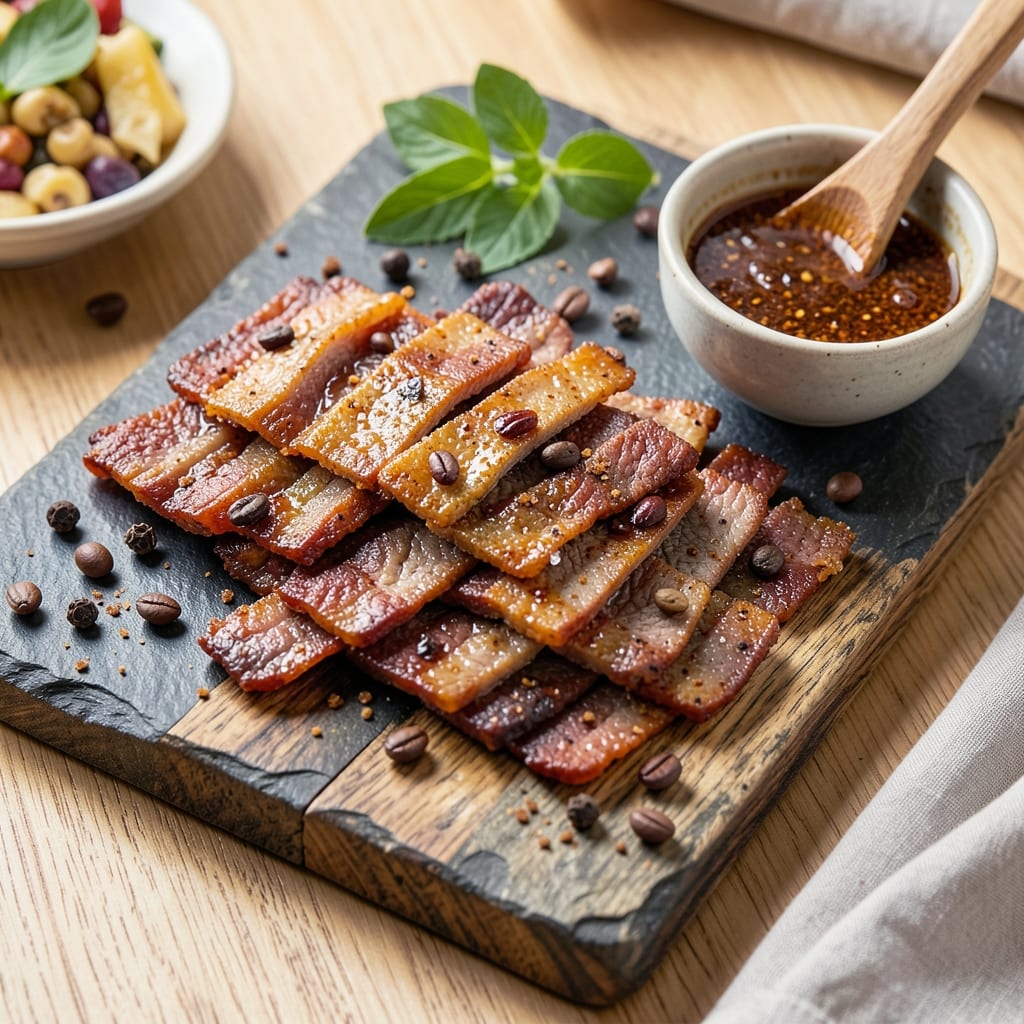
This Big Green Egg beef jerky recipe transforms tough cuts into smoky-sweet campfire snacks with restaurant-quality texture. The key? Slow-smoking over charcoal for deep flavor infusion while maintaining perfect moisture control—no tough, rubbery jerky here. I developed this method after years of experimenting with Big Green Egg's unique heat distribution, which creates an even bark without burning.
What sets this recipe apart is the two-stage process: first curing the meat in a flavor-packed marinade, then smoking it at 165°F for 3-4 hours until tender yet firm. The Big Green Egg's dome shape allows precise temperature management, crucial for jerky safety and perfect texture. No special equipment needed beyond what you already have on your grill.
By the time you're done, you'll have chewy, flavorful jerky with a glossy bark that holds up to outdoor adventures. The smoky-sweet glaze caramelizes beautifully, creating a satisfying crunch that disappears instantly. This method yields about 12 oz of jerky from 2 lbs of meat, perfect for camping trips or snacking at home.
Ready to make jerky that rivals store-bought? The secret lies in patience and temperature control—your Big Green Egg makes it foolproof. Let's get started with the full step-by-step process that delivers restaurant-quality results every time.
Ingredients for big green egg beef jerky
Transform tough beef into smoky-sweet jerky with these 15 game-changing ingredients.
| Ingredient | Amount | Notes |
|---|---|---|
| Lean Beef Top Round Roast 🥩 | 2 lb | Tough cut preferred for jerky texture |
| Coffee ☕ | ½ cup | Finely ground for deep flavor infusion |
| Brown Sugar 🍚 | ½ cup | Light or dark variety works |
| Granulated Sugar 🍬 | ¼ cup | For balanced sweetness |
| Smoked Paprika 🌶️ | 2 tbsp | Key for authentic smoky flavor |
| Ground Black Pepper 🌶️ | 1 ½ tbsp | Freshly ground for maximum heat |
| Garlic Powder 🧄 | 1 tbsp | Enhances umami depth |
| Onion Powder 🧅 | 1 tbsp | Adds savory complexity |
| Worcestershire Sauce 🍶 | 2 tbsp | Vegan version for plant-based option |
| Apple Cider Vinegar 🍏 | ¼ cup | For tenderizing and tang |
| Liquid Smoke 🔥 | 1 tsp | Enhances smoky character |
| Beef Tenderizer Enzyme 💊 | 1 tbsp | Optional for extra tenderness |
| Charcoal Chunks 🔥 | 2 lb | For Big Green Egg smoking |
| Apple Wood Chips 🌳 | 1 package | For subtle sweet aroma |
| Hickory Wood Chips 🌳 | 1 package | For classic smoky flavor |
The beef cut is non-negotiable—top round roast delivers that perfect chewy texture. Costco or local butchers carry this cut pre-sliced, but if you're buying whole, ask for it to be trimmed of fat and sliced paper-thin. The coffee isn't just for flavor; it's a secret tenderizer that prevents rubberiness. Starbucks or local roasters sell finely ground coffee that works perfectly. For the sugars, Domino or C&H brands are my go-tos—they dissolve smoothly without graininess. The smoked paprika? Penzeys brand is worth the splurge for that authentic campfire taste.
No Worcestershire sauce? Coconut aminos or soy sauce work in a pinch, though the umami won't be identical. Running low on apple cider vinegar? White vinegar or lemon juice adds tang, but apple cider's subtle sweetness is ideal. The liquid smoke is optional but adds that Big Green Egg smoky depth without hours of actual smoking. For wood chips, Traeger brand is my favorite—they're consistent and widely available. If you can't find apple wood, cherry wood gives a similar mild sweetness. The beef tenderizer enzyme is a game-changer if you're using older cuts—it breaks down tough fibers for that perfect melt-in-your-mouth texture.
This marinade keeps for 5 days in the fridge, though it's best used within 24 hours for maximum flavor infusion. The beef slices should be fully submerged in the marinade for at least 12 hours—overnight is ideal. For smoking, the Big Green Egg's dome shape lets you control temperature precisely, which is crucial for jerky safety. Store finished jerky in an airtight container with a silica packet to keep it crisp for up to 2 weeks. Freeze any extras for 6 months—just thaw overnight in the fridge before eating.
Why You'll Love This Recipe
- No-Fuss Prep: I’ll be real—this jerky takes zero fancy equipment. Just slice that top round into strips, toss them in the marinade (coffee + sugar + paprika = magic), and let the Big Green Egg do the work. No dehydrator, no babysitting—just set it and forget it while you grill your own burgers.
- Smoky-Sweet Obsession: That coffee grounds in the marinade? Deep, earthy, and just a little bitter—like a campfire in your mouth. The brown sugar caramelizes into this sticky, smoky crust that cracks when you bite it, and the smoked paprika ties it all together. Honestly, it’s the kind of jerky that makes you reach for seconds without thinking.
- Tailgate Hero: Between us, this is the only jerky I bring to football games or backyard BBQs. It’s hearty enough to feed a crowd but still light for snacking, and the rich flavors stand up to beer or even a cold soda. Plus, it’s way more impressive than store-bought—people will ask for the recipe, and you’ll look like a grill master.
- Budget Bulk: A pound of top round stretches forever, and the marinade costs pennies. I make a batch every few months, vacuum-seal it, and pull it out whenever I need a cheap, high-protein snack. No waste, no guilt—just pure, smoky satisfaction that won’t break the bank. (Yes, even on a Tuesday night.)
Step-by-step instructions for Big Green Egg beef jerky
Transform tough beef into irresistible, smoky-sweet jerky using your Big Green Egg.
Prepare the Beef with Tenderizing Marinade
Slice the 2 lb lean beef top round roast against the grain into ¼-inch thick strips. I like to use a sharp boning knife for clean cuts—this ensures even cooking and proper texture. Arrange the strips in a single layer on a baking sheet and refrigerate for 30 minutes to firm up before handling.
In a large bowl, combine the 0.5 cup finely ground coffee, 0.5 cup brown sugar, 0.25 cup granulated sugar, 2 tbsp smoked paprika, 1.5 tbsp freshly ground black pepper, 1 tbsp garlic powder, 1 tbsp onion powder, 2 tbsp Worcestershire sauce, 0.25 cup apple cider vinegar, and 1 tsp liquid smoke. Add the 1 tbsp beef tenderizer enzyme (if using) and mix until fully incorporated. Pour this marinade over the beef strips, ensuring each piece is well coated. Cover and refrigerate for 12-24 hours, turning occasionally for even penetration.
Set Up the Big Green Egg for Indirect Heat
Fill the Big Green Egg with 2 lb charcoal chunks and light them, allowing them to burn until they're covered with a thin layer of ash. Once the coals are ready, add the 1 package apple wood chips and 1 package hickory wood chips to the charcoal. Spread the coals evenly, creating a two-zone fire—one side with direct heat and the other with indirect heat. This setup ensures gentle, even drying without burning.
Place a wire cooling rack over the indirect heat zone. Preheat the Big Green Egg for 10-15 minutes until the internal temperature reaches 225°F. This low-and-slow approach is crucial for developing that perfect smoky-sweet bark while keeping the jerky tender.
Smoke the Beef Jerky Low and Slow
Arrange the marinated beef strips in a single layer on the wire rack, spacing them evenly to allow smoke circulation. Close the lid and smoke the jerky for 4-6 hours, maintaining a temperature between 200-225°F. You'll know it's ready when the jerky reaches an internal temperature of 160°F and the edges develop a deep mahogany bark. Check periodically to ensure even cooking—if any pieces start to darken too quickly, rotate the rack for balanced exposure.
Here's the thing—patience is key. If you rush it, the jerky will turn tough and leathery. The smoke should be gentle and steady, not thick and acrid. If you notice the temperature creeping above 225°F, add more green wood chips to cool things down and maintain that ideal range.
Test for Doneness and Finish
Remove the jerky from the Big Green Egg and let it cool completely on a wire rack. Once cooled, test for doneness by slicing into a piece—it should be flexible but not rubbery, with a moist, chewy interior and a crisp, smoky exterior. If any pieces feel too moist, return them to the indirect heat zone for 15-30 minutes to finish drying.
For extra flavor, brush the cooled jerky with a little more apple cider vinegar or a light glaze of brown sugar and liquid smoke mixture. Let it rest for 10 minutes before slicing into ¼-inch strips for serving. Store in an airtight container in the refrigerator for up to 2 weeks or freeze for 3 months to preserve freshness.
Pro Tips For Making Big Green Egg Beef Jerky
- Freeze Meat First: Trim and slice your top round, then freeze it solid for 1–2 hours before dehydrating. I learned this the hard way—unfrozen slices shrink unevenly and cook faster at the edges, leaving you with jerky that’s tough in spots and rubbery in others. Cold meat also holds its shape better in the Big Green Egg’s indirect heat.
- Mix Dry Rub Early: Combine coffee, sugars, and smoked paprika before applying it to the beef. Wet coffee grounds clump like glue if added later, and you’ll end up scraping them off your hands or the meat. A quick 30-second mix in a bowl saves frustration—and ensures every slice gets that deep, even flavor.
- Avoid Overcrowding Trays: Stagger slices with space between them, even if it means two batches. I used to jam them in tight, thinking more = faster, but the edges steam instead of drying. Proper airflow means crispier jerky and no soggy centers when you pull it out. Trust me, the second batch moves just as fast.
- Use a Meat Thermometer: Pull your jerky at 160°F internal temp, not "when it looks dry." I’ve burned batches waiting for color and had others still moist inside. The Big Green Egg’s heat varies by spot—check the thickest slice to guarantee safety and perfect texture. No guesswork, just done.
Dietary considerations for big green egg beef jerky
Gluten-Free Adaptations
The original recipe is naturally gluten-free since it relies on beef, spices, and vinegar—no wheat or barley ingredients are present. However, always double-check your Worcestershire sauce label, as some brands contain gluten. I recommend Annie's or coconut aminos for a safe alternative. The beef tenderizer enzyme is also gluten-free, so no substitutions are needed there. 🌾
Low-Sodium Options
If you're watching sodium intake, reduce the Worcestershire sauce to 1 tbsp and swap the regular salt for 1 tsp smoked sea salt (like Maldon). Use low-sodium soy sauce if substituting for Worcestershire. The apple cider vinegar and spices already provide plenty of flavor without extra sodium. Always taste as you go—jerky can be adjusted after smoking.
Allergen Considerations
This recipe contains no top allergens except potential traces from cross-contamination. For soy allergies, use coconut aminos instead of Worcestershire. If you're avoiding nightshades (like paprika), replace the smoked paprika with 1 tbsp smoked salt and 1 tsp liquid smoke for depth. Always prepare jerky in a clean environment to prevent allergen transfer. 💡
Dairy-Free & Vegan-Friendly
This recipe is already dairy-free, but for a vegan version, replace the beef with extra-firm tofu or tempeh (marinated identically). Use vegan Worcestershire and ensure your beef tenderizer enzyme is plant-based. The smoking process works the same—just monitor temps closely as plant proteins dry differently. Vegan jerky will have a slightly different texture but still delivers bold flavor.
Keto-Friendly Adjustments
The recipe is naturally keto-friendly with under 3g net carbs per serving (based on 12 oz yield). Skip the sugars entirely and use 1 tbsp erythritol or monk fruit sweetener instead for a zero-carb option. The coffee and spices add depth without carbs, making this a perfect high-protein, low-carb snack. Just ensure your Worcestershire sauce is sugar-free—Primal Kitchen brand is my go-to. 🥩
Nutrition facts
Frequently asked questions
Can I use a different type of beef for this Big Green Egg jerky?
While top round roast is ideal, you can also use chuck roast or sirloin tip for slightly more marbling. Avoid lean cuts like flank steak—they'll dry out too quickly. If using fattier cuts, trim excess fat before slicing to prevent flare-ups on your Big Green Egg. The key is ¼-inch thick slices cut against the grain for perfect texture.
How do I maintain consistent temperature on my Big Green Egg?
Use the two-zone fire method with 2 lb charcoal chunks and add green wood chips (like apple or hickory) every 30-45 minutes to stabilize heat. The Big Green Egg's dome shape naturally retains heat better than open grills. If temps rise above 225°F, move the rack to the cooler side or add more unlit charcoal to absorb excess heat. A good thermometer is your best friend here!
Why did my jerky turn out rubbery instead of chewy?
Rubbery jerky usually means it was overcooked or sliced too thick. Keep slices at ¼-inch maximum and smoke at 200-225°F for 4-6 hours—never exceed 160°F internal temp. The marinade's apple cider vinegar and beef tenderizer enzyme are key for tenderness. If it's still tough, try marinating 24 hours instead of just 12, or add 1 tsp baking soda to the marinade to break down fibers.
Can I make this jerky without a Big Green Egg?
Yes! Use an offset smoker or even a large oven at 175°F for 4-6 hours with a water pan for moisture. For a grill, create a drip pan with wood chips underneath the rack. The Big Green Egg's advantage is its precise heat control—without it, monitor temps closely to avoid burning. A meat thermometer is essential for safety and perfect results.
How long will my jerky last, and how should I store it?
Store in an airtight container with a silica packet to absorb moisture. It stays fresh for 2 weeks in the fridge or 3 months in the freezer. For longer storage, vacuum-seal portions. If jerky develops a white film (mold), discard it immediately—this recipe's acidity (from vinegar) should prevent spoilage, but proper storage is key. The smoky bark stays crisp when stored this way!