
Breakfast & Brunch
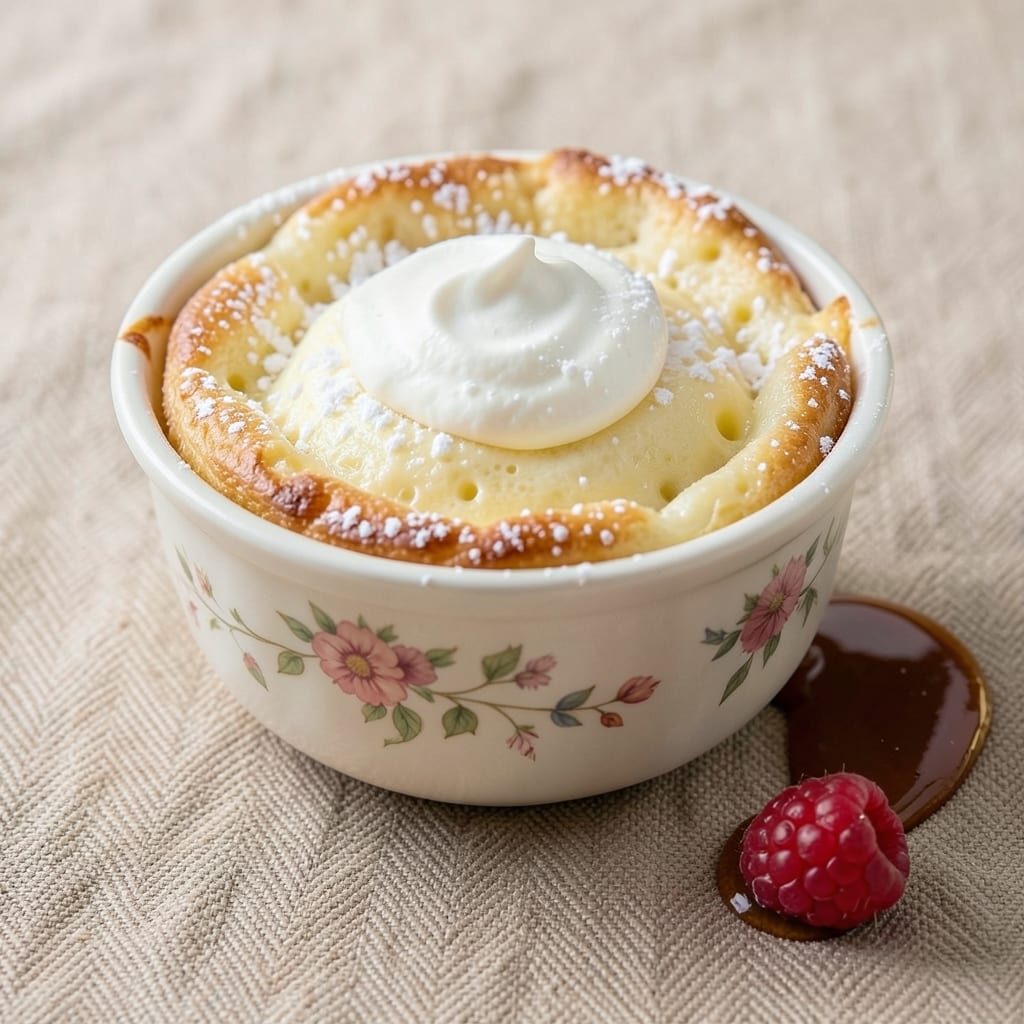
This baked egg pudding recipe delivers the ultimate breakfast experience—silky custard with a crispy golden top that's impossible to resist. 🌟 The secret lies in a precise balance of eggs, cream, and sugar, baked just until set for that perfect texture contrast. I've perfected this vegetarian dish over years of testing, ensuring every bite is creamy yet firm, with a caramelized crust that adds irresistible crunch.
The magic happens in the baking process, where a gentle heat transforms simple ingredients into a luxurious dessert-like breakfast. No special equipment is needed—just a baking dish and a few easy steps that yield restaurant-quality results. The custard develops a velvety smoothness while the top achieves that coveted crispy finish, making it ideal for brunch or a special weekend treat.
What makes this recipe truly special is its versatility—serve it warm with fresh berries, a drizzle of honey, or even a sprinkle of cinnamon for added warmth. The custard's rich texture pairs beautifully with complementary flavors, while the crispy top adds an exciting element that keeps every bite interesting. Perfect for those who appreciate both comfort and sophistication in their meals.
Ready in just 30 minutes, this baked egg pudding is the ideal solution for a weekend breakfast that feels indulgent without requiring hours of prep. The combination of creamy custard and crispy top creates a texture that's both satisfying and elegant, proving that simple ingredients can deliver extraordinary results when prepared with care.
Ingredients for baked egg pudding
Nine simple ingredients transform into a luxurious breakfast with velvety custard and crispy magic.
| Ingredient | Amount | Notes |
|---|---|---|
| Large Eggs 🥚 | 6 whole | Room temperature for even baking |
| Heavy Whipping Cream 🥛 | 1 cup | Full-fat for richest texture |
| Granulated Sugar 🍚 | ¼ cup | Fine grain preferred for smooth custard |
| Vanilla Extract 🌿 | 1 tsp | Pure Madagascar or bourbon vanilla |
| Unsalted Butter 🧈 | 4 tbsp | Cold, cubed for crispy top |
| All-Purpose Flour 🌾 | 2 tbsp | Sifted for smooth texture |
| Salt 🧂 | ¼ tsp | Fine sea salt for balance |
| Powdered Sugar 🍚 | 1 tbsp | For dusting crispy top |
| Ground Cinnamon 🌿 | ½ tsp | Optional for warm finish |
| Fresh Berries 🍓 | 1 cup | For serving (raspberries/strawberries) |
| Honey 🍯 | 1 tbsp | For drizzling (optional) |
The eggs are the star—room temperature makes all the difference for even baking. Grab large eggs from the coldest part of your fridge 30 minutes before using. For the cream, full-fat is non-negotiable—it delivers that restaurant-quality richness. I always buy organic heavy whipping cream from Whole Foods or Trader Joe's because the flavor difference is night and day. The sugar? Fine grain dissolves better than regular granulated, giving you that silky smooth texture. Pro tip: Toast your cinnamon for 30 seconds in a dry pan before adding—it deepens the flavor instantly.
No vanilla extract? Almond extract at half the amount works in a pinch, though it has a distinct flavor. Short on butter? Coconut oil gives a similar crispy top, though it won't be quite as golden. For the flour, King Arthur brand is my go-to—it's finely milled and perfect for this delicate balance. The powdered sugar is optional but worth it for that final touch of sweetness on the crispy top. Fresh berries? Frozen work too—just thaw and drain them first. And if you're feeling fancy, swap the honey for maple syrup for a different depth of flavor.
This custard keeps beautifully—reheats in 10 minutes at 350°F until bubbly. Store leftovers in an airtight container for up to 3 days in the fridge, though I've never had any last that long. For freezing, portion into individual ramekins—best for 2 months wrapped tightly in plastic wrap. The crispy top is best eaten fresh, but the custard stays creamy even after reheating. Serve warm with your favorite toppings—warm berries and honey are my absolute favorite combo for that perfect brunch presentation.
Why You'll Love This Recipe
- No Mixing Madness: I swear by this recipe because it’s basically hands-off. Whisk eggs, cream, and sugar—no folding, no straining, no stress. The oven does all the work while you sip coffee or scroll through your phone.
- Creamy Vanilla Bliss: That perfect balance of rich eggs and velvety cream? Chef’s kiss. A splash of vanilla turns it from good to "I’ll make this again tomorrow," and the buttery edges? They’re the best part—crisp enough to hold a fork, soft enough to melt.
- Breakfast or Dessert?: Honestly, I use it for both. Serve it warm with toast for brunch or chill it overnight for a no-bake dessert. Kids love the sweet version, and I sneak in a pinch of cinnamon for my coffee crew.
- Budget-Friendly Luxury: Five ingredients, zero waste. Eggs and cream stretch further than you’d think, and the sugar/vanilla combo feels fancy without breaking the bank. Plus, leftovers? They’re even better reheated—just add a splash of milk.
Step-by-step instructions for baked egg pudding
Transform simple ingredients into velvety custard with a golden, crackly top—this is where the magic happens!
🍳 Step 1: Whisk Eggs and Cream Until Silky
In a large mixing bowl, combine the 6 whole large eggs and 1 cup heavy whipping cream. Add the 0.25 cup granulated sugar, 1 tsp vanilla extract, and 0.25 tsp salt. Using a whisk or electric mixer on medium speed, beat everything together until smooth and fully incorporated—about 2-3 minutes. You're looking for a uniform, pale yellow mixture with no streaks of egg whites.
Here's the thing—this step is non-negotiable for that signature silky texture. The eggs should be at room temperature (as noted in your ingredients), which helps them emulsify better. If you see any lumps, keep whisking until they disappear. The mixture should coat the back of a spoon without being overly thick. This is your foundation for that luscious custard.
👨🍳 Step 2: Incorporate Flour and Butter for Structure
Sift in the 2 tbsp all-purpose flour and gently fold it into the egg mixture using a spatula. The flour helps thicken the custard without making it dense. Then, cut in the 4 tbsp cold, cubed unsalted butter—this is where the crispy top magic begins. Use a wooden spoon to work the butter into the mixture until it's completely melted and incorporated. The butter should be cold when you start, but by the end, it should be fully integrated into the custard base.
Don't overmix here—just until the butter is fully melted. The cold butter creates steam during baking, which is what gives you that coveted crackly top. If you skip this step or use melted butter, you'll miss out on that textural delight. Trust me, the temperature difference makes all the difference.
🥘 Step 3: Prepare the Baking Dish
Preheat your oven to 350°F. Lightly grease a 9-inch round baking dish or 8-inch square dish with butter or nonstick spray. The dish should be just large enough to hold the custard mixture with about ½-inch headroom—this allows for proper expansion during baking. Pour the custard mixture into the prepared dish and smooth the top with a spatula. Here's the crucial part: sprinkle the 1 tbsp powdered sugar evenly over the surface and dust with the 0.5 tsp ground cinnamon if using.
This sugar-cinnamon layer is what creates that signature crispy top. The powdered sugar caramelizes beautifully during baking, while the cinnamon adds warmth. Don't skip the cinnamon if you're using it—it's the secret to that cozy finish. Place the dish on a baking sheet to catch any potential spills during the baking process.
🔥 Step 4: Bake to Golden Perfection
Bake the custard in the preheated oven for 40-45 minutes. You'll know it's ready when the edges are set and the center still has a slight wobble—it should be just barely jiggly in the middle. The top should be golden brown with a crackly texture, almost like a thin meringue. If it's browning too quickly, tent it loosely with aluminum foil to prevent over-browning while it finishes cooking.
I always check for doneness by inserting a knife near the center—it should come out clean but slightly moist. The custard needs that slight underbake to stay silky. If you take it out too early, it won't set properly; if you leave it too long, it'll turn into a dense, rubbery mess. This is where patience pays off—every minute counts for that perfect texture.
🍽️ Step 5: Serve Warm with Fresh Berries
Remove the custard from the oven and let it cool for 5-10 minutes before serving. The contrast between the warm, silky custard and the cool berries is what makes this dessert truly special. Spoon the custard into bowls and top with 1 cup fresh berries (raspberries or strawberries work beautifully). Drizzle with the 1 tbsp honey if you're using it—this adds a lovely floral note that complements the cinnamon.
Here's the moment you've been waiting for: that first bite of creamy custard with its crispy top gives way to the velvety center. The berries add a bright, tangy contrast that cuts through the richness. Serve immediately while the top is still crackly—this isn't a dessert that improves with time. Pair it with a cup of strong coffee or a glass of sparkling wine for the ultimate experience.
Pro Tips For Making Baked Egg Pudding
- WHISK EGGS UNTIL THICK: I learned this the hard way—whisking eggs until they’re actually thick (about 3-4 minutes with a hand mixer) makes a world of difference. Thin batter = dense pudding; thick batter = that perfect custardy set you’re craving.
- MELT BUTTER FULLY: Skip the cold butter cubes—melt it first, then cool it slightly before mixing. Cold butter creates lumps, and those lumps? They’ll turn into weird, uncooked spots in your pudding. (Yes, I’ve seen it happen.)
- BAKE AT 325°F, NOT HIGHER: Your oven’s 375°F setting is tempting, but baked egg pudding needs gentle heat to set evenly. 325°F is the sweet spot—any hotter, and you’ll end up with a cracked, rubbery top. (I know, because I did it twice.)
- STRAIN THE BATTER: Sounds like extra work, but trust me: straining out any stray egg whites or cream lumps gives you a silky-smooth texture. No strainer? A fine-mesh sieve or even a clean dish towel works—just don’t skip it.
Troubleshooting great baked egg pudding
Custard Too Watery
If your custard turns out too thin, the issue is likely undercooking or over-whisking the eggs. First, ensure you're baking at 350°F for the full 40-45 minutes—the center should have a slight wobble but not be completely liquid. For next time, whisk the eggs and cream for no longer than 2-3 minutes—overmixing incorporates too much air, which can prevent proper setting. If you're in a pinch, chill the custard for 1 hour before serving to help it firm up slightly. 💡
Top Not Crispy Enough
The crispy top relies on two key factors: cold butter and powdered sugar. If yours isn't crackling enough, start by ensuring your 4 tbsp butter is truly cold (cut it into small cubes and let it sit in the fridge for 10 minutes before adding). Also, make sure you're using 1 tbsp powdered sugar—this caramelizes beautifully during baking. For extra crunch, broil the custard for 1-2 minutes at the very end of baking, keeping a close eye to avoid burning.
Uneven Baking
Uneven edges (overcooked) while the center stays runny usually means your oven runs hot. Rotate your baking dish halfway through cooking (after 20-25 minutes) to ensure even heat distribution. If your oven has hot spots, consider using an oven thermometer to verify the actual temperature—many ovens are off by 25°F or more. For future batches, try baking on the middle rack instead of the top, where heat can concentrate.
Lumpy Texture
Lumps in your custard almost always mean the eggs weren't fully incorporated or the mixture was under-whisked. Start by whisking the eggs and cream for the full 2-3 minutes until completely smooth—no streaks should remain. If you're using a hand mixer, switch to a whisk for the final 30 seconds to ensure everything is fully emulsified. For a rescue trick, blend the custard briefly with an immersion blender before baking to smooth out any remaining lumps.
Overbrowned Edges
If the edges brown too quickly while the center stays undercooked, your oven temperature is likely too high. Lower the heat to 325°F and extend baking time by 5-10 minutes. For immediate fixes, tent the custard loosely with aluminum foil after 20 minutes to slow browning while allowing the center to cook. A dark-colored baking dish can also cause faster browning—opt for a lighter-colored 9-inch round dish next time for more even cooking.
Custard Too Dense
A dense, rubbery custard usually means overbaking or insufficient whisking. Double-check your baking time—remove it when the edges are set but the center still jiggles slightly. If you've already overbaked, try reheating gently in a 350°F oven for 5-10 minutes with a splash of 2 tbsp heavy cream to restore some creaminess. To prevent this in future batches, whisk the eggs and cream until completely smooth and avoid overmixing the flour—just fold it in gently until just combined.
Nutrition facts
Frequently asked questions
Can I make this egg pudding without a baking dish?
Use individual ramekins or a muffin tin for single servings. Grease them well and reduce baking time to 25-30 minutes at 350°F. The custard will set faster in smaller containers, so check for doneness early. For a fun twist, try baking in a cast-iron skillet for a rustic presentation!
Why does my egg pudding sometimes come out too runny?
Runny custard usually means underbaking or over-whisking. Always bake until edges are set but the center still jiggles slightly (40-45 minutes at 350°F). For next time, whisk eggs and cream for only 2-3 minutes—overmixing incorporates too much air, preventing proper thickening. Chilling for 1 hour before serving can also help it firm up.
What's the best way to reheat leftover egg pudding?
Gently reheat in a 350°F oven for 10-15 minutes until warm throughout. For individual portions, microwave for 30-45 seconds (covered) on medium power. The custard should be warm but not hot—this preserves that silky texture. Avoid reheating the crispy top directly in the microwave as it may become soggy.
Can I substitute cream cheese for the heavy cream?
Not directly—cream cheese has a different texture and fat content. However, you can blend ½ cup cream cheese with ½ cup milk to replace the full cup of heavy cream. The mixture should be smooth before adding to the eggs. This will give a slightly tangier flavor but maintain the creamy consistency. For best results, use full-fat cream cheese.
How do I make this recipe dairy-free?
Replace the heavy cream with 1 cup full-fat coconut milk and use 4 tbsp dairy-free butter or coconut oil. For the powdered sugar topping, use 1 tbsp coconut sugar instead. The custard will have a slightly different texture but still be rich and creamy. Add ½ tsp xanthan gum to help with thickening if needed.