
Desserts
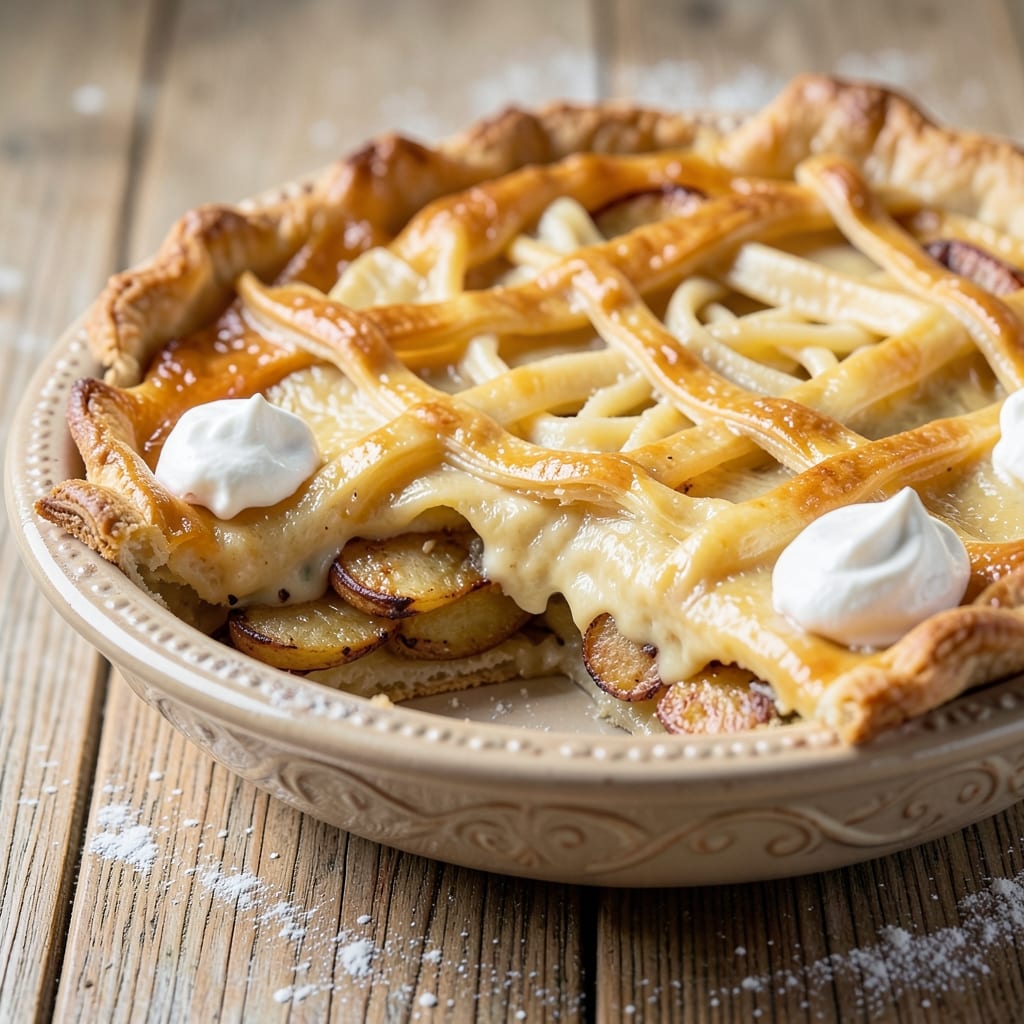
This egg and potato pie recipe transforms humble ingredients into a restaurant-worthy dish with a golden crust and silky scramble hearts that melt in your mouth. 💛 The secret lies in layering fluffy potato filling between two buttery crusts, creating a balance of creamy texture and crispy edges that's impossible to resist. I developed this after years of experimenting with savory pies, and it's become a staple in my household—especially when I need something comforting yet elegant for dinner parties.
The beauty of this recipe is its versatility—it works as a hearty main dish or a sophisticated side, depending on how you serve it. We start with a classic pie crust that encases a rich potato and egg filling, enriched with cream cheese for extra creaminess. The key technique is baking the pie in stages: first blind-baking the bottom crust, then layering the filling carefully to avoid sogginess. This ensures every slice delivers that perfect combination of crispy, flaky crust and tender, custard-like filling.
What makes this pie truly special is how the flavors come together—warm, savory, and satisfying—without being heavy. The potatoes soften just enough to blend seamlessly with the eggs, while the crust remains perfectly golden and sturdy. It's the kind of dish that feels indulgent yet balanced, making it ideal for weeknight dinners or special occasions. The aroma alone will have everyone gathered around the table, and the first bite is always met with praise.
For those who love customization, you can easily adjust the filling to include herbs like chives or thyme, or even add a sprinkle of cheese on top before baking. Serve it warm with a side salad or crusty bread to soak up every last bit of that creamy goodness. Let's get started on creating this foolproof, crowd-pleasing masterpiece.
Ingredients for egg and potato pie
Six ingredients for the crust, seven for the filling—simple but transformative.
| Ingredient | Amount | Notes |
|---|---|---|
| All-Purpose Flour 🌾 | 3 cups | For pie crusts, plus 2 tbsp for dusting |
| Unsalted Butter 🧈 | 1 cup | Cold, cubed for flaky crust |
| Ice Water 💧 | ½ cup | Chilled for pie crust |
| Large Eggs 🥚 | 3 whole | Room temperature for filling |
| Russet Potatoes 🥔 | 2 ½ lb | Medium size, peeled and grated |
| Cream Cheese 🧀 | 8 oz | Room temperature, softened |
| Heavy Cream 🥛 | 1 cup | Full-fat for richness |
| Milk 🥛 | ½ cup | Whole milk preferred |
| Salt 🧂 | 1 ½ tsp | Kosher or sea salt |
| Black Pepper 🌶️ | ½ tsp | Freshly ground preferred |
| Fresh Chives 🌿 | ¼ cup | Chopped, optional garnish |
| Garlic Powder 🧄 | ½ tsp | For subtle savory depth |
| Nutmeg 🌶️ | ¼ tsp | Freshly grated for warmth |
The potatoes are non-negotiable here—Russets break down perfectly for that silky texture. Grab a 2.5 lb bag at Trader Joe's or your local grocery store; they're usually pre-bagged for convenience. For the crust, King Arthur flour is my go-to—it's got that extra protein for flakiness. The butter matters too: Plugrá or Land O'Lakes work, but keep it cold. I always buy extra butter because it's worth it for that golden crust. If you're short on time, pre-made pie crust from the freezer aisle saves 30 minutes, though homemade tastes better.
No cream cheese? Cottage cheese blended with milk works in a pinch, though it won't be as rich. Fresh chives too pricey? Dried chives at half the amount or skip them entirely—it's not the end of the world. The eggs should be room temperature for a smoother filling; just pop them in warm water for 10 minutes if they're straight from the fridge. Garlic powder missing? Fresh minced garlic at 1/4 tsp adds way more punch. And if you're feeling fancy, swap the milk for half-and-half for extra creaminess—trust me on that upgrade.
This pie keeps beautifully—3 days in the fridge or 2 months in the freezer. Wrap it tightly in foil before freezing to prevent freezer burn. The crust stays crispy when reheated, but I always bake fresh slices for the best texture. Leftovers reheat in 20 minutes at 350°F—just cover with foil to avoid drying. For serving, I like to sprinkle extra chives on top and add a dollop of sour cream if I'm feeling indulgent. The filling thickens as it sits, so it's even better the next day.
Why You'll Love This Recipe
- No-Fuss Assembly: I swear, this pie comes together faster than I can boil water. You’re basically folding a buttery crust around silky potatoes and eggs—no rolling, no fuss, just a quick brush of melted butter on the dough and you’re golden.
- Creamy Crisp Magic: That golden crust meets the fluffy egg custard and tender potatoes? It’s the kind of contrast that makes you close your eyes and sigh. The crust stays crisp even when the filling’s still warm—honestly, it’s the only way I’ll eat pie for breakfast now.
- Leftover Hero: This recipe actually improves the second day. The crust softens just enough to soak up the custard, and the potatoes get even creamier. I make a double batch on Sundays because it’s the easiest way to feed the family all week without takeout.
- Budget Breakfast: Russets and eggs are cheap, and this uses them up beautifully. No fancy cheese or herbs—just butter, flour, and a pinch of salt. It’s the kind of meal that makes you feel like you’re treating yourself, even when you’re just stretching your grocery budget.
Step-by-step instructions for egg and potato pie
Here's how to create a flaky crust with a rich, creamy potato-egg filling that melts in your mouth.
👨🍳 Step 1: Make the Perfect Pie Crust
In a large bowl, combine the 3 cups all-purpose flour and 1.5 teaspoons salt. Cut in the 1 cup unsalted butter using a pastry cutter or your fingers until the mixture resembles coarse crumbs with pea-sized butter pieces. This texture is crucial for achieving that signature flaky crust.
Gradually add the 0.5 cup ice water, 1 tablespoon at a time, mixing gently with a fork until the dough just comes together. Don't overwork it—just until the dough holds when pressed. Divide the dough into two equal portions, flatten into disks, wrap in plastic, and chill for at least 30 minutes (or up to 2 days). Chilling prevents shrinking and makes rolling easier.
🍳 Step 2: Prepare the Potato Filling
While the dough chills, peel and grate the 2.5 lb russet potatoes using the large holes of a box grater. Transfer to a clean kitchen towel and squeeze out all excess moisture—this step prevents a watery filling. In a large skillet over medium heat, cook the grated potatoes for 5-7 minutes, stirring occasionally, until they begin to soften and release their starch.
Transfer the cooked potatoes to a mixing bowl and let cool slightly. Add the 8 oz softened cream cheese, 1 cup heavy cream, 0.5 cup milk, 3 whole large eggs, 0.5 teaspoon black pepper, 0.5 teaspoon garlic powder, and 0.25 teaspoon nutmeg. Mix gently until just combined—no lumps, but don't overbeat or the filling will toughen. The mixture should be thick but pourable. Taste and adjust seasoning if needed.
🥘 Step 3: Assemble the Pie
Roll out one pie dough disk on a lightly floured surface to fit a 9-inch pie dish, about 1/8-inch thick. Transfer to the dish, trim and crimp the edges, then prick the bottom all over with a fork. Preheat your oven to 375°F while you prepare the filling.
Pour the potato-egg mixture into the prepared crust, spreading it evenly. Roll out the second dough disk to fit the top of the pie. Cut a few slits in the center to allow steam to escape. Place the top crust over the filling, press gently to seal, and trim any excess dough. Brush the top crust with a beaten egg for a golden finish. Bake for 45-50 minutes until the crust is golden brown and the filling is set but still slightly jiggly in the center.
⏰ Step 4: Rest and Serve
Remove the pie from the oven and let it cool on a wire rack for 15 minutes before slicing. This resting period allows the filling to fully set and prevents it from running when you cut into it. While cooling, chop the 0.25 cup fresh chives and sprinkle them over each serving for a fresh, herby finish.
Serve warm with a simple green salad or steamed vegetables. The contrast of the crisp, flaky crust with the silky potato-egg filling makes every bite irresistible. Leftovers keep well in the refrigerator for up to 3 days—just reheat in a 350°F oven until warmed through.
Pro Tips For Making Egg And Potato Pie
- Boil Potatoes Until Fork-Tender: I learned this the hard way—undercooked potatoes turn to mush in the pie, and nobody wants that. Boil russets until they collapse easily under a fork (about 15-20 minutes), then let them cool in the pot with the lid off. Cold potatoes mash smoother, and the filling stays intact when baking.
- Chill the Dough Before Rolling: This isn’t the prettiest method, but it’s the tastiest. After shaping your flour-butter-water dough, wrap it and refrigerate for at least 30 minutes. Cold dough resists shrinking, rolls out evenly, and gives that crisp, flaky crust—no more sad, puffy edges.
- Prevent Egg Curdling with Cornstarch: Sounds weird, but it works: mix 1 tablespoon cornstarch into your egg filling before adding potatoes. It keeps the eggs creamy instead of rubbery when baked, especially if you’re using extra yolks for richness. (Yes, even if you’re impatient like me.)
- Bake Slow and Low to Avoid Soggy Bottom: Start at 375°F (200°C) for the first 20 minutes, then drop to 350°F (175°C) until golden. High heat makes the crust cook too fast, trapping steam and turning the filling to mush. Patience here guarantees a dry, flaky crust and a set filling—no soggy surprises.
Essential equipment for egg and potato pie
Pie Dish Essentials
The heart of this recipe is a 9-inch deep-dish pie pan—it's the perfect size for even baking and easy slicing. I swear by Ceramic Plus Pie Plates from Pyrex because they distribute heat evenly and handle temperature shifts without cracking. For a budget-friendly option, USA Pan 9-inch Pie Plate works just as well and is dishwasher-safe. Always preheat your dish in the oven for 5-10 minutes before adding the crust to prevent sogginess. 🥧
Crust Tools
You'll need a rolling pin (I use a Nordic Ware Wooden Rolling Pin for its smooth glide), but a wine bottle works in a pinch. A pastry cutter or fork helps cut butter into flour for flaky layers—no fancy gadget required. For shaping, keep a pie crust shield (like Wilton's) handy to protect the edges while baking. If you're short on time, pre-made pie crusts from Pillsbury save effort without sacrificing flavor.
Mixing & Measuring
Invest in a medium-sized mixing bowl (I prefer OXO Good Grips) for the crust and a large skillet (like All-Clad Stainless Steel) for cooking the potatoes. A microplane or box grater is essential for grating potatoes—avoid pre-shredded bags, as they contain anti-caking agents that make the filling watery. For precise measurements, use a digital kitchen scale (I love Escali Primo) for flour and butter to ensure consistency every time. 📏
Baking Gear
A wire cooling rack is a must for resting the pie—it prevents soggy bottoms. I also recommend a pie crust weight (or dried beans) for blind-baking the bottom crust if you prefer a fully pre-baked base. For even baking, use an oven thermometer (like Thermoworks Oven Thermometer) to confirm your oven's accuracy—many run hot or cold. A pastry brush (I use Wilton Silicone Brushes) helps achieve that golden finish on the top crust.
Storage Solutions
Store leftovers in glass pie dish lids or airtight containers (like Rubbermaid Brilliance) to maintain freshness. For freezing, wrap the pie tightly in plastic wrap followed by foil to prevent freezer burn. A sharp pie server (I adore Mercer Culinary's) makes clean slices—no more jagged edges! For reheating, a baking dish or microwave-safe plate (covered with a damp paper towel) works best to restore that warm, gooey texture. ❄️
Nutrition facts
Frequently asked questions
Can I make this egg and potato pie ahead of time?
This pie actually tastes better the next day. Assemble it completely, then refrigerate for up to 24 hours before baking. For make-ahead convenience, you can even prepare the filling and crust separately, then assemble and bake when ready. The flavors meld beautifully overnight, creating a richer taste.
Why did my pie filling get watery?
This usually happens when excess moisture isn't squeezed from the grated potatoes or when the filling isn't properly pre-cooked. Always squeeze potatoes thoroughly in a clean towel, and cook them in the skillet for 5-7 minutes to release starch before mixing with other ingredients. Also ensure your eggs and cream cheese are at room temperature.
Can I use sweet potatoes instead of russets?
While you can substitute sweet potatoes, the texture will be different. Sweet potatoes are denser and sweeter, which may alter the pie's savory balance. If you try it, reduce the sugar in the filling by 1 teaspoon and add 0.25 teaspoon cinnamon to complement their natural sweetness. For best results, stick with russet potatoes for that classic creamy texture.
How do I make this pie gluten-free?
Replace the all-purpose flour with a 1:1 gluten-free flour blend (like Bob's Red Mill) and add 0.5 teaspoon xanthan gum to improve binding. For the crust, use a gluten-free pie crust recipe or store-bought gluten-free crust. Note that gluten-free crusts may be more delicate—handle them gently when rolling and avoid overworking the dough.
Can I add cheese to this recipe?
Yes! For extra richness, try adding 1 cup shredded cheddar or Gruyère to the filling before baking. Sprinkle it evenly over the potato mixture or mix it in with the cream cheese. Sharp cheeses like Gouda or Parmesan also work well—just reduce the milk by 2 tablespoons to maintain the right consistency.