
Breakfast & Brunch
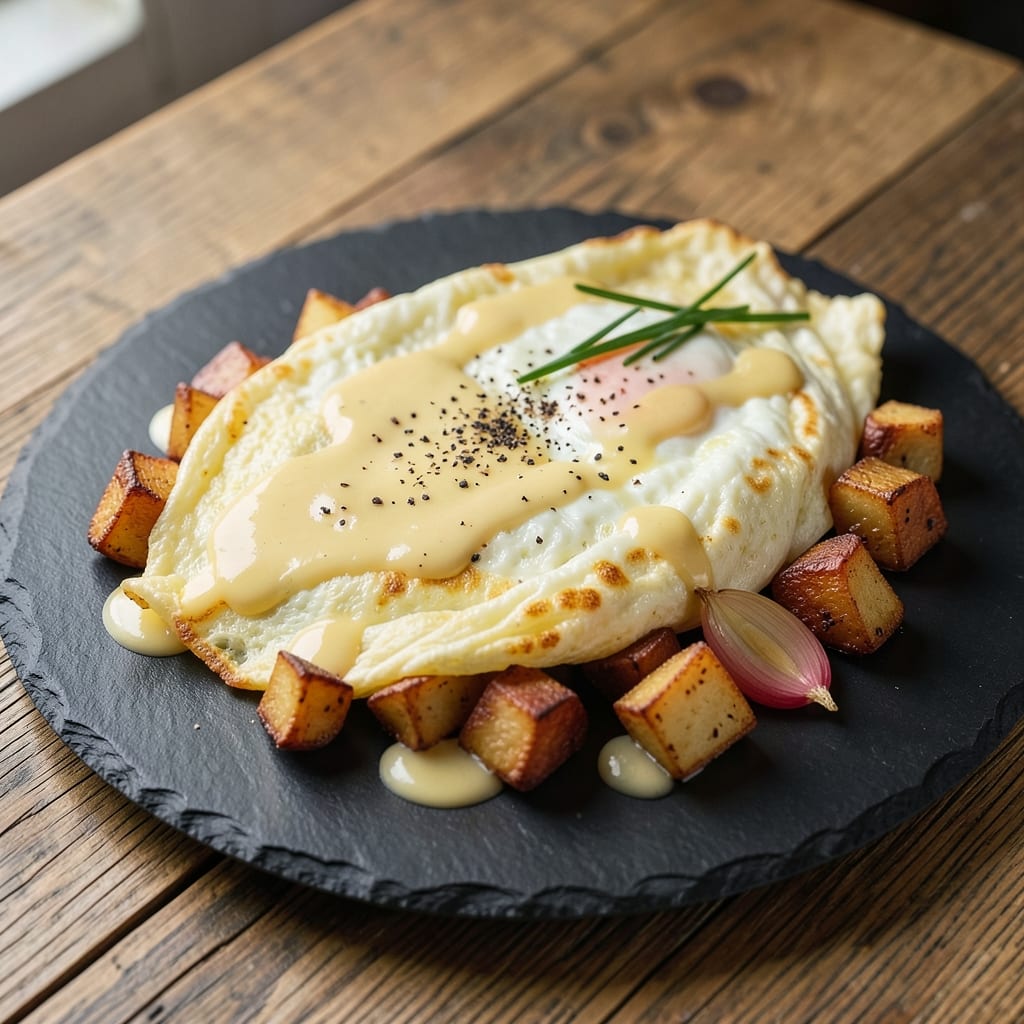
This egg and potato omelette recipe delivers crispy edges and fluffy centers—the perfect balance of textures that turns a simple breakfast into something extraordinary. The secret lies in pre-cooking the potatoes just until tender and crispy, then folding them into perfectly set eggs for maximum flavor and satisfaction. I developed this method after years of experimenting with breakfast dishes, and it’s now my go-to when I want something hearty yet quick.
What sets this recipe apart is the technique: potatoes are sautéed until golden before being folded into the eggs, ensuring every bite has that satisfying crunch. The eggs are cooked low and slow to maintain a tender, cloud-like interior while developing a subtle golden crust. This method works for both weeknight breakfasts and weekend brunch spreads, and it’s easily adaptable with add-ins like cheese, herbs, or spices.
By the time you’re done, you’ll have a restaurant-worthy omelette with layers of crispy potato, creamy egg, and rich, savory flavors. The potatoes stay tender yet crispy, while the eggs hold their shape beautifully—no soggy centers here. Serve it with a side of fresh herbs or a dollop of sour cream for the ultimate breakfast experience.
Whether you’re feeding a crowd or treating yourself to a solo meal, this omelette delivers foolproof results every time. The recipe scales effortlessly, and leftovers reheat beautifully. Let’s get cooking—your taste buds will thank you.
Ingredients for egg and potato omelette
Eight simple ingredients transform into a restaurant-worthy omelette with crispy potato edges and fluffy centers.
| Ingredient | Amount | Notes |
|---|---|---|
| Large Eggs 🥚 | 8 whole | Room temperature preferred |
| Russet Potatoes 🥔 | 1 ½ lbs | Waxy potatoes preferred, peeled |
| Unsalted Butter 🧈 | 4 tbsp | Full-fat for best flavor |
| Shallots 🧅 | 2 whole | Minced, or sub 2 tbsp onion |
| Salt 🧂 | 1 ½ tsp | Kosher or sea salt |
| Black Pepper 🌶️ | ½ tsp | Freshly ground preferred |
| Fresh Chives 🌿 | 2 tbsp | Chopped, for garnish |
| Sour Cream 🥛 | ¼ cup | For serving, optional |
| Vegetable Oil 🫒 | 2 tbsp | For potato cooking |
| Sharp Cheddar Cheese 🧀 | ½ cup | Shredded, optional add-in |
The potatoes are the star here—Russet potatoes hold their shape best when cooked until crispy. Peeled and cut into even 1/2-inch pieces, they cook faster and more evenly. I grab mine at Whole Foods because their waxy potatoes stay crispy longer, but any grocery store's Russets work. For extra crispiness, don't skip the vegetable oil—it helps create that golden crust. If you're short on time, baby potatoes work too, but they'll take longer to crisp up.
No shallots? Substitute 2 tbsp finely minced red onion—it gives the same sharp bite. The cheese is completely optional, but if you add it, sharp cheddar melts beautifully (Monterey Jack works too). Fresh chives are ideal for garnish, but dried parsley at half the amount works in a pinch. The butter matters—full-fat is non-negotiable for that rich flavor. If you're watching calories, use olive oil instead, but trust me on the butter for best results.
Potatoes stay crispy for about 2 days in the fridge if stored in an airtight container, but I recommend making them fresh for maximum crunch. The omelette itself reheats best in a skillet—just 30 seconds on medium heat keeps the eggs fluffy. For meal prep, I portion the potatoes and eggs separately and assemble when ready to eat. Leftovers keep for 3 days, but honestly, they're best the first day.
Why You'll Love This Recipe
- One-Pan Magic: I swear by this recipe—just potatoes, eggs, and butter in one skillet. No chopping boards to wash, no extra pans to scrub. The potatoes soften right in the same pan where the eggs set, and honestly? That’s my kind of cleanup.
- Caramelized Crunch: That crispy potato edge when you flip it? Chef’s kiss. The shallots add this sweet, golden depth, and the butter makes everything taste like a Sunday brunch. It’s rich but not heavy—just pure, satisfying flavor in every bite.
- Breakfast or Dinner: I make this for lazy mornings when I’m running late, but it’s also my go-to for a hearty weeknight dinner. Add a sprinkle of salt and maybe some hot sauce, and suddenly it’s a full meal. No rules—just flexibility.
- Budget Breakfast: Russets are cheap, eggs are cheap, and this recipe stretches like crazy. I’ll make a big batch on Sunday, reheat portions all week, and still have leftovers for lunch. Plus, it’s the kind of dish that makes pantry staples feel like a luxury.
Step-by-step instructions for egg and potato omelette recipe
Here's how to create a golden, fluffy omelette with perfectly crisp edges and tender potato filling.
Prepare the Potato Filling
Peel and dice the 1.5 lbs Russet Potatoes into ¼-inch cubes - uniform size ensures even cooking. Heat 2 tablespoons Vegetable Oil in a nonstick skillet over medium heat until shimmering. Add the potatoes and cook for 12-15 minutes, stirring occasionally, until they're golden brown and tender when pierced with a fork. The potatoes should release easily from the pan without sticking.
Drain the potatoes in a colander, pressing gently with a paper towel to remove excess oil. Transfer them to a bowl and set aside. In the same skillet, melt 2 tablespoons Unsalted Butter over medium-low heat. Add the 2 whole Shallots (minced) and sauté for 3-4 minutes until soft and translucent. Combine the shallots with the potatoes and season with 1 teaspoon Salt and ¼ teaspoon Black Pepper. This creates a flavorful base that won't overpower the eggs.
Whisk the Eggs to Ribbon Stage
Crack all 8 whole Large Eggs into a large bowl and add the remaining ½ teaspoon Salt and ¼ teaspoon Black Pepper. Using a whisk, beat the eggs vigorously for 2-3 minutes until they form thick, pale ribbons when the whisk is lifted. This thorough mixing incorporates air, which creates the light, fluffy texture we want. The eggs should be completely uniform in color with no visible streaks of white.
Here's the thing - room temperature eggs whip up faster and create a more stable omelette. If your eggs are straight from the fridge, let them sit at room temperature for 10-15 minutes before whisking. The temperature difference between cold eggs and hot pan can cause uneven cooking and breakage.
Cook the Omelette with Perfect Technique
Wipe out the skillet completely and place it over medium heat. Add 1 tablespoon Unsalted Butter and let it melt until foaming subsides. Pour in ¼ of the egg mixture, tilting the pan to distribute evenly. Cook for 1-2 minutes until the edges begin to set but the center still looks slightly wet. This creates the crispy edges while keeping the center fluffy.
Sprinkle ¼ of the potato mixture and ¼ cup Sharp Cheddar Cheese evenly over one half of the omelette. Carefully fold the other half over the filling using a spatula, pressing gently to seal. Cook for another 30-60 seconds until the bottom is deep golden brown and the center is just set. The omelette should release cleanly from the pan when ready.
Finish and Serve with Garnishes
Transfer the omelette to a warm plate and let it rest for 1 minute before slicing into wedges. This resting time allows the filling to set slightly and prevents it from spilling out when you cut. Garnish immediately with 2 tablespoons chopped Fresh Chives and serve with ¼ cup Sour Cream on the side for dipping.
For the best results, serve immediately while the omelette is still warm. The crispy edges will soften slightly but maintain their texture, while the potato filling stays warm and flavorful. If making ahead, assemble the omelette without the cheese, cover with a damp towel, and reheat briefly in a skillet before adding the cheese and final garnishes.
Pro Tips For Making Egg And Potato Omelette
- COOK POTATOES TO CREAMINESS: Russets stay dry and gummy if you overcook them—aim for fork-tender with a slight bite. I slice them ¼-inch thick, boil in salted water for 8-10 minutes, then drain and let them steam in the pot for 2 more minutes. That extra moisture is what makes the omelette silky, not soggy.
- SWEAT SHALLOTS UNTIL SOFT: Raw shallots in an omelette taste sharp and harsh. Cook them in butter until they’re almost translucent, then let them cool before folding into the eggs. I learned this the hard way—my first attempt had them raw, and the flavor was all wrong.
- USE COLD BUTTER FOR CRUST: Chill the butter for 10 minutes before melting it in the pan. Cold butter browns better and gives that golden crust without burning. I know it sounds counterintuitive, but trust me—it’s the thing that matters most for that restaurant-style finish.
- FOLD FAST, FOLD FIRM: The moment the eggs hit the pan, work quickly but don’t rush—let them set for 10 seconds before folding. Then, press the edges hard with a spatula to seal them shut. If you’re gentle, the filling will leak out like a sad omelette. Do it with confidence.
Make-ahead tips for leftovers
Prep Ahead Tips
Start by pre-cooking the potatoes the night before—this is my secret for saving time in the morning. Cook them exactly as directed, then store in an airtight container in the fridge. They’ll stay crispy for 2 days, and you can reheat them in a dry skillet for 2-3 minutes over medium heat to restore their crunch. I like to portion them into single-serving containers so I can grab and go in the morning. 🥔
Egg Prep Shortcut
Whisk your eggs the night before and store them in the fridge in a covered container. Bring them to room temperature for 10-15 minutes before cooking—this ensures they cook evenly and creates that perfect fluffy texture. I also pre-measure all the spices and cheese so everything is ready to go. Just crack the eggs, whisk, and cook! 🥚
Assemble for Later
For a truly make-ahead meal, cook the omelette without the cheese, then let it cool completely. Wrap it in parchment paper and store in the fridge for up to 3 days. To reheat, place it in a skillet over medium heat for 1-2 minutes per side—just enough to warm through without drying out. Add the cheese and garnishes right before serving for the freshest taste. 💡
Freezer-Friendly Option
If you want to freeze for later, assemble the omelette (without cheese) and let it cool completely. Wrap it tightly in plastic wrap and aluminum foil, then freeze for up to 1 month. To reheat, thaw in the fridge overnight, then warm in a skillet over low heat for 2-3 minutes. The texture won’t be as crispy as fresh, but it’s still delicious! ❄️
Potato Variations
Want to switch it up? Try roasting the potatoes ahead of time with a sprinkle of smoked paprika or garlic powder for extra flavor. Store them in the fridge and reheat before adding to the omelette. You can also make a big batch of hash browns instead—just break them into chunks and crisp them up in the skillet before folding into the eggs. 🌶️
Garnish Prep
Chop your fresh chives and store them in a small container with a damp paper towel to keep them fresh for up to 5 days. Pre-portion the sour cream into small bowls so it’s ready to serve. If you’re using cheese, grate it ahead of time and store it in the fridge—just sprinkle it on fresh when reheating the omelette. This keeps everything organized and ready for a quick breakfast. 🌿
Nutrition facts
Frequently asked questions
Can I use sweet potatoes instead of regular potatoes?
Yes, but with a few adjustments! Sweet potatoes are denser and sweeter, so they'll take longer to cook—about 20-25 minutes instead of 12-15 minutes. For best results, slice them slightly thinner (1/4-inch) and add 1/4 teaspoon cinnamon to the potato mixture. The flavor will be richer but more pronounced, so balance it with a squeeze of lemon or extra black pepper.
Why does my omelette turn out rubbery instead of fluffy?
Overcooking is the #1 culprit! The eggs should be just set (slightly jiggly in the center) when you fold them. Using high heat causes rubbery texture—stick to medium-low for even cooking. Also, make sure your eggs are whisked to ribbon stage (thick, pale ribbons) and room temperature. Cold eggs or under-whisked eggs won't hold air properly.
How do I make this recipe without butter?
Use olive oil or avocado oil instead—both work well for sautéing potatoes and cooking the eggs. For the potatoes, use 2 tbsp oil total. When cooking the eggs, use 1 tbsp oil instead of butter, but add 1/4 tsp garlic powder to compensate for the flavor difference. The texture stays crispy, though the flavor will be slightly milder.
Can I make individual omelettes instead of one large one?
Divide the egg mixture into 4 portions (2 eggs each) and cook in 8-inch nonstick skillets. Use 1 tbsp butter/oil per omelette and reduce the potato filling to 1/4 of the total mixture per omelette. Cook each for 2-3 minutes before folding—this ensures they're perfectly set without drying out. Great for meal prep!
What if I don't have shallots?
No problem! Substitute with 2 tbsp finely minced red onion or 1 tbsp green onion (white and green parts). For extra flavor, add 1/2 tsp onion powder to the potato mixture. Onions add a slightly sharper bite, so they work well if you prefer more punch. The texture remains the same—just the flavor profile changes.