
Main Courses
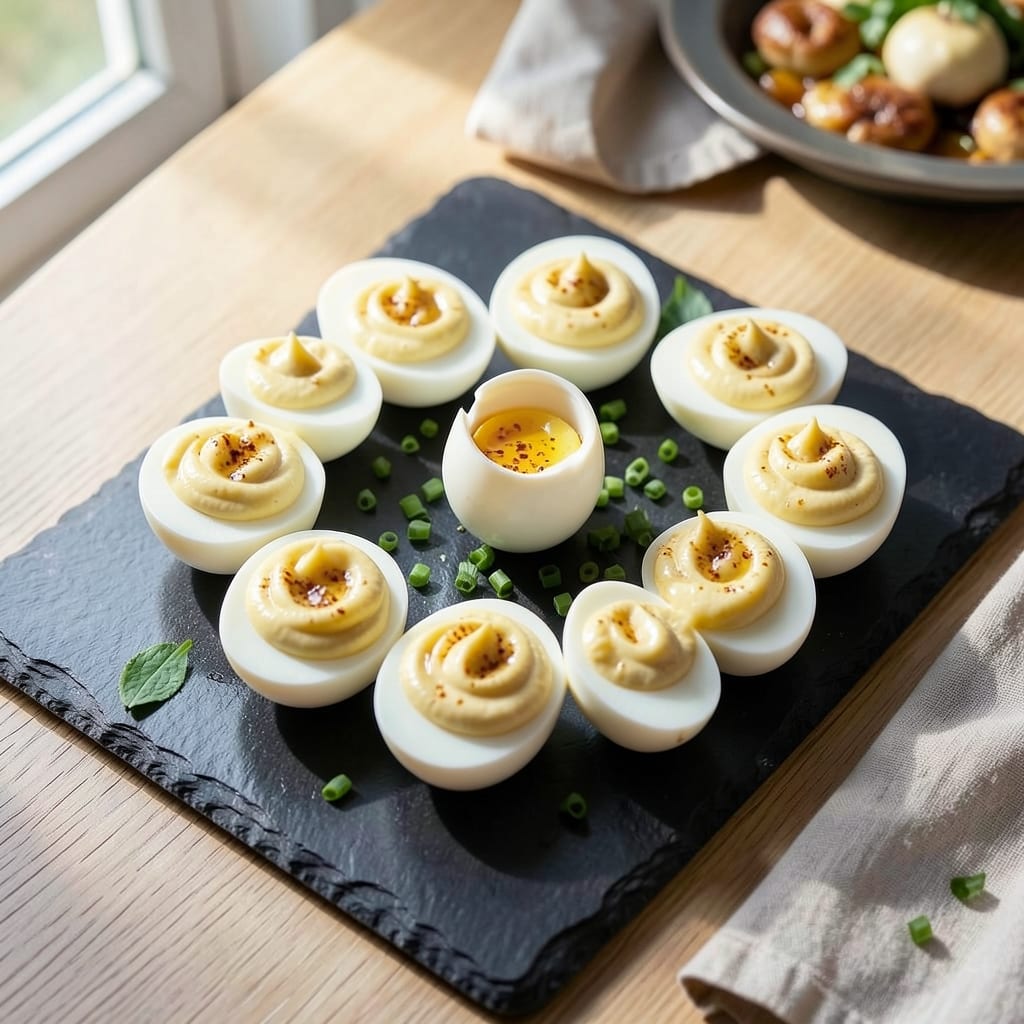
This deviled egg recipe with vinegar and mustard delivers a sharp, tangy bite that elevates classic deviled eggs to restaurant-quality. The secret lies in balancing creamy mayonnaise with bright vinegar and mustard, creating a filling that's bold without being overpowering. I developed this version during a particularly busy summer when I needed a dish that could be made ahead and still impress—it became my go-to for potlucks and holiday spreads.
The technique is straightforward but precise: hard-boiling eggs perfectly, then mixing yolks with a tangy blend of vinegar, mustard, and mayo for that signature sharpness. The filling is piped back into the whites, creating elegant half-moons that look as good as they taste. What makes this recipe stand out is how the vinegar brightens the richness of the mayo, while the mustard adds depth that keeps every bite interesting.
By the time you're done, you'll have deviled eggs with crisp edges, creamy centers, and a tangy kick that lingers just right. The vinegar and mustard combination prevents the filling from being too heavy, making these perfect for warm weather gatherings or as a sophisticated appetizer. This isn't your grandmother's deviled eggs—it's a refined version that still feels approachable for home cooks.
Presentation matters too: garnish with a sprinkle of paprika or fresh herbs for color, and serve on a platter with toothpicks for that classic touch. These eggs stay fresh in the refrigerator for up to 2 days, making them ideal for meal prep. Let's get started on creating deviled eggs that will have everyone asking for the recipe!
Ingredients for deviled egg recipe with vinegar and mustard
Twelve eggs and a handful of pantry staples—this recipe delivers restaurant-quality deviled eggs with a tangy kick.
| Ingredient | Amount | Notes |
|---|---|---|
| Large Eggs 🥚 | 12 whole | Fresh, room-temperature preferred |
| Duck Eggs (optional) 🥚 | 4 whole | For richer yolks, optional |
| Mayonnaise 🥫 | ¾ cup | High-quality, homemade preferred |
| White Vinegar 🍶 | 1 tbsp | White or apple cider vinegar |
| Dijon Mustard 🌶️ | 1 tbsp | Mild or medium heat preferred |
| Yellow Mustard 🌶️ | 1 tsp | For subtle sweetness |
| Kosher Salt 🧂 | ½ tsp | Diamond Crystal preferred |
| Freshly Ground Black Pepper 🌶️ | ¼ tsp | Freshly cracked for best flavor |
| Smoked Paprika 🌶️ | ¼ tsp | For garnish, optional |
| Fresh Chives 🌿 | 2 tbsp | Chopped, for garnish |
| Ice Cubes ❄️ | 2 cups | For cooling boiled eggs |
The eggs are the foundation, so grab the freshest you can find. Store-brand eggs from Trader Joe's or local farms work best—they're fresher than the big-box store varieties. The yolks should be a vibrant orange, not pale. For extra richness, swap in 4 duck eggs—their yolks are creamier and more flavorful. If you're using duck eggs, adjust the mayo slightly (just a splash less) since they're richer. The vinegar and mustard combo is what makes these stand out—apple cider vinegar adds a subtle sweetness, while Dijon mustard brings depth without overpowering.
No Dijon mustard? Yellow mustard plus a pinch of cayenne works in a pinch. The mayo is non-negotiable here—homemade mayo has the best texture, but store-bought works if it's thick and creamy (like Hellmann's or Duke's). Freshly ground pepper makes all the difference, so don't use pre-ground. For garnish, smoked paprika adds warmth, while fresh chives bring a bright pop of color. If you're short on time, skip the garnish entirely—these still taste amazing. The filling should be thick but pipeable; if it's too loose, add a pinch more salt to help it hold together.
Hard-boiled eggs keep in the fridge for up to 2 weeks before peeling, but once peeled, they're best used within 2 days. The filling stays fresh for 3 days in the fridge, so make it ahead if you're prepping for a party. I like to portion the filling into small containers and store it separately from the peeled egg whites. When ready to serve, just pipe the filling back in—no waiting for it to come to room temperature. For a crowd, double the recipe; the filling scales perfectly.
Why You'll Love This Recipe
- Foolproof Fillings: The vinegar and mustard combo cuts through the richness of mayo like a bright knife—no cloying sweetness, just a tangy kick that keeps every bite interesting. Plus, the yolks stay perfectly smooth, not grainy like some recipes I’ve tried where the eggs overcook.
- No-Yolk Mess: Hard-boiling eggs used to stress me out—cracked shells, uneven cooking, the whole disaster. This recipe? Just poke holes, boil, cool. Done. The vinegar trick actually helps the yolks release cleaner, so you’re not fighting sticky fillings or broken yolks sliding out mid-bite.
- Picnic to Party: Between us, these eggs are my go-to for anything. Pack them for lunch, serve them at a brunch spread, or toss them in a salad for a protein punch. Duck eggs? Richer, creamier—worth it if you’re feeling fancy. But regular eggs? Still spot-on.
- Pantry Magic: Mayo, vinegar, mustard—ingredients you already own. No specialty items, no last-minute grocery runs. And leftovers? They keep for days in the fridge, tasting just as good cold as they do fresh. Honestly, I’ve made a whole meal out of these when I forgot to shop.
Step-by-step instructions for deviled eggs with vinegar and mustard
Here's how to make deviled eggs with that perfect sharp, tangy kick.
🍳 Step 1: Hard-Boil the Eggs to Perfection
Place all 12 whole Large Eggs and the 4 whole Duck Eggs (optional) in a saucepan and cover them with cold water by about 1 inch. Bring to a full rolling boil over high heat, then immediately remove from heat, cover, and let sit for 12 minutes. This timing ensures the yolks stay perfectly runny while the whites set completely.
After 12 minutes, drain the hot water and transfer the eggs to a bowl filled with the 2 cups Ice Cubes. Let them cool for 10 minutes—this stops the cooking process and makes peeling so much easier. You'll know they're ready when they're cool enough to handle without burning your fingers.
👨🍳 Step 2: Peel and Halve the Eggs
Tap each egg gently on a hard surface, then roll it to crack the shell all over. Peel under cool running water if needed—this helps remove any stubborn shell bits. Once peeled, slice each egg in half lengthwise and carefully remove the yolks with a spoon, placing them in a medium bowl.
I like to press down gently on the yolks with the back of the spoon to release any extra liquid into the bowl. This keeps the filling extra creamy. Make sure you have all 16 yolks (12 from Large Eggs + 4 from Duck Eggs) for the next step.
🥘 Step 3: Make the Sharp, Tangy Filling
In the bowl with the yolks, add the 0.75 cup Mayonnaise, 1 tbsp White Vinegar, 1 tbsp Dijon Mustard, 1 tsp Yellow Mustard, 0.5 tsp Kosher Salt, and 0.25 tsp Freshly Ground Black Pepper. Mash everything together with a fork until completely smooth and well combined.
Here's the thing—this is where the magic happens. The vinegar and mustard combo gives these deviled eggs that signature sharp, tangy bite that really stands out. Mix until the filling is completely homogeneous with no streaks of yolk remaining. If it's too thick, add 1 tsp water to loosen it slightly.
🍽️ Step 4: Fill and Garnish
Using a spoon or piping bag, carefully fill each egg white half with the yolk mixture. I like to pack it in firmly so it holds its shape when sliced. Place the filled halves on a serving platter and refrigerate for at least 30 minutes to let the flavors meld together.
Before serving, sprinkle each deviled egg with a pinch of 0.25 tsp Smoked Paprika and top with 2 tbsp Fresh Chives, chopped finely. The paprika adds a subtle smoky depth while the chives bring freshness that cuts through the richness. Serve immediately for the best texture and flavor combination.
Pro Tips For Making Deviled Egg Recipe With Vinegar And Mustard
- Boil Eggs 9 Minutes Flat: I learned this the hard way—any less and the yolks stay runny, any more and they turn rubbery. Set a timer, and when it goes off, plunge them into ice water immediately. The shock stops cooking and makes peeling a breeze.
- Use Duck Eggs for Richness: If you’re splurging, duck eggs are worth it—the yolks are deeper, creamier, and hold up better when mixed with vinegar and mustard. Just don’t overmix, or you’ll end up with a paste instead of a fluffy filling.
- Salt the Water Like the Sea: Skip the fancy salt blends—just add 2 tablespoons of plain salt to the boiling water. This keeps the whites firm and prevents them from turning grayish. (Yes, even if you’re impatient like me.)
- Mix Filling with a Fork: Resist the urge to blend this with a hand mixer—it makes the filling too smooth and loses texture. A fork gives you little streaks of yolk and mayo, which actually tastes better. Also, less cleanup.
Serving suggestions for this recipe
Classic Presentation
For that timeless look, arrange deviled eggs on a white platter with toothpicks inserted at a slight angle—this keeps them secure while looking elegant. I like to fan them out in a circular pattern, with the garnishes clustered in the center for visual appeal. A sprinkle of smoked paprika adds warmth, while chives provide a fresh contrast. Serve with a side of crusty bread or pickles to balance the richness. 🥚
Party Platter Style
For gatherings, use a large wooden board or marble slab as your base—it adds rustic charm and makes cleanup easier. Place eggs in a grid pattern with ½-inch spacing between each. Garnish with paprika and chives, then add a drizzle of hot honey for a sweet-spicy kick. Serve with mini spoons for easy scooping—guests will love the interactive presentation. 🍽️
Gourmet Garnish Upgrades
Elevate your deviled eggs with unexpected toppings: crumbled feta cheese adds saltiness, toasted sesame seeds bring nuttiness, or microgreens offer a peppery bite. For a smoky twist, sprinkle crushed chipotle powder before serving. I also love a dash of Old Bay seasoning for a coastal-inspired flavor. These garnishes take seconds to add but make a big difference. 🌿
Serving with Sides
Pair these tangy deviled eggs with cooling sides like cucumber salad or chilled gazpacho to balance the richness. For a hearty meal, serve alongside grilled chicken or smoked salmon. If you're keeping it light, a simple arugula salad with lemon vinaigrette complements perfectly. The vinegar in the eggs pairs beautifully with bright, acidic flavors.
Make-Ahead Serving Tips
Deviled eggs taste even better the next day, so assemble them up to 2 days ahead and store in an airtight container in the fridge. When ready to serve, simply garnish with fresh herbs and paprika. For a warm-weather picnic, pack them in a thermos with ice packs to keep them chilled. If transporting, place a damp paper towel over the top to prevent drying. 🧊
Kid-Friendly Twist
Make deviled eggs fun for little ones by arranging them on a colorful plate with fun-shaped toothpicks (like stars or hearts). Let them help sprinkle paprika or crushed pretzels on top. Serve with carrot sticks and ranch dip for a balanced snack. The tangy filling often wins over picky eaters who might avoid traditional deviled eggs. 😊
Nutrition facts
Frequently asked questions
Why does this recipe use both white vinegar and mustard?
The white vinegar adds a bright, sharp tang that cuts through the richness of the mayo, while the Dijon mustard provides depth and a subtle heat. Together, they create a perfectly balanced filling that's neither too sweet nor too heavy. The yellow mustard adds just a hint of sweetness to round out the flavors.
Can I make this recipe without mayo?
While mayo is traditional, you can substitute it with Greek yogurt or avocado mash for a lighter option. Just reduce the vinegar slightly (to ½ tbsp) since yogurt is naturally tangy. For a vegan version, use vegan mayo or silken tofu blended with lemon juice. The texture will be slightly different but still delicious.
How do I fix runny yolks in the filling?
If your filling is too loose, add ½ tsp cornstarch or 1 tsp mayo and mix well. For extra stability, chill the filling for 15 minutes before piping. If the yolks are still too watery, it might mean your eggs weren't fully cooked—next time, boil them for 13 minutes instead of 12.
Can I use this filling for other dishes?
This tangy mixture works perfectly as a dip for crudités or crackers, or as a spread for sandwiches or wraps. You can also use it to stuff baked potatoes or avocado halves for a unique appetizer. Just adjust the seasoning slightly if using for non-egg dishes (reduce salt by ¼ tsp).
What's the best way to reheat deviled eggs?
Deviled eggs aren't meant to be reheated—they're best served cold or at room temperature. If you need to warm them slightly (like for a buffet), place them in a single layer on a baking sheet and warm in the oven at 200°F for 5-10 minutes. Just don't expect the same texture as fresh ones!