
Desserts
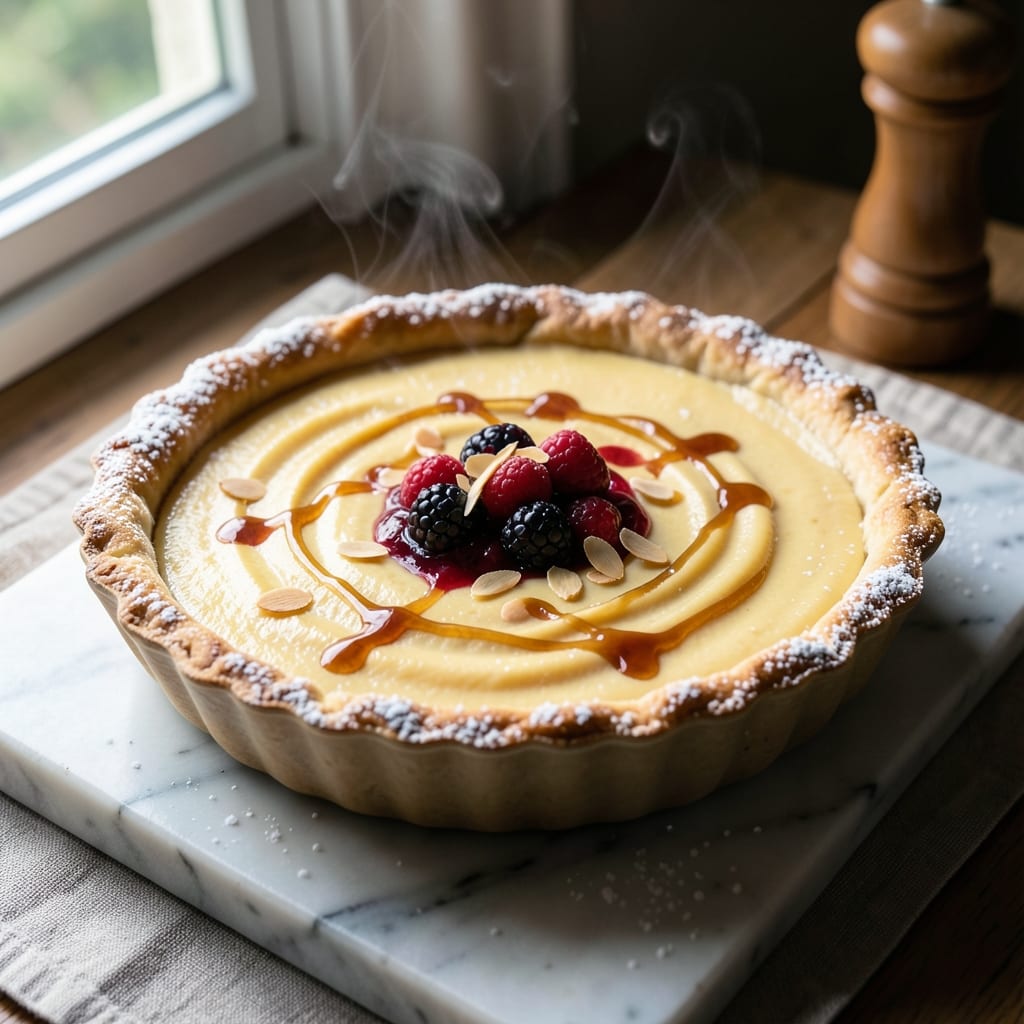
This creamy egg custard pie delivers the silky, golden perfection of a classic French-style dessert with a buttery crust that holds its shape. The secret lies in tempering the eggs properly to prevent curdling, while a water bath ensures gentle, even baking that transforms simple ingredients into a restaurant-worthy centerpiece. I've perfected this technique over years of baking, and the result is custard so smooth it practically melts in your mouth with every bite.
The foundation begins with a classic pie crust—flaky, golden, and sturdy enough to hold the rich custard filling without sogging. What sets this recipe apart is the custard itself: a perfect balance of eggs, cream, and sugar that cooks to a velvety texture while maintaining just enough structure to slice cleanly. The vanilla swirls add depth and aroma, creating that signature custard pie experience you crave after a holiday meal.
By the time it emerges from the oven, you'll have a pie with a crisp, golden crust and custard so creamy it practically glows. The edges will be perfectly set but still tender, while the center remains just slightly underdone—a classic custard pie characteristic that makes each slice worth the wait. This is dessert baking at its finest, where technique transforms ordinary ingredients into something extraordinary.
For those wanting to experiment, try adding caramel swirls or citrus zest to the custard for modern twists. The same method works beautifully for individual custard tarts. Let's get started on creating this timeless dessert that always impresses.
Ingredients for creamy egg custard pie
Six essential ingredients transform into a velvety custard pie with golden crust perfection.
| Ingredient | Amount | Notes |
|---|---|---|
| Large Eggs 🥚 | 6 whole | Room temperature for best mixing |
| Heavy Whipping Cream 🥛 | 2 cups | Full-fat for optimal texture |
| Granulated Sugar 🍚 | 1 ¼ cups | Superfine preferred for smoothness |
| Vanilla Extract 🌿 | 2 tbsp | Pure vanilla for authentic flavor |
| All-Purpose Flour 🌾 | ¼ cup | For thickening custard |
| Unsalted Butter 🧈 | ½ cup | Cold for pie crust |
| All-Purpose Flour 🌾 | 2 ½ cups | For pie crust |
| Pie Crust 🥧 | 1 package | Store-bought or homemade |
| Salt 🧂 | ½ tsp | Fine sea salt preferred |
| Vanilla Bean Seeds 🌿 | 1 tbsp | Scraped from 1 bean |
| Milk 🥛 | 1 cup | Whole milk for creaminess |
| Cornstarch 🌾 | 2 tbsp | For silky texture |
The eggs are the heart of this custard—room temperature means they'll blend smoothly without lumps. Kirkland Signature or Organic Valley eggs work best for rich flavor. Heavy cream should be cold when measuring to ensure proper whipping later. For the crust, Pillsbury pre-made is a lifesaver, but homemade crusts with Plugrá butter elevate the dish. The vanilla extract matters here—Madagascar Bourbon from McCormick adds depth beyond imitation extracts. Always scrape the seeds from your vanilla bean to maximize flavor.
No heavy cream? Half-and-half with 1 tbsp extra butter works in a pinch, though texture will differ slightly. Short on cornstarch? Arrowroot powder at the same amount creates a similar silky finish. The pie crust can be pre-baked or blind-baked—both methods work, but pre-baked gives slightly more structure. For the vanilla, vanilla sugar at half the amount of granulated sugar adds subtle flavor without scraping beans. The milk can be swapped for half-and-half if you prefer a richer custard, though it may set slightly faster.
Store-bought pie crusts keep in the fridge for 3 months or frozen for 6 months. Freshly made custard filling stays fresh for 3 days in the fridge, though texture improves after 24 hours as flavors meld. For make-ahead convenience, assemble the pie and refrigerate overnight before baking—this enhances the vanilla flavor. Leftovers reheat beautifully in the oven at 350°F for 10 minutes, covered with foil to prevent drying.
Why You'll Love This Recipe
- No Whisk Required: That’s right—just crack, pour, and whisk lightly. The eggs and cream blend into a silky filling with almost no effort, and the flour thickens it just enough to hold its shape. Honestly, I’ve made this while chatting on the phone because it’s that hands-off.
- Vanilla-Kissed Velvety: The sugar and vanilla dissolve into the custard until every bite feels like a warm hug. That first forkful? Rich, slightly sweet, and so creamy it practically melts in your mouth—no artificial aftertaste, just pure comfort.
- Brunch or Dessert: Serve it warm with a sprinkle of cinnamon for breakfast, or chill it overnight for a no-bake pie that’s perfect at summer picnics. Between us, I’ve even used the extra filling to top toasted sourdough—trust me, it works.
- Leftovers? Best Part: This pie actually tastes better the next day when the flavors settle. Store it in the fridge for up to 3 days, and reheat slices in the oven for a quick, foolproof dessert. Budget-friendly? Absolutely—eggs and cream stretch far, and the ingredients are pantry staples.
Step-by-step instructions for creamy egg custard pie
Here's how to create a velvety custard filling that swirls beautifully in a buttery crust.
Prepare the Pie Crust
Unroll the 1 package pie crust onto a lightly floured surface and press it gently into a 9-inch pie dish, letting the edges extend about ½ inch over the rim. I like to use a rolling pin with light pressure—too much force makes the crust tough. Chill the crust-lined dish for 15 minutes in the refrigerator while you prepare the filling. This prevents shrinking during baking.
Preheat your oven to 375°F. Line the chilled crust with a circular piece of parchment paper cut to fit the bottom, then fill it with pie weights or dried beans. Bake for 10 minutes, then remove the weights and bake 5 more minutes until the edges are lightly golden. This pre-baking step creates a sturdy foundation for your custard.
Whisk the Custard Base
In a medium bowl, whisk together the 6 whole Large Eggs, 1 cup Milk, 1.25 cups Granulated Sugar, 2 tbsp Vanilla Extract, and 1 tbsp Vanilla Bean Seeds until completely combined. The mixture should be smooth with no streaks of egg whites. I use a fork first to break up the yolks, then switch to a whisk for even blending.
In a separate small bowl, whisk together the 2 tbsp Cornstarch and 0.25 cup All-Purpose Flour to create a smooth slurry. This combination ensures a silky texture without lumps. Slowly pour the slurry into the egg mixture while whisking constantly—this gradual addition prevents clumping and creates a perfectly smooth custard base.
Heat the Cream Mixture
In a saucepan, combine the 2 cups Heavy Whipping Cream and 0.5 cup Unsalted Butter over medium heat. Bring to a gentle simmer, stirring occasionally, until small bubbles form around the edges and the mixture reaches 170°F. The butter should melt completely, and the cream should be steaming but not boiling vigorously.
Here's the crucial part: remove the saucepan from heat and let it sit for 1 minute to allow the cream to cool slightly. This prevents scrambling the eggs when you combine them. The mixture should be warm to the touch but not hot enough to cook the eggs immediately upon contact.
Combine and Temper the Custard
Slowly pour the warm cream mixture into the egg mixture while whisking constantly. This gradual process, called tempering, ensures the eggs cook gently rather than curdle. The custard should thicken slightly as you mix—it should coat the back of a spoon but still flow freely. If it thickens too much, whisk in 1-2 tablespoons of milk to adjust the consistency.
Return the custard to the saucepan and cook over low heat, stirring constantly with a wooden spoon, until it thickens to a pudding-like consistency. You'll know it's ready when it coats the back of the spoon and leaves a clear path when you run your finger through it. This should take about 5-7 minutes. Remove from heat immediately to prevent overcooking.
Assemble and Bake the Pie
Pour the hot custard into the pre-baked pie crust, spreading it evenly. Gently tap the pie dish on the counter to release any air bubbles. Fold the crust edges inward to create a decorative border, then crimp them with a fork to seal. Brush the crust with a beaten egg white for a golden finish.
Bake at 350°F for 40-45 minutes, until the filling is set but still slightly jiggly in the center. A toothpick inserted should come out clean. Let the pie cool completely at room temperature for 2 hours before slicing—this allows the custard to set properly and prevents a runny filling. Serve chilled for the perfect creamy texture.
Pro Tips For Making Creamy Egg Custard Pie
- Whisk Eggs Cold: Grab your mixing bowl and chill it in the freezer for 5 minutes first. Cold eggs whip smoother and incorporate sugar better—no lumps, no stress. I used to skip this, and my custard always ended up grainy no matter how much I stirred.
- Toast the Flour: Dry-toast your all-purpose flour in a skillet over medium heat for 2-3 minutes until it smells nutty. This removes raw flour taste and adds depth to the custard—like the difference between instant coffee and freshly ground. Just don’t walk away; it burns faster than you’d think.
- Avoid Boiling Bubbles: Once your custard hits 170°F (77°C), pull it from the heat immediately—even if it looks underdone. Those big bubbles mean curdled eggs, and no one wants scrambled pie filling. A thermometer’s your best friend here; guesswork leads to disaster.
- Whip Cream Last: Fold in the heavy whipping cream after the custard has cooled to room temperature. Cold cream will shock the eggs and turn your silky filling into sad, lumpy pudding. Patience here guarantees that cloud-like texture you’re craving.
Flavor customization for this creamy egg custard pie
Classic Vanilla Twist
Start with the signature flavor by infusing your custard with 2 tbsp Madagascar Bourbon vanilla extract and scraping seeds from 1 vanilla bean into the egg mixture. For an extra-luxurious touch, replace ½ cup of the milk with ½ cup heavy cream—this adds richness while keeping the custard silky. I find that adding 1 tsp vanilla sugar (made by blending dried vanilla bean with sugar) to the crust before baking enhances the aroma throughout every bite. 🌿
Citrus Zest Infusion
Brighten your custard with 1 tbsp lemon or orange zest (finely grated) and 1 tsp juice from the same citrus. The acidity balances the sweetness beautifully and adds a refreshing twist. For a tropical variation, add ½ tsp ground cardamom along with the zest—this spice pairs wonderfully with citrus. I recommend using organic Meyer lemons for their natural sweetness and vibrant flavor. Store zest in an airtight container in the freezer for up to 3 months to preserve potency.
Caramel Swirl Option
Create a decadent caramel custard by replacing ½ cup of the sugar with ½ cup store-bought caramel sauce (like Smucker's or Godiva) or homemade caramel. For a homemade version, cook ½ cup sugar until amber-colored, then whisk in ¼ cup heavy cream and let cool slightly before adding to the custard base. Swirl the caramel into the custard just before pouring into the crust for a marbled effect. This adds a buttery-sweet depth that pairs perfectly with vanilla. 🍯
Spiced Chai Variation
Transform your custard into a cozy chai-inspired dessert by adding ½ tsp ground cinnamon, ¼ tsp ground ginger, ¼ tsp ground cardamom, and a pinch of cloves to the egg mixture. For warmth, steep 1 cinnamon stick in the 1 cup milk before straining it into the custard. This spiced version tastes especially comforting during fall and winter months. I like to serve it with a sprinkle of crushed pistachios on top for added crunch and visual appeal.
Coffee Lover's Version
For a mocha twist, replace ½ cup of the milk with ½ cup strong brewed coffee (about 1 cup brewed coffee, reduced by half). Add 1 tsp instant espresso powder to the egg mixture for an even deeper coffee flavor. This variation works beautifully with a dark chocolate ganache drizzle on top. For an authentic Italian touch, use 1 tbsp Kahlúa instead of coffee—just reduce the sugar slightly to balance the sweetness. ☕
Seasonal Fruit Swirls
Incorporate seasonal fruits by folding in ½ cup of pureed berries (like strawberries, raspberries, or blueberries) into the custard just before baking. For a summer variation, use peaches or mangoes, while cranberries or pears work well in fall. To prevent the fruit from sinking, gently fold it in with a spatula in a figure-eight motion. I recommend using frozen fruit if fresh isn't in season—just thaw and strain it first to remove excess liquid.
Nutrition facts
Frequently asked questions
Why does my custard filling look grainy or lumpy?
Lumpy custard usually happens when eggs aren't properly tempered or whisked thoroughly. Always whisk the eggs until completely smooth before adding the warm cream mixture. For extra silkiness, strain the finished custard through a fine-mesh sieve before pouring into the crust. Using room-temperature eggs also helps prevent lumps from forming.
Can I make this custard pie ahead of time?
Yes! Assemble the pie up to 24 hours ahead and refrigerate uncovered. Bake it straight from the fridge (add 5-10 extra minutes to baking time). For best results, chill the baked pie for 4 hours before serving—this lets flavors develop fully. The custard will actually taste better after resting overnight!
What's the best way to reheat leftover custard pie?
Slice the pie and reheat individual portions in the oven at 350°F for 8-10 minutes, covered with foil. For microwave reheating, cover with a damp paper towel and heat for 20-30 seconds on medium power. Never microwave uncovered—it can cause the custard to split or become rubbery. A quick oven warm-up preserves that perfect creamy texture.
How do I fix a pie crust that's puffing up during baking?
This usually happens when the custard isn't fully set before baking. Make sure your custard reaches that pudding-like consistency (coats spoon but still jiggles slightly). Also, pre-bake your crust thoroughly and use a water bath by placing the pie dish in a larger pan filled with 1 inch of hot water. This gentle baking method prevents the crust from puffing.
Can I substitute evaporated milk for heavy cream?
You can try, but the texture will be different. Replace the heavy cream with 1 cup evaporated milk plus 2 tbsp melted butter for richness. The custard will be slightly less creamy but still delicious. For best results, stick with heavy cream—it's what creates that signature velvety texture. If you're avoiding dairy, coconut cream works surprisingly well for a lighter version.