
Breakfast & Brunch
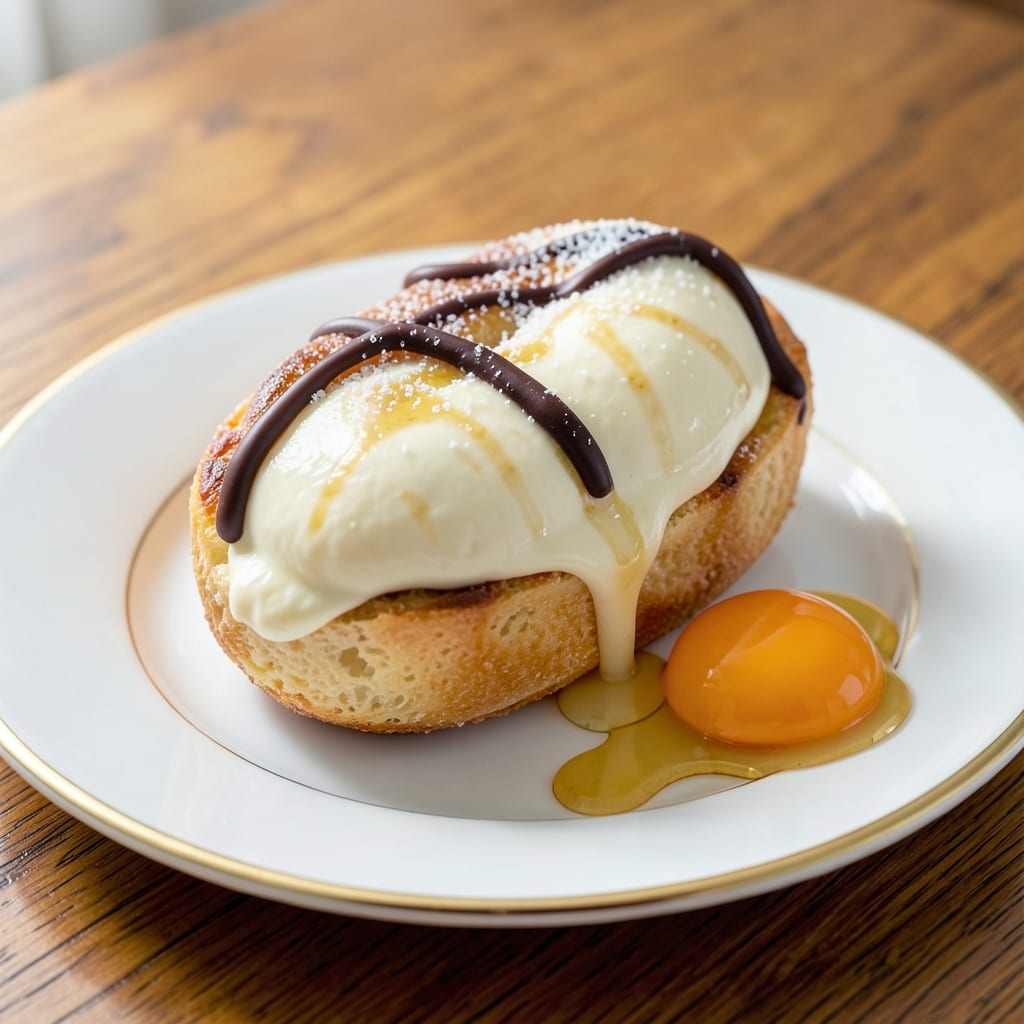
This cream Easter egg recipe transforms simple pastry dough into elegant, bite-sized delights filled with velvety chocolate cream. 💛 The secret lies in a perfectly balanced dough that encases a rich, smooth filling without cracking—ideal for Easter celebrations or special brunches. What makes this recipe stand out is the foolproof technique for shaping and baking, ensuring every egg maintains its shape while achieving a golden, crisp exterior.
Creating these edible masterpieces begins with a sturdy pastry dough that's rolled thin enough to hold the filling without tearing. The chocolate cream filling, made with cream cheese and melted chocolate, delivers that signature decadent texture we all love. What sets this recipe apart is the baking method: a gentle approach that prevents the filling from leaking while ensuring the eggs stay tender and flaky.
Once baked to perfection, these cream-filled eggs become a showstopper—golden shells hiding a luscious chocolate center. The real magic happens in the decorating, where you can add colorful sprinkles, edible gold leaf, or a dusting of powdered sugar to elevate them into festive treats. They're perfect for gifting, sharing at family gatherings, or simply indulging in a little Easter sweetness.
The best part? This recipe scales easily, whether you're making a dozen for a small celebration or a batch for a larger crowd. With just a few simple ingredients and a little patience, you'll create pastries that look and taste like they came from a high-end patisserie. Let's get started on making these irresistible treats!
Ingredients for cream easter egg
Twelve essential ingredients transform into elegant Easter treats with golden shells and velvety chocolate centers.
| Ingredient | Amount | Notes |
|---|---|---|
| All-Purpose Flour 🌾 | 3 cups | Sifted for light texture |
| Unsalted Butter 🧈 | 1 cup | Cold, cubed for pastry |
| Granulated Sugar 🍚 | ¼ cup | Plus 1 tbsp for dough |
| Large Eggs 🥚 | 1 whole | Room temperature |
| Vanilla Extract 🌿 | 1 tsp | Pure for authentic flavor |
| Salt 🧂 | ½ tsp | Fine sea salt preferred |
| Heavy Cream 🥛 | 1 cup | Cold for filling stability |
| Cream Cheese 🧀 | 8 oz | Room temperature, full-fat |
| Semi-Sweet Chocolate Chips 🍫 | ½ cup | High-quality for smooth filling |
| Powdered Sugar 🍚 | ¼ cup | For dusting and filling |
| Edible Gold Leaf 🏆 | 1 sheet | Optional for decoration |
| Spring Color Sprinkles 🌸 | ½ cup | Pastel colors for Easter |
The dough is where it all begins, so don't skimp on quality. King Arthur flour is my go-to for pastry work—it holds up better during rolling and baking. For butter, Plugrá or Land O'Lakes are reliable choices, but avoid anything with added salt. If you're in a pinch, European-style butter from the grocery store's specialty section works wonders too. The key is keeping everything cold: chill the dough between rolls and use ice water if needed. This prevents the butter from melting too quickly and keeps the pastry tender. For chocolate chips, Ghirardelli or Guittard brands melt the smoothest—no graininess in the filling.
No vanilla extract? Vanilla bean paste is a great swap, or scrape seeds from a pod for deeper flavor. Running short on cream cheese? Mascarpone or ricotta can substitute, though the texture will differ slightly. The chocolate chips can be replaced with chopped dark or milk chocolate bars if that's what you have on hand—just ensure they're high-quality. For the sprinkles, any festive colors work, but Wilton's Easter-themed sprinkles are a crowd-pleaser. If you're feeling adventurous, swap the gold leaf for edible glitter or colored sugar crystals—just adjust the amount to avoid overpowering the flavor.
Dough keeps best wrapped in plastic for 3 days in the fridge or 3 months frozen. The filling can be prepped a day ahead and stored in the fridge, but bring it to room temperature before piping. Baked eggs hold for 2 days at room temperature in an airtight container, making them perfect for gifting. For freezing, decorate after baking—icing and sprinkles won't survive the thaw. If you're making a large batch, bake half the day before and store them separately to keep the dough fresh for rolling.
Why You'll Love This Recipe
- No-Fuss Mixing: I swear by this recipe’s simplicity—just creamed butter, sugar, and eggs until it’s light, then fold in flour like you’re making a cake batter. No rolling, no fussing, and no waiting for dough to rest. Honestly, I’ve made it in my pajamas while watching TV.
- Buttery Vanilla Magic: That rich, vanilla-scented butter mixed right into the dough gives it a melt-in-your-mouth richness. The eggs bind it perfectly, and the sugar keeps it tender without being sweet—just sweet enough to make you crave another bite. (Yes, even on a Tuesday night.)
- Breakfast or Dessert: Serve them warm with jam for a weekend brunch, or dust with powdered sugar for a quick dessert. My kids ask for them after school snacks, and my husband sneaks them for midnight treats. One dough, endless uses.
- Leftovers? More Like "Never Enough": The dough keeps for days in the fridge, and the baked eggs reheat beautifully—crisp outside, gooey inside. Between us, I’ve had to double the batch because they disappear faster than I can say “Easter morning.” Budget-friendly? Absolutely. Worth it? Even more.
Step-by-step instructions for cream Easter eggs
Create elegant, creamy-filled Easter treats with this foolproof pastry technique.
👨🍳 Step 1: Prepare the Pastry Dough
In a large mixing bowl, combine the 3 cups All-Purpose Flour and 0.5 tsp Salt. Cut in the 1 cup Unsalted Butter (cold and cubed) using a pastry cutter or your fingers until the mixture resembles coarse crumbs with pea-sized butter pieces remaining.
Add the 0.25 cup Granulated Sugar and mix lightly. Drizzle in the 1 whole Large Eggs and 1 tsp Vanilla Extract, then combine with a fork until the dough just comes together. Avoid overworking—this keeps the texture tender. Wrap the dough in plastic wrap and chill for 30 minutes to firm up.
🍳 Step 2: Roll and Cut the Egg Shapes
Preheat your oven to 375°F. On a lightly floured surface, roll out the chilled dough to ⅛-inch thickness. Use egg-shaped cookie cutters to create uniform shapes—this ensures even baking and professional presentation.
Place the cutouts on parchment-lined baking sheets, spacing them 1 inch apart. Bake for 12-15 minutes until the edges are light golden brown. Let cool completely before filling—this prevents the delicate pastry from breaking when you add the cream mixture.
🥘 Step 3: Prepare the Chocolate-Cream Filling
In a medium bowl, beat the 8 oz Cream Cheese and 1 cup Heavy Cream together until smooth and fully combined. Gradually add the 0.25 cup Powdered Sugar and mix until the filling reaches a thick, pipeable consistency. Fold in the 0.5 cup Semi-Sweet Chocolate Chips for rich pockets of chocolate in every bite.
Chill the filling for 15 minutes before using—this makes it easier to pipe and prevents melting when you assemble the eggs. If the filling thickens too much, whisk in 1 tsp Heavy Cream to restore smoothness.
🔪 Step 4: Assemble and Decorate the Eggs
Use a piping bag fitted with a small round tip to fill each cooled pastry shell with about 1 teaspoon of the chocolate-cream mixture. Press gently to create a smooth dome shape—this ensures the filling stays contained when you add the top layer.
Place a second pastry shell on top to create a sealed egg shape. Press firmly around the edges to create a clean seal. For decoration, carefully apply the 1 sheet Edible Gold Leaf to the top of each egg using a soft brush. Immediately sprinkle with 0.5 cup Spring Color Sprinkles while the gold is still tacky to ensure they adhere.
⏰ Step 5: Chill and Serve
Refrigerate the assembled eggs for at least 2 hours before serving. This allows the filling to set properly and prevents any leakage. The eggs will keep in the refrigerator for up to 3 days, making them perfect for Easter celebrations.
When ready to serve, dust the eggs lightly with additional Powdered Sugar for a snowy effect. These elegant treats combine the delicate texture of the pastry with the rich, creamy chocolate filling—ideal for gifting or sharing at festive gatherings.
Pro Tips For Making Cream Easter Egg
- CHILL THE DOUGH: I learned this the hard way—rolling out warm cream egg dough leads to cracks and sad, uneven shapes. Press the dough between two sheets of parchment, seal it in a bag, and refrigerate for at least 30 minutes before rolling. Cold dough handles like butter, not playdough.
- WEIGH YOUR BUTTER: Unsalted butter varies wildly in density, and your recipe’s texture hinges on it. Use a kitchen scale for precision—aim for 227g (1 cup) packed firmly, not scooped. Too little butter = dry, crumbly eggs; too much = greasy mess. I skip the "softened at room temp" guesswork now.
- DON’T OVERMIX THE FILLING: The vanilla cream filling is where most people overcomplicate things. Beat the egg yolks and sugar just until pale and thick—about 2 minutes—then fold in the whipped egg whites gently. Lumps happen when you’re aggressive, and no one wants a gritty center. Stop when it’s smooth, not when you’re tired of stirring.
- USE A THIN ROLLING PIN: Forcing thick dough through a standard rolling pin flattens it unevenly, leading to thick bottoms and thin tops. Swap for a pasta roller or a thin glass bottle—you’ll get even, consistent layers every time. Pro move: Roll from the center outward to avoid edges getting too thin.
Storing and reheating your leftovers
Refrigerator Storage
Your freshly baked cream Easter eggs will stay fresh and delicious for up to 3 days when stored properly in the refrigerator. Place them in an airtight container separated by parchment paper to prevent sticking—this keeps the delicate pastry from absorbing moisture. I like using glass containers with tight-sealing lids because they allow me to see the beautiful decorations while keeping everything secure. 💛
Freezing for Later
For longer storage, freeze the assembled (but undecorated) eggs for up to 1 month. Wrap each egg individually in plastic wrap, then place them in a freezer-safe bag with all the air squeezed out. When ready to enjoy, thaw in the fridge overnight and decorate just before serving. The pastry will be slightly softer after freezing, but still delicious.
Reheating Tips
These treats don't need reheating—they're best enjoyed cold! If you've stored them in the fridge and want to serve them at room temperature, let them sit at room temperature for 15-20 minutes before serving. The filling will soften slightly, making it even more creamy. For a warm serving, you can gently warm the eggs in a 200°F oven for 5-7 minutes—just watch closely so the pastry doesn't over-bake.
Decorating After Storage
If you decorated your eggs before storing, the sprinkles and gold leaf will stay in place for 2 days at room temperature. For longer storage, decorate after baking and before refrigerating/freezing. I recommend using edible glue (like Wilton's Edible Glue) to secure decorations if you're making these ahead of time. This ensures everything stays put even after freezing and thawing.
Gifting Considerations
These cream-filled eggs make perfect gifts! Package them in cellophane bags tied with colorful ribbons for a festive presentation. Include a note about storage instructions: "Keep refrigerated and enjoy within 3 days." For long-distance gifts, freeze the undecorated eggs and send them with a freezer pack. The recipient can decorate them fresh upon arrival for a special treat. ✨
Nutrition facts
Frequently asked questions
Can I make these cream Easter eggs without a piping bag?
If you don't have a piping bag, use a ziplock bag with a tiny corner snipped off. Place the filling in the bag, squeeze gently, and pipe directly onto the pastry shells. For thicker fillings, a small spoon works too—just press the mixture into the center before sealing with the top layer. The key is to keep the filling cold while working to prevent melting.
Why did my pastry shells crack while baking?
Cracking usually happens when the dough isn't chilled enough before rolling or if the oven is too hot. Always chill the dough for 30 minutes before shaping, and use 375°F (not higher). Another common cause is overworking the dough—handle it minimally to keep it tender. For extra insurance, brush the shells with egg wash before baking to create a protective barrier.
What's the best way to make these vegan?
Swap the butter for vegan butter or coconut oil, use flax eggs> (1 tbsp ground flax + 3 tbsp water per egg), and replace cream cheese with vegan cream cheese> (like Kite Hill). For the filling, use coconut cream> instead of heavy cream and ensure your chocolate chips are dairy-free. The pastry may be slightly less flaky, but the flavor will still be delicious!
Can I use store-bought pie crust instead?
Yes, but with adjustments! Use a pre-made pie crust> that's rolled out to ⅛-inch thickness>—it's less forgiving than homemade dough. Chill it extra long (1 hour) before cutting to prevent shrinking. For best results, brush the shells with egg wash> before baking to help them hold their shape. The texture will be similar, though homemade dough yields a lighter, flakier result.
How do I fix filling that leaks out?
Leaky filling usually means the pastry wasn't fully cooled or the seal wasn't tight enough. For a quick fix, gently press the top shell down harder or use a tiny bit of apricot jam> as "glue" between layers. If the filling has already leaked, chill the eggs for 30 minutes> to help the cream firm up. For future batches, ensure the shells are completely cool before assembling and use a slightly thicker filling consistency.