
Main Courses
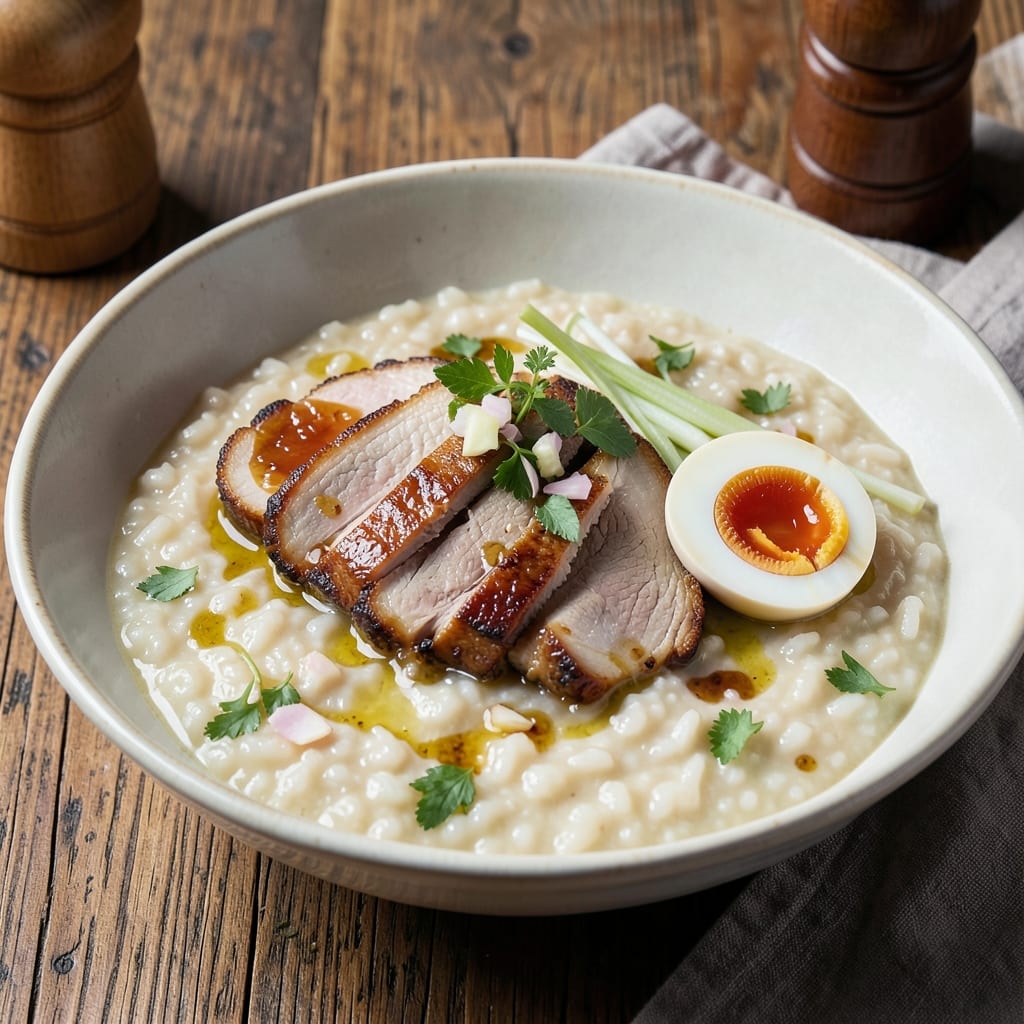
This congee pork and preserved egg recipe transforms simple ingredients into a comforting bowl of silky rice porridge with deep umami flavors. 🌟 I first discovered congee while traveling through Southeast Asia, where it's served as both breakfast and medicine—its gentle warmth perfect for any meal. The secret lies in slow simmering the rice until it dissolves into a velvety broth, then layering in tender pork and preserved egg for that signature rich, savory depth.
The beauty of this dish is in its balance—silky congee that practically melts in your mouth, shredded pork that's been braised until fall-apart tender, and preserved egg with its dark, marbled yolk that adds a briny contrast. Traditional techniques like the precise rice-to-water ratio (1:6) ensure the perfect texture, while a light drizzle of soy sauce and sesame oil elevates the flavors without overpowering. This isn't just a recipe; it's a bowl of comfort that feels like a hug.
What makes this version special is how it highlights each component—crisp scallions for freshness, toasted garlic for aroma, and a final touch of chili oil for heat. The preserved egg, with its umami-rich core, is the star, while the pork adds hearty substance. It's the kind of dish that gets better as leftovers, as the flavors meld and deepen over time. Ready to master this classic?
Perfect for weeknight dinners or special occasions, this congee is versatile enough to adapt with your favorite proteins or garnishes. Whether you're serving it to guests or treating yourself, the slow-cooked broth and tender ingredients make every spoonful worth the wait. Let's get started on creating your own bowl of silky perfection.
Ingredients for congee pork and preserved egg
Simple ingredients, extraordinary comfort—this congee transforms humble rice into velvety silk with pork and preserved egg.
| Ingredient | Amount | Notes |
|---|---|---|
| Jasmine Rice 🍚 | ½ cup | Uncooked, long-grain preferred |
| Pork Shoulder 🥩 | 1 lb | Boneless, cut into 1-inch cubes |
| Preserved Eggs 🥚 | 4 whole | Traditional Chinese preserved eggs |
| Fresh Ginger 🧄 | 1 inch | Peeled, sliced into thin coins |
| Fresh Ginger 🧄 | 2 tbsp | Minced, for braising pork |
| Garlic Cloves 🧄 | 6 cloves | Smashed, for pork braising |
| Soy Sauce 🥄 | ¼ cup | Light or all-purpose preferred |
| Sesame Oil 🫒 | 1 tbsp | Toasted, for finishing |
| Chili Oil 🌶️ | 1 tbsp | For serving, optional |
| Scallions 🧅 | ¼ cup | Thinly sliced, for garnish |
| Salt 🧂 | 1 tsp | Kosher or sea salt |
| White Peppercorns 🌶️ | ½ tsp | Crushed, for subtle heat |
| Chicken Broth 💧 | 6 cups | Low-sodium preferred |
The preserved eggs are the heart of this dish—look for authentic Chinese preserved eggs with that signature dark, marbled yolk. Asian grocery stores carry them fresh, or order online if your local market doesn't stock them. The pork shoulder should have good marbling for tenderness; Costco or butcher shops often have excellent cuts. Fresh ginger is non-negotiable—organic ginger from the produce section has the most punch, but even regular works if it's plump and firm. For the rice, jasmine rice is ideal, but any long-grain white rice will do in a pinch.
No preserved eggs? Century eggs from a specialty store work in a bind, but the flavor won't be identical. Swapping pork for chicken thigh keeps it hearty, though pork has that unmatched richness. Short on ginger? Ginger paste at half the amount saves time, though fresh is always better. The soy sauce matters—Kikkoman or Pearl River Bridge brands are reliable, but any light soy will work. For extra depth, toast the garlic and ginger in oil until fragrant before adding to the pork—this step makes all the difference.
Preserved eggs keep for months in the fridge once opened, so buy extra. Pork cubes can be prepped ahead and refrigerated for 2 days before braising. The congee itself reheats beautifully—just add a splash of water and simmer until silky again. Portion into bowls with the pork and egg on top, then drizzle with sesame oil and chili oil just before serving. Leftovers? Even better the next day as flavors meld.
Why You'll Love This Recipe
- Fewer Ingredients, More Magic: I swear by this recipe—just rice, pork, preserved eggs, and ginger. That’s it. No fancy pantry staples, no last-minute grocery runs. The preserved eggs alone bring that salty, creamy depth, while the ginger cuts through the richness like a breath of fresh air. Honestly, it’s the kind of dish where you realize you don’t need much to make something really good.
- Pork So Tender It Falls: The pork shoulder here? It’s fall-apart good. Simmered low and slow in the congee, it practically melts into the rice, soaking up all that fragrant ginger and jasmine aroma. Between us, I’ve tried this with cheaper cuts, and it still delivers—no need to splurge on fancy meat. That first bite? Pure satisfaction, especially when the preserved egg yolk breaks against the spoon.
- Leftovers That Beg for More: This congee actually improves the next day. The flavors meld even deeper, and the rice softens into that perfect, creamy texture. I make a big batch on Sundays, and by Wednesday, it’s still my go-to—whether I’m reheating it for lunch or turning it into fried rice (yes, really). My roommate’s a skeptic, but he’s now my biggest fan because it’s that reliable.
- Budget Breakfast for Days: Preserved eggs are cheap, pork shoulder stretches miles, and jasmine rice is a pantry staple. This feeds four for under $10, and the leftovers? Even better. I’ll be real: I’ve served this to college students on a tight budget, new parents who need one-pan meals, and friends who just want something hearty without fuss. It’s the kind of dish that makes you feel like you’re feeding a crowd without breaking the bank.
Step-by-step instructions for congee pork and preserved egg
Here's how to craft this luxurious congee with melt-in-your-mouth pork and rich preserved egg centers.
🔥 Step 1: Braise the Pork Shoulder for Deep Flavor
In a large Dutch oven, combine the 1 lb pork shoulder cut into 1-inch cubes, 2 tbsp minced fresh ginger, 6 smashed garlic cloves, 0.25 cup soy sauce, 1 tsp salt, and 0.5 tsp crushed white peppercorns. This aromatic blend is the foundation of your pork's flavor profile.
Add 6 cups chicken broth until the pork is just submerged. Bring to a simmer over medium-high heat until small bubbles break the surface. Then reduce to low heat and cover partially. Braise for 2 hours, stirring occasionally, until the pork is fork-tender and pulls apart easily. Here's the thing—don't rush this step. The long braise develops that irresistible tenderness and rich, caramelized flavor that makes this congee extraordinary.
🍳 Step 2: Prepare the Ginger and Rice Base
While the pork braises, peel and slice the 1-inch fresh ginger into thin coins. In a separate pot, combine the 0.5 cup jasmine rice with 4 cups fresh water (you want a 1:8 rice-to-water ratio for perfect congee texture). Add the ginger coins and bring to a boil over high heat. Immediately reduce to low heat and simmer uncovered for 30 minutes, stirring occasionally to prevent sticking.
The rice should break down into a creamy, silky consistency. I like to press the back of a wooden spoon against the rice—when it leaves a clear track, you know it's ready. This is where the magic happens; the rice transforms from solid grains into that luxurious, velvety texture we all crave in congee.
🥘 Step 3: Combine Pork and Rice for Perfect Congee
Carefully transfer the braised pork (with all its juices) to the rice pot using a slotted spoon. The pork should be completely submerged in the rice mixture. Return to low heat and simmer uncovered for another 30-45 minutes, stirring gently every 10 minutes. You're looking for that signature congee consistency—thick enough to coat a spoon but still silky smooth.
Here's a pro tip: If the congee gets too thick, add hot water 1 tablespoon at a time until it reaches your desired consistency. The key is maintaining that perfect balance between thickness and creaminess. When it's ready, the congee should have a glossy sheen and be just slightly thicker than heavy cream.
🍽️ Step 4: Finish with Preserved Eggs and Garnishes
Peel the 4 whole preserved eggs (traditional Chinese preserved eggs have a distinctive dark green yolk and firm texture). Gently slice each egg into quarters lengthwise, being careful to keep the yolk intact. The preserved egg's umami-rich yolk is the star of this dish—don't let it break apart during slicing.
Just before serving, stir in 1 tbsp toasted sesame oil and 0.25 cup thinly sliced scallions. Ladle the congee into bowls and arrange 2 preserved egg quarters in each serving. Drizzle with 1 tbsp chili oil for a subtle kick. The preserved egg's creamy yolk will melt beautifully into the warm congee when you take your first spoonful, creating that perfect balance of textures and flavors.
Pro Tips For Making Congee Pork And Preserved Egg
- Trim the Pork Right: Use a sharp knife to cut pork shoulder into 1-inch chunks—no need for thin slices here. Larger pieces render fat slower, keeping the congee from turning greasy, and they stay tender longer. I learned this the hard way after making my first batch too fine and watching it turn into a sad, oily porridge.
- Soak Rice Overnight: Rinse jasmine rice until the water runs clear, then soak it in cold water for at least 6 hours (or overnight if you’re planning ahead). This guarantees a smoother, creamier texture—no gritty bits—and cuts down on cooking time by 20-30 minutes. Yes, even if you’re impatient like me, trust the process.
- Avoid Overcrowding the Pot: Cook the pork in batches if needed—don’t dump all the chunks in at once. Crowding steams the meat instead of browning it, and you’ll end up with gray, flavorless pork instead of crispy, caramelized edges. A hot wok or deep pot with 1-2 inches of oil works best for that golden crust.
- Slice Preserved Eggs Thin: Cut the preserved egg yolks into paper-thin slices—no thicker than 2mm—and keep the whites whole or in large chunks. Thin yolks melt into the congee, coating every bite with that rich, buttery depth, while the whites stay intact for texture. Skip this, and you’ll just have a mushy, unbalanced mess.
Make-ahead tips for this congee pork and preserved egg
Prep Ahead Pork
Cut the 1 lb pork shoulder into 1-inch cubes and store in an airtight container with 2 tbsp minced ginger, 6 smashed garlic cloves, 1 tsp salt, and 0.5 tsp crushed white peppercorns. Refrigerate for up to 2 days before braising—this lets the flavors meld beautifully. I like to marinate mine overnight for even deeper flavor infusion. 🥩
Rice Base Shortcut
Pre-cook the rice base separately and store it in the fridge for up to 3 days. Use the 0.5 cup jasmine rice and 4 cups water ratio, simmering until creamy, then cool completely before refrigerating. When ready to serve, simply reheat with the braised pork—this saves 1.5 hours of active cooking time on busy mornings. Trust me, the texture stays perfect when reheated gently.
Preserved Egg Prep
Peel and slice the 4 preserved eggs ahead of time, storing them in a sealed container with a paper towel to absorb moisture. They'll keep in the fridge for 3-4 days without losing their distinctive marbled yolk. I often prep these the night before so they're ready to arrange on top when serving—it's the easiest way to guarantee that restaurant-quality presentation. 🥚
Complete Make-Ahead Bowl
For maximum convenience, assemble the entire dish ahead of time. Cook the congee completely, then store it in individual serving bowls with the pork and preserved egg quarters on top. Cover tightly with plastic wrap and refrigerate for up to 2 days. When ready to serve, simply reheat the congee portion (adding a splash of water if needed) and drizzle with fresh sesame oil and chili oil. The flavors actually improve overnight as everything melds together.
Freezer-Friendly Option
This congee freezes beautifully for up to 3 months. Portion into airtight containers, leaving 1 inch headspace for expansion. Thaw overnight in the fridge, then reheat on the stovetop with 1-2 tablespoons of water per serving. The texture might be slightly thicker after freezing, but it's still delicious—just stir in a bit more hot water if needed. I've done this dozens of times with my farm's leftovers, and it always comes out fantastic. ❄️
Reheating Like a Pro
For the best texture when reheating, use a lightly oiled pot and heat over low-medium heat with the lid slightly ajar. Add 1-2 tablespoons of hot water if the congee seems too thick. Stir gently and heat until just warmed through—10-15 minutes should do it. The preserved egg quarters can be reheated directly in the congee, but add them in the last 2 minutes to prevent overcooking. This method keeps everything silky and perfect every time. 🔥
Nutrition facts
Frequently asked questions
What's the secret to getting the perfect silky congee texture?
The key is patience and the right rice-to-water ratio. Use a 1:6 ratio (0.5 cup rice to 4 cups water) and simmer uncovered on low heat for 30-45 minutes. Stir occasionally to prevent sticking, and if it gets too thick, add hot water 1 tablespoon at a time. The congee is ready when it has a glossy sheen and coats the back of a spoon like heavy cream.
Can I substitute pork shoulder with another cut or protein?
For similar results, use pork belly (cut into thin slices) or chicken thighs (bone-in for more flavor). If using chicken, increase braising time to 45-60 minutes to ensure tenderness. For a vegetarian version, swap pork for shiitake mushrooms or tofu—just marinate them in soy sauce and ginger first.
How do I store and reheat leftovers without ruining the texture?
Store congee in airtight containers for up to 3 days in the fridge. To reheat, use a lightly oiled pot on low-medium heat with the lid slightly ajar. Add 1-2 tablespoons of hot water if needed, and stir gently until warmed through (10-15 minutes). Add preserved egg quarters in the last 2 minutes to keep them intact. Leftovers actually taste better as flavors meld!
Where can I find authentic preserved eggs if my local store doesn't carry them?
Check the Asian grocery section of larger supermarkets or order online from specialty stores like Manchurian Gourmet or Asia Market. Look for eggs with a dark green yolk and firm texture—these are the most flavorful. If unavailable, century eggs (from specialty stores) work in a pinch, though the flavor differs slightly. Never substitute with regular pickled eggs!
Can I make this congee in an Instant Pot or electric pressure cooker?
Yes! For the rice base, use the soup/steaming function with 4 cups water and 0.5 cup rice, cooking for 20 minutes after initial pressure. For the pork, braise on high pressure for 40 minutes with all seasonings. Release pressure naturally, then combine with the rice base and simmer on low heat for 15 minutes to thicken. The texture will be slightly different but still delicious!