
Breakfast & Brunch
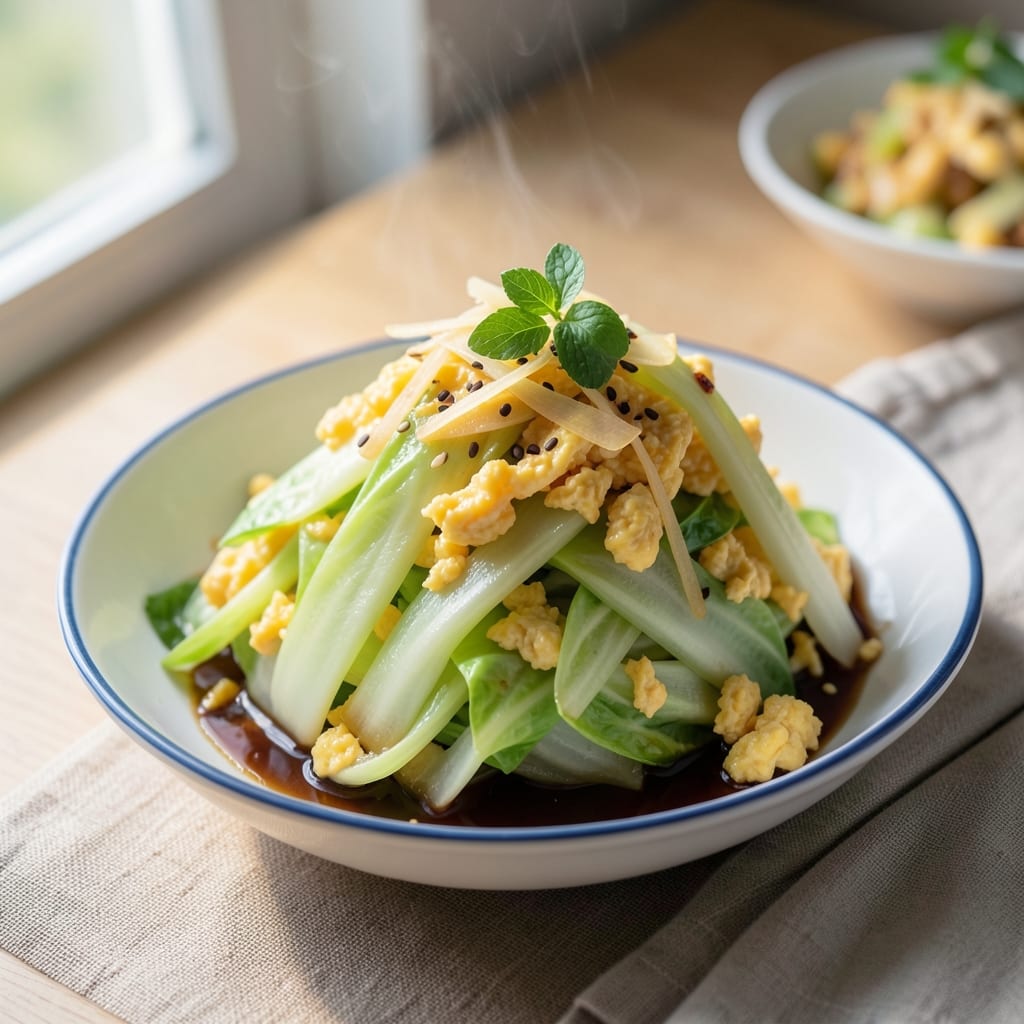
This Chinese cabbage and egg stir fry delivers restaurant-quality results in under 15 minutes—crisp-tender cabbage, silky scrambled eggs, and a savory-sweet sauce that transforms simple ingredients into a satisfying meal. The secret lies in high-heat wok technique and proper timing between components, ensuring each element reaches peak texture without overcooking.
What sets this dish apart is its balance of simplicity and depth. Fresh cabbage is julienned into crisp-tender ribbons while eggs scramble to perfect fluffiness, all bound together by a quick soy-ginger sauce. The method requires minimal prep but delivers maximum flavor—no advanced skills needed, just attention to heat control and quick cooking.
By the time you plate this dish, you'll have golden-brown cabbage edges, velvety egg curds, and a sauce that clings perfectly to each bite. The aroma alone will have everyone at the table asking for seconds. Serve over steamed rice or noodles for a complete meal that feels both comforting and elegant.
The beauty of this stir fry is its versatility—doubles as a quick breakfast, light lunch, or even a side dish. Garnish with toasted sesame seeds or sliced green onions for extra freshness. Let's get cooking with this lightning-fast recipe that proves home cooking can be both effortless and impressive.
Ingredients for chinese cabbage and egg stir fry
Fresh cabbage, silky eggs, and aromatic wok sauce transform simple ingredients into restaurant-quality stir fry.
| Ingredient | Amount | Notes |
|---|---|---|
| Bok Choy or Chinese Cabbage 🥬 | 1 lb | Julienned into 1/4-inch ribbons |
| Large Eggs 🥚 | 4 whole | Fresh, room temperature preferred |
| Vegetable Oil 🫒 | ½ cup | High smoke point for wok frying |
| Low-Sodium Soy Sauce 🍶 | 2 tbsp | Kikkoman preferred for authentic flavor |
| Sesame Oil 🫒 | 1 tbsp | Toasted, for aroma |
| Fresh Ginger 🧄 | 1 tbsp | Finely grated, peeled |
| Garlic Cloves 🧄 | 2 cloves | Minced, for aromatic base |
| White Sugar 🍚 | 1 tbsp | Balances soy sauce sweetness |
| Toasted Sesame Seeds 🌾 | 1 tsp | For garnish, store-bought fine |
| Green Onions 🧅 | 2 whole | Thinly sliced, for garnish |
| Cornstarch 🌾 | 1 tsp | For crisp-tender cabbage |
| Diamond Crystal Kosher Salt 🧂 | ½ tsp | Adjusts seasoning to taste |
| Black Pepper 🌶️ | ¼ tsp | Freshly ground for finish |
| Steamed White Rice 🍚 | 2 cups | Cooked, for serving |
The cabbage is the star—look for firm, crisp heads with vibrant green leaves. Whole Foods or Asian markets carry the best bok choy, but regular Chinese cabbage works too. Cut it into even ribbons for consistent cooking. The eggs should be fresh and cold from the fridge for silky scrambling. For the sauce, Kikkoman soy sauce delivers authentic umami—don't substitute light soy for dark. Toast your sesame oil in a separate pan first to deepen its nutty aroma before adding to the stir fry.
No sesame oil? Toasted peanut oil works in a pinch, though the flavor will differ slightly. Substitute maple syrup for sugar if you prefer, though white sugar dissolves more cleanly. For extra protein, add 1 cup firm tofu cubed along with the cabbage. The cornstarch is non-negotiable for crisp-tender cabbage—skip it, and you'll end up with soggy greens. Fresh ginger and garlic should be peeled and minced just before cooking to preserve their bright flavors. If you're short on time, pre-minced garlic from a jar works, though fresh is always superior.
Store fresh cabbage wrapped in damp paper towels for up to 5 days in the fridge. Eggs keep best in their original carton on the middle shelf—use within 3 weeks for optimal texture. The stir fry reheats beautifully, though cabbage loses crispness. Keep portions in airtight containers with a paper towel to absorb excess moisture. For meal prep, cook the cabbage and sauce separately, then combine with scrambled eggs just before serving to maintain texture. Garnishes like sesame seeds and green onions can be added fresh at serving time.
Why You'll Love This Recipe
- I swear by this combo: crisp-tender cabbage and silky eggs. That’s it. No fancy prep—just chop, scramble, and toss. The cabbage stays slightly crunchy while the eggs soak up the soy-sesame punch like a sponge.
- Two-Ingredient Core: I swear by this combo: crisp-tender cabbage and silky eggs. That’s it. No fancy prep—just chop, scramble, and toss. The cabbage stays slightly crunchy while the eggs soak up the soy-sesame punch like a sponge.
- Weeknight Magic: Honestly, this is my "I have no energy but need food" dish. Toss in pre-shredded cabbage (or even bagged stir-fry mix) and you’re done. The sesame oil finishes it in seconds—no waiting for sauces to simmer.
- Budget Powerhouse: A whole head of cabbage and half a dozen eggs feed four for under $5. That’s real money saved without sacrificing flavor. I make it twice a week, and my wallet and my family thank me.
Step-by-step instructions for Chinese cabbage and egg stir fry
Master this lightning-fast wok technique for perfectly crisp-tender cabbage and silky eggs every time.
Prepare the Cabbage for Optimal Texture
Begin by trimming the tough outer leaves from the 1 lb bok choy or Chinese cabbage and cutting it lengthwise into quarters. Remove the thick core from each quarter, then slice each piece into ¼-inch ribbons using a sharp knife. This uniform size ensures even cooking.
Transfer the sliced cabbage to a large bowl and toss with 1 tsp cornstarch and ½ tsp Diamond Crystal kosher salt. The cornstarch creates a light coating that promotes crisp-tender texture, while the salt enhances flavor. Let the cabbage sit for 5 minutes at room temperature before cooking—this prevents uneven heating when it hits the wok.
Create the Flavor Base with Aromatics
Heat ½ cup vegetable oil in a wok or large skillet over medium-high heat until shimmering. Add the 1 tbsp finely grated fresh ginger and 2 minced garlic cloves, stirring constantly for 30 seconds until fragrant but not browned. The ginger should sizzle gently, releasing its aromatic oils.
Add the cabbage in a single layer, spreading it evenly across the pan. Stir-fry for 2-3 minutes until the edges begin to soften slightly but still retain a crisp texture. Avoid overcrowding—the cabbage needs space to develop that perfect wok-fried texture. If needed, work in batches to maintain high heat.
Cook the Eggs to Silky Perfection
Push the cabbage to one side of the wok, creating space in the center. Crack the 4 large eggs into a small bowl, then pour them into the empty space. Let them sit undisturbed for 10 seconds until they begin to set slightly at the edges.
Using a spatula, gently scramble the eggs into soft curds while keeping them moist. When they reach 70% doneness, mix them into the cabbage. Add 2 tbsp low-sodium soy sauce, 1 tbsp white sugar, and 1 tbsp toasted sesame oil, tossing everything together for 1 minute to combine flavors evenly.
Finish with Garnishes and Serve Immediately
Remove the stir-fry from heat and let it rest for 1 minute to allow the flavors to meld. Garnish with 2 thinly sliced green onions and 1 tsp toasted sesame seeds, then stir once more to distribute evenly. The sesame seeds add a nutty crunch, while the green onions provide fresh contrast.
Serve immediately over 2 cups steamed white rice, sprinkling with an additional pinch of ¼ tsp black pepper for a finishing touch. The dish should be vibrant, with crisp-tender cabbage, silky eggs, and a glossy sauce that coats every bite. Leftovers lose their ideal texture, so enjoy fresh from the wok.
Pro Tips For Making Chinese Cabbage And Egg Stir Fry
- CUT CABBAGE IN EVEN STRIPS: Bok choy’s thick stems and leaves don’t cook at the same speed—split the leaves into 1-inch-wide strips while leaving the stems whole. I learned this the hard way when my first batch turned to mush while the stems stayed crunchy. A sharp knife and a steady hand make this faster than you’d think.
- SCRAMBLE EGGS ON LOW: Once the cabbage hits the wok, push it to one side and pour in the eggs, then immediately turn the heat down to medium-low. High heat makes the eggs rubbery, and I’ve ruined enough batches by keeping the flame cranked. Let them cook slow and creamy—like they’re being pampered.
- SALT THE CABBAGE FIRST: Toss the chopped cabbage with a pinch of salt (½ tsp) and let it sit for 5 minutes before cooking. This draws out moisture so it crisps up instead of steaming into a sad, limp pile. Skip this, and you’ll end up with soggy greens no matter how hot your wok gets.
- FINISH WITH SESAME OIL LAST: Drizzle the sesame oil over the entire dish right at the end—even the eggs—while it’s still hot. I used to add it earlier, and it’d burn, leaving a bitter taste. A few drops (½ tsp) is enough; it should smell like a warm hug, not a smoke alarm.
Pro cooking tips for perfect results
High-Heat Wok Mastery
Your wok or skillet must be screaming hot before adding oil—test it by flicking a drop of water that sizzles and evaporates instantly. I use a carbon steel wok (like Mauviel) because it retains heat better than stainless steel, but a heavy stainless skillet works too. Once hot, add ½ cup vegetable oil and let it shimmer before adding aromatics. If your pan isn't hot enough, the cabbage will steam instead of stir-fry, losing its crisp texture. 🔥
Cornstarch Secret
The 1 tsp cornstarch isn't just for thickening—it creates a crisp-tender texture by forming a light barrier on the cabbage fibers. Toss it with the cabbage and let it sit for 5 minutes before cooking. This gives the cornstarch time to adhere evenly. If you skip this step, your cabbage will turn mushy. For extra crunch, add ½ tsp potato starch to the mix—it's even more effective.
Egg Timing Trick
Let the eggs sit undisturbed for 10 seconds after pouring into the wok—they'll form a thin skin that helps them hold their shape when scrambled. Scramble them to 70% doneness (soft curds) before mixing with cabbage. Overcooking eggs makes them dry and rubbery. Pro tip: Use room-temperature eggs for silky texture—they scramble more evenly than cold ones straight from the fridge.
Sauce Integration
Add the soy sauce, sugar, and sesame oil all at once and toss vigorously for 1 minute to create a glossy, evenly distributed coating. The sugar should dissolve completely—if it doesn't, your sauce will taste grainy. For extra depth, add ½ tsp rice vinegar with the soy sauce. This balances the flavors perfectly and adds a bright finish. 💫
Garnish Like a Pro
Toast your sesame seeds in a dry pan for 30 seconds until golden and fragrant—this intensifies their flavor. Thinly slice the green onions on a bias (diagonally) for maximum surface area and crunch. Sprinkle them over the stir-fry right before serving to keep them vibrant. A pinch of black pepper at the end wakes up all the flavors with a subtle kick.
Heat Control Essentials
Never let your wok cool down between steps—keep it at medium-high heat throughout. If you notice the cabbage or eggs losing steam, add 1 tsp oil and increase heat immediately. A wok thermometer (like Thermoworks) helps maintain the ideal 350-400°F range. If your pan isn't hot enough, the eggs will turn out greasy, and the cabbage will wilt. 🌡️
Nutrition facts
Frequently asked questions
Can I substitute regular cabbage for Chinese cabbage?
You can use regular green cabbage in a pinch, but the texture and flavor will differ. Chinese cabbage (bok choy) has thinner leaves and a milder taste that cooks faster. If using green cabbage, cut it into ⅛-inch ribbons instead of ¼-inch and reduce cooking time by 1 minute to prevent overcooking.
Why are my eggs turning out rubbery?
Overcooking or stirring too aggressively causes rubbery eggs. Let them sit undisturbed for 10 seconds after pouring, then scramble gently to 70% doneness only. Use room-temperature eggs (not straight from the fridge) and keep heat at medium-high—never high.
How do I make this dish spicier?
Add ½ tsp chili flakes or 1 tsp sriracha to the sauce for heat. For deeper flavor, stir in 1 tsp gochujang (Korean chili paste) with the soy sauce. Garnish with sliced red chili peppers or a dash of cayenne at the end for extra kick.
Can I make this ahead of time?
Not ideal—this stir fry loses crispness when reheated. For meal prep, cook the cabbage and sauce separately, then scramble eggs fresh when serving. Store components in airtight containers with parchment paper between layers to prevent sogginess.
What's the best way to clean Chinese cabbage?
Rinse under cold water, then separate leaves and swish in a bowl of water to remove dirt. Pat dry thoroughly—moisture causes splattering in the wok. For extra crispness, soak leaves in ice water for 10 minutes before cooking to refresh them.