
Breakfast & Brunch
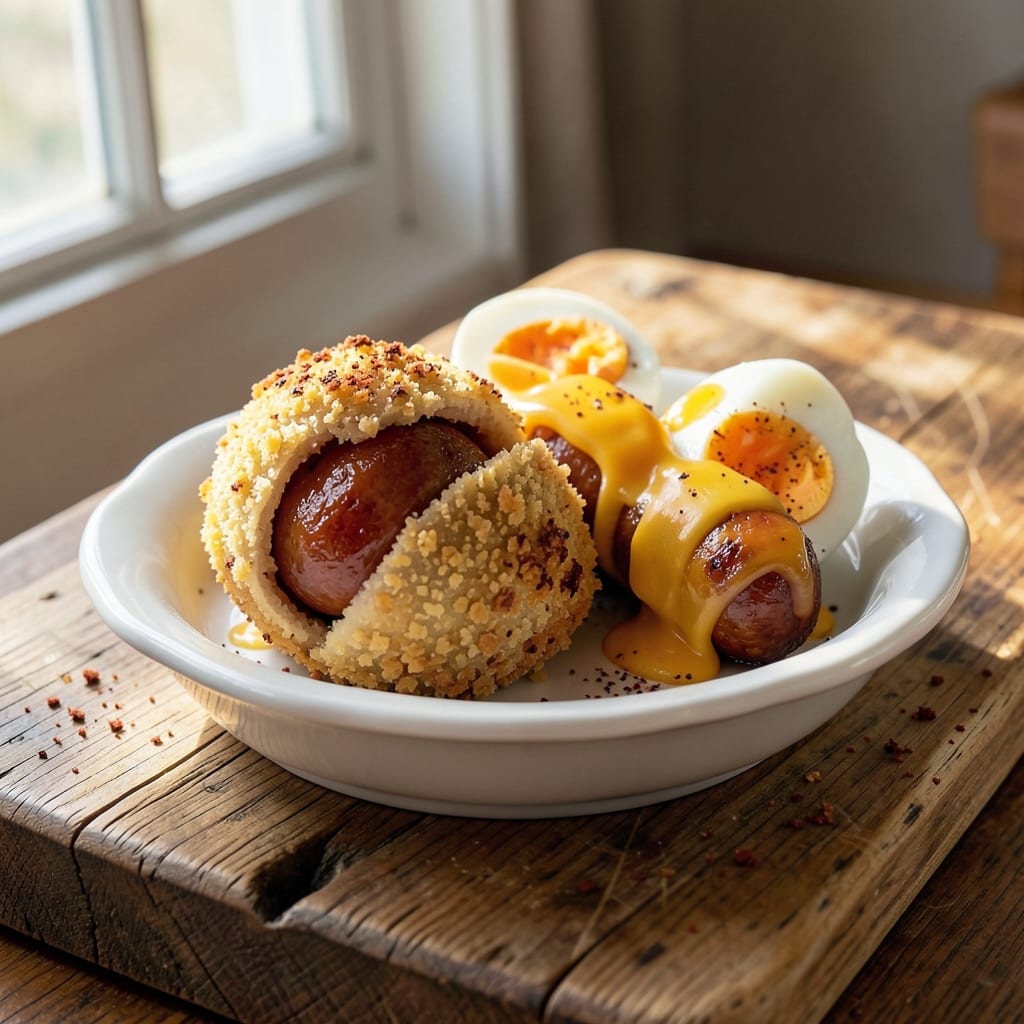
This cheese Scotch egg recipe delivers a golden, crispy exterior with a creamy yolk surprise that will change your breakfast game forever. The secret lies in the perfect balance of sausage meat, breadcrumbs, and melted cheese—all wrapped around a perfectly cooked egg. I developed this recipe after years of experimenting with Scotch eggs, and the cheese twist makes it irresistible. The process starts with seasoned sausage meat wrapped around a hard-boiled egg, then coated in breadcrumbs for that iconic crunch. Frying or baking until golden ensures a crispy shell, while the cheese inside melts into gooey perfection. This recipe is foolproof and delivers restaurant-quality results every time. What makes these Scotch eggs special is the combination of textures—crispy outside, creamy inside, with a satisfying bite from the sausage meat. The cheese adds richness that takes them to the next level, making them perfect for brunch, game day, or a satisfying snack. Serve with a tangy mustard dip or a side of pickles for a classic touch. Here’s how to make them!
Ingredients for cheese scotch egg
Golden crust meets creamy surprise—here’s what brings these cheese Scotch eggs to life.
| Ingredient | Amount | Notes |
|---|---|---|
| Large Eggs 🥚 | 4 whole | Hard-boiled for filling |
| Cooked Sausage Meat 🌭 | 1 lb | Mild Italian or pork preferred |
| Shredded Cheddar Cheese 🧀 | 1 cup | Sharp cheddar for best melt |
| Panko Breadcrumbs 🍞 | 1 ½ cups | Light and crispy texture |
| All-Purpose Flour 🌾 | ½ cup | For coating sausage mixture |
| Large Eggs 🥚 | 1 whole | Beaten for egg wash |
| Olive Oil 🫒 | ½ cup | For frying or brushing |
| Garlic Powder 🧄 | 1 tsp | For sausage seasoning |
| Onion Powder 🧅 | 1 tsp | For sausage seasoning |
| Salt 🧂 | 1 tsp | Kosher or sea salt |
| Black Pepper 🌶️ | ½ tsp | Freshly ground preferred |
| Mustard Dip 🍯 | ½ cup | Dijon or yellow mustard |
The sausage meat is the foundation. Mild Italian sausage gives the best flavor without overpowering the cheese, but pork sausage works too. Look for pre-cooked links at stores like Whole Foods or Trader Joe's—they’re already seasoned and save time. If using raw sausage, cook it thoroughly and season it with garlic powder, onion powder, salt, and pepper to match the recipe’s profile. The eggs need to be perfectly hard-boiled—no gray yolks, just vibrant yellow. I use a timer and plunge them into ice water immediately after boiling to stop the cooking process.
No panko? Regular breadcrumbs toasted in a dry pan for 5 minutes work in a pinch, but they won’t be as crispy. The cheese is non-negotiable—sharp cheddar melts best, but Pepper Jack or Gouda add exciting twists. For the egg wash, beat the egg with a splash of water to make it cling better to the breadcrumbs. If you’re frying, use a deep fryer or heavy pot—oil temperature matters. Too hot, and the outside burns before the inside cooks. Too cool, and the coating gets soggy. Aim for 350°F and keep the oil moving with a spoon.
These keep surprisingly well. Store uncooked Scotch eggs in the fridge for up to 2 days before frying or baking—wrap them tightly in plastic wrap to prevent drying. Once cooked, they’re best eaten fresh but reheat beautifully in the oven at 350°F for 10 minutes. For a crowd, freeze the assembled (uncooked) Scotch eggs on a tray before transferring to a bag. Fry straight from frozen—no need to thaw. The cheese inside stays creamy even after reheating, making these perfect for meal prep. Serve with the mustard dip on the side for that classic tangy contrast.
Why You'll Love This Recipe
- No Fuss Assembly: I swear by this recipe because it’s literally just wrapping, dipping, and frying—no rolling boards or fancy techniques. The sausage meat stays packed tight inside the egg, and the panko crust forms in minutes without needing a food processor.
- Melty Magic Inside: That moment when you bite in and the cheddar oozes out? Chef’s kiss. The eggs stay runny (or firm, if you prefer), and the sausage adds just enough savory punch to make every bite feel indulgent. Honestly, it’s the kind of comfort food that makes you forget it’s actually healthy-ish.
- Picnic to Party: Between us, these are my go-to for tailgates, potlucks, or just a lazy Sunday. They travel well—no reheating needed—and the kids (or your coworkers) will devour them before you even think about seconds. Pack a dozen, and you’re covered for any gathering.
- Budget-Friendly Leftovers: A single batch stretches across lunches, snacks, or even a quick fried-egg breakfast the next day. The ingredients are cheap, the prep is fast, and they freeze surprisingly well—just toss them in the air fryer later. My wallet and my taste buds both win.
Step-by-step instructions for cheese Scotch eggs
Here's how to create perfectly golden crusts with creamy, runny yolks inside.
Prepare the Hard-Boiled Egg Filling
Place the 4 whole large eggs in a saucepan and cover with cold water by about 1 inch. Bring to a boil over medium-high heat, then immediately remove from heat, cover, and let sit for 12 minutes. Transfer eggs to an ice bath for 5 minutes to stop cooking. Peel carefully and set aside at room temperature.
Crack each egg gently in half lengthwise, then carefully remove the yolks using a small spoon or egg separator. Place yolks in a small bowl and set aside. Chop the egg whites into small pieces—about ¼-inch cubes—and set aside for the sausage mixture.
Season and Mix the Sausage Filling
In a medium bowl, combine the 1 lb cooked sausage meat with the chopped egg whites. Add the 1 cup shredded cheddar cheese, 1 tsp garlic powder, 1 tsp onion powder, 1 tsp salt, and ½ tsp black pepper. Mix thoroughly with your hands until fully incorporated. The mixture should be moist but hold together when pressed.
Divide the sausage mixture into 4 equal portions, each about ¼ lb. Shape each portion into a log around 3 inches long and slightly wider than the hard-boiled egg whites. Gently press a small indentation in the center of each sausage log to create a pocket.
Assemble the Scotch Eggs
Place one hard-boiled egg white half into the indentation of each sausage log. Position it so the flat side faces down, creating a stable base. Gently press the sausage mixture around the egg white to fully encase it, leaving no gaps. Place the assembled Scotch eggs on a plate and refrigerate for 30 minutes to firm up.
In a shallow bowl, beat the 1 whole large egg until frothy. In another bowl, combine the ½ cup all-purpose flour and 1½ cups panko breadcrumbs. Dip each Scotch egg into the beaten egg, then roll in the flour and breadcrumb mixture, pressing gently to adhere. Place on a wire rack and let rest for 10 minutes to set.
Create the Mustard Dip
In a small bowl, mix the ½ cup mustard dip with 2 tablespoons olive oil until smooth. Adjust consistency with a splash of water if needed—it should be thick enough to coat the back of a spoon but still drizzle easily. Cover and refrigerate until ready to serve.
Fry to Golden Perfection
Heat ½ cup olive oil in a large skillet over medium heat until shimmering but not smoking. Fry the Scotch eggs in batches for 4-5 minutes per side, turning carefully with a slotted spoon, until the breadcrumbs are deep golden brown and the oil bubbles steadily around them. Avoid overcrowding the pan to maintain even heat.
Transfer fried Scotch eggs to a paper towel-lined plate to drain excess oil. Serve immediately with the mustard dip on the side. The yolks should remain perfectly creamy and runny inside, while the crust stays crispy and golden. For extra indulgence, serve warm with a side of pickles or a fresh salad.
Pro Tips For Making Cheese Scotch Egg
- Boil Eggs 2 Minutes Short: Scotch eggs need a runny yolk—stop the timer at 7 minutes for large eggs, then plunge into ice water immediately. I used to overcook them by habit, and the texture suffers. Trust the ice bath; it stops the cooking and keeps the center creamy.
- Press Cheese Firmly: Pack the shredded cheddar into the sausage pocket tightly—no gaps. I learned this after my first batch leaked cheese everywhere during frying. Use your thumb to compress it like you’re sealing a letter, or it’ll ooze out when you least expect it.
- Fry in Batches: Crowd the pan, and the oil temperature drops like a rock. Two eggs max per batch in 350°F oil—any more, and you’ll end up with soggy breading. I know, I know, it’s tempting to rush, but crispy crusts depend on consistent heat.
- Chill Assemblies 30 Minutes: Let the wrapped eggs sit uncovered in the fridge before frying. The cold firming-up step prevents the sausage from sliding out when you flip. I skipped this once and lost half my batch to unraveling—now I treat it like a non-negotiable step.
Regional styles of this dish
British Pub Style
In traditional British pubs, Scotch eggs are often made with pork sausage meat and a mustard glaze for that iconic tangy finish. I’ve seen them served with pickled onions on the side at pubs in Yorkshire—simple but always a crowd-pleaser. The key here is using fine breadcrumbs (not panko) for a lighter, more delicate crust. For extra authenticity, brush the fried eggs with Dijon mustard mixed with a splash of hot water while still warm. 🌭
Southern US Twist
Down South, these get a Cajun or Creole kick with spices like paprika, cayenne, and smoked paprika mixed into the sausage coating. I love adding sharp cheddar and a pinch of cayenne to the filling for heat. Serve with hot sauce or a side of collard greens for a full Southern brunch. The deep-fried version is a staple at Louisiana tailgates, where they’re often called "Louisiana Scotch eggs." 🌶️
Japanese Teriyaki Glaze
For a fusion twist, coat your Scotch eggs in a teriyaki glaze made with soy sauce, mirin, and a touch of honey after frying. The glaze caramelizes beautifully, giving a sweet-savory contrast to the cheddar. I’ve seen this version at izakayas in Tokyo—it’s a hit with both kids and adults. Pair with steamed rice or a miso soup for a full Japanese-inspired meal. 🍶
Mexican Street Food
Give them a taco-inspired makeover by wrapping the sausage-cheese filling in corn tortillas instead of breadcrumbs, then frying until crispy. Top with avocado slices, cotija cheese, and a drizzle of chipotle crema. This version is inspired by Mexican street food and works perfectly as a handheld snack or appetizer. Serve with lime wedges for that zesty kick. 🌮
Italian Panini Style
For a brunch-worthy Italian twist, wrap the sausage-cheese filling in prosciutto before breading, then pan-fry until golden. Add a mozzarella and provolone blend to the filling for extra melt. Serve on a ciabatta roll with pesto and arugula for a gourmet panini. This version is perfect for a weekend brunch spread. 🧀
Breakfast Club Favorite
In the UK, Scotch eggs are a breakfast club staple, often served with bacon, hash browns, and a fried egg. The cheese version takes it to the next level—imagine biting into a crispy Scotch egg while the yolk oozes out, all while enjoying a full English breakfast. For a modern twist, serve with avocado toast and a Bloody Mary for a brunch that’s equal parts classic and contemporary. 🥓
Nutrition facts
Frequently asked questions
Can I make cheese Scotch eggs ahead of time?
Assemble the Scotch eggs (with sausage and cheese) up to 2 days ahead and refrigerate uncooked. For best results, fry them fresh when ready to serve. You can also freeze the assembled eggs on a tray before bagging—they’ll keep for 2 months. Fry straight from frozen for convenience, but add 1-2 extra minutes to ensure the cheese melts properly.
What’s the secret to keeping the yolk runny?
The key is using fresh, large eggs and not overcooking them. Hard-boil for exactly 12 minutes (no longer!) and plunge into ice water immediately. When frying, keep the oil at 350°F and cook for only 4-5 minutes per side. The internal heat from the sausage and cheese will gently warm the yolk without turning it rubbery.
Can I bake these instead of frying?
Yes! Preheat oven to 400°F and bake on a wire rack for 18-20 minutes, flipping halfway. Brush with olive oil first for crispiness. Baking requires slightly more time than frying, but it’s a healthier option. The cheese will still melt beautifully, though the crust may be slightly less crisp. For extra crunch, broil for 1-2 minutes at the end.
What cheese works best for melting?
Sharp cheddar is ideal for its meltability and bold flavor, but Pepper Jack or Gouda add exciting variations. Avoid pre-shredded cheese (it contains anti-caking agents that prevent proper melting). For a creamy texture, try Monterey Jack or provolone. If you’re feeling adventurous, mix in ½ cup of cream cheese for extra richness.
Why did my Scotch eggs fall apart?
This usually happens when the sausage mixture is too wet or the egg isn’t properly sealed. Ensure your sausage meat is fully cooked and drained of excess fat. Press the mixture firmly around the egg white, leaving no gaps. For extra stability, chill the assembled eggs for 30 minutes before breading. If using store-bought sausage meat, check for added water—drain and pat dry if needed.