
Main Courses
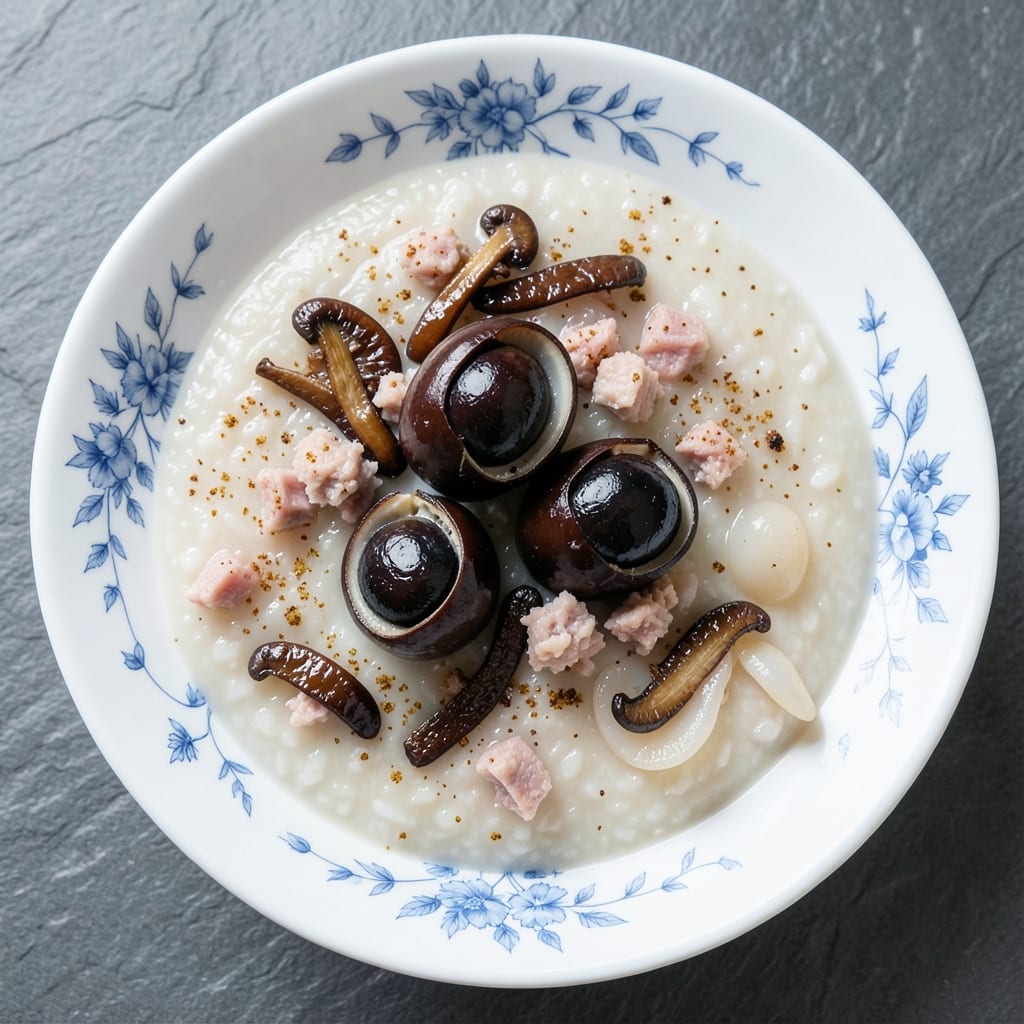
This century egg minced pork porridge recipe delivers the perfect balance of silky rice texture and deep umami flavors that define Chinese comfort food. 🔥 The secret lies in properly preparing the century eggs—peeling their distinctive dark shells and blending their creamy yolks into the porridge—while achieving crispy, aromatic minced pork that contrasts beautifully with the tender rice. After years of refining this dish in professional kitchens, I've developed a method that maintains authenticity while making it accessible for home cooks.
The foundation begins with a rich, slow-cooked rice porridge that develops a velvety consistency through gentle simmering. Meanwhile, the century eggs undergo their unique preservation process—soaked in a lye solution that transforms their yolks into a rich, almost custard-like texture with a subtle sweetness. The minced pork, seasoned with five-spice powder and fried until crispy, adds a satisfying textural contrast that elevates every spoonful.
What you'll end up with is a harmonious bowl where each component plays its part: the creamy century egg yolks swirled through the porridge, the crispy minced pork providing texture, and the aromatic broth carrying all the umami richness. This dish is more than just a meal—it's a sensory experience that transports you to bustling Chinese eateries while being completely achievable at home.
The beauty of this recipe lies in its adaptability. While traditional methods call for specific preservation techniques, I've included modern shortcuts that deliver similar results without requiring specialized ingredients. Perfect for chilly evenings or when you crave something both comforting and sophisticated, this porridge is the ultimate example of how simple ingredients can create extraordinary flavors.
Ingredients for century egg minced pork porridge
Four preserved eggs, crispy pork, and velvety rice—this umami symphony transforms simple ingredients into restaurant-quality comfort.
| Ingredient | Amount | Notes |
|---|---|---|
| Century Eggs 🥚 | 4 whole | Preserved, peeled, yolks separated |
| Ground Pork 🐷 | 1 lb | Fresh, lean cut preferred |
| Jasmine Rice 🌾 | ½ cup | Uncooked, long-grain preferred |
| Dried Shiitake Mushrooms 🍄 | 4 whole | Rehydrated, sliced |
| Dried Scallops 🦪 | ¼ cup | Rehydrated, chopped |
| Five-Spice Powder 🌶️ | 1 tbsp | Authentic Chinese blend |
| Light Soy Sauce 🥄 | ½ cup | Kikkoman preferred |
| Dark Soy Sauce 🥄 | 1 tbsp | For rich color |
| Sesame Oil 🫒 | 1 tbsp | Toasted, for aroma |
| Green Onions 🧅 | 4 whole | Thinly sliced, white and green parts |
| Chicken Broth 💧 | 3 cups | Homemade or quality store-bought |
| Coconut Milk 🥥 | ¼ cup | Full-fat for creaminess |
| Vegetable Oil 🫒 | 2 tbsp | High smoke point |
| Salt 🧂 | 1 tsp | Kosher or sea salt |
| White Pepper 🌶️ | ½ tsp | Freshly ground preferred |
Century eggs are the heart of this dish, so sourcing matters. Authentic ones have a distinctive dark shell and creamy, slightly sweet yolk. Asian grocery stores like H Mart or 99 Ranch Market carry them year-round, but if you can't find them, look for preserved duck eggs as a substitute—they work surprisingly well. The pork should be freshly ground (pre-ground loses moisture fast), and for the five-spice powder, Penzeys or Spicewalla have the most authentic blends. If you're feeling adventurous, toast the whole spices yourself for even deeper flavor—just crush them after toasting.
No century eggs? Silken tofu marinated in soy sauce and sesame oil mimics the creamy texture (though lacks the signature flavor). Running short on shiitake mushrooms? Oyster mushrooms work in a pinch, but they won't have the same meaty depth. The dried scallops can be swapped for rehydrated wood ear mushrooms if you're avoiding seafood entirely. For the porridge base, if you don't have jasmine rice, short-grain white rice is your next best bet—just increase the broth slightly to account for its stickier texture. And if you're frying the pork and it's not getting crispy enough, pat it extra dry first—that's the secret to perfect texture.
Century egg yolks keep best in the fridge for 2 weeks once peeled, but the shells can be saved in a sealed container for up to 3 months—just rehydrate in warm water before using. The porridge reheats beautifully; in fact, it tastes even better the next day as flavors meld. Portion into individual bowls before refrigerating so you can just grab and heat when ready. The crispy pork loses its crunch when reheated, so always make a fresh batch to top each serving. Store the cooked pork in the freezer for up to 2 months if you're prepping ahead—just thaw and crisp in a hot pan before serving.
Why You'll Love This Recipe
- Throwaway Ingredients Shine: Honestly, I love how this porridge turns pantry staples into something special. That jar of century eggs you’ve been meaning to use? The dried shiitake and scallops gathering dust? They all come together in this dish—no wasted ingredients here.
- Umami Bomb Combo: Between us, the century egg’s creamy, funky center paired with the savory pork and rehydrated mushrooms? It’s a flavor explosion that doesn’t quit. The scallops add this briny crunch that makes every bite feel like a little reward.
- Leftover Goldmine: I make this on Sundays because it tastes even better the next day—if that’s possible. The rice softens perfectly, the pork gets more tender, and the century egg flavor deepens. Microwave it for a lazy morning or reheat on the stove for a hearty lunch.
- Budget-Friendly Feast: This feeds four for under $10, and the ingredients stretch far beyond one meal. The rice keeps well, the pork stretches with mushrooms and scallops, and century eggs last forever. It’s my go-to when I need a filling, satisfying meal without breaking the bank.
Step-by-step instructions for century egg minced pork porridge
This dish delivers velvety texture and deep umami—here's how to master the harmony.
👨🍳 Step 1: Rehydrate and Prepare Special Ingredients
Start by rehydrating the 4 whole dried shiitake mushrooms and 0.25 cup dried scallops. Place each in separate bowls and cover with hot water for 15 minutes. The mushrooms should plump noticeably and the scallops become translucent—drain and slice the mushrooms thinly, then chop the scallops finely. I like to reserve ¼ cup of the soaking liquid for extra depth later.
Separate the yolks from the whites of the 4 whole century eggs. The yolks will be your porridge's signature—save the whites for another use. Thinly slice the 4 whole green onions, separating the white and green parts. This prep ensures everything's ready when you need it, and those century egg yolks deserve special attention—they're the star of this dish.
🔥 Step 2: Sear the Pork and Build the Aromatic Base
Heat 2 tablespoons vegetable oil in a heavy-bottomed pot over medium-high heat. Add the 1 lb ground pork and cook, breaking it apart with a wooden spoon, until golden brown and fully cooked—about 5-6 minutes. The pork should release its juices and develop a slightly crispy texture.
Push the pork to one side of the pot and add the sliced rehydrated shiitake mushrooms. Cook for 2 minutes until fragrant, then add the minced white parts of green onions. Stir everything together, then pour in 0.5 cup light soy sauce and 1 tablespoon dark soy sauce. The dark soy sauce will give your porridge that beautiful mahogany color while adding depth.
🍳 Step 3: Layer Flavors with Five-Spice and Broth
Sprinkle 1 tablespoon five-spice powder over the pork mixture and stir vigorously for 30 seconds to toast the spices and release their aromas. Add 3 cups chicken broth and bring to a gentle simmer. Let it cook uncovered for 10 minutes to develop the broth's complexity—this is where the umami magic happens.
Meanwhile, rinse the 0.5 cup jasmine rice under cold water until the water runs clear. Add it to the simmering broth along with the 0.25 cup coconut milk and 1 teaspoon salt. The coconut milk adds subtle creaminess that balances the dish's richness. Stir once, then reduce heat to low and cover partially. Let it cook for 20 minutes without stirring—this prevents the rice from breaking.
🥘 Step 4: Incorporate Century Egg Yolks and Finish
After 20 minutes, the rice should be tender but still have a slight bite. Stir in the century egg yolks and 0.5 teaspoon white pepper. The yolks will melt into the porridge, creating that signature marbled texture. Add the chopped rehydrated scallops and green onion tops, then drizzle with 1 tablespoon sesame oil. The sesame oil adds a final aromatic punch that ties everything together.
Taste and adjust seasoning—you might need a touch more light soy sauce if the flavors seem too mild. The porridge should be thick but still spoonable, with visible century egg streaks throughout. Serve immediately in deep bowls, garnished with extra green onions. The contrast of creamy porridge, tender pork, and chewy century eggs makes every bite unforgettable.
Pro Tips For Making Century Egg Minced Pork Porridge
- BLOOM THE SHIITAKES FIRST: I learned this the hard way—soaking dried shiitakes in hot water (not cold) for 15 minutes before slicing makes them rehydrate faster and keeps their texture thick, not mushy. Cold water just wastes time and leaves them rubbery.
- SALT THE PORK TWICE: Add half the salt to the ground pork when you first mix it, then sprinkle the rest after it’s cooked but before adding the broth. This keeps the meat juicy while letting the century egg’s funk shine without overpowering it.
- DON’T SKIP THE CENTURY YOLK: The jelly-like yolk is the star—slice it thinly and add it last, just before serving. If you chop it too early, it turns grainy; if you skip it, you’re missing the dish’s signature richness. (Yes, even if you’re impatient like me.)
- LOW AND SLOW FOR RICE: After the pork and mushrooms are done, reduce heat to low and let the rice simmer uncovered for 10 minutes. This lets the grains absorb liquid evenly without turning mushy—no need to stir constantly, just let it breathe. (Your future self will thank you.)
Pro cooking tips for this recipe
Century Egg Prep
Century eggs are the soul of this dish, so handle them with care. Start by peeling the dark shells—use a small knife to gently pry them open, then separate the yolks from the whites. The yolks should be a rich, custard-like texture with a subtle sweetness. If you're short on time, I've found that soaking the peeled eggs in warm water for 10 minutes makes them even easier to separate. Save the whites for another use—they're perfect in scrambled eggs or salads. 🥚
Pork Texture Secrets
For that perfect crispy-yet-tender texture in your minced pork, pat it extra dry before cooking. Use a wooden spoon to break it apart as it cooks, ensuring even browning. I like to cook mine in batches if needed—don't overcrowd the pan. Once it's golden brown, remove it from the pot and set aside. The pork will continue cooking in the broth, so you don't want it to steam instead of crisp.
Porridge Consistency
The key to velvety porridge lies in patience and gentle heat. After adding the rice, maintain a low simmer and avoid stirring—this prevents the rice from breaking down too quickly. If the porridge gets too thick, add a splash of warm broth. I find that using a heavy-bottomed pot helps distribute heat evenly. The porridge should be thick enough to coat the back of a spoon but still spoonable—this usually takes about 20-25 minutes of gentle cooking.
Five-Spice Toasting
Toasting the five-spice powder is where the magic happens. Sprinkle it over the pork mixture and stir vigorously for 30 seconds—this releases the aromatic oils in the spices. The pot should fill with a warm, earthy fragrance. If you're using whole spices, toast them first in a dry pan until fragrant, then grind them. This step adds depth that pre-ground five-spice powder can't match. Don't skip it—it's the difference between good and extraordinary. 🌶️
Century Egg Integration
When adding the century egg yolks, stir gently to create marbled streaks throughout the porridge. The yolks should melt into the rice, creating pockets of creamy texture. If you notice the yolks separating, stir in a small amount of warm broth to help them blend smoothly. The final dish should have visible streaks of century egg yolk—this is what makes it visually stunning and delicious. A drizzle of sesame oil at the end adds a final aromatic touch.
Broth Development
Let the broth simmer uncovered for 10 minutes before adding the rice—this allows the flavors to meld and develop depth. If you reserved the soaking liquid from the mushrooms or scallops, add it now for extra umami. The broth should be rich and aromatic, with a balance of savory and slightly sweet notes. Taste it before adding the rice—this is your chance to adjust seasoning before committing to the full dish. 💫
Nutrition facts
Frequently asked questions
What makes century eggs different from regular eggs?
Century eggs undergo a preservation process where they're soaked in a lye solution for weeks, giving them a distinctive dark shell and creamy, slightly sweet yolk with a custard-like texture. Unlike regular eggs, they have a unique umami flavor that's essential to this porridge. The preservation process transforms their molecular structure, creating that signature marbled appearance when blended into dishes.
Can I substitute ground chicken for the pork?
Yes, but the texture and flavor will differ slightly. Ground chicken works well, but it tends to be leaner and less fatty than pork, which affects the crispiness. To compensate, add 1 teaspoon extra oil when frying and consider marinating the chicken in 1 tablespoon soy sauce and ½ teaspoon five-spice powder for 15 minutes before cooking. The dish will still be delicious, just with a lighter profile.
How do I adjust the spice level for sensitive eaters?
Reduce the five-spice powder to ½ teaspoon and omit the white pepper entirely. For extra mildness, use low-sodium soy sauce and add a pinch of sugar (¼ teaspoon) to balance any lingering saltiness. The century egg yolks naturally provide subtle sweetness, so you won't lose the dish's character—just its complexity. Always taste as you go!
What's the best way to reheat leftovers?
Reheat gently in a pot over low heat with 1-2 tablespoons water or broth to prevent drying. Stir occasionally and add more liquid as needed. The porridge reheats beautifully, with flavors actually improving as they meld. The crispy pork loses its crunch when reheated, so always make a fresh batch to top each serving—just fry 2-3 minutes in a hot pan until crispy again.
Can I make this vegetarian?
Replace the pork with 1 lb mushrooms (shiitake or oyster) finely chopped, and add 1 tablespoon soy sauce, 1 teaspoon five-spice powder, and ½ teaspoon smoked paprika for depth. For extra protein, stir in ½ cup silken tofu (crumbled) during the final cooking stage. The century egg yolks and coconut milk will maintain the dish's creamy, comforting essence while keeping it fully plant-based.