
Side Dishes
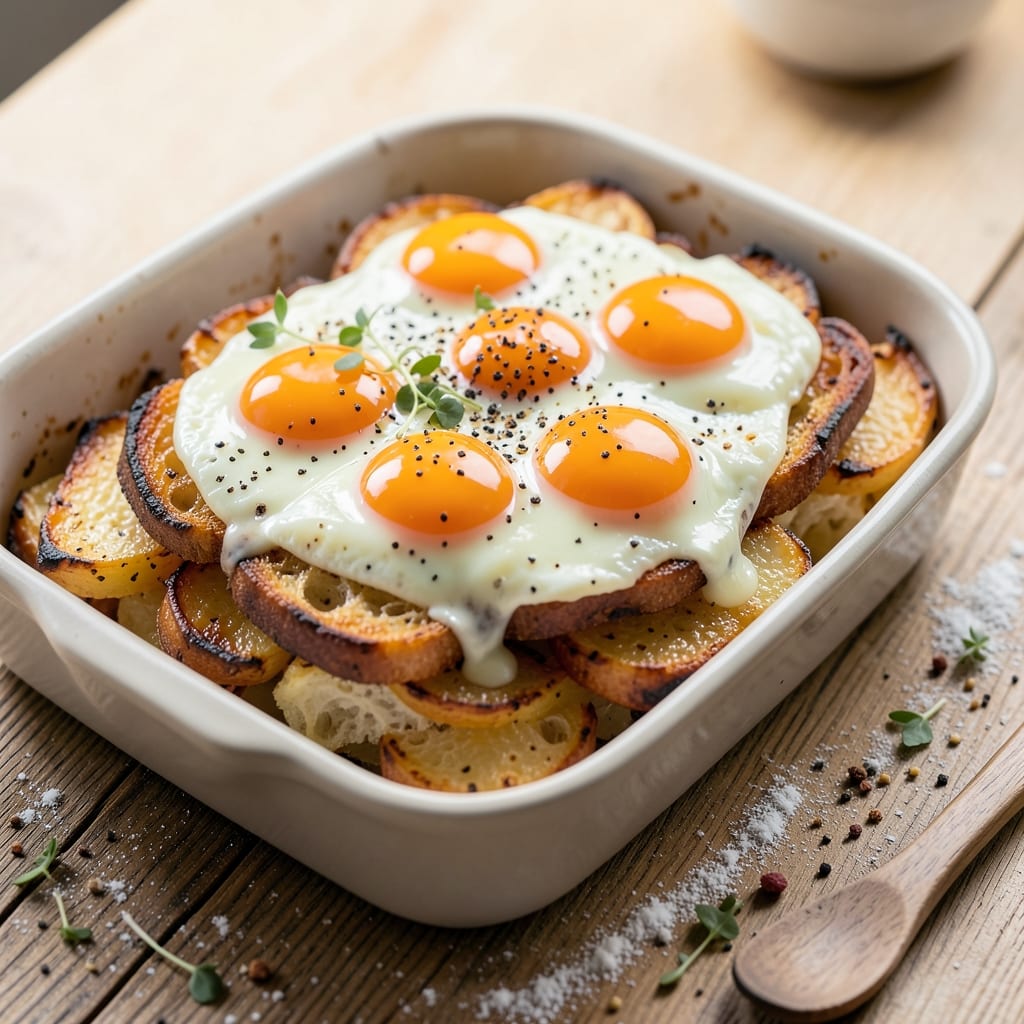
This bread egg potato recipe transforms humble ingredients into a restaurant-worthy side with a crispy golden crust and silky egg ribbons woven through tender potatoes. The secret lies in layering thinly sliced potatoes with shredded bread and beaten eggs, then baking until the top turns irresistibly crunchy while the center stays creamy. I developed this version after years of perfecting the technique—no soggy middles, no bland flavors, just a dish that disappears faster than you can say "seconds, please."
The beauty of this recipe is its simplicity: just five core ingredients that come together in minutes but deliver foolproof results every time. Thinly slicing the potatoes ensures even cooking, while the bread adds a subtle savory depth that balances the richness of the eggs. Baking at 400°F creates that signature crispy top, while the eggs bind everything into a cohesive, melt-in-your-mouth texture. It's the kind of side dish that elevates any meal—vegetarian or not—without stealing the spotlight.
What makes this recipe truly special is the texture contrast: the crispy bread crust gives way to tender potato layers, all wrapped in delicate egg ribbons that hold together when sliced. The aroma alone—warm bread, buttery potatoes, and softly cooked eggs—will have everyone at the table asking for the recipe. It's perfect for brunch, a hearty vegetarian main, or a side that pairs beautifully with grilled meats or fresh salads.
Once you try this version, you'll never go back to store-bought potato dishes again. The technique is straightforward, but the results are anything but ordinary. Let's get started—your taste buds (and leftovers) will thank you.
Ingredients for bread egg potato
Five simple ingredients create a crispy, golden-topped potato masterpiece with creamy egg ribbons inside.
| Ingredient | Amount | Notes |
|---|---|---|
| Russet Potatoes 🥔 | 2 lb | Thinly sliced, peeled |
| Stale Bread 🍞 | 4 cups | Crusts removed, torn into pieces |
| Large Eggs 🥚 | 6 whole | Room temperature, beaten |
| Unsalted Butter 🧈 | 3 tbsp | Melted, for brushing |
| Salt 🧂 | 1 tsp | Kosher preferred |
| Black Pepper 🌶️ | ½ tsp | Freshly ground |
| Garlic Powder 🧄 | ½ tsp | For seasoning |
| Fresh Parsley 🌿 | ¼ cup | Chopped, for garnish |
The potatoes are the foundation—Russets are ideal for their fluffy texture, but Yukon Golds work too. Slice them 1/8-inch thick for even cooking, and don't skip peeling unless you love sandpaper bites. For the bread, stale white or sourdough from the day before works best—no need to buy special bread. If you're short on time, toast day-old bread until dry and crumble it. The eggs should be room temperature for even mixing, and don't overbeat them or you'll end up with scrambled texture. I always grab large eggs from Trader Joe's—they're consistent and affordable.
No stale bread? Toast a few slices of fresh bread until completely dry, then crumble. Out of eggs? Silken tofu blended with a splash of milk mimics the binding quality (though texture will differ slightly). Want extra flavor? Mix in 1/4 cup grated Parmesan or nutritional yeast for a cheesy note. The garlic powder is optional but adds depth—skip it if you're sensitive to garlic flavors. For the butter, European-style butter like Plugrá has higher fat content, which gives a richer crust. If you're making this ahead, cover and refrigerate the assembled dish for up to 24 hours before baking—it actually develops better flavor.
Assemble the dish and refrigerate for 1 hour before baking—this ensures the eggs set properly without turning rubbery. Leftovers? They reheat beautifully in a 350°F oven for 15-20 minutes covered with foil. Store in an airtight container for 4 days in the fridge. For freezing, bake first, then slice and freeze portions on a tray before transferring to bags. 3 months is the max, but honestly, this disappears so fast you won't have leftovers. The parsley garnish is optional but adds a pop of color—use fresh if you've got it, dried at half the amount if you don't.
Why You'll Love This Recipe
- No-Waste Magic: I swear by this trick for stale bread—it’s the only way I keep my pantry from looking like a dumpster fire. Toss in cubes, let them soak up egg and butter, then bake until golden. Problem solved, flavor unlocked.
- Crispy-Creamy Contrast: That buttery bread crust cracking open while the potato stays fluffy inside? It’s the kind of texture combo that makes you slow down mid-bite. Honestly, it’s the only way I’ll eat potatoes after Thanksgiving leftovers.
- Budget Breakfast for Days: Two eggs, a potato, and bread scraps stretch into a meal that feeds my family for lunch too. I double the batch on Sundays—reheats like a dream, and my kids still beg for seconds even after school dinners.
- One-Pan, Zero Guilt: Sheet pan ready in 10 minutes, oven does the work while I wipe crumbs off the counter. Between us, this is my secret weapon for nights when I’d rather watch Netflix than stand at the stove. (Yes, even on a Tuesday night.)
Step-by-step instructions for bread egg potato bake
Master this technique for a golden crust and creamy interior every time.
Prepare the Potato Layer
Preheat your oven to 375°F and grease a 9x13-inch baking dish with 1 tablespoon of the melted butter. Arrange the 2 lb Russet Potatoes in a single layer at the bottom of the dish, slightly overlapping. The slices should be arranged in a tight, even pattern—this creates a stable base and prevents shifting during baking.
Brush the potato layer generously with the remaining 2 tablespoons melted butter. Sprinkle evenly with ½ teaspoon salt, ¼ teaspoon black pepper, and ¼ teaspoon garlic powder. The butter will help create a crispy top layer while the seasoning infuses into the potatoes as they cook. Bake for 15 minutes until the potatoes begin to soften but aren't fully cooked through.
Build the Bread Layer
Remove the potatoes from the oven and spread the 4 cups Stale Bread evenly over the potato layer. Press down gently with your hands to create an even, compact surface—this prevents gaps where egg might pool instead of creating ribbons. The bread should completely cover the potatoes without overlapping the dish's edges.
Brush the bread layer with another ½ tablespoon melted butter, focusing on the top surface. This butter will create that signature crispy crust while keeping the interior moist. Return the dish to the oven and bake for another 10 minutes at 375°F until the bread begins to firm up and develop a golden tint around the edges.
Create the Egg Ribbon Mixture
While the bread layer bakes, beat the 6 whole Large Eggs in a large bowl until they're completely homogeneous—no streaks of white should remain. The eggs should be at room temperature for even cooking. In a separate small bowl, whisk together the remaining ½ teaspoon salt, ¼ teaspoon black pepper, and ¼ teaspoon garlic powder. Gradually incorporate this seasoning into the eggs while continuing to whisk.
Here's the key: the eggs should be seasoned but not overly salty—the bread already contains some salt from its preparation. Pour the seasoned egg mixture evenly over the bread layer in the baking dish. Use a spatula to spread it into an even layer, about ¼-inch thick. The eggs should completely cover the bread without pooling in any areas.
Bake to Crispy Perfection
Return the dish to the oven and bake at 375°F for 25-30 minutes until the top develops a deep golden brown crust and the edges pull away slightly from the dish. You'll know it's ready when the top looks dry and crispy—this is where the magic happens. The interior should still be slightly jiggly when you gently shake the dish.
Remove from the oven and let it rest for 5 minutes before attempting to cut. This resting period allows the egg ribbons to set properly while preventing them from falling apart. Use a sharp knife to cut through the crispy top and into the creamy egg layer beneath. The contrast between the golden crust and silky egg ribbons is what makes this dish so special.
Garnish and Serve Immediately
Sprinkle the 0.25 cup Fresh Parsley evenly over the top just before serving. The parsley adds a fresh contrast to the rich, savory flavors. Serve immediately while the top is still crispy and the egg ribbons are at their most luxurious texture. The dish holds well for 30 minutes at room temperature, but the texture begins to degrade after that.
This technique delivers that perfect balance of textures: a shatteringly crisp top that gives way to delicate egg ribbons and tender potatoes beneath. The key is patience—don't rush the baking time or the resting period. Each element needs time to develop its optimal texture for the ultimate experience.
Pro Tips For Making Bread Egg Potato
- Pare Potatoes Like a Pro: Cut Russets into even ½-inch slices—thicker pieces stay gummy, thinner ones burn before cooking through. I learned this the hard way after serving a plate where half was underdone and half was crispy.
- Toast Bread Until Crunchy: Stale bread needs to crisp up fully in a dry pan over medium heat before mixing with eggs—about 3-4 minutes per side. Skimp here, and your dish turns into a sad, gluey mess.
- Salt the Potatoes Early: Season the potato slices with salt before cooking, not after. The flavor soaks in while they roast, and you’ll need less later when adding butter. Trust me, your taste buds will notice.
- Use Cold Eggs for Fluff: Whisk eggs with cold butter and salt first, then fold in the toasted bread—this keeps the texture light, not dense. Warm eggs make everything gummy, and nobody wants that.
Common mistakes when making this dish
Over-Slicing Potatoes
Thinly slicing potatoes is key, but going too thin—under 1/16-inch—turns them into mush instead of tender layers. I learned this the hard way when my first attempt used a mandoline set too fine. Aim for 1/8-inch slices using a sharp chef's knife or mandoline with a 3mm blade. Overlapping slices slightly helps prevent gaps where egg might pool instead of creating those signature ribbons. 🥔
Skipping the Chill
Rushing into the oven without chilling the assembled dish for 1 hour leads to rubbery eggs and a soggy bread layer. The eggs need time to begin setting before baking, which prevents them from turning into scrambled texture. I now make it a rule to set a timer and let everything rest while I prep the table. If you're short on time, chill for at least 30 minutes—just know the texture won't be as perfect.
Uneven Egg Distribution
Pooling egg in the center creates a dense, scrambled middle while leaving the edges dry. To avoid this, pour the egg mixture in a thin, even layer—about 1/4-inch thick—and use a spatula to spread it toward the edges. I tap the baking dish gently on the counter to help distribute any excess. For extra insurance, whisk the eggs until completely smooth with no streaks before pouring. The goal is uniform coverage that creates those delicate ribbons throughout.
Over-Baking for Crisp
Baking until the top is deep golden brown is crucial, but going past 30 minutes at 375°F turns the crust leathery while the interior stays undercooked. The perfect moment is when the edges pull away slightly from the dish and the top looks dry to the touch. I test doneness by inserting a knife—it should come out clean but with slightly moist potato. If you're worried about burning, tent the dish with foil for the last 5 minutes of baking.
Wrong Bread Choice
Fresh bread absorbs too much moisture, while crusty bread doesn't break down properly. Stale white or sourdough is ideal because it crumbles evenly and creates that perfect crispy layer. If you only have fresh bread, toast it until completely dry and crumble it finely. For extra flavor, I sometimes add 1/4 cup grated Parmesan to the bread layer, but this is optional. Avoid dense breads like rye—they won't create the same delicate texture.
Ignoring Rest Time
Cutting into the dish immediately after baking causes the egg ribbons to fall apart and the crispy top to crumble. That 5-minute rest lets the structure set properly. I've seen home cooks slice too soon and end up with a sad, soupy mess. Use this time to garnish with parsley and set the table. The wait is worth it for that perfect first bite where the crispy top gives way to silky egg ribbons. 💫
Nutrition facts
Frequently asked questions
Can I use sweet potatoes instead of regular potatoes?
Yes, but expect a slightly different texture and flavor. Sweet potatoes will be more moist and slightly sweet, which pairs beautifully with the savory bread and eggs. Reduce baking time by 5 minutes since they cook faster, and consider adding 1/4 teaspoon cinnamon to complement their natural sweetness. The crispy top will still form, but the interior will be more custard-like.
What if I don't have stale bread?
No problem! Toast fresh bread until completely dry (about 10-15 minutes at 350°F), then crumble it finely. For extra insurance, spread the toasted bread on a baking sheet and bake for another 5 minutes to remove all moisture. This mimics the texture of stale bread perfectly. If you're short on time, even day-old bread from the fridge works—just make sure it's fully dry before using.
How can I make this vegetarian-friendly without eggs?
Replace the eggs with a 1:1 ratio of silken tofu blended with 2 tablespoons milk (dairy or plant-based). For binding power, add 1 tablespoon cornstarch to the mixture. The texture will be slightly denser but still hold together well. Alternatively, use 1/2 cup aquafaba (chickpea brine) whipped with 1 teaspoon cream of tartar for a lighter result. Both options require the same chilling and baking times.
Can I make this dish ahead of time?
Assemble the dish completely (including the egg layer) and refrigerate it uncovered for 24 hours to let the bread dry out completely. When ready to bake, simply increase the oven temperature to 400°F and bake for 35-40 minutes (5 minutes longer than usual). The texture will be slightly firmer but still delicious. For reheating, cover with foil and warm at 300°F for 10-15 minutes to restore crispiness.
Why did my egg layer turn out scrambled instead of ribbon-like?
This usually happens when the eggs weren't whisked thoroughly or the dish wasn't chilled before baking.