
Breakfast & Brunch
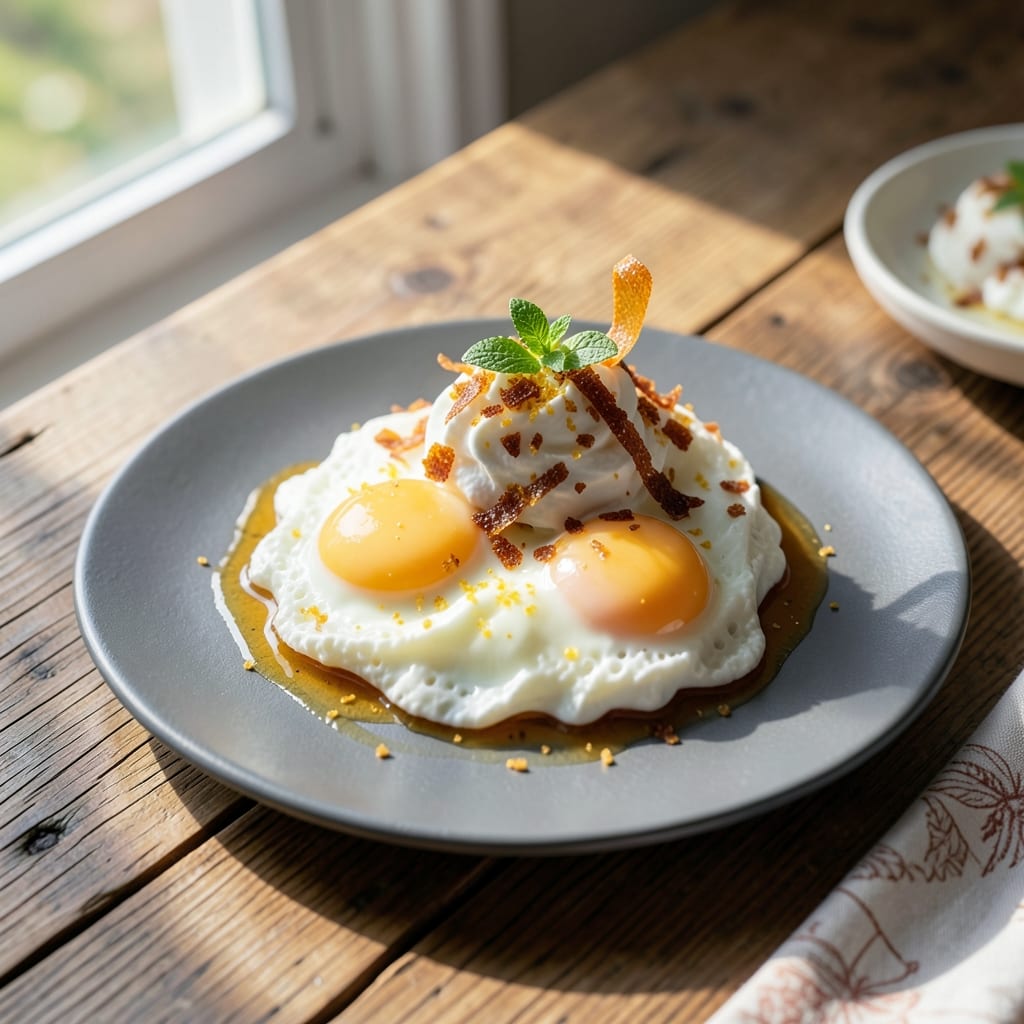
This boiled egg dessert recipe transforms simple ingredients into ethereal meringue clouds infused with bright citrus notes—no one will guess they're egg-based. 💛 The secret lies in perfectly boiled eggs, which create a velvety custard base that becomes the heart of these delicate, airy desserts. What makes this recipe special is how the citrus zest elevates the flavor profile without overpowering the delicate meringue texture.
You'll start with boiled eggs—not just any boiled eggs, but ones cooked to precise doneness—then transform them into a smooth, flavorful custard that's folded into whipped egg whites. The result is a dessert that's both visually stunning and surprisingly rich, with a silky texture that melts in your mouth. This recipe is perfect for those who want something elegant yet approachable, requiring just a few key ingredients and simple techniques.
The magic happens when the citrus zest is folded into the meringue mixture, adding a subtle tang that brightens every bite. The finished dessert has a light-as-air quality, with a crisp exterior that gives way to a tender, custardy center. It's the kind of treat that feels indulgent yet light enough for any occasion—whether you're serving it at a dinner party or simply enjoying a special dessert at home.
Ready in about 30 minutes, this recipe delivers restaurant-quality results without requiring advanced skills. The key is patience—letting the meringue set properly ensures those perfect, cloud-like peaks. Once you try this, you'll never think of boiled eggs the same way again.
Ingredients for boiled egg dessert
Six simple ingredients transform boiled eggs into ethereal citrus-infused meringue clouds.
| Ingredient | Amount | Notes |
|---|---|---|
| Large Eggs 🥚 | 6 whole | Fresh, room temperature preferred |
| Granulated Sugar 🍚 | 1 cup | Superfine preferred for smoothness |
| Lemon Zest 🍋 | 1 tbsp | Freshly grated, organic preferred |
| Orange Zest 🍊 | 1 tbsp | Freshly grated, organic preferred |
| Unsalted Butter 🧈 | ½ cup | Cold, cubed for whipping |
| Heavy Cream 🥛 | 1 cup | Cold, full-fat for stability |
| Vanilla Extract 🌿 | ½ tsp | Pure, high-quality preferred |
| Cornstarch 🌾 | 1 tbsp | For smooth custard texture |
| Salt 🧂 | ¼ tsp | Fine sea salt preferred |
| Lemon Juice 🍋 | 1 tbsp | Freshly squeezed |
| Orange Juice 🍊 | 1 tbsp | Freshly squeezed |
The eggs are the foundation—freshness matters. Use eggs that are no older than 2 weeks for the best texture, and room temperature eggs whip better. For the zest, organic lemons and oranges have more vibrant flavor, but conventional works too. The butter and cream should be cold when measured—this ensures stable meringue peaks. I grab my eggs from local farms when possible, but store-bought large eggs work perfectly fine for this recipe. The citrus zest should be finely grated—no peels or pith, just the bright yellow outer layer.
No fresh citrus? Bottled lemon juice works in a pinch, but the zest can't be substituted—it's what gives this dessert its signature brightness. Running out of heavy cream? Whipped coconut cream works for a dairy-free version, though the texture will be slightly lighter. The cornstarch is crucial for that silky custard—don't skip it. For the sugar, superfine works best, but regular granulated sugar will work if you pulse it in a food processor first. The vanilla extract should be pure—imitation will taste artificial in this delicate dessert.
Store the egg whites and yolks separately in the fridge until ready to use—they keep for 2 days. The zest can be refrigerated in an airtight container for up to 1 week, though it loses potency over time. The finished meringue clouds should be served immediately, but you can store them in an airtight container for up to 4 hours at room temperature. For best results, prepare the custard and meringue separately, then assemble just before serving—this keeps everything light and airy.
Why You'll Love This Recipe
- No Fuss, Big Payoff: I’ll admit, boiling eggs isn’t glamorous—but this dessert turns them into something ridiculously good with just sugar, citrus zest, and butter. You’re basically doing the bare minimum for a dessert that tastes like it took hours.
- Zesty Magic: That bright lemon and orange zest? It’s the secret weapon. The sugar caramelizes just enough to coat the eggs in a glossy, citrusy shell—like a candy coating for something that’s still creamy inside. Honestly, I’ve never met a boiled egg dessert this addictive.
- Office Party Hack: Between us, this is my go-to for last-minute gatherings. No one suspects how easy it is—just boil, zest, and roll. It’s fancy enough for a brunch spread but takes less time than toasting bagels.
- Pantry Staple Luxury: You’re using eggs you’d normally toss, sugar you already have, and butter that’s probably in your fridge. The cost? Almost nothing. The result? A dessert that feels special without breaking the bank—or your willpower.
Step-by-step instructions for silky meringue clouds
Transform simple boiled eggs into ethereal meringue clouds with this precise technique.
🍳 Step 1: Separate Eggs and Whip Meringue to Stiff Peaks
Crack the 6 whole Large Eggs into a fine-mesh strainer over a bowl, letting the whites drip through while discarding yolks. Add the 1 tbsp Lemon Zest and 1 tbsp Orange Zest to the yolks and set aside. In a clean, grease-free bowl, beat the egg whites with the 0.25 tsp Salt on low speed until foamy.
Gradually add the 1 cup Granulated Sugar in a slow stream while beating on medium-high speed. Increase to high speed and whip for 5-7 minutes until the meringue forms stiff peaks that hold their shape when the whisk is lifted. The peaks should be glossy and hold a slight bend without collapsing—this ensures light, airy clouds. If the meringue looks grainy, sift the sugar next time for smoother results.
👨🍳 Step 2: Cook Citrus-Infused Custard to Perfect Thickness
In a medium saucepan, combine the egg yolks, 1 tbsp Lemon Juice, 1 tbsp Orange Juice, 0.5 tsp Vanilla Extract, and 1 tbsp Cornstarch. Whisk constantly over medium-low heat for 3-4 minutes until the mixture thickens to a pudding-like consistency. It should coat the back of a spoon smoothly without being gluey.
Remove from heat and immediately stir in the 0.5 cup Unsalted Butter, cubed, until fully melted and incorporated. The custard should be silky and slightly thicker than heavy cream. Let it cool to room temperature while you prepare the meringue—this prevents the meringue from melting when combined. If the custard cools too much, gently rewarm it over a double boiler to maintain its smooth texture.
🥘 Step 3: Fold Custard Into Meringue for Cloud-Like Texture
Using a spatula, gently fold one-third of the meringue into the cooled custard to lighten it. Then, carefully fold in the remaining meringue in two additions, using a gentle scooping motion to preserve the air pockets. The mixture should be smooth with no streaks of white—this indicates proper folding. If you see too much white, fold a bit more to fully incorporate.
Spoon the batter into a 6-cup silicone mold or individual ramekins, filling each ¾ full. Tap the molds gently on the counter to release any air bubbles trapped in the batter. This step is crucial for preventing dense centers in your finished dessert.
🔥 Step 4: Bake at Low Heat for Even Cooking
Preheat your oven to 300°F—low and slow is key here. Place the molds on a baking sheet and bake for 1 hour 15 minutes until the tops are golden brown and the centers spring back when gently pressed. The exterior should be crisp, while the interior remains soft and jiggly—like a cloud.
For even cooking, rotate the baking sheet halfway through baking. If the tops brown too quickly, tent loosely with foil. The dessert is done when it passes the toothpick test: insert a toothpick into the center—it should come out clean but slightly moist. Overbaking will dry out the meringue, so keep a close eye on the color.
⏰ Step 5: Chill and Serve for Maximum Stability
Remove from the oven and let cool for 10 minutes before unmolding. Gently run a knife around the edges of each mold to loosen, then invert onto serving plates. Chill in the refrigerator for at least 4 hours (or overnight) to set completely. This step is non-negotiable—rushing will result in a crumbly texture instead of the silky, cloud-like consistency we're after.
Serve each cloud dusted with a pinch of Lemon Zest or Orange Zest for a fragrant finish. The contrast of crisp exterior and light, airy interior makes this dessert unforgettable. Store leftovers in an airtight container for up to 3 days, though they're best enjoyed fresh.
Pro Tips For Making Boiled Egg Dessert
- USE COLD EGGS: Pull eggs straight from the fridge—room temp makes them crack like eggshell grenades. I learned this the hard way when my first batch turned into a custardy mess on the stove.
- ZEST FRESHLY, SCRAPE HARD: Don’t just skim the surface—get down to the pith with a microplane. The bitter white layer hides in there, and skipping it means your citrus flavor will taste half-hearted.
- LOW AND SLOW FOR SYRUP: Simmer sugar and butter at a gentle bubble—no splashing, no rushing. I used to crank the heat and end up with grainy sugar crystals instead of that glossy, golden coating.
- TEST DONENESS WITH A THERMOMETER: Pull eggs at 160°F (71°C)—that’s the sweet spot for creamy yolks that don’t slide out like overcooked pudding. Guessing leads to rubbery yolks or raw centers.
Common mistakes when making perfect results
Overwhipped Meringue
One of the most common mistakes is overwhipping the egg whites, which can turn your meringue grainy or even collapse completely. I’ve seen this happen when people whip past the stiff peaks stage, adding extra time or speed. The meringue should hold its shape when you lift the whisk—if it drizzles or flattens, it’s overdone. To avoid this, use a clean, grease-free bowl and whip just until stiff peaks form, about 5-7 minutes on high speed. 🌟
Undercooked Custard
If your custard isn’t thick enough, the finished dessert will be runny or dense. The key is cooking the yolks over medium-low heat until they reach a pudding-like consistency, coating the back of a spoon. I’ve learned the hard way that rushing this step leads to a watery center. Stir constantly and remove the pan from heat the second it thickens—then immediately stir in the butter to stabilize it. Let it cool slightly before folding into the meringue.
Incorrect Folding Technique
Folding the custard into the meringue too aggressively can deflate all those beautiful air pockets, leaving you with a dense, heavy dessert. The trick is to use a spatula and work gently, folding in just one-third of the meringue first to lighten the custard. Then, fold in the rest in two additions, using a scooping motion. If you see too much white meringue showing, keep folding until it’s fully incorporated—this ensures a smooth, cloud-like texture. 💫
Skipping the Chill Time
Rushing the 4-hour chill in the refrigerator is a surefire way to end up with crumbly, unstable meringue clouds. The chilling step is non-negotiable—it allows the dessert to set properly, giving you that perfect contrast of crisp exterior and silky interior. I’ve tried serving these too soon, and the results were disappointing. Plan ahead: make the dessert in the morning and serve it in the evening for the best texture.
Uneven Baking
Baking at too high a temperature or uneven heat distribution can cause the tops to brown too quickly while the centers stay undercooked. Always preheat your oven to 300°F and bake on the middle rack for even cooking. Rotate the baking sheet halfway through, and if the tops brown too fast, tent loosely with foil. The dessert is done when the exterior is golden and the center springs back when gently pressed—like a cloud. Overbaking dries out the meringue, so keep an eye on it! ⏰
Using Room-Temperature Egg Whites
Cold egg whites whip up much better than room-temperature ones because the cold fat in the whites helps stabilize the foam. If you accidentally use room-temperature whites, don’t worry—just chill the bowl in the freezer for 5 minutes before whipping. I’ve also found that older eggs (over 2 weeks) whip up more easily, but for this recipe, freshness is key for flavor and texture. Always use the whites from fresh, room-temperature eggs for the best results.
Nutrition facts
Frequently asked questions
Can I make this dessert without a silicone mold?
Use individual ramekins or small oven-safe bowls instead. Grease them lightly with butter or line with parchment paper for easy removal. For a rustic look, try baking the meringue on a parchment-lined sheet pan and cutting into squares after chilling. The key is to fill them ¾ full to prevent overflowing during baking.
What's the secret to getting the cloud-like texture?
The magic happens with three things: stiff meringue peaks, gentle folding, and proper chilling. Whip egg whites to stiff peaks (not dry), fold in custard in stages, and never skip the 4-hour chill. The contrast of crisp exterior and soft interior comes from baking at 300°F until golden but still jiggly inside.
Can I substitute the citrus zest with something else?
While lemon and orange zest give this dessert its signature brightness, you can experiment with other citrus like lime or grapefruit for a different twist. For non-citrus flavors, try 1 tsp vanilla bean paste or ½ tsp almond extract instead. The zest is crucial for aroma—if substituting, use ½ tsp of the extract equivalent to maintain balance.
How do I store leftovers?
Store in an airtight container at room temperature for up to 3 days, or refrigerate for 5 days. Reheat briefly in the microwave (10-15 seconds) to restore texture. For longer storage, freeze individual portions for up to 1 month. Thaw overnight in the fridge before serving—never microwave frozen meringue directly.
Why did my meringue collapse?
Most likely from humidity, overwhipping, or improper folding. Check your weather—high humidity makes meringue unstable. Also ensure your egg whites are cold, your bowl is grease-free, and you're folding gently in stages. If it collapses during baking, try adding 1 tbsp cornstarch to the meringue mixture next time for stability.