
Breakfast & Brunch
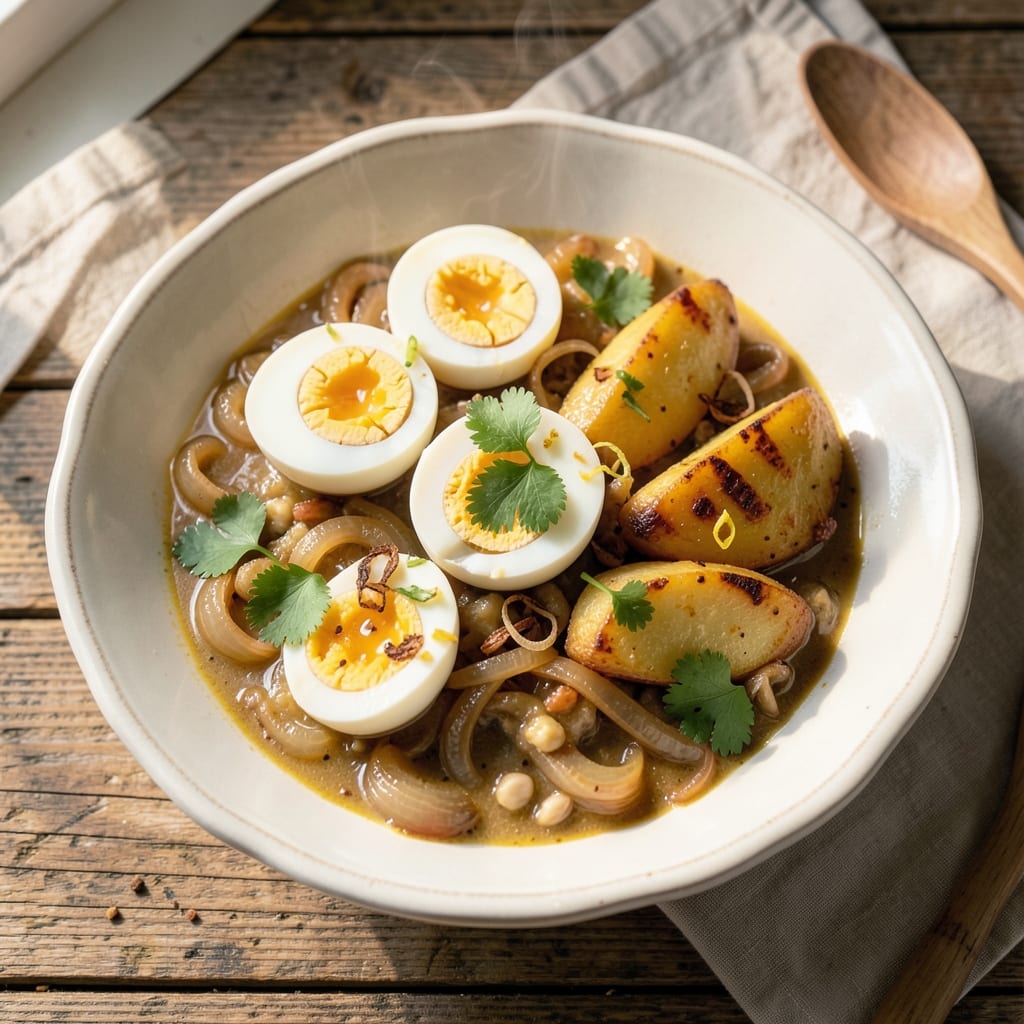
This boiled egg and potato curry recipe transforms humble ingredients into a rich, aromatic dish where tender eggs and crispy spuds float in a fragrant coconut broth. The secret lies in balancing spices—gentle enough to let the potatoes develop a satisfying crunch while keeping the eggs perfectly soft. I developed this recipe during a week when I had boiled eggs on hand and wanted to elevate them into something special, and it became a brunch staple almost immediately.
The foundation is a light yet deeply flavorful coconut broth, infused with warm spices like turmeric, cumin, and coriander. After sautéing onions and garlic until golden, we add the spices and toast them briefly to release their aromas before pouring in the coconut milk. This creates a velvety base that coats every ingredient without overpowering the natural flavors of the potatoes and eggs.
What makes this dish truly special is the texture contrast—crispy potato edges that give way to tender flesh, paired with eggs that stay perfectly soft at their centers. The curry simmers just long enough to meld the flavors without turning the potatoes mushy, ensuring each bite delivers that satisfying crunch. Serve it over steamed basmati rice or with warm naan to soak up every last drop of that fragrant broth.
This recipe is perfect for brunch gatherings or a hearty weeknight dinner, offering a comforting yet sophisticated meal that feels both familiar and refined. The method is straightforward, but the result is anything but basic—proof that simple ingredients can create something extraordinary with the right technique and attention to detail.
Ingredients for boiled egg and potato curry
Transform humble boiled eggs and potatoes into a fragrant, spiced coconut curry with these 15 ingredients.
| Ingredient | Amount | Notes |
|---|---|---|
| Large Potatoes 🥔 | 2 lb | Yukon gold or red preferred |
| Large Eggs 🥚 | 6 whole | Hard-boiled, peeled, room temperature |
| Onions 🧅 | 1 whole | Yellow or red, diced |
| Garlic Cloves 🧄 | 4 cloves | Minced, fresh preferred |
| Ginger Root 🌿 | 1 tbsp | Freshly grated, aromatic |
| Coconut Milk 🥥 | 1 can (13.5 oz) | Full-fat for creaminess |
| Vegetable Broth 💧 | 1 cup | Low-sodium preferred |
| Ground Turmeric 🌶️ | 1 tsp | Freshly ground for color |
| Ground Cumin 🌿 | ½ tsp | Toasted for depth |
| Ground Coriander 🌿 | ½ tsp | Freshly ground preferred |
| Garam Masala 🌶️ | ½ tsp | Store-bought blend works |
| Salt 🧂 | 1 tsp | Kosher or sea salt |
| Black Pepper 🌶️ | ¼ tsp | Freshly ground preferred |
| Olive Oil 🫒 | 2 tbsp | For sautéing onions |
| Lemon Juice 🍋 | 1 tbsp | Freshly squeezed |
The potatoes are the backbone of this dish—Yukon gold or red develop that perfect crispy edge while staying tender inside. Buy them a day ahead and let them sit at room temperature before cooking for even better texture. Fresh ginger and garlic are non-negotiable here; Trader Joe's or Whole Foods bulk sections have great quality at reasonable prices. The coconut milk should be full-fat for that rich, velvety texture—Thai Kitchen brand is my go-to for consistency, but any canned full-fat works. For the spices, Penzeys or the bulk bins at your local grocery store will give you the freshest, most aromatic options.
No fresh ginger? Powdered works at half the amount, though it lacks that bright zing. Ran out of garam masala? Mix equal parts cumin, coriander, and cinnamon for a close approximation. Using low-sodium broth? Add an extra pinch of salt at the end to balance flavors. The lemon juice is key for brightness—don't skip it. For extra richness, stir in 2 tbsp of Greek yogurt at the end (though this makes it slightly dairy-heavy). If you're short on time, pre-cooked frozen potatoes can be used, but they'll be less crispy.
This curry tastes even better the next day as the flavors meld. Store leftovers in an airtight container in the fridge for up to 4 days. For freezing, portion into individual containers—it reheats beautifully and keeps for 3 months. The potatoes will soften further when reheated, so aim for slightly undercooked when first simmering. Always serve with steamed basmati rice or warm naan to soak up that fragrant broth. The eggs stay perfectly soft when reheated gently, so avoid microwaving—stovetop or oven reheating is best.
Why You'll Love This Recipe
- No Chopping Nightmare: I swear by this recipe because you only need to dice onions and mince garlic—no peeling potatoes or cracking eggs mid-recipe. The potatoes and eggs go in whole, boiled first, then tossed into the sauce. Honestly, my lazy Sundays thank me every time.
- Garlic-Ginger Magic: That fresh ginger and garlic paste simmered into the onions? It’s the secret weapon. The potatoes soak up the flavor like a sponge, while the boiled eggs add this perfect contrast—creamy yolks cutting through the spiced richness. Between us, it’s the kind of taste that makes you want to eat it straight from the pot.
- Lunchbox Hero: This curry reheats like a dream, so I make a big batch on Sundays and pack it for work. The potatoes stay tender, the eggs hold their shape, and the spices keep it exciting all week. My kids even ask for it in their school lunches—yes, even on a Tuesday.
- Pantry Staple Power: Potatoes, eggs, onions, garlic—these are things I always have. No fancy ingredients, no last-minute grocery runs. And because the flavors get better the next day, leftovers aren’t just acceptable; they’re the best part. I’ll be real: this is my budget-friendly go-to when I’m broke but still want to eat well.
Step-by-step instructions for boiled egg and potato curry
This method delivers tender potatoes and perfectly cooked eggs in aromatic coconut broth.
Parboil Potatoes for Crispy Edges
Place the 2 lb large potatoes in a large pot and cover with cold water by 2 inches. Add 1 tsp salt and bring to a boil over high heat. Once boiling vigorously, reduce to a gentle simmer and cook for 10 minutes. You want the potatoes to be slightly underdone in the center—they'll finish cooking in the curry.
Using a slotted spoon, remove the potatoes and let them drain briefly. The residual moisture will help create steam during cooking, ensuring crispy edges while keeping interiors tender. Cut the potatoes into 1-inch cubes and set aside. Real talk: If you cut them too small, they'll turn mushy. Keep them uniform for even cooking.
Build the Spiced Base
Heat 2 tbsp olive oil in a large, heavy-bottomed pot over medium heat. Add the 1 whole diced onion and cook for 5 minutes until softened and translucent. Add the 4 cloves minced garlic and 1 tbsp freshly grated ginger root, cooking for another 2 minutes until fragrant.
Stir in the 1 tsp ground turmeric, 0.5 tsp ground cumin, 0.5 tsp ground coriander, and 0.5 tsp garam masala. Toast the spices for 30 seconds until you can smell their aromatic oils release. This step develops the curry's depth—don't skip it. Immediately add 1 cup vegetable broth and bring to a gentle simmer.
Simmer Potatoes in Spiced Broth
Add the 1-inch potato cubes to the pot and stir gently to coat in the spiced broth. Reduce heat to low and let the potatoes simmer for 10 minutes, stirring occasionally. You're looking for the edges to develop a slight crispness while the centers remain soft. If the broth reduces too quickly, add 2-3 tablespoons water to maintain moisture.
Here's the thing—don't overcrowd the pot. The potatoes need room to develop that crispy texture. If needed, work in batches, reserving some broth for the second batch. The potatoes should be tender enough to pierce with a fork but still hold their shape.
Add Coconut Milk and Eggs
Pour in the 1 can (13.5 oz) full-fat coconut milk and stir well to combine. Add the 6 whole peeled large eggs (room temperature) to the pot, gently stirring to distribute them evenly. The eggs will absorb the flavors while cooking through. Simmer for 8-10 minutes on low heat, until the eggs reach 160°F internally and the whites are just set.
Watch the heat carefully—you want gentle simmering, not boiling. If the curry starts to bubble vigorously, reduce the heat immediately. The eggs should float and gently cook through without breaking. You'll know they're done when they're firm to the touch but still creamy inside.
Finish with Lemon and Serve
Remove the pot from heat and stir in the 1 tbsp freshly squeezed lemon juice. This brightens the dish and balances the richness of the coconut milk. Taste and adjust seasoning with additional salt or black pepper if needed. The curry should be flavorful but not overwhelming.
Serve immediately with the crispy potato edges and tender eggs floating in the aromatic coconut broth. The contrast of textures—crispy potatoes, soft eggs, and velvety sauce—makes this curry uniquely satisfying. Garnish with fresh cilantro if desired, but it's delicious as-is.
Pro Tips For Making Boiled Egg And Potato Curry
- CUT POTATOES UNIFORM: Use a mandoline for even slices—no, I won’t let you skip this. Uneven pieces mean some potatoes turn to mush while others stay rock-hard, and that’s a curry fail waiting to happen. Aim for ¼-inch thickness, and don’t stack them or they’ll steam instead of cook.
- BOIL EGGS IN COOLING WATER: Shock your boiled eggs in ice water immediately—I learned this after peeling eggs that slid off the shell like sad, overcooked noodles. For this curry, use eggs that’ve cooled completely; they’ll hold their shape when they hit the simmering broth later.
- SAUTÉ ONIONS LOW AND SLOW: Caramelize onions at medium-low for 10-12 minutes—yes, it’s boring, but rushing turns them bitter. For this curry, you want them sweet and jammy to balance the eggs’ richness. Skip the high heat; patience here means flavor later.
- ADD EGGS LAST MINUTE: Slide eggs into the curry just before serving—no, don’t boil them again. They’ll absorb the broth’s flavor in 2-3 minutes, staying creamy without turning to scrambled rubber. Overcook them, and you’ve ruined the texture.
Regional styles of this recipe
Indian Subcontinent
In India, this dish is often called "Aloo Ande ki Khichdi" or "Aloo Ande Curry", where potatoes and boiled eggs are simmered in a spiced broth with minimal coconut milk. I’ve adapted the recipe to include coconut milk for creaminess, but traditional versions use mustard oil instead of olive oil and add fenugreek leaves for a distinct earthy flavor. The dish is commonly served with steamed rice or roti for brunch or as a light dinner. 🌶️
Sri Lankan Adaptation
Sri Lankan cuisine takes this curry further by incorporating curry leaves and black pepper more generously, creating a bolder, slightly spicier profile. The Sri Lankan version often includes coconut milk as the primary base, with tamarind paste for a tangy twist. I’ve kept the lemon juice for brightness, but you could substitute 1 tsp tamarind paste dissolved in warm water for an authentic touch. Serve with hoppers (appa) for a true island experience. 🥥
Thai-Inspired Twist
For a Thai-inspired version, swap garam masala for 1 tsp turmeric, ½ tsp cumin, and ½ tsp coriander, then add 1 tbsp fish sauce (or soy sauce for a vegetarian option) and 1 tsp palm sugar to balance flavors. Thai cooks often use red curry paste instead of individual spices, giving the dish a deeper, slightly sweet heat. Garnish with fresh Thai basil or cilantro for an aromatic finish. 🌿
Caribbean Fusion
The Caribbean version of this curry incorporates scotch bonnet peppers for heat and allspice (pimento) for warmth, transforming it into a vibrant, spicy dish. Use 1 scotch bonnet pepper (seeds removed for less heat) and ½ tsp ground allspice in the spice blend. The coconut milk remains central, but add 1 cup tomato sauce for a tangy contrast. Serve with festival (fried dumplings) or coconut rice for a festive touch. 🌶️
Japanese Okonomiyaki Influence
For a fusion take, blend Japanese flavors by adding 1 tbsp soy sauce and 1 tsp mirin to the broth, then top with bonito flakes and green onions before serving. The potatoes and eggs remain the stars, but the umami-rich broth gives it a savory depth. Serve with pickled ginger and Japanese mayo for a playful contrast. This version is perfect for adventurous eaters craving a mix of textures and flavors. 🍳
Nutrition facts
Frequently asked questions
Why do the potatoes need to be parboiled before making the curry?
Parboiling creates steam when they hit the hot curry, which helps develop that perfect crispy edge while keeping the centers tender. This two-step cooking method prevents the potatoes from turning mushy—something that happens when they cook too long in the curry. The 10-minute boil ensures they finish cooking just right in the spiced broth.
Can I use pre-cooked frozen potatoes instead of fresh?
Yes, but expect less crispy edges since frozen potatoes release more moisture. Thaw them completely first, then pat dry thoroughly before adding to the curry. For best results, parboil them for 5 minutes (instead of 10) to compensate for their pre-cooked state. The texture won't be identical, but it'll still be delicious!
How do I prevent the eggs from breaking in the curry?
Use room-temperature eggs (never cold) and add them gently to the simmering broth. Keep the heat at a low simmer—never boiling—and stir occasionally to prevent them from bumping against each other. The whites should just set (160°F internal temp) without overcooking. If they start to break, remove them with a slotted spoon and finish cooking separately.
What's the best way to reheat leftovers without ruining the texture?
Gently reheat on the stovetop over low heat with a splash of water or coconut milk to prevent drying. Avoid microwaving—the potatoes will turn soggy, and the eggs may get rubbery. For extra flavor, add a pinch of turmeric or garam masala while reheating. The curry tastes even better the next day as flavors meld!
Can I make this curry dairy-free?
Skip the garam masala (which often contains dairy) and use 1 tsp each of cumin, coriander, and turmeric instead. For extra richness, stir in 2 tbsp coconut cream at the end. The coconut milk base already makes it naturally dairy-free while keeping that creamy texture.