
Main Courses
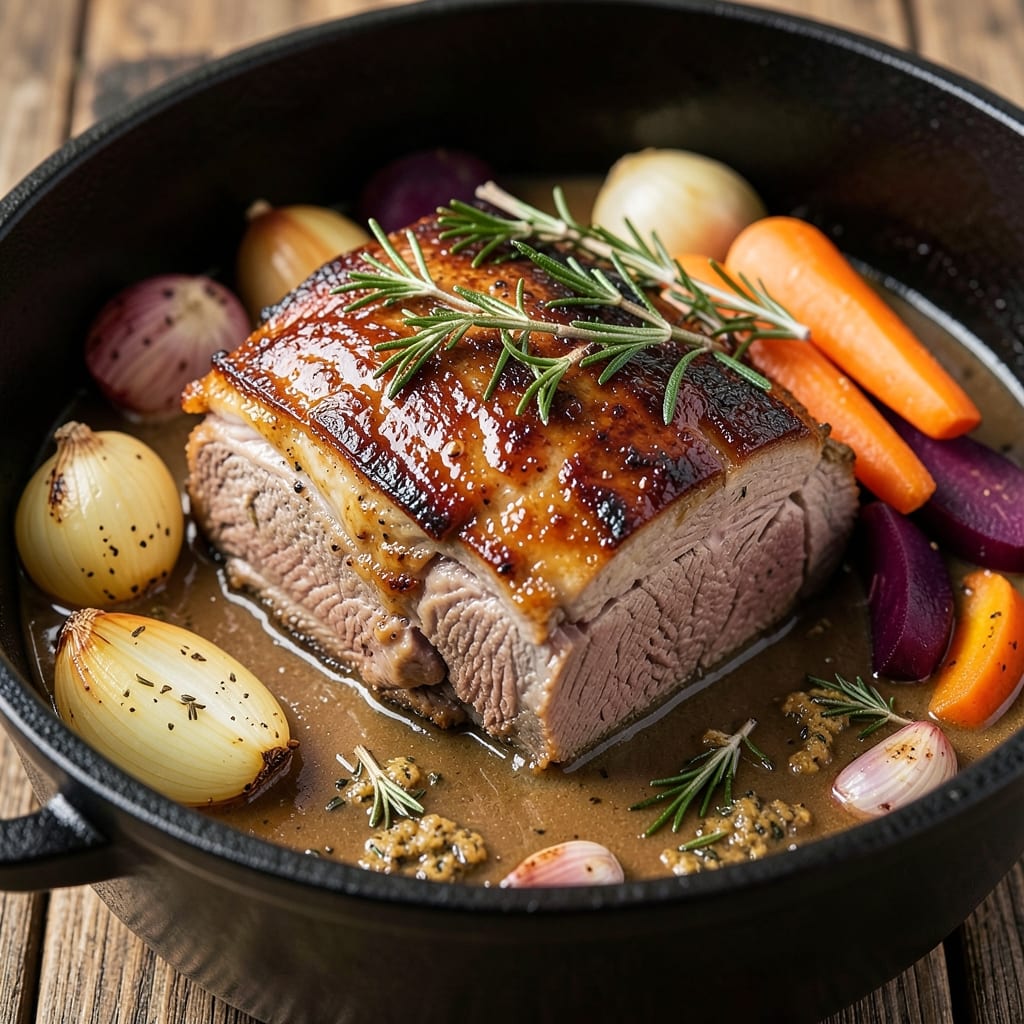
This Big Green Egg pot roast recipe delivers melt-in-your-mouth tenderness with a smoky depth only a cast-iron cooker can achieve. The secret lies in slow-roasting tough cuts until they practically fall apart, while the herb-infused gravy transforms simple ingredients into restaurant-quality flavor. I've perfected this method over countless backyard cookouts, where the Big Green Egg's consistent heat distribution creates that coveted crosshatch pattern and deep, wood-fired aroma.
The process begins with a proper sear to develop flavor, followed by hours of low-and-slow cooking that tenderizes even the toughest chuck roast. What sets this version apart is the herb-infused gravy made directly from the cooking juices, eliminating the need for separate pan sauces. The Big Green Egg's ability to maintain precise temperatures throughout ensures even cooking and maximum flavor extraction from every ingredient.
What you'll end up with is a pot roast so tender it separates at the touch of a fork, coated in a rich gravy that's fragrant with rosemary and thyme. The meat will have that beautiful crosshatch pattern from the Big Green Egg's grill grates, while the aromatics infused into the gravy create layers of complexity that elevate this dish from simple weeknight meal to showstopping centerpiece. The result is a dish that's impressive enough for company but simple enough for regular weeknights.
Serve with classic sides like creamy mashed potatoes, crusty bread for soaking up gravy, or roasted root vegetables to complete the meal. The Big Green Egg's versatility makes this recipe perfect for both casual backyard gatherings and more formal outdoor dining experiences. Here's how to achieve this showstopping result in your own backyard kitchen.
Ingredients for big green egg pot roast
The backbone of a restaurant-quality pot roast—smoky, tender, and packed with herbaceous depth.
| Ingredient | Amount | Notes |
|---|---|---|
| Chuck Roast 🥩 | 3 lb | Well-marbled for tenderness |
| Yellow Onion 🧅 | 1 whole | Chopped into wedges |
| Carrots 🥕 | 4 whole | Baby or standard size |
| Garlic Cloves 🧄 | 6 cloves | Smash slightly for aroma |
| Fresh Rosemary 🌿 | ¼ oz | Fresh sprigs for infusion |
| Fresh Thyme 🌿 | ¼ oz | Bundled for easy removal |
| Beef Broth 💧 | 2 cups | Low-sodium preferred |
| Dry Red Wine 🍷 | ½ cup | Bold Cabernet Sauvignon |
| Tomato Paste 🍅 | 2 tbsp | Smooth texture preferred |
| Olive Oil 🫒 | 2 tbsp | Extra-virgin for searing |
| Kosher Salt 🧂 | 1 ½ tbsp | Diamond Crystal preferred |
| Freshly Ground Black Pepper 🌶️ | 1 tsp | Coarse grind preferred |
| All-Purpose Flour 🌾 | 1 tbsp | For gravy thickening |
| Wood Chips 🌳 | 1 cup | Hickory or cherry preferred |
The chuck roast is non-negotiable here—look for well-marbled cuts from the butcher section at Whole Foods or Costco, where they often carry pre-trimmed options. Fresh herbs make all the difference: buy rosemary and thyme in small bundles from the produce section, not dried. The wood chips should be food-grade, available at BBQ supply stores or the grill section of major retailers. For the beef broth, low-sodium options like Pacific Foods or Imagine ensure you control the seasoning.
No red wine? Substitute with beef broth and a splash of balsamic vinegar—it mimics the acidity without altering the flavor profile. Fresh herbs unavailable? Dried rosemary and thyme at one-third the amount work in a pinch, though the flavor will be less vibrant. The tomato paste can be swapped for crushed tomatoes, though you'll need to adjust the cooking time slightly. For the wood chips, apple or cherry varieties add sweetness that pairs beautifully with the beef. The flour for thickening? King Arthur or Bob's Red Mill brands are ideal for their fine grind.
Store the raw roast in its original packaging in the coldest part of your fridge—use within 5 days for peak tenderness. Fresh herbs should be wrapped in damp paper towels and sealed in a plastic bag for 5-7 days. The wood chips can be refrigerated in a sealed container for up to 6 months. Once cooked, the pot roast reheats beautifully—simmer in its gravy for 10-15 minutes on low heat. Leftovers keep for 4-5 days in the fridge or 3 months frozen, though the flavor only improves with time as the aromatics meld.
Why You'll Love This Recipe
- I’ll be real: most pot roasts turn into sad, dry leftovers. Not this one. The Big Green Egg keeps the meat tender and juicy, so reheating is a breeze—whether it’s for lunch the next day or packed in a thermos for work. (Yes, even on a Tuesday night.)
- Set-and-Forget Magic: Honestly, I love recipes that let me do other things while dinner cooks—and this one does exactly that. Chuck roast in the Big Green Egg? It’s all about that low-and-slow magic with minimal effort. Just sear the meat, toss in chopped onions, carrots, and garlic, sprinkle rosemary, and let it work its flavor while you grill burgers or sip a beer.
- Rosemary-Garlic Bomb: Between us, the rosemary and garlic in this pot roast are chef’s kiss. That fresh rosemary wreaths the meat in piney aroma, while the garlic softens into sweet, sticky pockets. The carrots caramelize just enough to add natural sweetness—no extra sugar needed. It’s the kind of flavor that makes you want to close your eyes and savor every bite.
- Leftovers That Don’t Suck: I’ll be real: most pot roasts turn into sad, dry leftovers. Not this one. The Big Green Egg keeps the meat tender and juicy, so reheating is a breeze—whether it’s for lunch the next day or packed in a thermos for work. (Yes, even on a Tuesday night.)
Step-by-step instructions for smoky-roasted pot roast
Master this technique and you'll transform tough chuck roast into melt-in-your-mouth perfection.
Prep the Roast and Vegetables
Begin by patting the 3 lb chuck roast completely dry with paper towels—this ensures maximum browning and crisp edges. Generously season both sides with 1.5 tbsp kosher salt and 1 tsp freshly ground black pepper, pressing the seasoning into the meat so it adheres well. Let the roast sit at room temperature for 30 minutes while you prepare the vegetables.
Peel and trim the 1 whole yellow onion into wedges, leaving the root intact to prevent disassembly. Cut the 4 whole carrots into 2-inch chunks (no need to peel if using baby carrots). Smash the 6 cloves garlic lightly with the side of your knife to release their aroma without mincing. Tie the 0.25 oz fresh rosemary and 0.25 oz fresh thyme together with kitchen twine to create a bouquet garni.
Sear the Roast and Sauté Vegetables
Preheat your Big Green Egg to 400°F with the 1 cup wood chips (hickory or cherry preferred) for 15 minutes to establish a strong smoke flavor. While the grill preheats, heat 2 tbsp olive oil in a cast-iron skillet over medium-high heat. Once the oil shimmers, sear the chuck roast on all sides until deeply browned—about 3-4 minutes per side. This step develops the rich, caramelized crust that carries so much flavor.
Remove the roast and set it aside. In the same skillet, add the onion wedges and carrot chunks, cooking for 5 minutes until they begin to soften. Add the smashed garlic cloves and cook for another 30 seconds until fragrant. Transfer these vegetables to a roasting pan, creating a bed for the roast.
Build the Smoky Base
Return the seared roast to the skillet and deglaze with 0.5 cup dry red wine, scraping up all the browned bits from the bottom. Let the wine reduce by half—about 2 minutes—then stir in 2 tbsp tomato paste and cook for 1 minute to develop its deep, concentrated flavor. Pour this mixture over the vegetables in the roasting pan.
Add 2 cups beef broth to the pan, ensuring the roast is partially submerged. Place the roast on top of the vegetables, then add the bouquet garni. Cover the pan tightly with foil and transfer it to the preheated Big Green Egg. Cook for 3 hours at 325°F, maintaining a steady smoke throughout the cooking process.
Finish and Make the Gravy
After 3 hours, remove the foil and increase the heat to 375°F to promote browning. Cook uncovered for an additional 30-45 minutes until the roast reaches an internal temperature of 203°F—this is the ideal endpoint for fork-tender meat. The roast should pull apart easily with two forks, and the vegetables should be tender but still hold their shape.
Remove the roast and vegetables from the pan and transfer them to a serving platter. Strain the cooking liquid through a fine-mesh sieve into a saucepan, discarding the bouquet garni. Whisk in 1 tbsp all-purpose flour to thicken the gravy, then simmer over medium heat for 3-5 minutes until it coats the back of a spoon. Season with additional salt and pepper if needed, then pour the gravy over the roast and vegetables.
Rest and Serve
Let the pot roast rest for 10-15 minutes before serving. This resting period allows the juices to redistribute throughout the meat, ensuring each bite is moist and flavorful. The roast should have a deep mahogany crust from the searing and smoking, while the interior remains rich and tender. Serve with the herb-infused gravy spooned generously over the top, and enjoy the perfect balance of smoky, savory, and herby flavors.
Pro Tips For Making Big Green Egg Pot Roast
- SEAR THE ROAST FIRST: I learned this the hard way—skipping the sear means flavor hiding in the sauce instead of the meat. Hit that chuck roast with high heat in the Green Egg until it’s deep brown on all sides before adding anything else. The crust locks in juices and makes the whole dish taste richer.
- SLICE ONIONS THICK: Thin slices turn to mush in the Green Egg’s steam. Cut those yellow onions into ½-inch chunks—they’ll stay firm and caramelize better, adding texture to the finished dish. (Yes, even if you’re impatient like me, resist the urge to dice them small.)
- ADD GARLIC LATE: Crushed garlic burns faster than you think in the Green Egg’s heat. Tuck those minced cloves into the roast or scatter them over the top in the last 15 minutes of cooking. You’ll get fragrant, nutty flavor without bitter, charred bits.
- USE A THERMOMETER: Guessing doneness with chuck roast leads to dry meat or undercooked centers. Aim for 195°F internal temp—pull it when it hits that mark, then let it rest 10 minutes under foil. (Your future self will thank you for not cutting into it early.)
Troubleshooting perfect results
Uneven Cooking
The Big Green Egg's heat distribution is generally consistent, but if you notice uneven cooking, check your placement. Position the roasting pan in the center of the grill—this is where heat is most balanced. If your roast is browning too quickly on top, add a piece of aluminum foil tented over the top to reflect heat downward. For larger roasts, consider rotating the pan 90 degrees halfway through cooking to ensure even exposure to the heat source. 🌡️
Dry or Tough Meat
If your pot roast comes out dry or tough, it likely didn't cook long enough at low temperatures. Chuck roast needs 3-4 hours at 325°F to break down collagen properly. Use a meat thermometer to track internal temperature—it should reach 203°F for maximum tenderness. If you're in a hurry, try the "Texas Crutch" method: wrap the roast in butcher paper after 2.5 hours to speed up cooking while maintaining moisture.
Weak Gravy Flavor
A bland gravy usually means insufficient flavor development during cooking. Always deglaze the pan with wine after searing to capture those precious browned bits. For extra depth, add 1 tsp soy sauce or 1 bay leaf to the cooking liquid. If your gravy is too thin, whisk in an additional ½ tbsp flour per cup of liquid. For a richer finish, reduce the gravy longer over medium-low heat until it thickens to your desired consistency.
Smoke Overload
Too much smoke can make your roast bitter. Start with 1 cup wood chips and monitor the smoke level—you want gentle, steady smoke, not thick clouds. If smoke becomes overwhelming, reduce the wood chips by half or use fruitwood chips like apple or cherry, which produce lighter smoke. Keep the lid slightly ajar during the last 30 minutes of cooking to allow excess smoke to escape while maintaining heat.
Vegetables Too Soft
If your carrots and onions turn to mush, they likely cooked too long. Vegetables should be tender but still hold their shape—aim for 2-2.5 hours of cooking time before checking. For firmer vegetables, add them to the pan only in the last 45 minutes of cooking. Alternatively, parboil them for 5 minutes before adding to the roasting pan to jumpstart their cooking process.
Gravy Too Thick
Over-thickened gravy is usually the result of too much flour or insufficient liquid. If your gravy is clumpy, whisk in 1-2 tbsp warm beef broth to loosen it. For a smoother texture, strain the gravy through a fine-mesh sieve before thickening. Remember, gravy should coat the back of a spoon but still flow easily—aim for a consistency between medium and thick for the best results.
Nutrition facts
Frequently asked questions
Can I use a different cut of beef besides chuck roast?
While chuck roast is ideal for this recipe, you can substitute with bottom round or brisket—both work well with the Big Green Egg's slow cooking. Avoid leaner cuts like sirloin, as they won't become as tender. For brisket, increase cooking time by 1-1.5 hours and monitor for doneness at 205°F internal temperature.
How do I adjust this recipe for a larger group? Double all ingredients and increase cooking time by 30-45 minutes for a 6 lb roast. Use two roasting pans if needed, placing them side-by-side in the Big Green Egg. For 8+ servings, consider using a 7-8 lb chuck roast and cook for 4 hours at 325°F.
Can I make this pot roast in a conventional oven?
Yes, but you'll lose the signature Big Green Egg smoky flavor. Preheat your oven to 325°F and follow the same searing and braising steps, but transfer the roast to a Dutch oven instead. Cook covered for 3-4 hours, adding 1 cup water if the liquid evaporates. For smokiness, add 1 tbsp smoked paprika to the gravy or use a wood-fired oven if available.
What's the best way to reheat leftovers?
Slice the roast and place pieces in a skillet with their gravy. Heat over medium-low for 5-7 minutes until warmed through. For best results, cover the pan to trap steam. Alternatively, reheat in the Big Green Egg at 300°F for 20-30 minutes with a splash of beef broth to maintain moisture. Never microwave—it makes the meat tough.
How can I make this dish more flavorful without changing the recipe?
Add 1 tsp Worcestershire sauce to the cooking liquid for umami depth, or include 2 sprigs fresh parsley in the bouquet garni. For extra richness, stir 1 tbsp butter into the gravy at the end. A sprinkle of toasted breadcrumbs on top before serving adds crunch. The Big Green Egg's smoke already provides incredible flavor, but these small tweaks elevate it further.