
Main Courses
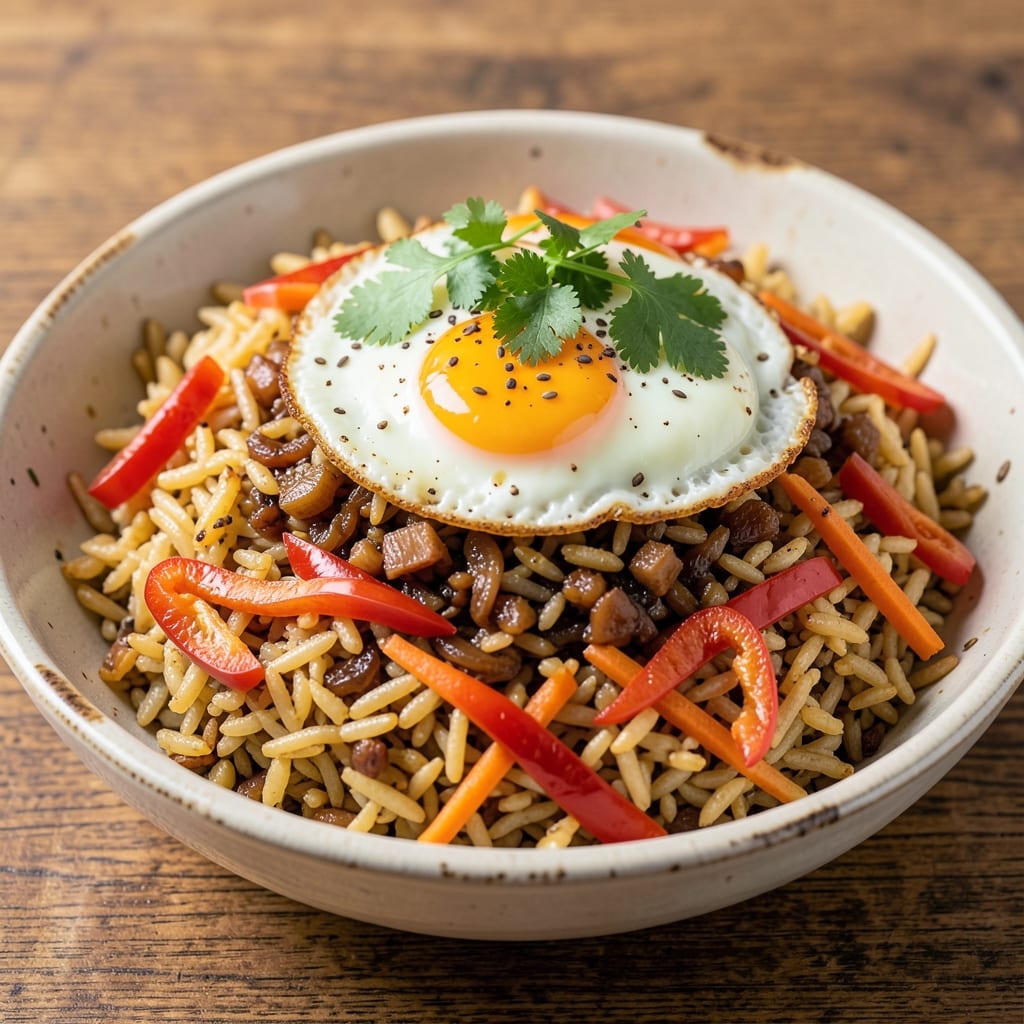
This Indian-style egg fried rice transforms simple basmati into a fragrant, spiced masterpiece with crispy veggie bites and perfectly seasoned eggs. The secret lies in tempering whole spices like cumin and mustard seeds to create that signature aromatic base, while turmeric-infused rice absorbs bold flavors without losing its texture. I developed this recipe after years of testing—balancing smoky garam masala with tangy lemon for that perfect regional taste.
The crispy vegetables and tender eggs come together in just 20 minutes thanks to high-heat stir-frying, while the rice stays separate yet flavorful. Fresh coriander and a squeeze of lemon at the end elevate it from homemade to restaurant-quality, proving you don't need a wok to achieve authentic results. What makes this version stand out is the careful spice balance—warm, slightly sweet, with just enough heat to linger.
What you'll end up with is a vibrant, one-pan dish packed with texture: crisp carrot and bell pepper pieces, fluffy basmati grains, and eggs that stay intact yet absorb the spiced oil. The aroma alone will have everyone gathering around the table—this is comfort food with a bold twist. Perfect for weeknight dinners or meal prep, it's the kind of recipe that gets better with leftovers.
Whether you're serving it with raita or a side of papad, this fried rice delivers restaurant-quality flavors without the fuss. The technique is straightforward but essential: high heat, quick cooking, and precise seasoning. Let's get started on creating your best Indian-style fried rice yet.
Ingredients for best egg fried rice recipe indian style
Spiced basmati, crisp veggies, and perfectly seasoned eggs—this is your ultimate Indian-style fried rice fix.
| Ingredient | Amount | Notes |
|---|---|---|
| Basmati Rice 🍚 | 1 ½ cups | Uncooked, long-grain preferred |
| Large Eggs 🥚 | 4 whole | Fresh, room temperature |
| Yellow Onion 🧅 | 1 whole | Medium size, finely chopped |
| Carrots 🥕 | 2 medium | Julienned, crisp-cut |
| Bell Pepper 🍅 | 1 whole | Green or red, diced |
| Fresh Cilantro 🌿 | ¼ cup | Chopped, for garnish |
| Fresh Lemon Juice 🍋 | 2 tbsp | Freshly squeezed |
| Cumin Seeds 🌿 | 1 tsp | Toasted for aroma |
| Mustard Seeds 🌶️ | ½ tsp | Whole, for tempering |
| Turmeric Powder 🌶️ | ½ tsp | Bright yellow color |
| Garam Masala 🍃 | 1 tsp | Freshly ground preferred |
| Salt 🧂 | 1 ½ tsp | Adjust to taste |
| Vegetable Oil 🫒 | 3 tbsp | High smoke point |
The spices make or break this dish. Whole cumin and mustard seeds are non-negotiable—they toast up beautifully for that signature aroma. Grab them from the bulk section at Whole Foods or your local Indian market for the freshest batch. Garam masala is where the magic happens, so don't skimp. I always buy MDH or Everest brands—they're widely available and pack serious flavor. The turmeric? Look for bright yellow powder (no orange tint)—that's your freshness indicator. Fresh cilantro is ideal, but if you're using dried, one-third the amount works. For the eggs, room temperature is key—they'll cook more evenly.
No fresh cumin seeds? Ground cumin at half the amount is fine, but you'll lose that toasty aroma. Swapping bell pepper colors? Green for classic flavor, red for sweetness. Carrots can be baby carrots if that's what you've got—just slice them thin for crispiness. The rice? Day-old basmati is ideal—it's dry and absorbs flavors better. Making it ahead? Cook the rice, spread it on a tray to dry out, then refrigerate. The oil matters too—vegetable or canola works, but avoid olive oil (it burns). For extra richness, add a tablespoon of butter at the end.
This reheats beautifully—just add a splash of water and stir-fry for 2 minutes. Keeps for 4 days in the fridge or 3 months frozen. I always double the batch because leftovers are even better the next day. Store in airtight containers with parchment paper between layers to keep it crisp. Garnish with fresh cilantro and lemon right before serving—that's what takes it from good to restaurant-quality
Why You'll Love This Recipe
- One-Pan Magic: I swear by this recipe because it’s all about the minimal. Just one wok or deep pan—no fancy gadgets, no extra bowls. The onions caramelize while you scramble those eggs, and by the time the veggies hit, everything’s singing together. (Yes, even on a Tuesday night.)
- Umami Bomb: That crispy edge on the eggs? The way the basmati rice soaks up the garlic and ginger like a sponge? Honestly, it’s the kind of flavor that makes you pause mid-bite. The bell pepper adds a sweet crunch, but the real star is the soy-vinegar-ketchup trio—trust me, it’s dangerously addictive.
- Lunchbox Hero: Between us, this is my go-to for meal prep. Pack it in containers for three days straight, and it still tastes fresh. The carrots stay slightly al dente, the eggs hold their shape, and honestly? Nobody complains when it’s in their lunchbox. (My daughter picks out the peppers first, but still asks for seconds.)
- Pocketbook Win: Basmati rice in bulk, eggs by the dozen, onions that last forever—this recipe is my budget’s best friend. I can stretch one batch into four lunches without breaking the bank. And if I make a double batch? Leftovers get repurposed into fried rice burritos. (No waste, all wins.)
Step-by-step instructions for spiced Indian-style egg fried rice
This method delivers perfectly crisp veggie bites and fluffy, aromatic basmati rice every time.
Toast the Spices for Maximum Aroma
Heat 3 tablespoons vegetable oil in a large wok or deep skillet over medium heat. Add the 1 teaspoon cumin seeds and ½ teaspoon mustard seeds, stirring constantly for 30 seconds until they begin to sizzle and pop. The cumin should release its nutty aroma while the mustard seeds dance and crackle—this is your signal they're ready.
Immediately add the ½ teaspoon turmeric powder and stir for 10 seconds until the oil turns a vibrant golden yellow. This step is crucial—it infuses the oil with deep, earthy flavors that will permeate every grain of rice. If the oil starts to smoke, reduce the heat slightly to maintain control. Once the spices are toasted and fragrant, remove the pan from heat for just a moment—you'll return to it shortly.
Sauté the Aromatics and Vegetables
Return the pan to medium-high heat and add the finely chopped yellow onion. Cook for 3-4 minutes until the onions soften and turn translucent, stirring occasionally to prevent browning. Here's the thing—you want the onions tender but not caramelized at this stage.
Add the julienned carrots and diced bell pepper, spreading them evenly in the pan. Cook for 4-5 minutes until the vegetables soften slightly but maintain their crisp texture—you're aiming for a satisfying bite, not mush. Stir frequently to ensure even cooking and prevent sticking. The vegetables should release their juices and develop a light golden hue around the edges.
Scramble the Eggs Perfectly
Push the vegetables to one side of the pan, creating space in the center. Add the 4 room temperature eggs to the empty space and let them sit undisturbed for 10 seconds to set slightly. Using a spatula, gently scramble the eggs in small, loose curds until they're just set but still slightly runny—this ensures they'll blend seamlessly with the rice later.
Combine the eggs with the vegetables and stir for 30 seconds until everything is well-coated in the spiced oil. Remove the pan from heat for a moment to prevent overcooking. The eggs should be fully set but still moist, with a tender, custard-like texture. If you see any dry spots, add a splash of water and stir to rehydrate the mixture slightly.
Cook the Rice to Fluffy Perfection
Add the 1½ cups uncooked basmati rice to the pan and stir vigorously for 1-2 minutes until every grain is coated in the spiced oil and vegetable mixture. This step is where the magic happens—the rice absorbs the flavors while developing a slight crust that adds texture.
Pour in 2 cups water (just enough to cover the rice) and add the 1½ teaspoons salt and 1 teaspoon garam masala. Stir once to distribute the seasoning evenly, then increase the heat to high and bring the mixture to a boil. Once boiling, reduce the heat to medium-low, cover the pan tightly with a lid, and cook for 12-15 minutes without disturbing it. The rice should steam gently and absorb all the liquid, leaving you with fluffy, separate grains.
Finish with Fresh Herbs and Zing
Remove the lid and fluff the rice gently with a fork, breaking up any clumps. Return the pan to medium heat and let any excess moisture evaporate for 1-2 minutes. Stir in the 2 tablespoons fresh lemon juice and ¼ cup chopped fresh cilantro, tossing well to incorporate. The lemon juice brightens the dish, cutting through the richness of the eggs and spices.
Taste and adjust the seasoning if needed—you might want to add a pinch more salt or garam masala to suit your preference. Serve immediately while the rice is hot and the vegetables retain their crisp texture. The dish should be fragrant with toasted spices, with each bite offering a perfect balance of fluffy rice, tender eggs, and crisp vegetables. Garnish with additional cilantro if desired, and enjoy with a side of raita or a dollop of yogurt for extra creaminess.
Pro Tips For Making Best Egg Fried Rice Recipe Indian Style
- Fry Eggs First: Crack those eggs into a hot, oiled wok before tossing in the rice—this keeps them fluffy and prevents them from turning into sad, waterlogged scraps. I used to scramble them last, and the eggs always ended up rubbery. Trust me, the first 30 seconds in the pan make all the difference.
- Chop Onions Like a Pro: Dice those yellow onions into even ¼-inch cubes—no big chunks, no slivers. My grandmother swore by this, and she was right: uniform pieces cook at the same rate, so you don’t end up with raw onion bits while the rest burns. (Yes, even if you’re impatient like me.)
- Use Day-Old Rice: Cold, dry basmati rice from yesterday? Perfect. Fresh rice turns mushy in the wok because it’s too moist. Spread yesterday’s leftovers on a tray, let them air-dry for 10 minutes, then fry them with medium-high heat. This isn’t the prettiest method, but it’s the tastiest.
- Sauté Veggies in Stages: Carrots and bell peppers need different heat levels—start with carrots on medium until they soften slightly, then crank up the heat for the peppers. I learned this the hard way after charring the peppers while leaving the carrots undercooked. (Your future self will thank you.)
Regional styles of this dish
North Indian Style
This version keeps it bold and aromatic with whole spices like cumin and mustard seeds that pop dramatically in a hot wok. I love adding green chilies and a pinch of asafoetida (hing) for that signature North Indian depth—just ¼ teaspoon makes all the difference. The rice is often cooked separately and then tossed with the veggies and eggs, keeping the grains distinct. Garnish with sev (crispy chickpea noodles) for extra crunch and texture. 🌶️
South Indian Twist
For a South Indian approach, swap garam masala for curry leaves and black pepper—about 5-6 leaves and ¼ teaspoon cracked black pepper add a distinct, earthy aroma. Use short-grain rice instead of basmati for a stickier texture, and add grated coconut (2 tbsp) at the end for a sweet contrast. The eggs here are often scrambled finer, almost like a egg curry consistency. Serve with a side of coconut chutney for dipping. 🥥
Hyderabadi Flavor
Hyderabadi fried rice is all about rich, smoky flavors—start by tempering 1 tsp jeera (cumin), ½ tsp shahi jeera (caraway seeds), and ½ tsp fennel seeds for a complex aroma. Add 1 tsp red chili powder and ½ tsp turmeric for a deeper heat. The star here is Hyderabadi biryani rice (or basmati) cooked with ½ tsp saffron infused in 2 tbsp warm milk. Finish with fried onions and a squeeze of lime for that signature tang. 🌟
Punjabi Home-Style
Punjabi versions are heartier, often including chana (chickpeas) and potatoes for extra substance. Use 2 tbsp ghee instead of oil for a richer base, and add 1 tsp kasuri methi (dried fenugreek leaves) for that unmistakable Punjabi touch. The eggs are usually scrambled coarser, and the dish is finished with fresh cream (2 tbsp) for a luxurious finish. Serve with pickled onions on the side for a tangy kick. 💛
Goan-Inspired
Goan fried rice gets its unique flavor from Goan spices—start with 1 tsp coriander seeds, ½ tsp cloves, and ½ tsp cinnamon toasted in the oil. Add 1 tsp coconut amchur (dry mango powder) for a sweet-tangy balance, and finish with fresh curry leaves and grated coconut. The eggs are often soft-boiled and halved for a rustic touch. This version pairs beautifully with Goan fish curry for a full meal. 🌴
Nutrition facts
Frequently asked questions
Can I use day-old rice for this Indian-style fried rice?
Day-old basmati rice works perfectly—it's dry and absorbs flavors better. Spread freshly cooked rice on a tray to cool and dry out for 30-60 minutes before using. Never use freshly cooked rice as it turns mushy when stir-fried. Pro tip: Cook extra rice when making biryani or curry to use later!
What's the best way to scramble eggs for fried rice?
For perfect eggs, scramble them just until set but still slightly moist—this ensures they blend well with the rice. Push them to one side of the pan, let sit for 10 seconds to set slightly, then scramble gently. Avoid overcooking—dry eggs make the dish taste rubbery. The secret is high heat and quick cooking!
Can I make this vegan by replacing eggs?
Yes! Swap eggs for 1 cup crumbled tofu (pan-fried with turmeric) or ½ cup chickpeas (mashed with salt and pepper). For texture, add ¼ cup roasted cashews or ½ cup soy curls>. The dish will still be flavorful—just adjust the cooking time slightly as plant proteins release moisture differently.
Why does my fried rice turn out mushy?
Mushy rice usually means overcooking or using fresh rice. Use day-old dry rice and cook it on high heat for 3-4 minutes max after adding to the pan. Stir constantly and avoid adding extra water—let the residual moisture steam off. A wok or deep skillet with high sides prevents spreading and burning.
How can I make this spicier?
Add ½ tsp red chili powder with the turmeric, or stir in 1-2 chopped green chilies with the vegetables. For heat lovers, finish with ½ tsp cayenne pepper> or a dash of chili oil. Start with small amounts—you can always add more, but you can't remove excess spice!