
Desserts
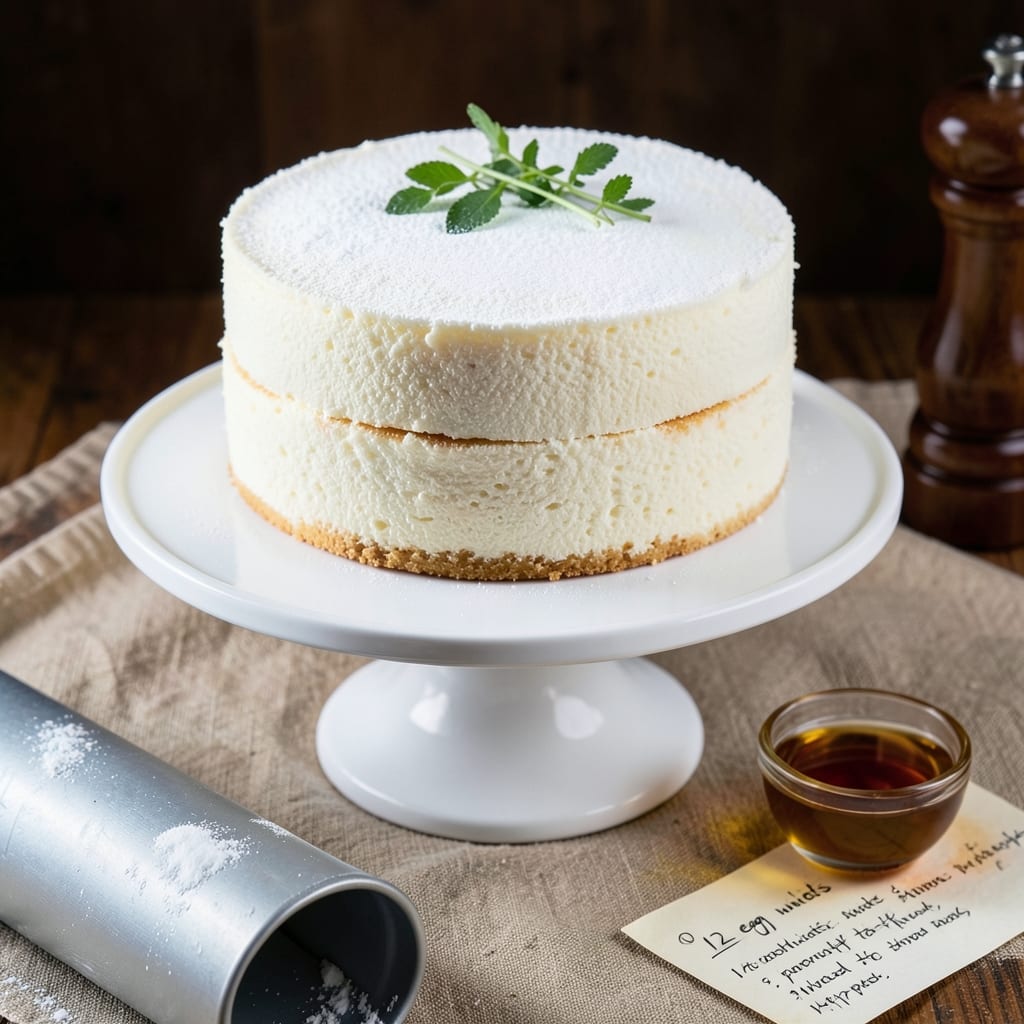
This angel food cake recipe delivers the lightest, fluffiest dessert you’ll ever make—no butter, no oil, just 12 egg whites whipped to cloud-like perfection. The secret lies in precise folding and a citrus glaze that brightens every tender bite, making it the best angel food cake you’ll bake at home. I’ve perfected this method over years of testing, ensuring a cake that’s airy, moist, and effortlessly elegant.
The magic happens with 12 egg whites whipped to stiff peaks, folded into a delicate batter of cake flour and sugar, then baked at 350°F until golden. Cooling upside-down in the pan preserves that signature cloud-like texture, while a zesty lemon or orange glaze adds a refreshing finish. This isn’t just a cake—it’s a masterpiece of lightness and flavor.
What sets this recipe apart is the balance of technique and simplicity. No special equipment beyond a tube pan and mixer, and no shortcuts that compromise texture. The result? A cake so tender it practically dissolves on your tongue, yet sturdy enough to slice neatly. Serve it with fresh berries or a dollop of whipped cream for the ultimate dessert experience.
Perfect for celebrations or spontaneous cravings, this angel food cake proves you don’t need butter to create something extraordinary. Let’s get baking—your taste buds will thank you.
Ingredients for best angel food cake recipe with 12 egg whites
Twelve egg whites and a whisper of citrus create this legendary cloud cake—no butter, no oil, just pure airy perfection.
| Ingredient | Amount | Notes |
|---|---|---|
| Large Egg Whites 🥚 | 12 whole | Room temperature, pasteurized preferred |
| Granulated Sugar 🍚 | 1 ½ cups | Superfine preferred for smoothness |
| Cake Flour 🌾 | 1 ½ cups | Not self-rising, sifted |
| Fresh Lemon Juice 🍋 | ½ cup | Strained for clarity |
| Vanilla Extract 🌸 | 1 tbsp | Pure Madagascar preferred |
| Salt 🧂 | ½ tsp | Fine sea salt |
| Unsalted Butter 🧈 | ¼ cup | For greasing tube pan |
| Lemon Zest 🍋 | 1 tbsp | Freshly grated |
| Powdered Sugar 🍚 | 1 cup | For citrus glaze |
| Fresh Orange Blossom Water 🌸 | ½ tsp | Optional, for floral note |
| Cornstarch 🌾 | 1 tsp | For dusting pan |
The egg whites are non-negotiable here—room temperature is critical for maximum volume. Pasteurized works if you're cautious, but fresh is ideal. Grab large whites only (no jumbo or small)—they whip to the stiffest peaks. I always buy mine from Whole Foods or Trader Joe's (their organic free-range are fantastic). For the flour, Gold Medal cake flour is my go-to—it's pre-sifted and gives that signature tender crumb. The citrus is where the magic happens: organic lemons from the farmers market have the brightest juice, but store-bought works too—just strain out any pulp.
No superfine sugar? Pulse regular granulated in a food processor for 30 seconds—it makes all the difference. Short on vanilla? Vanilla bean paste gives a similar depth. The glaze calls for powdered sugar, but if you've only got granulated, blend it with 1 tsp cornstarch first. For the floral touch, orange blossom water is available at Middle Eastern markets or online, but skip it if you can't find it—the lemon zest alone is still spectacular. Pro tip: Whip the egg whites in a spotlessly clean bowl—even a trace of fat prevents stiff peaks. And don't rush the folding—gentle, slow folds preserve that airy texture.
This cake is best served the day it's made, but if you must prep ahead, wrap tightly in plastic and store at room temperature for 24 hours max. The glaze sets quickly, so assemble it right before serving. For make-ahead glaze, store powdered sugar and lemon juice separately and mix just before drizzling. The tube pan is your best friend here—grease it thoroughly with butter and dust with cornstarch for easy release. Once cooled, invert onto a wire rack to maintain that signature dome shape. Slice with a serrated knife for clean, elegant portions—this isn't just cake, it's an experience.
Why You'll Love This Recipe
- No Mixer Needed: I beat the egg whites by hand—no fancy equipment, just elbow grease and a bowl. The secret’s in the sugar fold; it’s the only part that matters, and honestly? It’s easier than it looks.
- Bright & Light: That lemon juice cuts through the sweetness like a summer breeze. The vanilla ties it all together—no heavy frosting, no dense crumbs, just pure, airy happiness in every slice.
- Weekend or Weeknight: Slice it for breakfast with fruit, crumble it over yogurt, or serve it at brunch. Between us, I’ve even used it as a pie crust substitute (yes, it works). No rules, just flexibility.
- Leftovers? Better: This cake stays fresh for days, no weird aftertaste. I’ve packed it for picnics, frozen slices for smoothies, and even tossed crumbs into oatmeal. Waste nothing—use everything.
Step-by-step instructions for light-as-air angel food cake
Here's the method that delivers the fluffiest, most tender angel food cake with that perfect citrus brightness.
Prepare the Cake Pan for Perfect Rise
Preheat your oven to 350°F and grease a 10-inch tube pan thoroughly with the 0.25 cup unsalted butter, using a pastry brush for even coverage. Then dust the pan generously with 1 teaspoon cornstarch, tapping out any excess. This creates a nonstick barrier that prevents sticking and allows the cake to climb beautifully.
I like to use a tube pan for this recipe because it ensures even baking and that signature dome shape. The cornstarch layer is critical—it prevents the cake from adhering to the sides as it rises, which would collapse the delicate structure. If you don't have a tube pan, a 9-inch round pan will work, but you'll need to adjust baking time.
Whip Egg Whites to Stiff Peaks
In a clean, grease-free mixing bowl, combine the 12 whole large egg whites and 0.5 teaspoon salt. Using a stand mixer fitted with the whisk attachment, beat on medium speed until soft peaks form. Gradually add the 1.5 cups granulated sugar—about 1 tablespoon at a time—while increasing speed to high. Continue beating until the meringue is glossy and holds stiff, glossy peaks when the whisk is lifted.
This is the most critical step—don't rush it. The sugar should dissolve completely, and the meringue should be thick enough to hold its shape without collapsing. If you see any graininess, keep beating. The egg whites should be completely room temperature for best results, as cold whites won't whip as effectively. I like to separate the eggs about an hour before baking to ensure they're at the right temperature.
Fold in Dry Ingredients Gently
In a separate bowl, sift together the 1.5 cups cake flour and gently fold it into the meringue using a spatula, working from the bottom up to avoid deflating the mixture. Add the 0.5 cup fresh lemon juice and 1 tablespoon lemon zest, along with the 1 tablespoon vanilla extract and 0.5 teaspoon orange blossom water (if using). Fold these in just until combined—overmixing will make the cake dense.
The key here is patience. You want to maintain as much air as possible in the meringue. I use a gentle "J" folding motion to incorporate the flour without breaking down the air pockets. The batter should be thick and glossy, with just a few streaks of flour visible. If it looks too thin, you've overmixed—start again with fresh egg whites.
Bake Until Golden and Springy
Pour the batter into the prepared tube pan and smooth the top with a spatula. Bake for 35-40 minutes until the top is golden brown and the cake springs back when gently pressed in the center. The cake should pull away from the sides of the pan easily, indicating it's fully set.
Don't open the oven door during baking—this causes the cake to collapse. If you're unsure whether it's done, insert a toothpick into the center; it should come out clean. The cake will continue cooking slightly after removal, so it's better to err on the side of underbaking. Let it cool in the pan for 10 minutes before inverting onto a wire rack to cool completely.
Create the Citrus Glaze for Extra Zing
While the cake cools, whisk together the 1 cup powdered sugar with 2-3 tablespoons fresh lemon juice (from the remaining lemon juice you didn't use in the batter) until smooth. Drizzle this glaze over the cooled cake just before serving. The glaze adds moisture and enhances that bright citrus flavor that makes this cake truly special.
For an extra touch, you can garnish with additional lemon zest or a few fresh berries. Serve immediately after glazing while the cake is still light and airy. This glaze is what elevates this angel food cake from good to extraordinary—it's the perfect balance of sweetness and tang that complements the delicate texture.
Pro Tips For Making Best Angel Food Cake Recipe With 12 Egg Whites
- Use Room-Temp Whites: Cold egg whites hold onto air like a miser with cash—you’ll end up with dense, sad cake. Let them sit in a bowl at room temp for 30 minutes before whipping. I learned this the hard way after a batch that looked more like meringue pancakes than cake.
- Sift Flour Twice: Cake flour is fickle, and clumps ruin the tender crumb. Sift it into the bowl before folding it in, then sift again right before mixing. Yes, it’s extra work, but your cake will thank you with a lightness that feels almost magical.
- Stop Mixing When Wet: Overmixing turns angel food cake into a gluey disaster. Fold in the dry ingredients until just combined—no streaks, but no extra stirring either. The moment it starts to look like wet sand, stop. Your future self will thank you when the cake doesn’t collapse.
- Preheat Pan and Oven: A cold tube pan + cold oven = uneven baking and potential sinking. Preheat the tube pan in the oven for 10 minutes before adding batter. I was skeptical until I tried it—now my cakes rise straight and tall every time.
Troubleshooting perfect results
Egg Whites Not Whipping
If your egg whites refuse to hold peaks, they’re likely too cold or contaminated with fat. First, ensure your bowl and beaters are completely grease-free—even a trace of oil prevents stiff peaks. Cold whites won’t whip properly, so let them sit at room temperature for at least 1 hour before starting. If you’re using older eggs, their whites lose volume faster. For extra insurance, add ¼ tsp cream of tartar (it stabilizes the meringue) or use pasteurized egg whites if fresh ones are unreliable. 🥚
Cake Collapses or Sinks
A collapsed cake usually means the meringue lost air during folding or the oven door was opened too soon. To fix this, fold the flour in gently—use a spatula to cut through the meringue and lift from the bottom, avoiding overmixing. After pouring the batter, tap the pan firmly on the counter to remove air bubbles, then bake without opening the oven until the cake pulls away from the sides. If it still sinks, your oven might run hot—try baking at 325°F for a longer time instead. ⚠️
Dense or Gummy Texture
Overmixing the batter or underbaking are the top culprits for a dense cake. To avoid this, fold the flour in just until combined—stop when you see a few streaks remaining. For baking, check doneness with a toothpick: it should come out clean but slightly moist (not wet). If your cake feels gummy, it likely needs 5–10 more minutes in the oven. Pro tip: Don’t overfill the pan—the batter should reach only ¾ of the way up to allow room for rise. 💡
Sticky or Grainy Glaze
A grainy glaze usually means the powdered sugar wasn’t fine enough or the lemon juice was added too quickly. For a silky finish, sift the powdered sugar before mixing and add the juice 1 tablespoon at a time, whisking vigorously between additions. If the glaze is too thick, thin it with 1–2 drops of water. For extra shine, strain the mixture through a fine-mesh sieve. Store any leftover glaze ingredients separately and mix fresh before using—citrus glaze doesn’t keep well once combined. ✨
Cake Sticks to Pan
Even with greasing, cakes sometimes stick if the pan wasn’t prepped correctly. Always butter the pan thoroughly, then dust with cornstarch (not flour)—it creates a smoother barrier. Let the cake cool in the pan for 10 full minutes before inverting, and run a thin knife around the edges to loosen it. If it still resists, place the pan in the fridge for 5 minutes before attempting to invert. For next time, avoid nonstick sprays—they can leave a residue that interferes with release. 🧈
Nutrition facts
Frequently asked questions
Why do you need exactly 12 egg whites for this angel food cake?
The 12 egg whites create the signature light, airy texture that defines angel food cake. This quantity provides enough structure and volume without making the cake dense. Fewer whites would result in a smaller cake, while more could make it too delicate to slice neatly. The extra whites also help maintain moisture during baking.
Can I substitute cake flour with all-purpose flour?
You can, but your cake may be slightly denser. Replace the 1.5 cups cake flour with 1.5 cups all-purpose flour minus 2 tablespoons (since all-purpose is heavier). For best results, sift the flour thoroughly and don't skip the 10-minute cooling period in the pan—this helps develop the tender crumb. The texture won't be identical, but it'll still be delicious.
How do I know when the egg whites are whipped enough?
Stiff peaks form when you lift the whisk and the meringue holds its shape with a slight point at the tip. The peaks should be glossy and firm, not wet or droopy. If you're unsure, try this test: turn the bowl upside down—if the meringue doesn't slide out, it's ready. Overwhipped meringue can make your cake tough, so aim for 3-5 minutes of total whipping time after adding sugar.
What's the best way to store leftover angel food cake?
Store your cake in an airtight container at room temperature for up to 2 days, or refrigerate for 3-4 days. For longer storage, wrap individual slices in plastic wrap and freeze for up to 1 month. Thaw overnight in the fridge before serving. The cake's texture is best when eaten fresh, but it reheats beautifully in the microwave for 10-15 seconds if you prefer it warm.
Can I make this cake without a tube pan?
Yes! Use a 9-inch round cake pan instead, but reduce baking time to 30-35 minutes and avoid overfilling—fill only ¾ full. For even better results, bake in a water bath (place the pan in a larger pan with 1 inch of hot water) to ensure even cooking. The dome shape will be different, but the texture will remain light and tender. Just