
Breakfast & Brunch
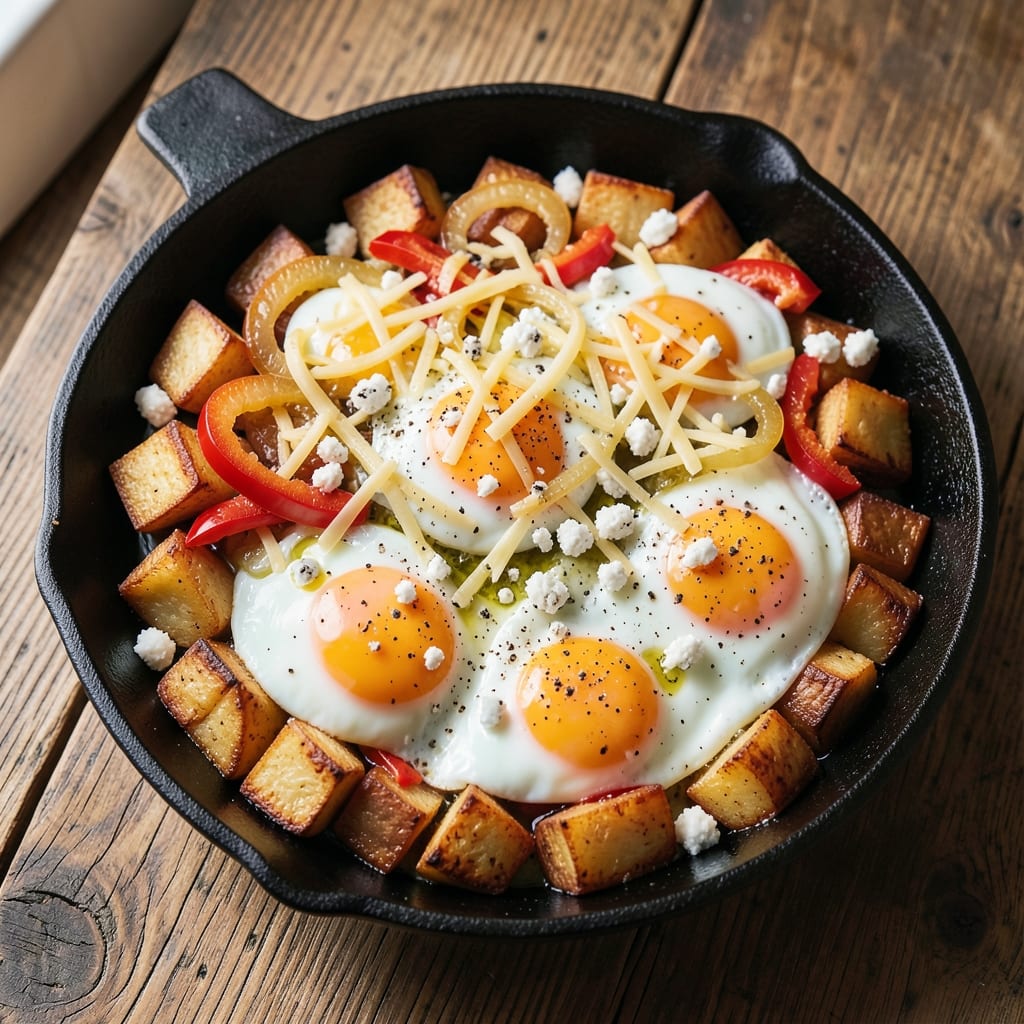
A baked egg skillet transforms breakfast into a restaurant-worthy meal with just one pan and 20 minutes of hands-off baking. The secret lies in high-heat pre-cooking your veggies and cheese for a crispy golden crust, while the eggs bake to perfect doneness—runny yolks that pool like rivers when you cut in. I developed this recipe after years of overcooked scrambled eggs and soggy breakfast skillets, and it finally delivers that ideal texture: tender eggs with a caramelized, cheesy top layer that holds together like a frittata.
This dish works for breakfast, brunch, or even dinner—just swap in proteins like sausage or chicken. The base is simple: potatoes or hash browns for heartiness, sautéed peppers and onions for flavor, and a blend of cheeses (cheddar and feta work best) that melts into a bubbly, golden crust. The eggs bake right on top, creating that signature runny yolk effect without requiring a single flip. It’s the kind of meal that feels indulgent but comes together in one pan, with minimal cleanup.
What makes this recipe stand out is the balance of textures: crispy potatoes at the bottom, creamy melted cheese in the middle, and silky eggs on top. The high-heat pre-cooking ensures the crust stays golden and crispy, not rubbery, while the eggs cook just enough to set but stay rich and custardy inside. It’s foolproof for weekdays but impressive enough for guests—no one will guess it took less than 30 minutes to prepare.
For extra flavor, add fresh herbs like chives or parsley on top before baking, or sprinkle smoked paprika into the cheese mixture. Vegetarians can skip the meat entirely, and vegans can use a plant-based cheese substitute. The possibilities are endless, but the core technique—pre-cooking the base, layering the eggs, and baking until golden—is what guarantees success every time.
Ingredients for baked egg skillet
High-heat pre-cooking and layered baking create restaurant-quality texture with minimal effort.
| Ingredient | Amount | Notes |
|---|---|---|
| Russet Potatoes 🥔 | 2 lbs | Diced small for even cooking |
| Yellow Onion 🧅 | 1 whole | Thinly sliced for quick sautéing |
| Bell Peppers 🌶️ | 2 whole | Red or green, diced |
| Sharp Cheddar Cheese 🧀 | 1 ½ cups | Shredded, block preferred |
| Feta Cheese 🧀 | ½ cup | Crumbled, mild variety |
| Large Eggs 🥚 | 6 whole | Room temperature for even baking |
| Unsalted Butter 🧈 | 3 tbsp | Melted for crispy base |
| Fresh Chives 🌿 | ¼ cup | Chopped for garnish |
| Smoked Paprika 🌶️ | 1 tsp | For depth of flavor |
| Salt 🧂 | 1 ½ tsp | Kosher or sea salt |
| Black Pepper 🌶️ | ½ tsp | Freshly ground preferred |
| Vegetable Oil 🫒 | 2 tbsp | For sautéing vegetables |
The potatoes are the foundation—Russet potatoes work best because they hold their shape and crisp up beautifully. Grab a 2-pound bag from the grocery store's produce section, or pre-cut hash browns if you're short on time. For the onions, yellow onions add the right sweetness, but red or white work too. Thinly slice them so they soften quickly during the sauté—10 minutes max on high heat. The bell peppers? Any color, but red or green are most common. Dice them small so they cook through evenly alongside the onions. Pro tip: Costco often has pre-diced veggie mixes that save time here.
No sharp cheddar? Monterey Jack or pepper jack work in a pinch, though sharp cheddar gives that signature tang. Feta can be swapped for goat cheese if you prefer a creamier texture. For the eggs, room temperature is key—they'll bake more evenly. No time to wait? Run them under warm water for 30 seconds. The butter matters here—unsalted ensures you control the seasoning. If you're avoiding dairy, olive oil works just as well for the crispy base. The smoked paprika adds depth without overpowering—Penzeys has great options if you want to splurge, but regular grocery store brands are fine too.
Store prepped veggies in an airtight container for up to 3 days before baking. The cheese mixture can be prepped ahead and refrigerated for 1 day, though it's best used fresh. Once baked, this skillet reheats beautifully—30 seconds in the microwave or 5 minutes in a 350°F oven restores that crispy crust. Portion leftovers into single servings for easy grab-and-go breakfasts. The eggs are best eaten fresh, but the cheesy potato base keeps well for 4 days in the fridge.
Why You'll Love This Recipe
- One-Pan Magic: I swear by this recipe—just slice, layer, and bake. The potatoes and peppers soften perfectly while the eggs cook right in the skillet, no flipping or fussing required.
- Cheesy Crispy Edge: Between us, the sharp cheddar and feta get ridiculously crispy on top while staying creamy underneath. That contrast? Absolute perfection when you cut into it.
- Lunchbox Hero: Honestly, this makes the best cold leftovers. Pack it in containers for work lunches—still hearty, still delicious, and way better than sad takeout.
- Budget Breakfast: Russets and bell peppers stretch so far, and the cheese adds richness without breaking the bank. I’ve fed four people for under $10, and no one ever complains.
Step-by-step instructions for baked egg skillet
Create a hearty breakfast skillet with crispy edges and perfectly runny yolks using these precise techniques.
Prep and Par-Cook the Potatoes
Preheat your oven to 400°F. Dice the 2 lbs Russet Potatoes into ½-inch cubes for even cooking. Toss them in a large bowl with 2 tbsp Vegetable Oil, 1.5 tsp Salt, 0.5 tsp Black Pepper, and 1 tsp Smoked Paprika until evenly coated.
Spread the potatoes in a single layer on two rimmed baking sheets. Roast for 25 minutes, stirring once halfway, until they begin to soften and develop a slight crust. This par-cooking step ensures the potatoes finish tender without turning mushy in the final bake. Remove from the oven and let cool slightly before proceeding.
Sauté the Onions and Peppers
While the potatoes roast, heat 3 tbsp Unsalted Butter in a large oven-safe skillet over medium heat. Add the 1 whole Yellow Onion and 2 whole Bell Peppers (diced), cooking for 6-8 minutes until softened and slightly caramelized. The onions should turn translucent while the peppers release their moisture.
Season with an additional pinch of salt and pepper as you cook. Remove the skillet from heat and let it cool for 2 minutes—this prevents the vegetables from overcooking when you return them to the oven later. The residual heat will keep them warm while you prepare the eggs.
Layer the Skillet Ingredients
Return the skillet to the stovetop over low heat. Spread the par-cooked potatoes evenly over the sautéed vegetables. Sprinkle 1 cup Sharp Cheddar Cheese and 0.5 cup Feta Cheese over the top, letting the cheeses melt slightly to create a binding layer. Tuck in the 6 whole Large Eggs, spacing them evenly across the skillet.
Season the eggs with a final pinch of salt and pepper. The eggs should nestle into the potato mixture, creating pockets for their yolks to pool. Transfer the skillet to the preheated oven for 15-18 minutes until the edges are golden and the cheese is fully melted.
Bake to Golden Perfection
Remove the skillet from the oven and let it rest for 3-5 minutes off the heat. This resting period allows the eggs to set slightly while keeping the yolks runny. Sprinkle the 0.25 cup Fresh Chives evenly over the top for a fresh finish.
Serve immediately with the skillet still in its pan—this makes it easy to slice through the crispy edges and creamy centers. Each bite should deliver tender potatoes, caramelized onions and peppers, and perfectly runny yolks that pool together for dipping. The golden crust should contrast beautifully with the creamy cheese and rich egg yolks.
Pro Tips For Making Baked Egg Skillet
- PREHEAT FOR 15 MINUTES: I learned this the hard way—skipping the extra preheat time means your skillet won’t get that crispy bottom later. Russets need a hot oven to brown properly, so crank it to 425°F and let it sit while you prep everything else.
- CUT POTATOES UNIFORM: Thick slices? They’ll stay doughy. Thin slices? They’ll burn before the eggs set. Aim for ¼-inch chunks—consistent size guarantees even cooking and that perfect tender-crisp texture.
- SAUTÉ ONIONS FIRST: Don’t just toss raw onion into the skillet—it’ll steam instead of caramelize. Cook it in a dry pan for 5-7 minutes until soft and slightly golden before adding other veggies. This builds flavor that raw onion just can’t match.
- LAYER CHEESE LAST: If you dump all the cheddar and feta on top at once, it’ll melt into a sad, greasy puddle. Sprinkle half now, then add eggs, then finish with the rest—this way, the top stays golden and gooey, not soupy. (Yes, even if you’re impatient like me.)
Flavor customization for these flavors
Cheese Swaps
Skip the cheddar and feta for goat cheese and parmesan—the tangy goat cheese melts beautifully, while the parmesan adds a nutty depth. For a smoky kick, swap in smoked gouda instead of cheddar. I love using Monterey Jack for a milder, creamier texture that still holds its shape. If you're avoiding dairy, try nutritional yeast for a cheesy flavor without the cheese.
Herb Variations
Fresh dill brightens the dish, especially with goat cheese. A sprinkle of thyme adds earthiness that pairs well with smoked paprika. For a Mediterranean twist, add oregano and basil on top before baking. I often use Penzeys dried herbs for consistency, but fresh works too—just chop them finely so they distribute evenly.
Spicy Heat Boost
Add ½ tsp cayenne pepper to the cheese mixture for a subtle kick, or sprinkle red pepper flakes on top before baking. For smoky heat, mix ½ tsp chipotle powder into the potatoes before roasting. If you love bold flavors, try 1 tbsp hot honey drizzled over the finished skillet—it balances the richness perfectly. 🌶️
Sweet Additions
Dice ½ cup caramelized onions and scatter them over the eggs for a sweet-savory contrast. A pinch of cinnamon in the cheese layer adds warmth, especially with apples or pears. For brunch, top with crispy bacon bits or crumbled sausage after baking. I’ve also used sautéed apples with cinnamon for a fall-inspired twist.
Protein Upgrades
Add ½ lb cooked sausage or crumbled chorizo to the potato layer for extra heartiness. For a vegetarian option, stir in chickpeas or black beans> with the onions and peppers. I like using smoked turkey sausage for a lighter option that still packs flavor. 💪
Crunchy Toppings
Sprinkle toasted breadcrumbs or crushed tortilla chips on top before baking for extra texture. For a fresh crunch, add toasted pumpkin seeds or crumbled bacon after baking. I often use panko breadcrumbs mixed with garlic powder for a savory topping that adds a satisfying crunch to every bite.
Nutrition facts
Frequently asked questions
Can I make this skillet ahead of time?
Yes, but with some adjustments! Prep the potato and veggie base up to 2 days ahead and store it in an airtight container in the fridge. When ready to bake, assemble the skillet as directed and bake at 375°F instead of 400°F for 20-22 minutes to prevent overcooking. The eggs are best added fresh, but you can pre-cook them separately and reheat gently before assembling.
How do I keep the eggs runny without overcooking?
The secret is baking at 400°F for only 15-18 minutes and letting the skillet rest 3-5 minutes off heat before serving. Use a meat thermometer to check the eggs—when the center reaches 150°F, they're perfectly set with runny yolks. If your oven runs hot, reduce the temperature to 375°F and bake for 12-15 minutes instead.
What if I don't have an oven-safe skillet?
No problem! Transfer the assembled skillet to a baking dish and bake as directed. For even browning, place the dish on a baking sheet to catch any cheese overflow. If your skillet is too small, use two smaller oven-safe pans and bake them side by side. The key is maintaining the layering technique—potatoes, veggies, cheese, then eggs—to keep the texture intact.
Can I make this vegetarian or vegan?
For vegetarian, simply omit the meat and use plant-based cheese alternatives like nutritional yeast or vegan cheese shreds. For vegan, replace eggs with tofu scramble or chickpea flour "eggs" (mix ¼ cup chickpea flour with ½ cup water and 1 tbsp oil per egg). The potato and veggie base stays the same—just adjust the baking time by 2-3 minutes since plant-based proteins cook differently.
Why did my skillet turn out soggy?
Soggy results usually happen from overcrowding or undercooking the base.