
Breakfast & Brunch
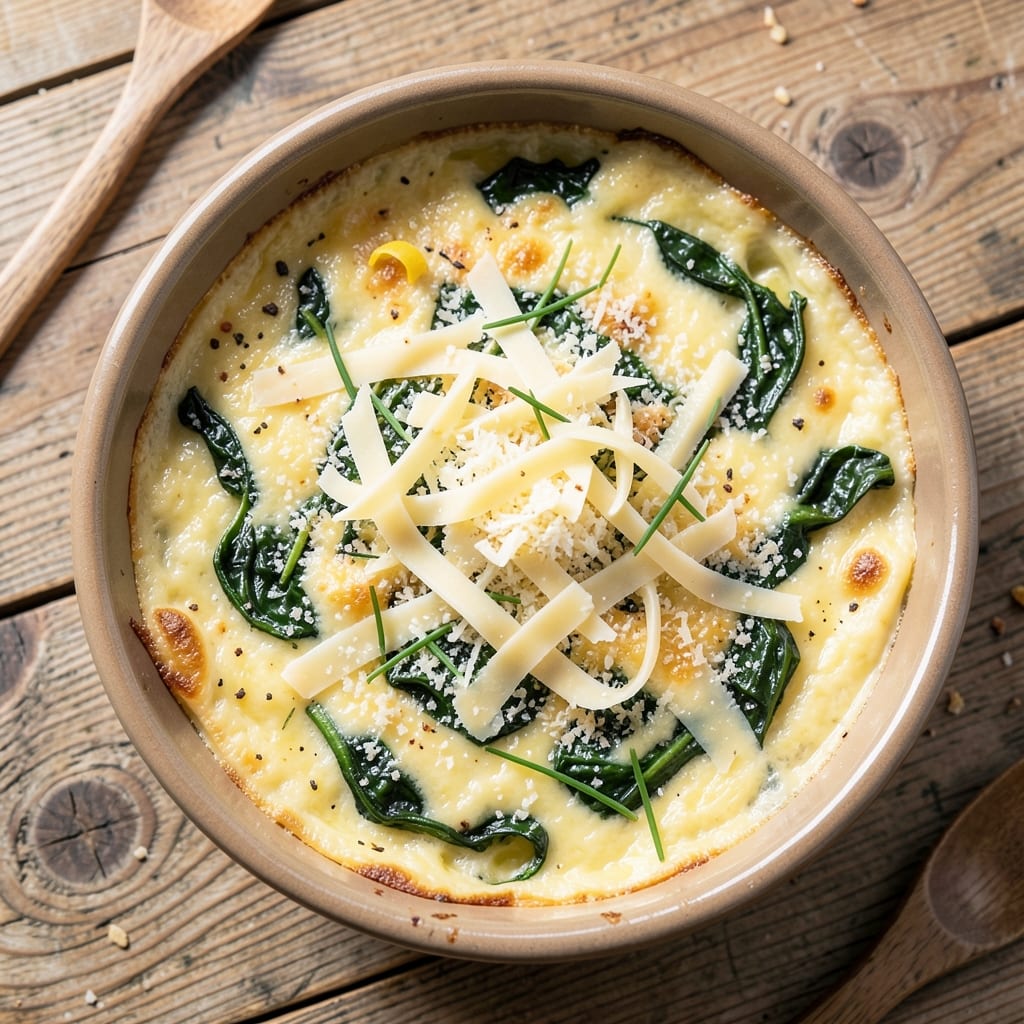
This baked egg omelette recipe delivers a restaurant-worthy breakfast with a crispy parmesan crust and silky yolk centers—no stove required. The secret lies in baking eggs in a ramekin until the edges achieve a golden, crackly texture while the yolks remain perfectly runny. I've perfected this technique over countless mornings when I craved something heartier than scrambled eggs but lighter than a quiche.
The beauty of this method is its foolproof simplicity—just whisk eggs with cheese, pour into buttered ramekins, and bake at 375°F for 12-15 minutes. The parmesan creates that coveted crispy crust, while the addition of fresh herbs or sautéed vegetables transforms it into a complete meal. It's vegetarian, protein-packed, and ready in under 20 minutes—ideal for busy weekdays or weekend brunches.
What you'll end up with is a dish that looks impressively elegant but requires minimal effort: golden edges that shatter at the slightest touch, a creamy egg center that flows like liquid silk, and a savory depth from the parmesan. The contrast between the crisp exterior and velvety interior makes every bite satisfying. This isn't just breakfast—it's a morning masterpiece that elevates your table without the fuss.
Serve with a drizzle of hot sauce, fresh herbs, or a sprinkle of flaky salt to enhance the flavors further. The possibilities for fillings are endless—think spinach and sun-dried tomatoes, mushrooms and goat cheese, or classic ham and cheese for a non-vegetarian twist. Let's get started on creating your perfect baked omelette.
Ingredients for baked egg omelette
Six eggs, two cheeses, and a handful of fresh herbs—this is your crispy-edged, silky-yolked breakfast masterpiece.
| Ingredient | Amount | Notes |
|---|---|---|
| Large Eggs 🥚 | 6 whole | Room temperature for even cooking |
| Extra-Sharp White Cheddar Cheese 🧀 | ½ cup | Shredded, aged for maximum flavor |
| Parmesan Cheese 🧀 | ¼ cup | Freshly grated, fine texture |
| Unsalted Butter 🧈 | 2 tbsp | Melted for ramekin coating |
| Fresh Chives 🌿 | 2 tbsp | Finely chopped, for garnish |
| Fresh Spinach 🌱 | ½ cup | Chopped, for filling option |
| Sun-Dried Tomatoes 🍅 | 2 tbsp | Chopped, oil-packed variety |
| Kosher Salt 🧂 | ½ tsp | Diamond Crystal preferred |
| Freshly Ground Black Pepper 🌶️ | ¼ tsp | Cracked peppercorns preferred |
| Flaky Sea Salt 🧂 | 1 tsp | For final garnish |
| Vegetable Oil 🫒 | 1 tbsp | For ramekin preheating |
| Fresh Basil Leaves 🌿 | ¼ cup | Torn, for optional garnish |
| Garlic Cloves 🧄 | 1 clove | Minced, for optional filling |
The eggs are the star, so grab the freshest you can find—look for cartons labeled with a sell-by date at least 1 week out. Room temperature eggs cook more evenly, so take them out of the fridge 20 minutes before baking. For the cheeses, sharp white cheddar gives that tangy bite, while Parmigiano-Reggiano delivers the crispy crust magic. I always buy my Parmesan in a wedge and grate it fresh—pre-grated tastes like sawdust in comparison. Whole Foods or Trader Joe's have great cheese counters if you're not at a specialty market. The spinach and sun-dried tomatoes can be swapped for mushrooms or goat cheese if you prefer—just keep the portion to about 1/4 cup per ramekin.
No fresh chives? Substitute green onions or extra basil—they'll add brightness. Short on sun-dried tomatoes? Roasted red peppers from a jar work perfectly (just drain them well). The flaky sea salt is non-negotiable for that final touch—Maldon is my go-to, but any flaky salt will do. Want to skip the filling entirely? The eggs and cheese alone make a luxurious dish. For extra richness, add a splash of heavy cream to the egg mixture (about 1 tbsp per ramekin). And if you're feeling fancy, infuse the melted butter with a garlic clove before brushing the ramekins—trust me, it elevates everything. The vegetable oil is just for preheating; you could use butter instead if you prefer.
Prep ahead by grating the cheese and chopping the herbs the night before—everything stays fresh in the fridge for 3 days. The sun-dried tomatoes keep for 6 months in their oil, so no rush to use them up. For the perfect bake, preheat your oven to 375°F and let the ramekins sit in there for 5 minutes before adding the egg mixture—this ensures that golden crust. Leftovers? They reheat beautifully in the oven at 350°F for 8-10 minutes, though honestly, they're best eaten fresh. Store any extras in an airtight container with a piece of parchment between layers to keep them from sticking.
Why You'll Love This Recipe
- No-Fuss Mornings: I swear by this when I’m running late—just crack eggs into a buttered pan, sprinkle cheese, and pop it in the oven. No flipping, no mess, just golden perfection while I sip my coffee.
- Cheese Overload: Between that sharp white cheddar and nutty parmesan, every bite feels like a hug. The chives add this bright, fresh finish that cuts through the richness—trust me, it’s the kind of flavor combo that makes you go back for seconds.
- Lunchbox Hero: This bakes up perfectly portioned, so I make a batch on Sundays and pack it for work. Cold or reheated, it’s still delicious—no sad, soggy lunches here. My coworkers actually ask for seconds.
- Budget Breakfast: Eggs and cheese are my go-to cheap eats, and this recipe stretches them further than scrambled eggs ever could. Plus, the leftovers keep for days, so I’m not scrambling (pun intended) to feed the family every night.
Step-by-step instructions for crispy Parmesan egg omelettes
Here's how to create restaurant-quality baked egg omelettes with a golden crust and perfectly set yolks.
Prepare the Omelette Base
In a large bowl, whisk together all 6 whole large eggs until no streaks remain. The mixture should be completely smooth and pale yellow. I like to add a pinch of 0.5 teaspoon kosher salt and 0.25 teaspoon freshly ground black pepper to the eggs at this stage for even seasoning throughout.
Next, fold in 0.5 cup chopped fresh spinach, 2 tablespoons chopped sun-dried tomatoes, and 1 clove minced garlic if using. This creates a flavorful filling that will bake evenly within the omelette. For best results, use room temperature eggs—they blend more smoothly and cook more evenly.
Create the Parmesan Crust
Preheat your oven to 375°F and position a rack in the center position. Generously brush 4 ramekins (about 6-ounce size) with 2 tablespoons melted unsalted butter, coating the bottom and sides thoroughly. This butter layer creates the foundation for our crispy crust.
Sprinkle 0.25 cup freshly grated Parmesan cheese evenly into each ramekin, pressing it gently into the butter layer. The cheese will create a flavorful, crispy crust while preventing the eggs from sticking. Tap the ramekins lightly on the counter to help the cheese settle evenly.
Assemble and Bake to Perfection
Divide the egg mixture evenly among the prepared ramekins, filling each about ¾ full. Sprinkle each with a pinch of 0.5 teaspoon kosher salt and 0.25 teaspoon freshly ground black pepper. The eggs should come up to just below the rim of each ramekin.
Place the ramekins on a baking sheet and bake for 12-15 minutes until the edges are deep golden brown and the centers are just set. You'll know they're ready when the top springs back slightly when touched gently—this indicates the eggs are perfectly cooked without being rubbery.
Finish with Crispy Garnishes
Remove the omelettes from the oven and immediately sprinkle each with 1 teaspoon flaky sea salt and 2 tablespoons finely chopped fresh chives. The salt enhances the Parmesan flavor while adding a beautiful contrast of textures. For extra flair, add 0.25 cup torn fresh basil leaves on top.
Let them rest for 2-3 minutes before serving. This resting period allows the eggs to set completely and makes them easier to remove from the ramekins. Serve immediately while the crust is still crispy and the centers remain silky—each bite should deliver that perfect combination of textures and flavors.
Pro Tips For Making Baked Egg Omelette
- Preheat Pan Properly: Get that oven screaming hot—425°F (220°C) for 5 minutes before adding the eggs. I learned this the hard way: cold pans make for rubbery omelettes, and you’ll end up with a sad, uneven bake. The butter needs that heat to brown properly, too.
- Shred Cheese Coarse: Skip the fine dust—tear the cheddar into uneven chunks (Parmesan too, if you’re lazy about grating). It melts slower, stays gooey longer, and gives every bite that satisfying pull of melted cheese. Yes, it looks messy, but that’s how you get real flavor.
- Don’t Overfill the Molds: Fill ramekins only halfway with egg mix—eggs expand more than you think. I used to pack them full, then watch them spill over like a volcano. A little air space lets the top puff properly without turning into a greasy puddle.
- Chives Last Minute: Sprinkle fresh chives right before baking—no waiting. They’ll wilt into oblivion if you add them early. Toss a handful on top right when the eggs hit the oven, then broil for 30 seconds if you’re feeling fancy. Crispy chives make all the difference.
Troubleshooting this dish
Undercooked Centers
If your omelettes come out with runny yolks or pale centers, your oven temperature might be too low or the baking time too short. Always preheat your oven to 375°F and use an oven thermometer to confirm accuracy—many ovens run 25°F cooler than set. I also recommend baking on the middle rack for even heat distribution. For extra insurance, check at 12 minutes and continue until the edges are golden and the center just jiggles slightly when shaken gently. 🌡️
Rubbery Texture
Overcooking is the usual culprit for rubbery omelettes. Remove them from the oven the moment the edges are golden and the center still has a slight wobble—this indicates perfect doneness. If you're unsure, cut one open to test. Another trick: Use fresh eggs (older eggs have more water content and cook faster). For extra tenderness, add 1 tablespoon heavy cream to the egg mixture per ramekin. 🍳
Crust Not Crispy
A lackluster crust usually means insufficient Parmesan or butter.
Eggs Stick to Ramekins
Butter alone isn't always enough to prevent sticking. After brushing with melted butter, sprinkle a thin layer of Parmesan cheese on the sides of the ramekins as well. I also recommend using 6-ounce ramekins (not larger) to ensure proper heat distribution. For extra insurance, lightly oil the ramekins with vegetable oil before adding the butter. Never overfill the ramekins—keep the egg mixture below the rim to prevent spillage and sticking. 🛠️
Uneven Cooking
If some omelettes cook faster than others, it's likely due to uneven oven heat or inconsistent ramekin sizes. Use identical ramekins (I prefer Le Creuset stoneware) and rotate them halfway through baking. For even better results, place the baking sheet on a lower oven rack and add a shallow pan of water below it—this creates steam that helps cook the omelettes more evenly. Always check for doneness in the center ramekin first. 🔥
Filling Not Hot Enough
If your fillings (like spinach or sun-dried tomatoes) stay cold, they need preheating. Sauté any veggies in a separate pan until just tender before mixing them into the egg batter. For delicate ingredients like herbs, fold them in right before baking. Another trick: Add 1/4 teaspoon red pepper flakes to the egg mixture—it helps distribute heat more evenly while adding subtle warmth. 🌶️
Nutrition facts
Frequently asked questions
Can I make this omelette recipe without ramekins?
Yes! Use 6-ounce oven-safe ceramic dishes or even small cast-iron skillets—just make sure they're deep enough to hold the egg mixture without overflowing. For a rustic look, try individual oven-safe mugs or even small baking dishes. The key is maintaining the same 6-ounce capacity per serving to ensure proper cooking. Line with parchment paper for easy removal.
How do I adjust this recipe for fewer/more servings?
This recipe scales perfectly—just maintain the same ratio of 1.5 eggs per serving. For 2 servings, use 3 eggs and 1/4 cup total cheese. For 6 servings, increase to 9 eggs and 3/4 cup cheese. Keep ramekins the same size (6-ounce) to prevent uneven cooking. The baking time remains 12-15 minutes regardless of quantity.
Can I prepare this ahead of time?
While best served immediately, you can assemble the omelettes in ramekins up to 4 hours ahead and refrigerate. Bake straight from the fridge, adding 2-3 extra minutes to the baking time. For make-ahead fillings, pre-chop all veggies and store separately—fold them in just before baking. Never bake ahead—the crust loses crispness and the centers overcook when reheated.
What's the best way to reheat leftovers?
Reheat in a 350°F oven for 8-10 minutes on a baking sheet to restore crispness. For microwave reheating, cover with a damp paper towel and heat for 20-30 seconds—this prevents drying out. The texture won't be identical to fresh, but it's still delicious. Store leftovers in an airtight container with parchment between layers to maintain moisture.
Can I use this technique for savory egg muffins?
For egg muffins, use muffin tins and reduce baking time to 10-12 minutes. Add your fillings (like diced ham, bell peppers, or sautéed onions) directly to the egg mixture. The Parmesan crust technique works perfectly—just sprinkle cheese on the bottom of each muffin cup before adding eggs. These make great meal prep for breakfast or snacks!