
Breakfast & Brunch
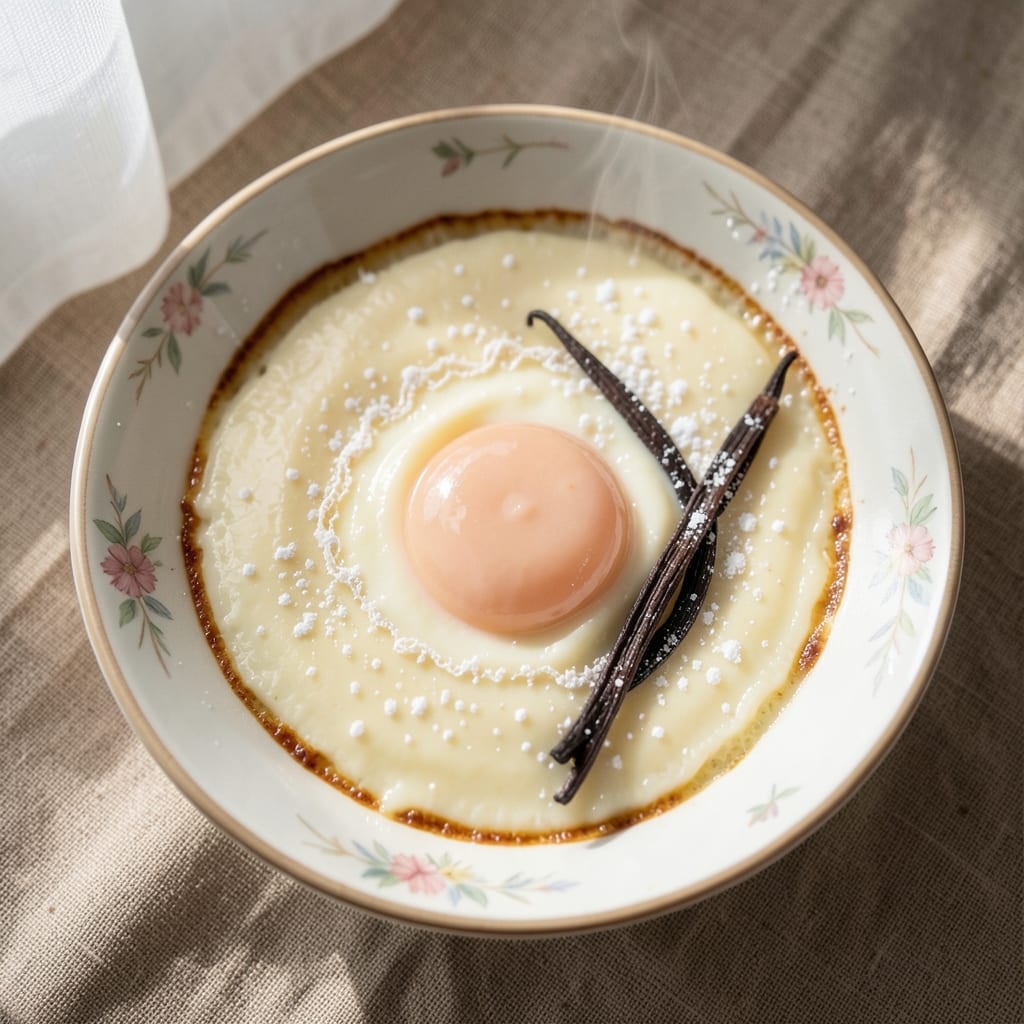
This baked egg custard recipe with milk delivers the kind of velvety, golden perfection that turns breakfast into an indulgence. The secret lies in balancing whole milk for richness with vanilla extract to infuse that signature creamy warmth—no artificial flavors here. After years of testing variations, I’ve perfected a method that guarantees a silky texture with a tender, custardy bite every time.
The process is simpler than it sounds: whisk eggs, milk, sugar, and vanilla until smooth, then bake in a water bath at 325°F until just set. The water bath ensures even heat distribution, preventing any risk of cracking or overcooking. This technique transforms basic ingredients into a restaurant-quality dessert that’s surprisingly easy to replicate at home.
What you’ll end up with is a luscious, vanilla-kissed custard that’s smooth enough to melt on your spoon yet firm enough to slice neatly. The aroma alone—warm milk, caramelized sugar, and vanilla—will have everyone gathered around the table. It’s the kind of dish that elevates a simple breakfast into something special, without requiring advanced skills.
Perfect for brunch, dessert, or even a decadent snack, this custard pairs beautifully with fresh berries, a sprinkle of cinnamon, or a drizzle of honey. The best part? It reheats beautifully, making it ideal for meal prep or satisfying cravings later in the day. Let’s get started on creating your own batch of this creamy masterpiece.
Ingredients for baked egg custard recipe with milk
Six essential ingredients transform into restaurant-quality custard with velvety texture and vanilla warmth.
| Ingredient | Amount | Notes |
|---|---|---|
| Large Eggs 🥚 | 6 whole | Room temperature for even baking |
| Whole Milk 🥛 | 2 cups | Full-fat for optimal creaminess |
| Granulated Sugar 🍚 | ¾ cup | Superfine preferred for smooth texture |
| Pure Vanilla Extract 🌿 | 1 tbsp | High-quality Madagascar bourbon |
| Unsalted Butter 🧈 | 2 tbsp | Cut into small pieces for even melting |
| All-Purpose Flour 🌾 | 2 tbsp | For stabilizing custard consistency |
| Salt 🧂 | ¼ tsp | Diamond Crystal preferred for precision |
| Ground Cinnamon 🌶️ | ½ tsp | For subtle warm undertones |
| Fresh Berries 🍓 | 1 cup | Optional garnish for presentation |
| Honey 🍯 | 1 tbsp | For drizzling after baking |
The eggs form the custard's foundation—use large, fresh eggs for optimal binding. Whole milk provides richness, but avoid ultra-pasteurized varieties as they can separate during baking. For sugar, superfine dissolves more evenly, though granulated works if pulsed briefly in a food processor. Vanilla extract should be pure bourbon or Madagascar—imitation extracts contain artificial flavors that compromise the delicate balance. Unsalted butter adds subtle depth; cut it into small pieces before melting to ensure even distribution throughout the custard. Diamond Crystal kosher salt is preferred for its finer grain, allowing for precise seasoning without graininess. Source these ingredients from specialty grocers like Whole Foods or Trader Joe's for guaranteed quality, particularly for the vanilla and butter.
No vanilla extract? Almond extract at half the amount provides a similar floral note, though with a distinct almond character. Substitute whole milk with heavy cream for an even richer texture, though the custard will set slightly firmer. Superfine sugar unavailable? Pulse granulated sugar in a blender until it resembles powdered sugar. For the cinnamon, ground cassia can be used interchangeably, though it has a slightly stronger flavor profile. Fresh berries can be swapped for compote or caramelized bananas for a different flavor profile. The honey drizzle is optional but enhances the custard's natural sweetness and adds visual appeal—local raw honey offers the best flavor complexity.
This custard reheats beautifully—microwave for 20-30 seconds or warm gently in a 350°F oven for 10 minutes. Store baked custard in an airtight container in the refrigerator for up to 5 days or freeze for 3 months in individual portions. For meal prep, bake in ramekins or a loaf pan for easy slicing. The custard thickens as it cools, so reheat gently to restore its silky texture. Portion into serving dishes before refrigerating to maintain neat slices. When serving, a light dusting of powdered sugar or extra cinnamon adds professional flair.
Why You'll Love This Recipe
- Five-Ingredient Magic: I swear by this list—eggs, milk, sugar, vanilla, butter. That’s it. No fancy pantry raids, no last-minute grocery runs. The custard comes together while you’re still deciding whether to put on pajamas or not.
- Silky-Smooth Payoff: The butter and whole milk give it that just-right richness—creamy but not heavy, sweet but not cloying. That vanilla? It’s the kind that lingers, turning every bite into a little moment of indulgence.
- Breakfast or Dessert: Honestly, I’ve served this chilled for brunch with berries and toasted nuts, or warm with a sprinkle of cinnamon as a midnight treat. Kids adore it, coworkers steal seconds, and my coffee-drinking husband asks for it on Sundays.
- Leftovers That Last: Bake a batch, refrigerate it, and you’ve got a week’s worth of grab-and-go portions. Slice it, pack it, and it stays perfect—no soggy texture, no reheating drama. My lunchbox’s new best friend.
Step-by-step instructions for baked egg custard with milk
Here's the precise method for achieving that signature silky texture and vanilla-infused richness.
Whisk Eggs and Milk Until Fully Emulsified
In a large mixing bowl, combine the 6 whole Large Eggs and 2 cups Whole Milk at room temperature. Using a whisk or electric mixer on medium-high speed, beat the mixture for 3-4 minutes until completely smooth and slightly thickened. This emulsification process is critical—you're looking for a uniform consistency where no egg whites remain visible.
The eggs should lighten in color slightly as they incorporate air, creating a velvety base for your custard. If you notice any curdling at first, don't panic—just continue whisking until fully combined. This step ensures your custard will have that signature silky mouthfeel rather than a grainy texture.
Incorporate Sugar, Vanilla, and Dry Ingredients
Gradually whisk in the 0.75 cup Granulated Sugar until fully dissolved, then add the 1 tbsp Pure Vanilla Extract, 2 tbsp All-Purpose Flour, 0.25 tsp Salt, and 0.5 tsp Ground Cinnamon. Continue whisking on medium speed for another 2 minutes until the mixture is completely smooth and all flour is fully incorporated.
I like to taste the mixture at this stage to check the balance of sweetness and spice. The custard should taste rich but not overly sweet—you can adjust with a pinch more sugar or cinnamon if needed. The flour acts as a stabilizer here, preventing the custard from becoming too delicate during baking.
Melt Butter and Prepare Baking Dishes
While the custard mixture rests, melt the 2 tbsp Unsalted Butter in a small saucepan over low heat until just liquid, then remove from heat. Lightly grease 6 individual ramekins (about 6-ounce capacity) with the melted butter, then place them in a deep baking dish.
Preheat your oven to 325°F—this lower temperature is crucial for achieving that perfect custard texture without curdling. The butter greasing ensures easy release and prevents the custard from sticking to the sides of the ramekins during baking.
Strain and Pour the Custard Mixture
Strain the custard mixture through a fine-mesh sieve into a large measuring cup to remove any potential lumps. This step is particularly important if you're using whole eggs rather than separated yolks—it guarantees that silky texture we're after. Pour the strained mixture evenly into the prepared ramekins, filling each about ¾ full.
Tap the ramekins gently on the counter to release any air bubbles that may have formed. This ensures an even surface that will bake uniformly. The custard should be at room temperature when you pour it—this prevents uneven cooking as it heats up in the oven.
Bake in a Water Bath for Perfect Texture
Place the baking dish with ramekins into a larger roasting pan. Carefully pour hot water into the roasting pan until it comes about halfway up the sides of the ramekins. This water bath creates gentle, even heat that prevents the custard from forming a skin on top while baking.
Bake for 35-40 minutes until the custards are just set but still slightly wobbly in the center when gently shaken. A toothpick inserted should come out clean but with a few moist crumbs clinging to it. The center should still have a slight give—this indicates proper doneness. If you prefer firmer custards, bake for an additional 2-3 minutes.
Cool and Serve with Fresh Berries
Remove the ramekins from the water bath and let them cool at room temperature for 10 minutes. Then refrigerate for at least 2 hours (or up to overnight) to allow the custards to fully set. This chilling step is essential for developing the proper texture—rushing this will result in a runny custard.
Before serving, drizzle each custard with 1 tbsp Honey and top with 1 cup Fresh Berries for a beautiful presentation. The contrast between the warm vanilla custard and the cool, tart berries creates an elegant balance of flavors. Serve immediately for the perfect temperature contrast between the chilled custard and room-temperature berries.
Pro Tips For Making Baked Egg Custard Recipe With Milk
- Whisk Until Ribbons Form: Stop when the egg-milk mix coats the back of a spoon and leaves clear streaks—about 3-4 minutes of steady whisking. Over-whisking turns custards gummy, and under-whisking gives you lumpy sad pudding. I used to rush this, then wondered why my custard had texture issues.
- Use Cold Butter: Cut that unsalted butter into small cubes and chill them for 10 minutes before adding to the warm custard mixture. Cold butter melts slower, creating tiny pockets of richness that make the custard velvety instead of greasy. Trust me, your mouth will notice the difference.
- Avoid Overbaking: The custard is done when the center jiggles just like gelatin—about 30-35 minutes at 325°F (160°C). Pull it out when the edges are set but the middle still wobbles. I’ve learned the hard way that even 5 more minutes turns custard into rubber.
- Strain the Mixture: Pour the custard through a fine-mesh sieve before baking—yes, even if you whisked well. Eggs and milk have stubborn bits that sneak through, and those tiny lumps ruin the silky texture. It takes 30 seconds but makes a real difference.
Flavor customization for baked egg custard recipe with milk
Vanilla Variations
Swap the 1 tbsp pure vanilla extract for ½ tsp vanilla bean paste (like Madagascar Bourbon) to add flecks of real vanilla seeds. For a non-alcoholic option, use 1 tsp vanilla sugar (store-bought or homemade by mixing vanilla extract with sugar). For a citrus twist, add ½ tsp lemon zest alongside the vanilla—it brightens the custard beautifully. 🌿
Spiced Alternatives
Replace the ½ tsp ground cinnamon with ¼ tsp cardamom for a Middle Eastern flair, or use ¼ tsp nutmeg for a cozy winter vibe. For warmth, add ⅛ tsp freshly grated ginger—it pairs surprisingly well with vanilla. If you love warmth, try ½ tsp chai spice blend (cinnamon + ginger + cloves) for a festive touch.
Flavor Boosters
Infuse the 2 cups whole milk by heating it with 1 cinnamon stick or 3-4 whole cloves for 10 minutes, then straining. For coffee lovers, replace ½ cup milk with cold brew concentrate—it adds depth without overpowering. A splash of orange liqueur (like Cointreau, 1 tbsp) elevates the custard to dessert-worthy elegance.
Texture Adjustments
For a firmer custard, add 1 extra tbsp all-purpose flour or 1 tsp cornstarch to the dry ingredients. Need it lighter? Replace ½ cup milk with ½ cup heavy cream—it adds richness while keeping the texture airy. For a cheesecake-like twist, fold in 2 oz cream cheese after whisking the wet ingredients.
Sweetness Control
Reduce the ¾ cup sugar to ½ cup if you prefer less sweetness, then balance with 1 tsp honey or 1 tbsp maple syrup stirred into the custard after baking. For caramel lovers, sprinkle 1 tbsp brown sugar on the ramekins before pouring the custard—it caramelizes during baking for a buttery finish. 🍯
Nutrition facts
Frequently asked questions
Why does my baked egg custard come out grainy?
Graininess usually happens when eggs aren't fully emulsified or lumps remain in the mixture. Always whisk the eggs and milk together for 3-4 minutes until completely smooth, then strain through a fine-mesh sieve before pouring into ramekins. Using room-temperature ingredients also prevents curdling. For extra silkiness, add 1 extra tbsp flour as a stabilizer.
Can I use half-and-half instead of whole milk?
Yes, but your custard will be slightly less rich and creamier. Half-and-half works in a pinch, but for the best texture, stick with whole milk or replace ½ cup with heavy cream. The fat content in whole milk creates that signature velvety mouthfeel. If using half-and-half, reduce baking time by 2-3 minutes as it sets faster.
How do I fix custard that's too runny?
Runny custard usually means it wasn't baked long enough or wasn't chilled properly. For immediate fixes, sprinkle 1 tsp cornstarch mixed with 1 tbsp cold water over the surface, then bake at 350°F for 5-10 minutes. For prevention, always bake until just set (toothpick clean but slightly moist) and chill for at least 2 hours before serving. The texture firms up as it cools.
What's the best way to reheat baked egg custard?
For perfect reheating, warm slices in a 350°F oven for 10-12 minutes until just heated through. Microwave in 20-second bursts on low power, stirring between each, to avoid rubbery texture. Never reheat to boiling—just until the center reaches 160°F. The custard should be warm but still silky, not hot enough to curdle.
Can I make this custard ahead of time?
This custard actually tastes better the next day. Bake it 1 day ahead, then refrigerate in an airtight container. Reheat gently before serving. For 3 months of storage, freeze individual portions in ramekins (leave ½-inch headspace). Thaw overnight in the fridge—never at room temperature—to preserve texture.