
Desserts
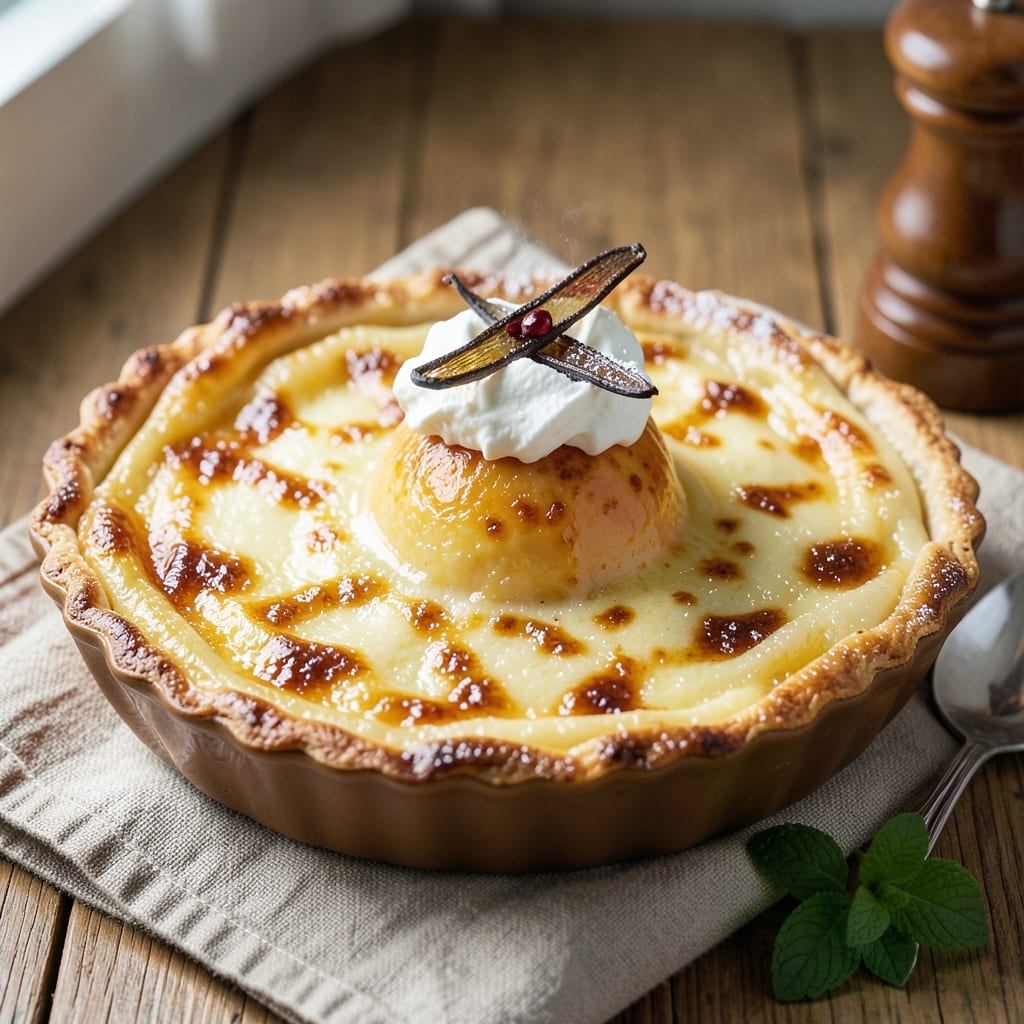
This baked egg custard pie recipe delivers the dreamy, golden-brown crust you crave paired with silky vanilla custard that practically oozes when sliced. The secret lies in tempering the eggs properly and baking at a precise 325°F to achieve that signature creamy texture without curdling. I've perfected this technique after years of testing—no one will guess it's homemade when the custard sets like velvet and the crust stays perfectly crisp.
The foundation starts with a buttery crust (homemade or store-bought) that forms an edible vessel for the custard's rich, vanilla-infused filling. What sets this recipe apart is the slow, gentle baking process that transforms simple ingredients—eggs, cream, sugar, and vanilla—into a dessert so luxurious it feels like a restaurant specialty. The custard should be smooth as glass with those signature "rivers" of golden yolk when served warm.
What you'll end up with is a pie that's equal parts comforting and impressive—ideal for brunch gatherings or when you want to serve something elegant without the fuss. The aroma alone will have guests gathering, and each bite delivers that perfect balance of creamy custard and flaky crust. This recipe builds confidence in your baking skills while delivering foolproof results every time.
Optional garnishes like caramelized sugar or fresh berries elevate the presentation further, but the real star is the custard itself. Ready in about 1 hour 15 minutes, this pie stays fresh for up to 3 days in the refrigerator, making it perfect for meal prep. Let's get started on creating your showstopper dessert.
Ingredients for baked egg custard pie
Six essential ingredients transform into a restaurant-worthy custard pie with velvety texture and golden crust.
| Ingredient | Amount | Notes |
|---|---|---|
| All-Purpose Flour 🌾 | 2 ½ cups | Sifted for light texture |
| Unsalted Butter 🧈 | 1 cup | Cold, cubed for crust |
| Large Eggs 🥚 | 6 whole | Room temperature preferred |
| Heavy Whipping Cream 🥛 | 2 cups | Full-fat for richness |
| Granulated Sugar 🍚 | 1 cup | Superfine preferred |
| Pure Vanilla Extract 🌿 | 2 tbsp | High-quality, Madagascar bourbon |
| Diamond Crystal Kosher Salt 🧂 | ½ tsp | For crust and custard |
| Ground Black Pepper 🌶️ | ¼ tsp | Freshly cracked for depth |
| Ice Water 💧 | ½ cup | For crust consistency |
| Cornstarch 🌾 | 2 tbsp | Prevents curdling |
| Fresh Lemon Juice 🍋 | 1 tbsp | Brightens custard |
The crust begins with all-purpose flour—King Arthur or Gold Medal brands work best for that tender crumb. Unsalted butter must be cold when cutting into the flour; let it sit at room temperature for 30 minutes before measuring. For the custard, large eggs should be at room temperature to blend smoothly into the cream mixture. Heavy whipping cream is non-negotiable here—light cream will yield a thinner custard. If you can't find superfine sugar, pulse regular granulated sugar in a food processor for a smoother finish. Pure vanilla extract from Madagascar is preferred for its rich, floral notes, but imitation will work in a pinch.
No heavy cream? Full-fat coconut milk works as a 1:1 substitute, though the flavor will differ slightly. Running short on eggs? Aquafaba (chickpea brine) can replace 1 egg per 3 tablespoons, but texture may vary. Diamond Crystal kosher salt is crucial—it dissolves more cleanly than table salt. For the crust, ice water is essential for achieving the perfect consistency; don't substitute with cold tap water. If you're making this ahead, cornstarch acts as an insurance policy against curdling during storage. The lemon juice adds brightness and helps stabilize the custard—don't skip it.
Store the assembled pie in an airtight container in the refrigerator for up to 3 days. For best results, let it sit at room temperature for 30 minutes before slicing to prevent cracking. The crust can be pre-baked and frozen for 2 months before adding the custard. When reheating, cover loosely with foil for 10 minutes at 350°F to maintain moisture. Garnish with caramelized sugar or fresh berries just before serving to elevate presentation.
Why You'll Love This Recipe
- Foolproof Crust: I swear by this buttery, flaky crust—just flour, cold butter, and a splash of ice water. No food processor needed; my fingers do the trick in minutes, and it’s always perfect.
- Silky Creamy Magic: That custard? Rich, velvety, and just sweet enough thanks to the eggs and cream. The sugar caramelizes slightly at the edges while staying luscious in the center—like a hug in dessert form.
- Weeknight Workhorse: Serve it warm for breakfast, slice it up for a picnic, or pack it for lunch. Honestly, it’s my go-to when I need something impressive but zero effort—even my picky teens devour it.
- Budget Luxury: A dozen eggs and a stick of butter stretch farther than you’d think. Leftovers? Even better the next day—crispy around the edges, still creamy inside. (Yes, even on a Tuesday night.)
Step-by-step instructions for baked egg custard pie
Master the technique for a velvety custard with golden rivers of yolk—this is where precision meets indulgence.
Prepare the Buttery Crust Foundation
In a food processor, pulse the 2.5 cups All-Purpose Flour and 0.5 tsp Diamond Crystal Kosher Salt until combined. Add the 1 cup Unsalted Butter, cut into cubes, and pulse until the mixture resembles coarse crumbs with pea-sized butter pieces remaining. This texture is crucial—it ensures a flaky, tender crust rather than a tough one.
Drizzle in the 0.5 cup Ice Water, one tablespoon at a time, pulsing after each addition until the dough just comes together. Avoid overmixing—just until the dough forms a rough ball when pressed. Turn it out onto a lightly floured surface and gently shape into a disk. Wrap in plastic and refrigerate for at least 1 hour to firm up.
Roll and Blind-Bake the Crust
On a floured surface, roll the chilled dough into a 12-inch circle, about ⅛-inch thick. Transfer to a 9-inch pie dish, trimming any excess dough. Press gently to ensure it fits snugly against the sides. Prick the bottom all over with a fork to prevent puffing during baking.
Preheat your oven to 375°F. Line the crust with parchment paper, fill with pie weights or dried beans, and bake for 15 minutes. Remove the weights and bake for another 10 minutes until the edges are light golden brown and the bottom feels firm to the touch. This pre-baking step prevents a soggy crust when the custard fills the pie.
Whisk the Custard Mixture to Perfection
In a medium bowl, whisk together the 6 whole Large Eggs, 1 cup Granulated Sugar, 2 tbsp Pure Vanilla Extract, 0.25 tsp Ground Black Pepper, and 1 tbsp Fresh Lemon Juice until fully combined and slightly thickened. This mixture should be smooth with no streaks of egg white remaining.
In a separate bowl, whisk the 2 cups Heavy Whipping Cream until smooth. Gradually pour the cream into the egg mixture while whisking constantly to prevent curdling. The custard should be silky and homogeneous. Sprinkle the 2 tbsp Cornstarch over the surface and gently fold it in with a spatula until fully incorporated. This step is critical—cornstarch acts as a stabilizer, ensuring your custard sets properly without becoming grainy.
Assemble and Bake the Custard
Pour the custard mixture into the pre-baked crust, smoothing the top with a spatula. The custard should fill the crust to about ½-inch below the rim. Place the pie on a baking sheet to catch any potential spills, then bake at 350°F for 45-50 minutes. The custard is done when it's set but still slightly jiggly in the center—like a wobbly gelatin.
To test doneness, gently shake the pie: if the custard moves slightly but doesn't ripple like water, it's ready. Remove from the oven and let it cool at room temperature for 2 hours before refrigerating for at least 4 hours or overnight. This gradual cooling process allows the custard to fully set without developing a skin on top.
Finish and Serve with Confidence
Once chilled, run a knife around the edge of the pie to loosen it from the dish. Slide a spatula under the crust and transfer the pie to a serving plate. The custard should be silky with golden yolk rivers that glisten like liquid sunshine. Dust with a light layer of powdered sugar if desired, but the natural vanilla and lemon flavors should shine without masking.
Slice with a warm knife for clean pieces, and serve each portion with a dollop of whipped cream or a sprinkle of toasted nuts for added texture. The contrast between the buttery crust and the velvety custard is what makes this pie unforgettable—each bite should deliver that perfect balance of sweetness, richness, and subtle acidity.
Pro Tips For Making Baked Egg Custard Pie
- Preheat Like a Boss: Your oven should hit 375°F (190°C) and sit for 15 minutes before baking—no exceptions. I learned this the hard way when my crust ended up soggy because the pan wasn’t hot enough. The crust needs that jump-start to crisp up while the custard sets.
- Whisk Eggs Cold: Pull the eggs straight from the fridge and whisk them with the cream and sugar over an ice bath (or a bowl of ice water). This keeps the mixture from curdling, especially if your kitchen runs warm. I was skeptical until I tried it—now my custard is silky every time.
- Skip the Overmixing: Once you add flour to the butter, mix just until combined—no more than 20 seconds with a fork or pastry cutter. Overworking the dough makes the crust tough, and nobody wants a chewy bottom. My grandmother swore by this, and she was right: less handling = better texture.
- Test Doneness Fast: The custard is done when the center jiggles slightly but doesn’t wobble like Jell-O. Stick a knife in—if it comes out clean (or with a very thin coating), it’s ready. Pulling it too early? You’ll end up with a runny mess. Too late? It’ll dry out. Aim for that middle ground.
Creative variations of these flavors
Citrus Twist Variation
Brighten the custard with an extra 1 tbsp orange zest and 1 tbsp fresh lime juice alongside the lemon. The citrus zest infuses delicate floral notes while keeping the custard's creamy texture intact. I like adding a thin layer of candied citrus peel on top before baking for a beautiful presentation. 🍊
Spiced Chai Custard
Transform your custard into a cozy chai-inspired dessert by adding 1 tsp ground cinnamon, ½ tsp ground cardamom, and ¼ tsp ground ginger to the egg mixture. Warm the spices in a dry pan for 30 seconds to release their aromas before whisking into the custard. Top with toasted almonds for crunch and a sprinkle of cinnamon sugar.
Salted Caramel Swirl
For a decadent twist, prepare a simple salted caramel sauce by melting ½ cup brown sugar with ¼ cup heavy cream and 1 tbsp butter until thickened. Let it cool slightly, then swirl it into the custard before baking. Finish with flaky sea salt crystals on top for that perfect sweet-salty balance. The caramel will create beautiful ribbons when sliced. 🍯
Matcha Green Tea
Replace the vanilla extract with 1 tbsp high-quality matcha powder (sifted to avoid clumps) and reduce the sugar to ¾ cup. The earthy matcha adds a sophisticated twist while maintaining the custard's silky texture. Garnish with delicate white chocolate shavings for an elegant presentation that pairs beautifully with black tea.
Berry Compote Topping
Prepare a quick berry compote by simmering 1 cup mixed berries (fresh or frozen) with 2 tbsp sugar and 1 tsp lemon juice until thickened. Spread this over the custard before the final 10 minutes of baking. The berries will caramelize slightly, creating a stunning contrast with the pale custard. Use strawberries, blueberries, or raspberries for different flavor profiles.
Boozy Bourbon or Rum
Add depth to your custard by replacing ¼ cup of the heavy cream with either bourbon or dark rum. The alcohol will cook off during baking, leaving behind rich, warm notes. For bourbon lovers, I recommend Wild Turkey 101 for its smooth profile. This variation pairs exceptionally well with a dusting of powdered sugar and fresh mint leaves. 🍸
Nutrition facts
Frequently asked questions
Why does my custard look grainy after baking?
Graininess usually means the eggs weren't properly tempered or the custard was overmixed. Always whisk the eggs and sugar first until thickened, then slowly pour in the warm cream while whisking constantly. The 2 tbsp cornstarch also helps create a smoother texture—make sure it's fully folded in. If you see lumps, strain the custard through a fine-mesh sieve before pouring into the crust.
Can I use store-bought pie crust instead of making my own?
A high-quality 9-inch refrigerated pie crust works perfectly—just follow the package instructions for pre-baking. For best results, choose one with at least 16% butter fat content to ensure a flaky texture. Blind-bake it for 20 minutes at 375°F to prevent a soggy bottom when the custard goes in.
How do I prevent the custard from developing a skin on top?
This happens when the custard cools too quickly. After baking, let it cool at room temperature for 2 hours before refrigerating. Cover it loosely with plastic wrap pressed directly onto the custard surface to trap moisture. For extra insurance, sprinkle a thin layer of powdered sugar on top before covering—it creates a protective barrier.
What's the best way to reheat sliced custard pie?
Slice the pie just before serving for the creamiest texture, but if you need to reheat, warm individual slices in the microwave for 15-20 seconds on medium power. For a more restaurant-style finish, cover the pie loosely with foil and warm at 300°F for 10 minutes. The custard should be warm but not hot—just enough to melt any firming that occurs during refrigeration.
Can I make this custard pie ahead of time?
Yes! Assemble the pie up to 24 hours in advance and refrigerate uncovered. The custard will firm up beautifully, and the flavors will deepen. For best results, let it sit at room temperature for 30 minutes before slicing to prevent cracking. Store leftovers in an airtight container for up to 3 days—the crust stays crisp and the custard maintains its silky texture.