
Breakfast & Brunch
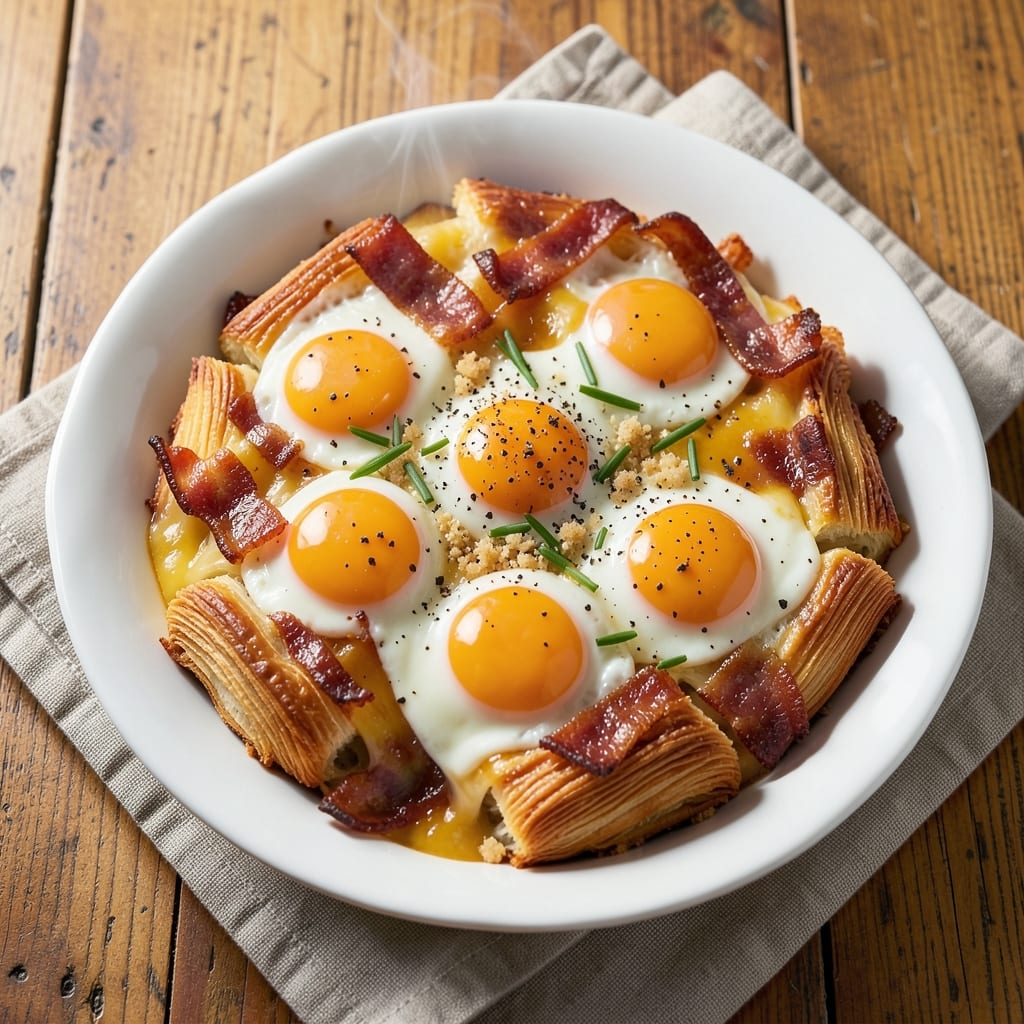
This bacon egg and cheese croissant casserole delivers the ultimate breakfast experience—crispy, golden layers that hide rivers of runny yolk and melted cheese. The secret lies in layering buttery croissant slices with crispy bacon, fluffy eggs, and sharp cheddar, then baking until the top is perfectly crisp while keeping the inside creamy. I’ve perfected this dish after years of testing, ensuring every bite balances smoky bacon, rich eggs, and buttery croissant without falling apart.
The magic happens in the assembly: thinly sliced croissants form the base and top, while bacon and cheese create a flavorful lattice. A light spray of water before baking ensures the top stays golden and crispy, while the eggs cook just enough to set but remain tender inside. This isn’t just breakfast—it’s a showstopper that transforms a simple meal into something restaurant-worthy, with minimal effort. The result? A dish that’s as impressive to serve as it is delicious to eat.
What makes this casserole stand out is its crispy top that shatters like a perfect pie crust, revealing gooey egg centers and melted cheese beneath. The bacon adds a smoky depth, while the croissant brings buttery richness that ties everything together. It’s the kind of dish that disappears quickly—perfect for brunch gatherings, lazy weekends, or when you crave something hearty without the fuss of cooking individual plates.
Ready in just 30 minutes, this recipe is designed for ease without sacrificing flavor or texture. Whether you’re feeding a crowd or treating yourself to a decadent breakfast, this casserole delivers every time. Let’s get cooking—your taste buds will thank you.
Ingredients for bacon egg and cheese croissant casserole
Buttery croissants, smoky bacon, and gooey eggs—this is your ultimate breakfast casserole lineup.
| Ingredient | Amount | Notes |
|---|---|---|
| Croissants 🥐 | 12 whole | Day-old, sliced thinly (1/4-inch) |
| Bacon 🥓 | 12 oz | Thick-cut, cooked crispy |
| Large Eggs 🥚 | 6 whole | Room temperature for even cooking |
| Sharp Cheddar Cheese 🧀 | 2 cups | Shredded, block preferred |
| Heavy Whipping Cream 🥛 | ½ cup | Full-fat for richness |
| Unsalted Butter 🧈 | 4 tbsp | Melted, for brushing |
| Salt 🧂 | ½ tsp | Kosher or sea salt |
| Black Pepper 🌶️ | ¼ tsp | Freshly ground |
| Garlic Powder 🧄 | ½ tsp | For extra flavor depth |
| Water 💧 | 2 tbsp | Light spray for crispy top |
The croissants are non-negotiable here. Day-old from the bakery section (or even the frozen aisle) are ideal—they slice thinner and get extra crispy. Trader Joe's and Publix have the best pre-sliced packs, but any buttery croissant works. If you can't find day-old, bake fresh ones at 350°F for 10 minutes to crisp them up first. The bacon? Thick-cut is key—it stays crispy longer and adds that smoky depth. Cook it ahead and drain on paper towels to render all that fat. That fat? We're using it to make the casserole rich and flavorful.
No sharp cheddar? Gruyère or pepper jack work beautifully—just adjust the amount to taste. Eggs can be swapped for duck eggs if you're fancy, but chicken eggs work just fine. Running short on cream? Half-and-half or whole milk will do, though the texture won't be quite as luscious. For that crispy top, the water spray is crucial—it creates steam that helps the croissant slices puff up like a perfect pie crust. Pro tip: use a spray bottle for even distribution. No spray bottle? A fine mist setting on your sink works too. And if you're feeling adventurous, add a pinch of smoked paprika to the egg mixture for extra depth.
This casserole tastes even better the next day—honestly, it's when the flavors really meld. Store leftovers covered in the fridge for 3-4 days. For reheating, cover with foil and warm at 350°F for 10-15 minutes. Freezing? Not ideal for the croissants, but you can freeze the assembled casserole (without baking) for up to 2 months. Just bake straight from frozen, adding 10-15 minutes to the cooking time. The secret to serving? Let it rest for 5 minutes after baking—this helps the layers set and makes slicing cleaner. Trust me, it's worth the wait.
Why You'll Love This Recipe
- One-Pan Magic: I swear by this trick—just layer, bake, and walk away. No chopping, no frying, no mess. The croissants soak up the egg and cream while the bacon crisps right on top, all in one sheet pan.
- Breakfast-for-Dinner Luxe: That sharp cheddar melts into gooey perfection, the eggs stay rich and custardy, and the flaky croissant crust? It’s like a croissant sandwich, but better. Honestly, I’ve served this at brunch and it passed for fancy.
- Leftovers That Don’t Suck: The flavor actually improves the next day—crispier edges, warmer cheese. I make a double batch on Sundays, and by Wednesday, it’s still the star of my lunch. (Yes, even on a Tuesday night.)
- Budget Breakfast Win: Bacon and croissants sound fancy, but this is secretly cheap. A few slices of bacon, a handful of eggs, and a block of cheddar stretch further than you’d think. Plus, it feels indulgent without the grocery bill.
Step-by-step instructions for bacon egg and cheese croissant casserole
Here's how to create a golden, crispy-topped masterpiece with perfectly runny yolks.
Prepare the Croissant Layers
Preheat your oven to 375°F. Take the 12 whole croissants and slice each one thinly into ¼-inch pieces. You should have about 48 slices total. Arrange 24 slices in a single layer on a baking sheet, overlapping slightly like shingles. Brush each slice lightly with 2 tablespoons of the melted unsalted butter, making sure to cover all surfaces.
Here's the thing—don't skip the butter brushing. It creates that signature crispy top we're after. Bake these croissant slices for 5 minutes until they're just starting to turn golden. Watch carefully—they go from perfect to burnt in seconds. Remove from oven and set aside. You'll use these for the bottom layer of your casserole.
Build the Casserole Layers
In a large bowl, whisk together the 6 whole large eggs, 0.5 cup heavy whipping cream, 0.5 tsp salt, 0.25 tsp black pepper, and 0.5 tsp garlic powder until fully combined. This mixture should be smooth with no streaks of egg white. In a separate bowl, combine the 2 cups shredded sharp cheddar cheese with the remaining 2 tablespoons melted butter.
Assemble your casserole in a 9x13-inch baking dish. Start with the pre-baked croissant slices you prepared earlier. Spread half of the cheese-butter mixture evenly over the croissant layer. Pour the egg mixture over the cheese, then sprinkle half of the 12 oz cooked crispy bacon (cut into bite-sized pieces) on top. Repeat with another layer of croissant slices, remaining cheese mixture, egg mixture, and remaining bacon. The final layer should be croissant slices.
Bake Until Golden and Set
Transfer the assembled casserole to the preheated 375°F oven and bake for 25-30 minutes until the top is golden brown and the edges are crispy. You'll know it's ready when the top looks like it's about to crack—this is where that crispy texture forms. The casserole should be set but still slightly jiggly in the center when you shake the dish gently.
Here's a pro tip: About 5 minutes before the casserole is done, spray the top lightly with the 2 tablespoons water using a spray bottle. This creates steam that helps develop that perfect crispy crust. Remove from oven and let it rest for 10 minutes before serving—this allows the layers to set properly and the flavors to meld.
Serve with Runny Yolk Rivers
Use a sharp knife to cut through the crispy top and serve immediately. The inside should be creamy with runny yolk rivers—this is what makes this dish truly special. If you prefer a firmer texture, you can bake it 5 minutes longer, but you'll sacrifice some of that luxurious yolk experience.
Garnish with additional crispy bacon bits if desired. The contrast between the crispy top, creamy egg mixture, and cheesy croissant layers makes every bite unforgettable. Serve with a side of fresh fruit or a simple green salad to balance the richness.
Pro Tips For Making Bacon Egg And Cheese Croissant Casserole
- Preheat Pan Low: The croissant dough is delicate—don’t let the bacon sizzle like it’s auditioning for a horror movie. Cook it at medium-low heat until crispy but not blackened, or you’ll end up with burnt edges and sad, soggy croissants underneath.
- Cut Croissants Cold: Slice those croissants before you assemble the casserole—thin, even layers work best. Keep them in the fridge until you’re ready to layer, or they’ll start to soften and lose their structure. (Yes, even if you’re impatient like me.)
- Salt the Cheese: Sharp cheddar is already bold, but trust me—sprinkle a pinch of extra salt over the grated cheese before mixing it with the cream. The croissants absorb flavor like sponges, and this makes a real difference in the final bite.
- Bake Until Golden: Don’t peek! The casserole needs a solid 20-25 minutes at 375°F (190°C) to get that perfect golden crust on top. If you open the oven too soon, you’ll end up with a pale, undercooked mess—no one wants a sad breakfast casserole.
Troubleshooting this dish
Soggy Bottom Fix
If your casserole turns out soggy instead of crispy, the issue is likely under-baked croissant layers or too much moisture. First, ensure you pre-bake the bottom croissant layer for 5 minutes at 375°F—this creates a sturdy base. For extra insurance, sprinkle ¼ cup panko breadcrumbs mixed with 1 tbsp melted butter over the top layer before baking. This adds a crunchy barrier that absorbs excess moisture. Also, reduce the heavy cream to ¼ cup if you notice excessive wetness—it’s the primary culprit for a gummy texture. 💡
Eggs Too Firm
Overcooked eggs ruin the creamy texture we’re aiming for. The key is timing: remove the casserole from the oven when the top is golden but the center still jiggles slightly. If you pull it out too early, the eggs will stay runny, but if you wait too long, they’ll firm up completely. For extra insurance, bake at 350°F instead of 375°F—this gives you a 5-minute buffer to achieve perfect doneness. Use an instant-read thermometer to check the center: it should read 160°F (not 165°F, which is fully cooked).
Cheese Not Melted
A blocky, unmelted cheese layer is usually caused by cold ingredients or insufficient baking time. First, shred your cheese using a box grater (not a food processor)—this creates smaller, more uniform pieces that melt better. Also, make sure your shredded cheese is at room temperature before assembling the casserole. If you notice cheese clumps after baking, cover the casserole with foil and bake for an additional 5-10 minutes at 350°F. For extra meltiness, mix 1 tbsp cream cheese into the shredded cheese before layering—it acts as a natural emulsifier. 🧀
Bacon Too Soft
If your bacon loses its crispiness in the casserole, it’s likely because it absorbed too much moisture from the eggs or cheese. Cook your bacon ahead of time and drain it on a wire rack (not paper towels) to remove excess fat. Then, pat the bacon dry with a clean kitchen towel before cutting it into pieces. For an extra crunch, broil the casserole for 1-2 minutes at the end of baking—just watch it closely to avoid burning. Another trick? Layer the bacon between the croissant and cheese layers instead of on top, so it stays crispier longer.
Top Not Crispy
The crispy top is the star of this dish, so if it’s soft, it’s likely due to insufficient steam or butter. First, double-check that you’re brushing the croissant slices with melted butter before assembling the casserole. For the steam trick, spray the top with water 5 minutes before the casserole is done—this should create a golden, shatterable crust. If it’s still not crispy, broil the casserole for 1-2 minutes at the very end, keeping a close eye to avoid burning. For extra insurance, sprinkle 1 tbsp cornstarch over the top layer before baking—it helps absorb moisture and promotes crispiness. ✨
Nutrition facts
Frequently asked questions
Can I make this casserole ahead of time?
Assemble the casserole in a baking dish, cover tightly with plastic wrap, and refrigerate for up to 24 hours before baking. For best results, bake it straight from the fridge—just add 5-10 extra minutes to the cooking time. The flavors actually improve overnight as the ingredients meld. Just don't bake it ahead—croissants lose their crispiness when reheated.
What if I don't have croissants?
Don't worry! You can substitute with puff pastry (like store-bought sheets) or even thinly sliced brioche for a similar buttery texture. For a lighter option, use phyllo dough—just brush it with extra butter and bake it longer. Avoid regular bread as it won't hold up to the moisture from the eggs and cheese. The key is a flaky, buttery layer that gets crispy when baked.
How do I keep the eggs perfectly runny?
The secret is baking at the right temperature and checking for doneness properly. Remove the casserole when the top is golden but the center still jiggles slightly—this usually takes 25-30 minutes at 375°F. For extra insurance, use an instant-read thermometer: the center should read 160°F (not 165°F, which is fully cooked). If you're nervous, bake it for 25 minutes first, then check.
Can I add other ingredients like sausage or spinach?
Yes! Cooked breakfast sausage works beautifully—just crumble it and layer it with the bacon. For veggies, try sautéed spinach or mushrooms (drained well) mixed into the egg mixture. Avoid watery vegetables like tomatoes or zucchini—they'll make the casserole soggy. If adding extras, reduce the cream slightly to ¼ cup to balance the moisture. The key is keeping the texture creamy, not watery.
Why does my casserole fall apart when cutting?
This usually happens when the croissant layers aren't pre-baked enough or the casserole is undercooked. First, always pre-bake the bottom croissant layer for 5 minutes at 375°F to create a sturdy base. Second, make sure the casserole is fully set before cutting—it should jiggle slightly in the center but not be liquidy. Let it rest for 10 minutes after baking to help the layers firm up. If it still falls apart, try baking it 5 minutes longer next time.